
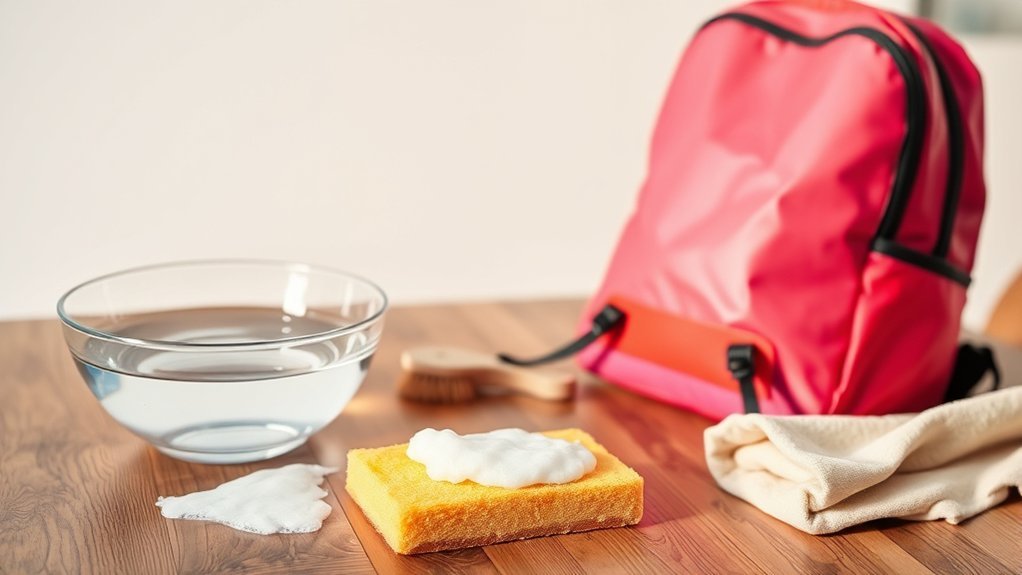
To clean your waterproof backpack, start by shaking it out to remove debris and vacuum inside. Detach components like straps and soak the pack in lukewarm water. Use a sponge with detergent-free soap to gently spot clean the interior and exterior without soaking. Rinse thoroughly and hang to dry in a shaded area. Inspect zippers and lubricate if needed. For more tips on maintaining your backpack’s longevity, keep exploring.
Preparation for Cleaning Your Backpack

Before you start cleaning your waterproof backpack, it’s important to prepare it properly. Begin by shaking out loose dirt, sand, or crumbs to remove surface debris. If you notice stubborn dirt particles, grab a vacuum to reach those tricky spots inside. Next, detach any removable components like shoulder straps, hip belts, or frames; this guarantees you clean every part effectively.
Now, prepare a cleaning solution using detergent-free soap, like tech wash, along with a clean sponge and a soft nylon brush. This combination will help you avoid damaging the waterproof material while tackling grime. Finally, soak your backpack in lukewarm water. This step loosens dirt and grime, making your cleaning process smoother and more efficient. With these preparation steps, you’ll set yourself up for a thorough and liberating clean of your trusty backpack.
Cleaning the Interior of Your Pack
Cleaning the interior of your waterproof backpack is vital for maintaining its functionality and longevity. Start by grabbing a clean sponge and gently wipe away any dirt and debris. Avoid using soap unless you’re dealing with a spill. Pay special attention to areas prone to sweat accumulation, like the back panel and shoulder straps. If you find particularly dirty spots, apply a drop of detergent-free soap to your sponge and spot clean those areas.
Be careful not to soak the interior; excessive water can compromise the waterproofing materials and coatings. Once you’ve finished cleaning, rinse the interior with cool water. It’s essential to guarantee it dries completely before storing your pack to prevent mold and odors. By following these simple steps, you’ll keep your backpack fresh and ready for your next adventure, allowing you to explore without worry.
Spot Cleaning the Exterior
Spot cleaning the exterior of your waterproof backpack is essential for keeping it looking great and functioning well. Start by using a clean sponge to gently target areas that are particularly dirty or stained. Avoid scrubbing the entire pack; aggressive cleaning can damage the waterproof coatings. For freshening up sweaty spots, like the back panel, shoulder straps, and hip belt, add a drop of detergent-free soap to your sponge. Make sure to use lukewarm water, as it helps lift dirt without compromising the fabric’s integrity. After spot cleaning, thoroughly rinse the sponge and wipe down the area with clean water to remove any soap residue that could affect the waterproofing. By taking these simple steps, you can maintain the appearance and performance of your backpack, ensuring it stays ready for your next adventure.
Zipper Maintenance Tips
Maintaining the zippers on your waterproof backpack is just as important as keeping the exterior clean. Start by regularly cleaning the zippers with a soft nylon brush to remove dirt and sand that can wear them down. Inspect the zipper tracks for any blockages or debris that might hinder smooth operation, and address any issues immediately. After cleaning, test the zippers to confirm they function properly; this helps prevent future malfunctions when you’re on the go.
To prolong zipper life, avoid exposure to saltwater or harsh chemicals that could cause corrosion. Additionally, lubricate the zippers occasionally with a silicone-based lubricant to enhance movement and reduce friction. By taking these simple steps, you’ll keep your zippers in top shape, guaranteeing your backpack remains reliable and ready for your next adventure. Remember, well-maintained zippers contribute to a hassle-free experience while enjoying your liberated lifestyle.
Rinsing and Drying Your Backpack
Once you’ve finished cleaning your waterproof backpack, it’s important to rinse it thoroughly with cool water to eliminate any soap residue and dirt. This step is essential for maintaining the integrity of the materials. After rinsing, hang your backpack indoors or in a shaded area to dry overnight. Avoid direct sunlight, as it can damage the fabric.
Steer clear of heat sources or tumble drying, since these can compromise the waterproof coatings and ruin the backpack’s structure. Make certain that all components, including zippers and straps, are completely dry before storing. This prevents mold and mildew from developing.
Before you put it away, check for any lingering odors or dampness. Addressing these issues now will extend your backpack’s longevity and keep it performing well on your next adventure. Taking these simple steps will help you enjoy your gear for years to come.
Reassembling Your Backpack
Once your backpack is dry, it’s time to reassemble it. Make certain all components are securely attached and check that zippers and hardware function properly. A final inspection will guarantee everything’s in place and ready for your next adventure.
Ensure All Components Secure
Before you start reassembling your waterproof backpack, make certain all components, such as shoulder straps, hip belts, and frames, are clean and completely dry. This prevents mold and odors, guaranteeing your gear stays fresh for your adventures.
Follow these steps for a secure reassembly:
- Inspect for Damage: Check for any wear or tear during cleaning and make necessary repairs to maintain waterproof integrity.
- Align Attachment Points: Confirm that all attachment points are aligned correctly for ideal weight distribution when loaded.
- Final Inspection: Once reassembled, verify that all straps and buckles are properly secured to assure your backpack is ready for action.
Taking these steps will guarantee your backpack is secure and reliable for your next journey.
Check Functionality Before Use
Checking the functionality of your waterproof backpack is essential to guarantee it’s ready for your next adventure. Before you reassemble, make certain all parts are dry to prevent mold. Test zippers by operating them multiple times to confirm they’re debris-free. Inspect attachment points and buckles for wear or damage. Ensure removable frames are secure to maintain comfort. Finally, double-check integrated waterproof features.
| Task | Action |
|---|---|
| Dry Components | Ensure all parts are completely dry |
| Test Zippers | Operate zippers several times |
| Inspect Buckles | Look for signs of wear or damage |
| Secure Frames | Check removable support structures |
| Verify Waterproof Features | Confirm sealed seams and coatings are intact |
With these steps, you’re set for your next journey!
Pro Tips for Extended Pack Life
To keep your waterproof backpack in top shape, regular inspections and maintenance are key. Make sure to store it properly and avoid overloading it to prevent wear and tear. By following these tips, you’ll greatly extend your pack’s life and performance.
Regular Inspections and Maintenance
While you may be excited to hit the trails, keeping your waterproof backpack in top shape requires regular inspections and maintenance. By staying vigilant, you can prolong your pack’s lifespan and guarantee it performs when you need it most. Here are three essential maintenance tips:
- Inspect for Damage: Regularly check for frayed straps, damaged zippers, and worn-out buckles. Address these issues before they worsen.
- Clean Seasonally: Clean your backpack at least once a season, particularly if you’ve used it in harsh conditions, to maintain its waterproof integrity.
- Reapply Waterproofing: Consider reapplying a waterproofing treatment every few seasons to enhance its water resistance and protect your gear.
These simple steps can make a significant difference in your backpack’s durability and functionality!
Proper Storage Techniques
After you’ve inspected and maintained your waterproof backpack, proper storage becomes essential for its longevity. Always keep your pack in a cool, dry place to prevent mold and mildew. Using a breathable storage bag or hanging the backpack instead of compressing it helps maintain its shape and structure over time. Before storing, make certain it’s completely clean and dry; this minimizes odors and deterioration caused by moisture or dirt. Avoid direct sunlight, as prolonged exposure can degrade the waterproof materials. Finally, periodically check and refresh the waterproofing treatment to guarantee it remains effective during storage. Following these steps will keep your backpack ready for your next adventure, extending its life and performance.
Avoiding Overloading the Pack
Overloading your waterproof backpack can lead to serious damage, so it’s important to stay mindful of its capacity. By adhering to a few guidelines, you can extend your pack’s life and maintain its waterproof qualities.
- Stay Within 70-80% Capacity: This helps prevent strain on seams and zippers, reducing the risk of water ingress.
- Distribute Weight Evenly: Balance the load throughout the pack to minimize stress on specific areas, prolonging durability.
- Reassess Contents Regularly: Remove unnecessary items to avoid overloading and guarantee a comfortable carrying experience.
Common Mistakes to Avoid
When cleaning your waterproof backpack, it’s crucial to avoid common mistakes that can damage its protective features. Here are key points to remember:
| Mistake | Why You Should Avoid It | Better Alternative |
|---|---|---|
| Using harsh detergents | They can ruin waterproof coatings. | Opt for mild soap instead. |
| Scrubbing aggressively | It can wear down protective layers. | Focus on spot cleaning. |
| Drying in direct sunlight | Heat can degrade materials and waterproofing. | Air dry in a shaded area. |
| Soaking in hot water | High temperatures compromise waterproof integrity. | Use cool or lukewarm water. |
| Neglecting straps and zippers | Dirt buildup can affect functionality. | Clean components separately. |
Steering clear of these mistakes will help your backpack remain in top shape for all your adventures.
When to Seek Professional Cleaning
Even with careful cleaning, there are times when your waterproof backpack might need more than just a basic wash. If you find yourself facing any of the following issues, it’s wise to seek professional cleaning services:
- Stubborn Stains: When dirt or stains refuse to budge despite your efforts, professionals can tackle them effectively.
- Mold or Mildew: If you spot signs of mold or mildew that regular cleaning can’t eliminate, don’t hesitate to get expert help.
- Damaged Waterproof Coating: Should the waterproof coating look worn or degraded, professionals can assess and restore it to guarantee your pack stays water-resistant.
For complex backpacks with integrated systems, consulting a professional is essential to prevent accidental damage. Finally, if you notice any functional issues with zippers or seams, a professional repair might be necessary to maintain your backpack’s integrity. Remember, caring for your gear guarantees it serves you well!
Frequently Asked Questions
Can I Machine Wash My Waterproof Backpack?
You shouldn’t machine wash your waterproof backpack. The agitation and heat can damage the materials and waterproofing. Instead, spot clean with mild soap and water, then air dry it to maintain its integrity.
What Materials Are Typically Used in Waterproof Backpacks?
Imagine a fortress against the elements. Waterproof backpacks often use nylon, polyester, or PVC, materials designed to repel water while remaining lightweight. These fabrics guarantee your gear stays dry, empowering your adventures without fear of the rain.
How Often Should I Clean My Backpack?
You should clean your backpack every few months, or more often if you’ve used it in muddy or dusty conditions. Regular cleaning keeps it functional and looking good, ensuring you enjoy your adventures without worry.
Will Cleaning Affect the Waterproofing of My Backpack?
Yes, cleaning can affect your backpack’s waterproofing. If you use harsh soaps or scrub too hard, you might damage the coating. Stick to gentle methods and specific cleaners to maintain that protective layer.
Can I Use Bleach to Clean My Backpack?
No, you shouldn’t use bleach to clean your backpack. It can damage the fabric and compromise waterproofing. Instead, opt for mild soap and water to keep it clean without risking its protective qualities.
Conclusion
By following these easy steps and pro tips, you can keep your waterproof backpack looking as good as new, even after countless adventures. Remember, a clean pack is like a trusty steed, ready to carry you through life’s wildest journeys. Avoid common mistakes, stay on top of maintenance, and don’t hesitate to seek professional help if needed. With proper care, your backpack will be your loyal companion for years to come, ready for every challenge you face.