
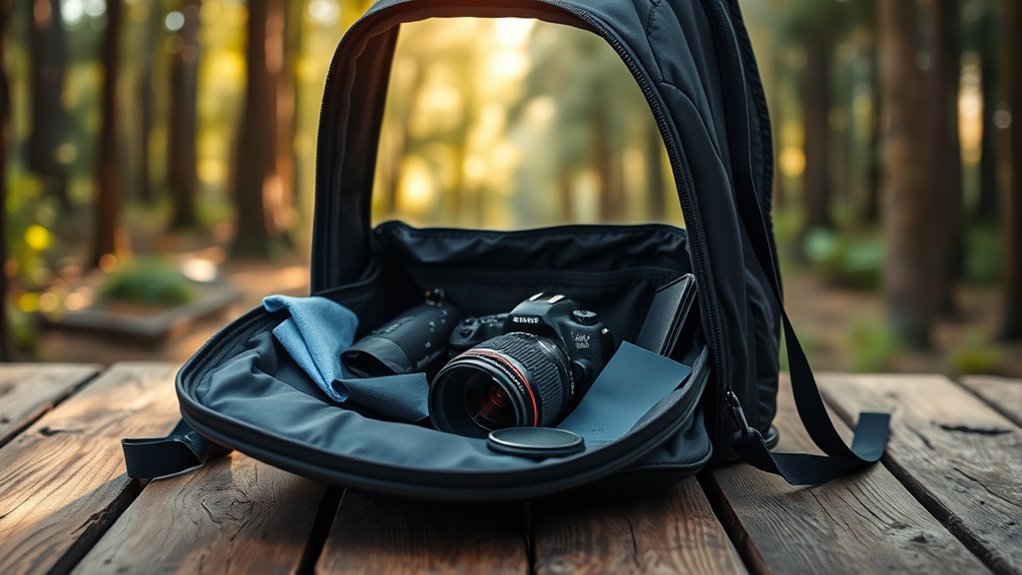
To carry a camera safely in your backpack, start by choosing a suitable method like a dedicated camera pod or a padded compartment. Visualize your packing to keep essentials accessible and prioritize lightweight gear. Select versatile lenses, like all-in-one zooms, to minimize bulk. Always consider weatherproof options to protect your equipment. Moreover, routinely check your gear for maintenance needs. Want to maximize your setup even more? Keep exploring for additional tips and strategies.
Choosing the Right Camera Carrying Method

When you’re deciding how to carry your camera in a backpack, it’s essential to balance protection, accessibility, and your specific needs. The Hyperlite Mountain Gear Camera Pod offers a lightweight option, weighing just 2.8 oz for the regular size and providing excellent protection without bulk. Alternatively, the Peak Design Capture Camera Clip allows for quick access by attaching to your shoulder strap, but keep in mind it exposes your camera to the elements. If you prefer a more versatile approach, a fanny pack can store smaller gear conveniently, though it may lack waterproofing and space for larger setups. Storing your camera inside your backpack maximizes protection from environmental factors but sacrifices immediate access. Ultimately, evaluate your personal priorities—ease of access, weather protection, and budget—to determine which method aligns best with your photographic journey.
Packing Preparation and Strategy
To guarantee your camera gear is both accessible and well-protected, start by visualizing everything you plan to pack. Lay it all out on a table or floor, evaluating what you truly need. This step helps you avoid overpacking and identify any unnecessary items. Next, pack based on usage frequency; keep the essentials at the top or in an easily accessible pocket. This way, you won’t waste time digging for your most-used gear.
Prioritize lightweight items to enhance your mobility—every ounce counts when you’re on the move. Pair lenses with their respective camera bodies for efficient packing, allowing for quick access during shoots. Finally, leave some room for adjustments. Different lens combinations can enhance your creative flexibility, so make sure you’re prepared to adapt while you’re out capturing stunning moments. With these strategies, you’ll travel freely and shoot with confidence.
Lens Selection for Travel
Selecting the right lenses for travel can considerably enhance your photography experience while keeping your gear manageable. All-in-one zoom lenses, like the Sony 20-70mm F4 or 24-105mm F4, are excellent choices as they reduce weight and save space compared to carrying multiple prime lenses. If you’re keen on capturing expansive landscapes or architectural wonders, a 16-35mm lens will provide the versatility you need for various settings. Another solid option is the Tamron 17-50mm F4, which balances quality and flexibility for different shooting scenarios. By opting for zoom lenses, you can make quick adjustments on the go, minimizing the hassle of frequent lens swaps. Always prioritize lenses that align with your specific photography needs and planned activities. This approach not only prevents overpacking but also guarantees that you can efficiently capture your travel moments without being weighed down by unnecessary gear.
Managing Camera Bodies and Accessories
When managing your camera bodies and accessories for travel, focus on selecting only the essentials that align with your photography goals. Leave behind any unnecessary gear to lighten your load, and consider removing grips or cages to maximize space. By carefully evaluating each item’s purpose, you’ll enhance your mobility while ensuring you’re prepared for any shooting opportunity.
Selecting Essential Camera Bodies
As you plan your photography adventure, it’s essential to choose camera bodies that align with your specific needs, ensuring you’re equipped for every shot. Prioritize higher megapixels for those once-in-a-lifetime opportunities to guarantee stunning image quality. However, avoid packing unnecessary bodies that won’t see use; this reduces weight and optimizes your backpack space. Consider the trade-off between weight and practicality—removing grips and cages can save additional ounces. Stock bodies often suffice for most situations, allowing you to streamline your gear without sacrificing quality. Evaluate the necessity of each camera body and its accessories, packing only what you truly need to maintain a lightweight and manageable setup while traveling. This approach liberates you to enjoy your creative journey.
Streamlining Accessories for Travel
Packing efficiently for travel involves careful consideration of your camera accessories, just as you did with your camera bodies. Prioritize only the essentials to minimize weight and streamline your gear. Remove grips and cages from camera bodies—they add unnecessary bulk. Evaluate each accessory’s necessity based on your photography needs and planned activities, packing only what you’ll truly use. Favor quality glass for sharp images, opting for versatile all-in-one zoom lenses like the Sony 20-70mm F4. This approach not only reduces space but guarantees you have the right tools at your fingertips. By focusing on practicality, you’ll enhance your mobility and ease of access during your adventures, liberating you to capture stunning moments without the burden of excess gear.
Space and Weight Management
Efficient space and weight management is essential for any photographer on the move. Start by evaluating the weight and size of each piece of gear. Aim for a lighter load to enhance your travel comfort and mobility. Use padded compartments to protect your camera while keeping it easily accessible for quick shots. This balance of protection and convenience is vital.
Leave behind non-essential gear that doesn’t serve a clear purpose in your photography. This not only lightens your pack but also simplifies your decision-making on location. Allowing extra space in your backpack for unexpected gear configurations can enhance flexibility, enabling you to adapt to changing situations without feeling cramped.
Finally, remember that the weight of your packed gear directly impacts your ability to explore freely. Prioritize items that truly matter, and you’ll enjoy the liberation that comes from a thoughtfully packed backpack.
Overpacking Awareness and Backup Considerations
While you might be tempted to pack every piece of gear you own, doing so can quickly lead to discomfort and hinder your mobility during travel. Resist the “just in case” mindset that encourages packing unnecessary items; this approach can greatly increase your backpack’s weight. Focus on essential items instead of potential needs. Overpacking not only slows you down but can also prevent quick access to your gear when opportunities arise.
Differentiate between “just in case” items and essential backups. Prioritize redundancy only for critical equipment, like microphones. Learn from past experiences to refine your packing choices, ensuring a more efficient and comfortable travel experience. Remember, traveling light frees you to explore and capture moments without the burden of excess gear. Embrace the liberation that comes with smart packing, and you’ll find your adventures more enjoyable and fulfilling.
Efficient Use of Gear and Quick Access Features
Smart packing sets the stage for how you’ll use your gear on the go. Organize your equipment by how often you use it, placing essential items at the top or in easy-to-reach compartments. This way, you can grab what you need without delay. Use large zippers and clear compartments for better visibility, reducing fumbling during shoots.
Incorporate camera clips like the Peak Design Capture Camera Clip to keep your hands free while providing stable access to your gear. Pack logically based on shooting scenarios to enable quick adjustments without unpacking everything.
Here’s a quick reference:
| Feature | Benefit |
|---|---|
| Frequent Item Access | Reduces retrieval time |
| Clear Compartments | Enhances visibility |
| Camera Clips | Frees hands for spontaneity |
| Streamlined Packing | Minimizes clutter and confusion |
Weather Considerations and Stability
When you’re out in the field, unpredictable weather can challenge even the most prepared photographer, so it’s essential to equip yourself with weatherproof gear. Here are some tips to keep your camera safe and stable in changing conditions:
- Use weatherproof gear: Consider items like the Hyperlite Mountain Gear Camera Pod, made from Dyneema® Composite Fabric to shield your camera from rain, hail, or snow.
- Keep jackets handy: Utilize the top compartment of your backpack for easy access to layers, allowing quick adaptation to fluctuating weather.
- Opt for a rear-opening bag: This design secures your gear from wet or muddy surfaces while providing a clean space for setup.
- Incorporate camera clips: These provide stable attachment points on your backpack, ensuring quick access to your camera without compromising stability.
Preparing for Shoots and Maintenance
After confirming your camera gear is protected from the elements, it’s time to focus on preparing for your shoots and maintaining your equipment. Treat the preparation like a professional shoot; clean all gear and verify everything is functional before you head out.
Regularly check memory cards for sufficient space and wipe them to prevent delays. Organize your gear based on shooting frequency, placing frequently used items in easily accessible compartments. A checklist can help you ascertain you have everything needed for the planned activities and location.
| Task | Frequency | Notes |
|---|---|---|
| Clean lenses | Before each shoot | Use a microfiber cloth |
| Check battery levels | Before departure | Bring extras |
| Format memory cards | Before each shoot | Free up space |
| Optimize camera settings | Pre-shoot | Set for the location |
Arrive ready to shoot, optimizing camera settings in advance to minimize setup time.
Frequently Asked Questions
Can I Carry a Drone in My Camera Backpack?
Yes, you can carry a drone in your camera backpack, but make certain it fits securely without damaging your gear. Use padded compartments, and keep batteries separate to avoid accidents. Prioritize organization for easy access during your adventures.
What Are the Best Backpacks for Camera Gear?
The best backpacks for camera gear include brands like Lowepro, Peak Design, and Manfrotto. They offer padded compartments, adjustable dividers, and weather resistance, ensuring your equipment stays safe while you explore and capture your adventures.
How Do I Clean My Camera While Traveling?
Think of your camera as a delicate flower; it needs care. While traveling, gently wipe the lens with a microfiber cloth, use a blower for dust, and store it securely to keep it clean and safe.
Can I Use Packing Cubes for Camera Equipment?
Yes, you can use packing cubes for camera equipment. They help organize your gear, protect it from damage, and maximize space in your backpack. Just make certain the cubes have padding and fit your gear snugly.
What Safety Tips Should I Follow When Traveling With a Camera?
When traveling with a camera, always use a sturdy strap, keep it close to your body, avoid crowded areas, and store it in a padded case. Don’t forget to insure your gear for added peace of mind!
Conclusion
By following these steps, you can carry your camera safely in a backpack without compromising its safety or your comfort. Have you considered how the right packing method can enhance your shooting experience? Prioritizing space, weight management, and quick access guarantees you’re always ready for that perfect shot. Plus, being mindful of weather conditions and maintaining your gear can make all the difference. So gear up, stay organized, and enjoy capturing unforgettable moments on your travels!