
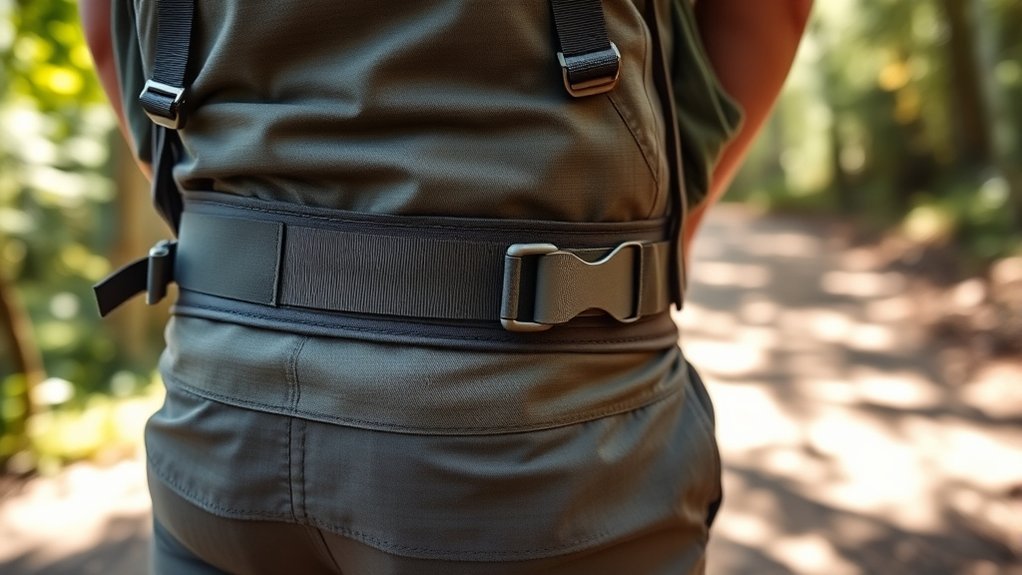
A hip belt on a backpack is an essential component that redistributes up to 80% of the pack’s weight from your shoulders to your hips, greatly boosting comfort during hikes. It alleviates strain, allowing your leg muscles to bear the load instead of your shoulders. When fitted properly, a well-padded and wider hip belt enhances weight distribution, preventing fatigue. Want to know how to choose the right backpack and guarantee a perfect fit? Keep exploring!
Understanding the Function of a Hip Belt

A hip belt is a game changer for any backpacker looking to enhance comfort and efficiency on the trail. By transferring weight from your shoulders to your hips, it considerably reduces shoulder strain, allowing you to move with ease. When properly fitted, a hip belt can alleviate up to 80% of your pack’s weight, meaning your legs—stronger muscles—carry the load instead of your shoulders. For a 22-pound carry-on, it can relieve approximately 17.6 pounds, greatly improving your overall comfort.
To get the most out of your hip belt, make sure it rests on the top of your hip bones, with the buckle positioned around your belly button for ideal weight distribution. Look for a well-padded design made from high-quality materials, as wider belts enhance comfort and performance during long treks. Embrace the liberation a hip belt provides and enjoy your adventures like never before!
Benefits of Using a Hip Belt
Using a hip belt not only enhances comfort but also offers a range of notable benefits that can elevate your backpacking experience. By transferring up to 80% of your backpack’s weight from your shoulders to your hips, you’ll considerably reduce shoulder strain during your travels. For instance, with a maximum carry-on weight of 22 pounds, a hip belt can relieve 17.6 pounds from your shoulders, allowing your stronger leg muscles to bear the load.
Well-padded and wider hip belts distribute weight more effectively, preventing discomfort and fatigue on long hikes. When fitted properly, resting on the top of your hip bones, these belts improve overall comfort and weight distribution, which is essential for effective use. Additionally, spacious hip belt pockets offer easy access to essentials, letting you grab what you need without removing your backpack. Embrace the liberation that a hip belt brings to your adventures!
Characteristics of an Effective Hip Belt
When you’re on the trail, an effective hip belt is vital for maximizing comfort and stability. A well-padded belt guarantees that weight transfers from your shoulders to your hips, enhancing support and reducing fatigue. Opt for a wider hip belt; it distributes weight over a larger area, making it especially comfortable when you’re carrying heavier loads.
The design matters too—your hip belt should absorb weight without being excessively large, which could overwhelm your midsection. High-quality materials, like soft foam padding, are essential for preventing discomfort during long treks. Features such as storage pockets can also add functionality, allowing you to keep essentials within reach.
Lastly, always choose a hip belt that comes with your backpack. A separate purchase can compromise fit and functionality, hindering your freedom on the trail. Prioritize these characteristics, and you’ll enhance your hiking experience considerably!
How to Fit Your Hip Belt Properly
Fitting your hip belt properly is crucial for a comfortable and efficient hiking experience. Start by measuring your torso length from the C7 vertebra to the top of your hip bones; this guarantees the belt rests correctly. Position the hip belt on top of your iliac crest for ideal weight transfer, allowing the load to shift from your shoulders to your hips. Adjust the buckle so it sits just above your belly button, enhancing comfort and stability. Make sure the fit is snug but not excessively tight; discomfort can ruin your adventure. Finally, test the fit with a loaded backpack to confirm the hip belt effectively distributes weight and provides comfort during your travels. A well-fitted hip belt liberates you from strain, letting you focus on the journey ahead, so take the time to get it right!
Choosing the Right Backpack With a Hip Belt
When you’re choosing a backpack with a hip belt, it’s important to prioritize comfort and support. Look for padded hip belts that effectively transfer weight from your shoulders to your hips, making your journey much more enjoyable. Remember to test the fit with a loaded pack to verify it meets your needs for both functionality and convenience!
Importance of Hip Belts
A well-chosen hip belt can transform your travel experience by greatly enhancing comfort and support. When you’re carrying a larger backpack, hip belts are essential; they shift up to 80% of the pack’s weight from your shoulders to your hips, reducing strain. Look for padded, wider belts that distribute weight effectively and include pockets for added functionality. To guarantee ideal fit, measure from your C7 vertebra to your iliac crest, making sure the belt rests snugly on your hip bones. Prioritize backpacks that specify hip belt sizing and steer clear of flimsy straps. Tortuga travel backpacks are a fantastic option, featuring padded hip belts and adjustable systems specifically engineered for maximum carry-on comfort, empowering your adventurous spirit.
Features to Consider
Choosing the right backpack with a hip belt is essential for guaranteeing a comfortable and enjoyable travel experience, especially during long hikes or trips. Start by selecting a well-padded hip belt designed for effective weight transfer. Wider hip belts distribute weight over a larger area, alleviating shoulder pressure. Always check that the hip belt is included; some brands offer them separately, compromising weight distribution. Measure your torso length from the C7 vertebra to the iliac crest to ascertain a proper fit, allowing the belt to rest on your hip bones. Finally, evaluate the backpack’s overall design to confirm it accommodates the hip belt effectively, enhancing both comfort and usability during your adventures.
Testing Comfort and Fit
To guarantee your hip belt is properly fitted, measure from the C7 vertebra to the top of your hip bones, allowing it to rest securely on your hips. Always test the fit with a loaded backpack, as this reveals how well the belt distributes weight and improves comfort. Don’t forget to adjust for a snug fit; a well-fitted, padded hip belt can greatly reduce shoulder strain during your hikes.
Importance of Proper Fit
When it comes to guaranteeing comfort during long hikes, the proper fit of a hip belt is essential. A well-fitted hip belt not only enhances your experience but also liberates you from discomfort. Here’s what to take into account for a superior fit:
- Measure Torso Length: From the C7 vertebra to the top of your hip bones—this facilitates proper weight transfer.
- Position the Belt: It should rest snugly on your hip bones, alleviating shoulder strain while distributing weight effectively.
- Adjust the Buckle: Aim to place it on top of your belly button for improved comfort and load management.
With these adjustments, you’ll feel the difference, and your hikes will become more enjoyable and less exhausting!
Testing With Load
Testing a backpack with a loaded hip belt is essential for ensuring comfort and proper fit during your hikes. You want to make sure the weight is evenly distributed, transferring about 80% to your hips to reduce shoulder strain. When you try it on, the hip belt should sit on your hip bones, with the buckle near your belly button for ideal weight transfer. Wear the loaded pack for an extended period to really assess comfort and make necessary adjustments. Check that the hip belt is padded and wide enough to effectively distribute weight. This attention to detail can drastically enhance your comfort on long hikes, allowing you the freedom to explore without fatigue holding you back.
Adjusting for Comfort
Adjusting the hip belt correctly is key to maximizing comfort and fit, especially after you’ve tested the pack with a load. Here’s how to guarantee your hip belt is set up for success:
- Position: The hip belt should rest on the top of your hip bones to enable effective weight transfer from your shoulders.
- Buckle Alignment: Make sure the buckle is aligned with your belly button for stability and support during your hike.
- Test Fit with Load: Always test the fit while your backpack is loaded; improper adjustment can lead to discomfort on long treks.
A well-fitted hip belt can alleviate up to 80% of your pack’s weight from your shoulders, enhancing comfort and freeing you to explore without strain.
The Impact of Weight Distribution on Hiking
Although many hikers underestimate the importance of proper weight distribution, using a hip belt can greatly transform your experience on the trail. By transferring up to 80% of your backpack’s weight from your shoulders to your hips, you considerably reduce shoulder strain. For instance, with a carry-on weight limit of 22 pounds, a hip belt can lift approximately 17.6 pounds off your shoulders, allowing your leg muscles to handle the load more effectively. This shift enhances comfort during long hikes, as it distributes weight evenly across your body. Even lightweight packs benefit from this feature, as proper weight management can elevate your hiking experience and minimize discomfort. To maximize these advantages, verify your hip belt is properly fitted. Embracing this essential gear not only enhances your comfort but also liberates you to focus on the beauty of the trail ahead.
Shoulder Pain and Prevention Techniques
Weight distribution plays an essential role not just in comfort but also in shoulder health during hikes. An improperly loaded backpack can lead to shoulder pain, making a well-fitted hip belt vital. By transferring the load from your shoulders to your hips, you alleviate strain and improve your hiking experience. Here’s how to prevent shoulder pain effectively:
Ensure proper weight distribution with a well-fitted hip belt to enhance comfort and reduce shoulder strain during hikes.
- Use a Properly Fitted Hip Belt: Make sure your hip belt sits snugly on your hips to help with weight management.
- Incorporate Regular Stretching: Focus on stretches that target the shoulder blade area to relieve discomfort and promote shoulder health.
- Try Yoga: Engaging in yoga can greatly enhance your flexibility and reduce muscle tension, helping to prevent shoulder pain.
Stretching and Flexibility for Better Hiking Experience
When you’re out on the trail, incorporating stretching and flexibility exercises can transform your hiking experience, making it not only more enjoyable but also safer. Regular stretching alleviates shoulder discomfort, allowing you to focus on the beauty around you instead of pain. Try specific stretches, like reaching one arm while lowering the shoulder, to enhance your shoulder health and flexibility. Consistency is key; a well-structured stretching routine prevents injuries during those long hikes.
Don’t overlook yoga stretches, such as the cat stretch, which limbers your spine and improves body alignment, boosting your hiking performance. To make the most of your outdoor experience, consider using a Tyvek ground sheet for comfortable stretching on the trail. Embrace these techniques, and you’ll enjoy a liberated, pain-free hiking adventure, fully engaging with nature while moving with ease and confidence.
Frequently Asked Questions
Can a Hip Belt Be Added to Any Backpack?
You can’t add a hip belt to just any backpack. It needs compatible attachment points and specific designs. Check your pack’s features first, then explore aftermarket options for enhanced comfort and load distribution. Enjoy your adventures!
How Do I Clean My Hip Belt?
You can clean your hip belt by removing it from the backpack, hand washing it with mild soap and water, then air drying completely. Avoid machine washing or harsh chemicals to maintain its integrity and comfort.
Are Hip Belts Adjustable for Different Body Types?
Yes, hip belts are adjustable for different body types. You can customize the fit to guarantee comfort and support during your adventures, empowering you to carry more gear without sacrificing mobility. Enjoy your journey!
What Materials Are Hip Belts Usually Made From?
Hip belts are usually made from durable nylon or polyester, often featuring foam padding for comfort and support. They’re designed to withstand wear and tear while providing a secure, adjustable fit for your adventures.
Do All Backpacks Come With a Hip Belt?
Not all backpacks come with a hip belt. Many lightweight daypacks skip it, while larger backpacks designed for hiking or travel often include one. Choosing a pack with a hip belt can enhance your comfort considerably!
Conclusion
To sum up, using a hip belt on your backpack can greatly enhance your hiking experience by improving weight distribution and reducing shoulder strain. Research shows that proper hip belt usage can decrease the likelihood of injuries, allowing you to hike longer and more comfortably. By understanding how to fit and select the right backpack, you’re not just investing in gear—you’re investing in your health and enjoyment on the trail. So gear up and hit the trails with confidence!