
Last Updated on September 11, 2026 by Daniel Globe
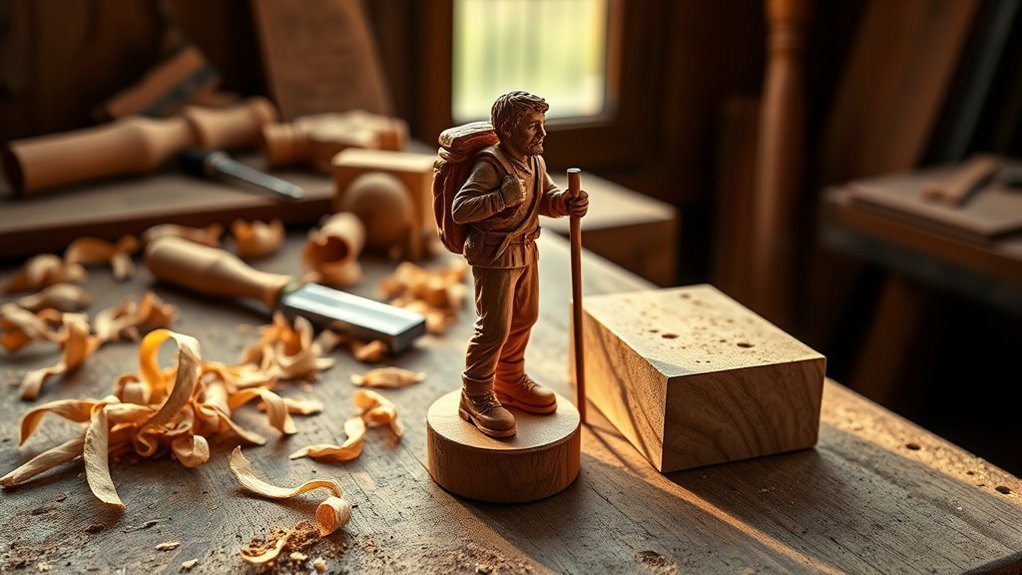
Carving a custom hiker topper for a walking stick is one of the most rewarding whittling projects for both beginners and experienced woodcarvers. Starting with a straight-grained block of basswood, you can shape a characterful trail companion equipped with a hat, beard, backpack, and trail gear using basic hand tools. This complete guide walks you through wood selection, stop-cut carving techniques, facial proportions, pyrography detailing, painting, and secure mounting to ensure your hiking stick topper withstands years on the trail.
Quick Answer
To carve a hiker topper, sketch the hat, nose, beard, and pack onto a dry 1.25 x 1.25 x 6-inch basswood block. Use stop cuts and a detail knife to rough out the silhouette, refine facial features with a V-tool, burn fine details, paint with watered-down acrylic washes, and mount using a 2.5-inch dowel screw with epoxy.
Key Takeaways
- Wood Choice: Use a knot-free, dry 1.25 x 1.25 x 6-inch basswood block for clean cuts and grain control.
- Safety First: Always wear an ANSI Level 5 cut-resistant glove on your non-carving hand and a leather thumb guard.
- Facial Mechanics: Establish the nose first using stop cuts; facial features anchor the proportions of the rest of the figure.
- Painting & Sealing: Thin acrylic paint with water (1:4 ratio) to let the wood grain show through, then seal with satin polyurethane.
- Secure Mounting: Use a 2.5-inch wood-to-wood dowel screw combined with two-part epoxy for a trail-ready bond.
At a Glance
| Time Required | 4 to 6 hours (carving, painting, curing) |
| Difficulty | Intermediate Whittling / Woodcarving |
| Tools Needed | Detail knife, V-tool gouge, woodburner, drill & 7/64″ bit, sandpaper |
| Cost | $15 – $30 (materials & basic wood blank) |
Disclosure: As an Amazon Associate I earn from qualifying purchases. Some links on this page are affiliate links, at no extra cost to you.
What You Need to Carve a Hiker Topper
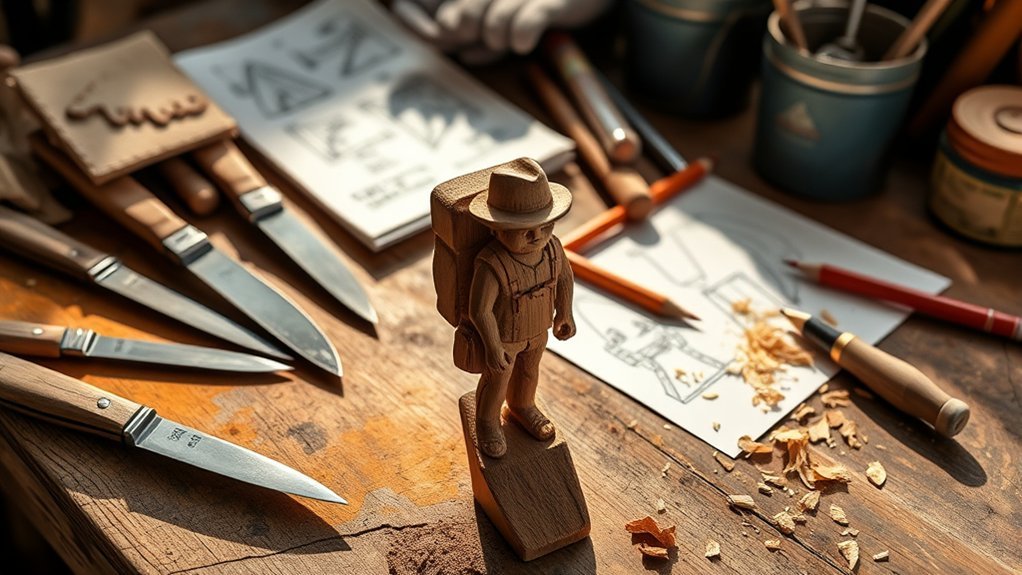
To carve a hiker topper, start with a high-grade basswood block measuring approximately 1.25 inches by 1.25 inches by 6 inches. Basswood is the gold standard for hand whittling because its low Janka hardness rating allows your blade to slice cleanly across and with the grain without heavy resistance. Gather your essential hand tools, specifically a dedicated detail knife from a trusted maker like Flexcut Tool Company, a 1/4-inch V-tool parting gouge, pencil, ruler, fine sandpaper, acrylic paints, and a 2.5-inch double-ended dowel screw.
Warning: Always wear an ANSI Level 5 cut-resistant safety glove on your holding hand and a leather thumb guard on your carving hand. Never carve toward your lap or body without a protective leather apron.
Pencil your basic profile—including hat brim, nose line, beard tip, and backpack location—directly onto all four sides of the block before making your initial cuts. Drilling your mounting pilot hole before carving is an optional trick that keeps the block easy to secure in a vise during setup.
Choose the Right Basswood Block
Selecting the right piece of wood is critical to a clean carving process. American Basswood (Tilia americana) is prized by carvers because of its pale color, soft texture, and uniform density. According to the USDA Forest Products Laboratory, dry basswood maintains superior dimensional stability, making it less prone to splitting when detailed with delicate cuts.
| Check | What to Feel & Look For | Why It Matters |
|---|---|---|
| Size | 1.25 x 1.25 x 6 inches | Fits standard walking sticks without top-heavy bulk |
| Grain | Straight, tight, growth rings close | Prevents unexpected blade tear-outs and chipping |
| Surface | Free from knots, mineral streaks, or sap pockets | Ensures smooth, uniform knife passes on facial features |
| Moisture | Kiln-dried (6% to 8% moisture content) | Prevents cracking, checking, or shrinkage after mounting |
| Texture | Soft, pale creamy color, lightweight | Allows effortless push cuts and clean detail work |
Inspect all six sides of your blank. Reject blocks with visible pinpoint knots or dark sap streaks along the upper section where delicate nose and hat cuts will occur.
How to Carve the Hiker Shape
Executing precise profile cuts sets up the structural geometry of the hiker figure. Begin by establishing stop cuts around key dividers: the brim of the floppy trail hat, the base of the nose, and the bottom line of the beard.
Pro Tip: Keep your carving knife razor-sharp by stropping the blade on a leather strop coated with chromium oxide polishing compound every 20 minutes. A razor edge cuts wood cells cleanly; a dull blade tears them.
To execute a stop cut, press the knife edge firmly straight down into your pencil mark at a 90-degree angle. Next, make a slicing slice cut at an angle toward that initial cut to release a small wedge of wood. This removes material cleanly without tear-out.
- Establish the Nose First: Make horizontal stop cuts under the nose line, then slice up from the cheeks to isolate the nose block.
- Form the Hat Brim: Cut a deep stop cut around the head perimeter, slicing upward from the shoulders to relieve wood under the brim.
- Block Out Body Mass: Taper the lower body down slightly toward the base, keeping excess wood near the back for a molded backpack and rolled sleeping pad.
- Use a V-Tool for Hair & Beard: Drag your 1/4-inch V-tool in gentle S-curves to texture the flowing hair and beard.
Shape the Face, Hair, and Clothing
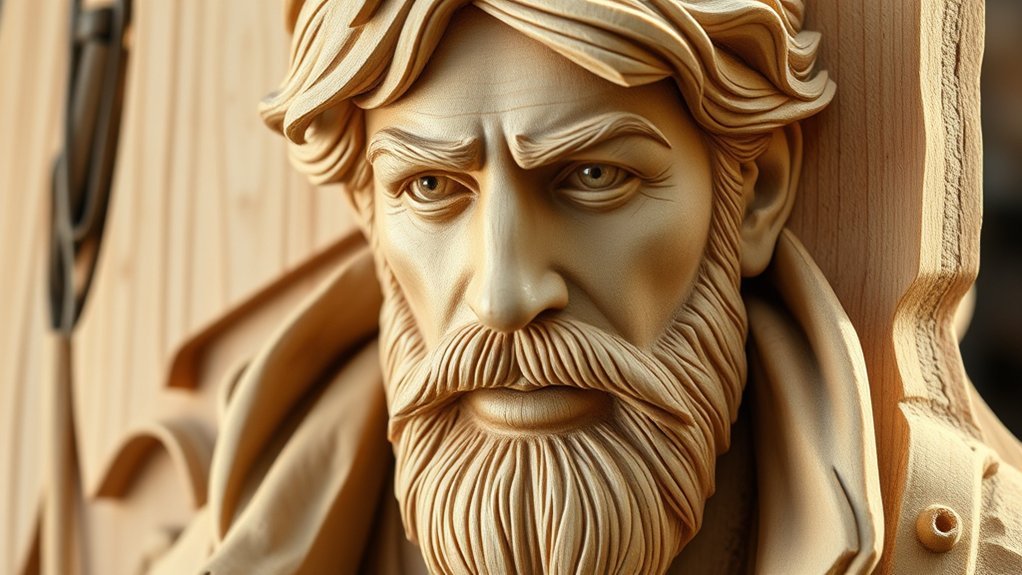
Facial proportions give your hiker personality and expression. Use the “rule of thirds” adapted for caricatures: divide the head into three equal sections—top of forehead to eyebrow line, eyebrow line to nose base, and nose base to tip of chin.
Carve around the nose to round off sharp corners, leaving a bulbous or weathered outdoor nose profile. Deepen the eye sockets by making small triangular cuts on either side of the nose bridge. Slice tiny notch cuts under the mustache line to create depth and shadow without needing to carve individual teeth or mouth details.
Next, define the hiker’s outerwear. Outline the jacket lapels, collar, and shoulder straps using narrow stop cuts. When shaping the backpack, leave it slightly blocky, then undercut the bottom edge to make it look like a heavy load resting against the hiker’s back.
Use a Woodburner for Fine Details
Pyrography (woodburning) enhances hand-carved figures by creating fine lines, dark outlines, and textural contrast that static carving blades cannot easily achieve. Standard tips, such as skew and wire-nib nibs, let you burn crisp detail into hair, clothing folds, and gear straps.
“Pyrography bridges the gap between relief carving and painting, embedding natural shadow lines directly into the basswood fibers.”
- Practice Temperature Control: Set your woodburner to a medium heat setting. A burn that is too hot will char the wood and bleed across grain lines.
- Burn Hair Strands: Sweep a fine skew tip in light, quick strokes down the beard and hair locks to mimic fine hair texture.
- Define Gear Seams: Burn dark accent lines along jacket seams, backpack zipper lines, buttonholes, and boot laces.
- Moisture Check: Ensure your carving is dry; damp wood creates steam pockets under pyrography tips, resulting in uneven shading.
Paint Your Carved Hiker Topper
Woodcarvings look best when the paint enhances rather than hides the carved facets. Thick acrylic paint buries blade marks and dulls crisp details. Instead, make thinned acrylic washes by mixing 1 part water-based acrylic paint with 4 parts clean water.
Apply thinned paint with a soft round brush, allowing the wood grain to show through every layer:
- Trail Hat: Blend tangelo orange or golden yellow for high visibility.
- Jacket & Pants: Wash with forest green or slate blue washes.
- Backpack & Bedroll: Apply earth tones like burnt umber or midnight blue.
- Skin Tones: Thin flesh-tone acrylic heavily and apply in a single swift coat to avoid splotching.
Note: Allow acrylic washes to dry for at least 2 hours before applying antiquing wax. Dark paste wax or oil-based antiquing stain brushed over the piece and wiped off highlights deep crevices and softens bright paint tones.
Attach the Hiker to a Hiking Stick
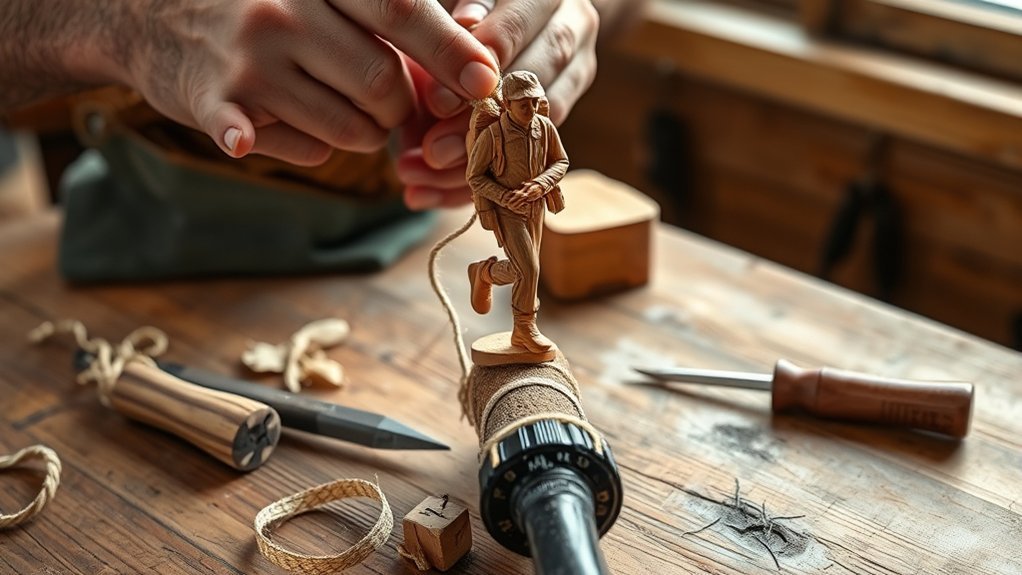
Mounting your topper securely ensures it withstands trail vibrations, accidental drops, and weather exposure. According to Wood Magazine guidelines on joinery fasteners, wood-to-wood hanger bolts (dowel screws) provide maximum shear strength when paired with pilot holes drilled precisely to thread-root diameter.
- Mark the exact dead-center on the flat bottom of your carved hiker topper and the top flat cut of your hiking stick.
- Drill a straight, vertical 7/64-inch pilot hole 1.25 inches deep into the base of the basswood topper.
- Drill a matching pilot hole into the top of your wooden hiking staff (use a 1/8-inch bit if the staff is a hardwood like hickory or oak).
- Thread one end of a 2.5-inch steel dowel screw into the topper base using locking pliers.
- Mix a small batch of 2-part waterproof epoxy and apply it inside the pilot hole of the staff and along the exposed screw threads.
- Thread the topper down onto the staff firmly until it seats completely flush against the wood top. Wipe away squeeze-out immediately with denatured alcohol.
Seal the Finished Hiker Topper
Because hiking stick toppers face rain, sunlight, and hand sweat, robust sealing is mandatory. Choose a clear exterior-grade finish that provides UV protection and moisture resistance.
Brush on two to three thin coats of a satin finish like Minwax Clear Satin Polyurethane or a marine-grade spar varnish. Allow 6 to 8 hours drying time between coats, lightly rubbing the surface with 0000 steel wool between applications to remove dust nibs. Alternatively, boiled linseed oil (BLO) offers a soft, natural hand-rubbed sheen, but requires reapplication once or twice a year to maintain full moisture protection on active trail sticks.
Common Hiker Carving Mistakes
Avoiding critical errors saves hours of work and keeps your carving intact:
- Carving Against the Grain: Cutting into the grain direction causes the wood to tear out in large chunks. If your blade digs in or splits wood ahead of the edge, flip the block over and carve in the opposite direction.
- Using Dull Knife Blades: Dull blades force you to apply excess pressure, drastically increasing the chance of slipping and cutting yourself or snapping small detail features like noses and brim edges.
- Skipping Safety Gear: Whittling without a safety glove leads to unnecessary injuries. Always protect your non-dominant holding hand.
- Applying Thick Paint: Applying heavy, un-diluted acrylic paint hides intricate blade cuts and leaves an unnatural plastic look. Keep paint washes watery.
- Inaccurate Drilling: Drilling a crooked pilot hole results in a crooked topper mount that sits off-center on your walking stick. Use a drill press or alignment jig whenever possible.
Hiker Carving Variations to Try
Once you master the basic hiker figure, customize your carvings to reflect different trail personalities and styles:
- The Trail Gnome Hiker: Exaggerate the hat length into a tall pointed cap, enlarge the nose, and carve a sweeping beard reaching down past the belt.
- Ultra-Light Backpacker: Add modern details like trekking poles, trail running shoes, a curved foam sleeping pad, and a sleek modern pack silhouette.
- The Weathered Mountain Guide: Add carved eyeglasses or sunglasses, a pipe, a brimmed Stetson hat, and deeply etched facial wrinkles using fine woodburner lines.
- Seasonal Carvings: Carve winter hikers with earflap caps and heavy parkas, or summer hikers with baseball caps, shorts, and water bottles.
Frequently Asked Questions
What is the rule of three in wood carving?
The rule of three in wood carving refers to creating balanced visual composition by organizing features, textures, or focal points in groups of three (such as three main hair locks, three primary coat folds, or balancing the head, body, and pack). It creates a harmonious, visually appealing rhythm across hand-carved figures.
What are some common mistakes in wood carving?
Common mistakes include using dull tools, carving against the wood grain, skipping safety gloves, rushing the drying process of green wood, and making deep cuts without making stop cuts first. Using thin wood or failing to plan proportions beforehand also frequently leads to broken features.
What are the common mistakes in carving facial features?
Carving eyes and noses too flat is the single most common facial carving mistake. Facial features require depth: you must set the eye sockets back into the head and project the nose forward by carving deep shadow lines around the cheeks and nostrils.
What are the 4 main types of wood carving?
The four primary types of wood carving are whittling (shaping wood using primarily a single pocket or detail knife), relief carving (carving figures onto a flat wood panel), chip carving (removing small geometric chips from flat surfaces), and full three-dimensional sculptural carving (carving figures in the round).
Conclusion
Carving a custom hiker topper transforms a standard wooden staff into a personal, handcrafted trekking companion. By selecting a straight-grained basswood block, carefully blocking out facial and body proportions, detailing with pyrography, and applying thinned paint washes, you create a figure rich in character and depth. Take your time during the mounting process—use a straight pilot hole, strong dowel screw, and waterproof epoxy to ensure your topper stays firmly attached through every mile on the trail.
Sources
- USDA Forest Products Laboratory — Wood properties, grain characteristics, and Janka hardness data for American Basswood.
- Flexcut Tool Company — Carving knife safety standards, gouge maintenance, and blade stropping procedures.
- Wood Magazine — Joinery standards, pilot hole sizing, and mechanical fastener guidelines for wood projects.
- Minwax Finishing Products — Specifications for polyurethane sealers, UV protective topcoats, and stain applications.
