

Last Updated on July 28, 2026 by Ethan Caldwell
Getting from Seattle to Olympic National Park is straightforward, but the best route depends on which part of the park you plan to visit. Port Angeles and Hurricane Ridge are easiest from the north, while Hoh Rain Forest, Ruby Beach, Kalaloch, and Quinault require a longer west-side drive. Build in time for traffic, ferry lines, weather, and limited parking.
Quick Answer
For Port Angeles or Hurricane Ridge, drive south through Tacoma on WA-16, WA-3, and WA-104, or take the Seattle–Bainbridge ferry and continue on WA-305, WA-3, WA-104, and US-101. Allow roughly 2.5–3.5 hours to Port Angeles and longer for the coast or rain forest.
Key Takeaways
- Choose your park area before choosing a route; Olympic has no road across its mountainous center.
- The Tacoma route avoids ferries, while Bainbridge and Kingston offer scenic crossings but can add queue time.
- Vehicle reservations are not offered on the Seattle–Bainbridge or Edmonds–Kingston routes.
- A one-day trip works best when you focus on one region, such as Hurricane Ridge and Lake Crescent or Hoh Rain Forest and Ruby Beach.
- Check park roads, ferry alerts, tides, and weather immediately before leaving Seattle.
At a Glance
| Time Required | About 2.5–3.5 hours to Port Angeles; roughly 4–6 hours to many west-side destinations before sightseeing stops |
| Difficulty | Easy navigation, but moderate planning because of traffic, ferry queues, mountain weather, and long distances |
| Tools Needed | Reliable vehicle, offline map, ferry schedule, park road report, tide information for beaches, water, snacks, and weather layers |
| Cost | Fuel, optional ferry fares, and a $30 seven-day private-vehicle park pass unless you already hold a qualifying federal pass |
Disclosure: As an Amazon Associate I earn from qualifying purchases. Some links on this page are affiliate links, at no extra cost to you.
Best Seattle To Olympic National Park Route

There is no single park entrance that works for every trip. Olympic National Park wraps around a roadless mountain core, so your destination should decide your route. The National Park Service directions send drivers arriving from Tacoma across WA-16, WA-3, and WA-104 to US-101. Drivers using a ferry also connect to US-101 after reaching the Olympic Peninsula.
For Port Angeles, Hurricane Ridge, or Lake Crescent, the most predictable no-ferry option is I-5 South to Tacoma, WA-16 West, WA-3 North, WA-104 West across the Hood Canal Bridge, and US-101 West. From downtown Seattle, allow about 2.5 to 3.5 hours to Port Angeles in normal conditions. Rush-hour congestion, bridge openings, construction, and weekend traffic can add time.
For Kalaloch, Lake Quinault, or the southern coast, a southwest approach may save backtracking: take I-5 South toward Olympia, continue toward Aberdeen and Hoquiam on WA-8 and US-12, then turn north on US-101. For the Hoh Rain Forest or Ruby Beach, compare this route with the north-side route on the morning of travel.
| Route | Best For | Main Trade-Off |
|---|---|---|
| Tacoma / WA-16 | Port Angeles, Hurricane Ridge, Lake Crescent | No ferry, but possible I-5 and Tacoma congestion |
| Seattle–Bainbridge ferry | A scenic start from central Seattle | About a 35-minute crossing plus first-come vehicle queues |
| Edmonds–Kingston ferry | Travelers starting north of Seattle | About a 30-minute crossing, but terminal waits can be long |
| Olympia / Aberdeen | Quinault, Kalaloch, and the southwest coast | Longer highway drive, but less backtracking for southern destinations |
Note: Olympic National Park currently has no timed-entry requirement. A private-vehicle entrance pass costs $30 and is valid for seven consecutive days. Check the official fee page before your trip because fees and policies can change.
How To Reach Olympic National Park Without A Ferry?
To reach Olympic National Park without a ferry, drive south on I-5 from Seattle and choose either the Tacoma route for the park’s north side or the Olympia–Aberdeen route for the southwest side. The Tacoma route is usually the better choice for Port Angeles, Hurricane Ridge, and Lake Crescent. The Olympia–Aberdeen route is often more practical for Quinault and Kalaloch.
Best Inland Routes
North-side route: I-5 South to Tacoma, WA-16 West, WA-3 North, WA-104 West across the Hood Canal Bridge, then US-101 West. This avoids ferry schedules and takes you through Bremerton and along Hood Canal.
Southwest route: I-5 South toward Olympia, WA-8 West, US-12 West to Aberdeen and Hoquiam, then US-101 North. This route reaches Lake Quinault, Kalaloch, and Ruby Beach from the south.
Warning: WA-104 crosses the Hood Canal Bridge, which can close temporarily for marine traffic or severe weather. Park roads can also close with little notice. Check Olympic National Park road conditions and WSDOT traffic alerts before leaving.
Drive Times & Stops
Use Port Angeles as the first planning point for a north-side trip, not as a stand-in for the entire park. From the Olympic National Park Visitor Center in Port Angeles, the National Park Service lists approximate drive times of 45 minutes to Hurricane Ridge, 30 minutes to Lake Crescent, 2 hours 15 minutes to the Hoh Rain Forest, and 2 hours 30 minutes to Kalaloch.
- Leave Seattle before the morning commute when possible.
- Refuel before heading to remote west-side roads.
- Download maps because cellular service is weak or absent in parts of the park.
- Use designated pullouts for viewpoints and wildlife; never stop in a travel lane.
Pro Tip: Do not try to visit Hurricane Ridge, the Hoh Rain Forest, and the Pacific coast in one rushed day from Seattle. Choose one region for a day trip or stay overnight near Port Angeles and Forks to reduce backtracking.
Park Areas To Prioritize
Prioritize areas that fit the same side of the peninsula. Port Angeles, Hurricane Ridge, and Lake Crescent combine well. Hoh Rain Forest and Ruby Beach also make a logical pair when you start early and account for summer parking lines.
| Area | Why Prioritize | Approximate Access From Port Angeles |
|---|---|---|
| Port Angeles | Visitor services and a practical north-side base | Starting point |
| Hurricane Ridge | Alpine views and short-to-moderate hikes | About 45 minutes |
| Lake Crescent | Lake views, Marymere Falls, and easy US-101 access | About 30 minutes |
| Hoh Rain Forest | Temperate rain forest and short loop trails | About 2 hours 15 minutes |
| Kalaloch and Ruby Beach | Sea stacks, beach walks, and Pacific sunsets | About 2 hours 30 minutes to Kalaloch |
Seattle To Bainbridge Ferry Route
The Seattle–Bainbridge ferry is the most scenic route from downtown Seattle. The crossing takes about 35 minutes, but the total trip depends on how early you reach the terminal and whether your vehicle fits on the next sailing. Check the current Washington State Ferries schedule and alerts before entering the vehicle line.
Vehicle reservations are not available on this route. Ferries load vehicles on a first-come, first-served basis, and buying a ticket does not reserve space. Summer weekends, holidays, and commuter periods can produce long waits.
Bainbridge Ferry Timing
Sailing frequency changes by day and season, so plan around the official schedule rather than assuming a departure every 50 minutes. Arrive early with a vehicle, especially during peak travel periods. Walk-on passengers and bicyclists usually have more room than vehicles.
- Use the crossing for skyline and Puget Sound views.
- Keep your ticket accessible until boarding is complete.
- Check terminal cameras and ferry alerts before committing to the line.
On July 28, 2026, the base fare from Seattle was $27 for a standard vehicle under 22 feet with its driver and $11.35 for each additional adult age 19–64; youth passengers age 18 and under traveled free. WSDOT also applies a 3% cost-recovery surcharge to credit and debit card transactions. Use the official fare calculator for your travel date and vehicle size.
Peninsula Drive Continuation
After leaving the Bainbridge terminal, follow WA-305 North, merge onto WA-3 North, take WA-104 West across the Hood Canal Bridge, and join US-101. Continue west toward Sequim and Port Angeles for Hurricane Ridge or Lake Crescent. For Forks, the Hoh Rain Forest, and the coast, stay on US-101 and expect several more hours of driving.
Edmonds To Kingston Ferry Route
The Edmonds–Kingston ferry works well for travelers starting in north Seattle, Shoreline, or Snohomish County. The scheduled crossing is about 30 minutes. Like the Bainbridge route, it does not accept vehicle reservations, so drivers travel first come, first served and may wait through one or more sailings during busy periods.
- Check the Edmonds–Kingston schedule and live terminal conditions before leaving.
- Follow WA-104 west from Kingston, cross the Hood Canal Bridge, and merge onto US-101.
- Allow extra time for the Kingston vehicle queue and any boarding-pass procedures posted at the terminal.
On July 28, 2026, the base outbound fare was also $27 for a standard vehicle and driver plus $11.35 for one additional adult, before any card surcharge. That made a one-way trip for two adults in a standard car $38.35, not about $30. Fares vary by date, direction, passenger count, and vehicle size.
Can You Reach Olympic National Park Without A Car?
You can reach Port Angeles without driving the entire way, but public transportation does not provide easy access to every park area. Walk onto the Seattle–Bainbridge ferry, then connect with Clallam Transit Route 123, the Strait Shot, from the Bainbridge ferry terminal to Port Angeles. In 2026, the regular fare is $10 per boarding, youth ride free, and no reservation is required.
From Port Angeles, the seasonal Hurricane Ridge shuttle operates daily from May 24 through September 7, 2026. The fare is $1 per boarding, a valid park pass is required, and seats are first come, first served. The shuttle bypasses the private-vehicle entrance queue.
Note: The Hoh Rain Forest, Ruby Beach, Kalaloch, and many trailheads remain difficult to reach without a car, a guided tour, or carefully coordinated regional buses. Verify every connection because Route 123 does not wait for delayed ferries.
Should You Plan A Day Trip Or Stay Overnight?
A Seattle day trip is realistic when you choose one compact region and leave early. For a north-side day, pair Hurricane Ridge with Lake Crescent or a short Port Angeles stop. For a west-side day, start near Forks and pair the Hoh Rain Forest with Ruby Beach.
To see the park’s mountains, rain forest, and Pacific coast without spending most of the trip in the car, plan at least two or three days. Splitting lodging between Port Angeles and Forks, Kalaloch, or Quinault reduces backtracking and creates more time for trails and viewpoints.
Hoh Rainforest And Ruby Beach Itinerary
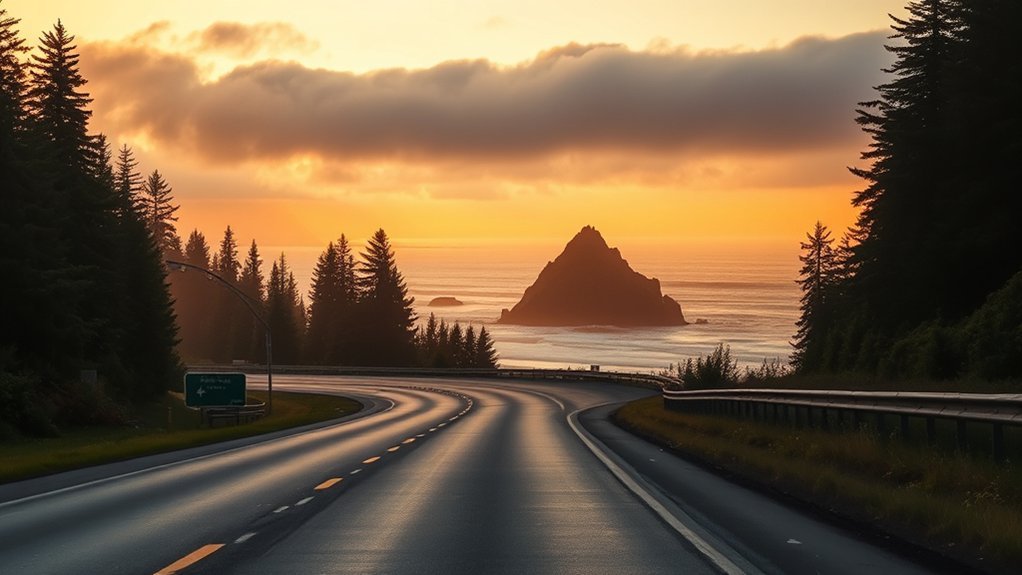
Start at the Hoh Rain Forest early. The Hoh lies about two hours from Port Angeles and under an hour from Forks. In summer, its parking area can fill and entrance waits can reach one or two hours. Current park guidance recommends arriving before 8 a.m. or after 5 p.m. during busy periods.
For a short visit, walk the 0.8-mile Hall of Mosses loop or the 1.2-mile Spruce Nature Trail. Longer hikers can follow part of the Hoh River Trail, but an out-and-back distance should match your daylight, weather, and fitness.
After the rain forest, drive back to US-101 and continue to Ruby Beach. Under normal conditions, allow roughly an hour from the Hoh visitor area rather than the original two to two-and-a-half hours. Ruby Beach has a short access trail, sea stacks, driftwood, and limited parking. The beach is beautiful at any tide, but low tide exposes more shoreline and tide pools.
Warning: Check the official tide and coastal safety guidance before walking far along the beach. Rising water can cut off routes, storm surf can push logs without warning, and wet rocks are slippery.
Olympic is too large for a checklist sprint: choose one region, arrive early, and leave room for weather, parking, and the road itself.
Hurricane Ridge On The Way Back To Seattle
Hurricane Ridge is 17 miles south of Port Angeles and can be a rewarding final stop on a north-side itinerary. It is not a quick add-on after a full day at the Hoh Rain Forest or Kalaloch, because reaching Port Angeles from the west side already takes several hours.
The Hurricane Ridge Day Lodge burned down in 2023. Temporary restrooms and trash bins are available, but there is no drinking water, café, gift shop, or indoor visitor-center exhibit space at the ridge. Fill water bottles and buy food before driving up.
Hurricane Ridge Road is open through summer when conditions allow. In winter it is generally scheduled to open Friday through Sunday and holiday Mondays, weather permitting, and vehicles must carry tire chains. The road can close at any time because of weather, snow, construction, or safety concerns, so check the official Hurricane Ridge page before going.
A clear day at Hurricane Ridge can deliver a broad Olympic Mountain panorama before the drive back to Seattle.
- Bring drinking water, food, sun protection, and a warm layer.
- Allow about 45 minutes each way from Port Angeles in normal conditions.
- Hike Hurricane Hill for about 3 miles round trip and roughly 700 feet of elevation gain if time and conditions allow.
- Stay at least 50 yards from wildlife and never feed animals.
What To Check Before Leaving Seattle
- Park alerts and roads: Confirm closures, construction, campground status, and seasonal facility hours.
- Ferry schedule and terminal wait: Check current sailings, alerts, and vehicle lines immediately before departure.
- Weather: Compare Seattle, Port Angeles, Hurricane Ridge, Hoh, and coastal forecasts because conditions can differ sharply.
- Tides and surf: Review tide predictions and marine conditions before a beach walk.
- Fuel and food: Services are limited in remote areas, and Hurricane Ridge has no food or drinking water.
- Offline navigation: Download maps and save reservation details before cellular service disappears.
Frequently Asked Questions
What is the fastest route from Seattle to Olympic National Park?
For Port Angeles and Hurricane Ridge, the most predictable route is usually I-5 South to Tacoma, WA-16 West, WA-3 North, WA-104 West, and US-101. A ferry can be faster when the terminal line is short, but it can also add an unpredictable wait.
How long is the ferry ride from Seattle to Olympic National Park?
The Seattle–Bainbridge ferry crossing takes about 35 minutes, but it does not land inside Olympic National Park. After reaching Bainbridge Island, allow roughly two more hours or more to Port Angeles, depending on traffic and your exact destination.
Do I need a ferry reservation for Bainbridge or Kingston?
No. Washington State Ferries does not offer vehicle reservations on the Seattle–Bainbridge or Edmonds–Kingston routes. Vehicles load first come, first served, so arrive early and check live terminal conditions.
Can you visit Olympic National Park as a day trip from Seattle?
Yes, but choose one region. Hurricane Ridge and Lake Crescent make a reasonable north-side day, while the Hoh Rain Forest and Ruby Beach work better when you start near Forks or leave Seattle very early. Trying to cover all three ecosystems in one day creates too much driving.
Can you visit Hoh Rain Forest and Hurricane Ridge on the same day?
It is physically possible in long summer daylight, but it is not a relaxed plan. The drive between the areas is several hours, and either destination can have entrance waits. Most visitors will have a better trip by placing them on separate days.
What is the most scenic route from Seattle to Portland?
This is separate from the Olympic National Park trip. I-5 is the direct Seattle–Portland route, not necessarily the most scenic. A Columbia River Gorge detour near Vancouver and WA-14 adds river views and waterfalls but also adds time and does not help you reach Olympic National Park.
What is the most beautiful road trip in the United States?
There is no objective winner. The Pacific Coast Highway is famous for cliffs and ocean views, while an Olympic Peninsula loop combines mountains, temperate rain forest, lakes, and wild coastline in one trip. The best choice depends on the landscapes and travel pace you prefer.
Where should you avoid staying in Seattle before the trip?
Do not reject broad neighborhoods based on stereotypes. Choose a property using recent guest reviews, secure parking information, noise reports, and its access to your morning route. Downtown is convenient for the Bainbridge ferry, while south or north Seattle may suit the Tacoma or Edmonds routes better.
Conclusion
The best Seattle-to-Olympic route is the one that matches the part of the park you actually plan to see. Drive through Tacoma for a predictable no-ferry trip to the north side, use Bainbridge or Kingston for a scenic crossing, or approach through Olympia and Aberdeen for the southwest coast. Leave early, pack food and water, and let the peninsula set the pace instead of forcing every landmark into one day.
Sources
- National Park Service: Directions and Transportation — official driving, ferry, and transit approaches to Olympic National Park.
- National Park Service: Getting Around — mileage and travel-time guidance between major park areas.
- National Park Service: Alerts and Conditions — current road, facility, parking, and seasonal access updates.
- Washington State Ferries — official schedules, alerts, tickets, fares, and reservation rules.
- National Park Service: Tides and Your Safety — coastal tide planning and beach safety.
- Clallam Transit: Route 123 Strait Shot — current Bainbridge-to-Port Angeles public-transit service.
