
Last Updated on August 26, 2026 by Daniel Globe
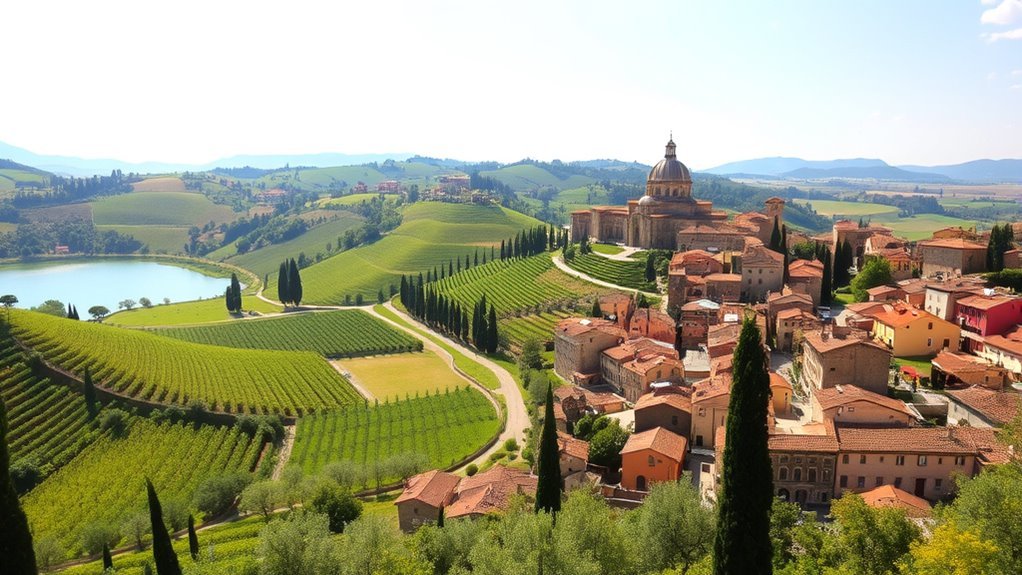
Umbria rewards travelers who slow down. The region combines medieval hill towns, major religious sites, Etruscan and Roman history, vineyards, mountain scenery, waterfalls, ceramics, and some of central Italy’s most distinctive food. The best things to do in Umbria range from exploring Assisi and Perugia to tasting Sagrantino in Montefalco, walking through Castelluccio’s seasonal flower fields, and timing a visit to the powerful Cascata delle Marmore.
Quick Answer
The best things to do in Umbria include visiting Assisi, Perugia, Gubbio, Orvieto, Montefalco, Spoleto, Marmore Falls, Castelluccio di Norcia, and Deruta. Add Spello or Lake Trasimeno if you have extra time. Four to five days covers the highlights, while a week gives you time for smaller towns and countryside stops.
Key Takeaways
- Assisi, Perugia, Orvieto, Spoleto, and Gubbio deliver the strongest mix of art, architecture, and history.
- Montefalco is the key wine stop, particularly for Montefalco Sagrantino DOCG.
- Marmore Falls has a controlled water flow, so check the official release schedule before visiting.
- Castelluccio’s flowering normally unfolds from early June through late July, but the exact peak varies with weather.
- Civita di Bagnoregio is a worthwhile optional excursion, but it is in Lazio rather than Umbria and is not currently an inscribed UNESCO World Heritage Site.
2026 update: Umbria Jazz ran July 3–12, the Festival dei Due Mondi ran June 26–July 12, and Eurochocolate is scheduled for November 13–22. Festival dates change each year, so verify the calendar when planning a future trip.
Disclosure: As an Amazon Associate I earn from qualifying purchases. Some links on this page are affiliate links, at no extra cost to you.
Plan Your Umbria Trip
Best Time to Visit Umbria
Spring and early autumn are excellent all-around periods for sightseeing because temperatures are generally easier for walking than in midsummer. Late spring brings green countryside, while September and October work especially well for vineyard visits, olive-growing areas, and food-focused trips.
Summer has the busiest cultural calendar. Perugia hosts major music events, Spoleto fills with performances, and mountain areas become popular for hiking. If the Castelluccio flowering is your priority, plan for roughly early June through late July and remain flexible because weather determines the exact progression of the blooms. The official Umbria tourism portal describes the flowering window as the beginning of June through the end of July.
Winter is quieter and can suit travelers who care more about museums, churches, food, and uncrowded town centers than long days outdoors. Some attractions, cable cars, trails, and rural businesses operate reduced seasonal hours, so check opening times before making a long detour.
How to Get Around Umbria
You can see a surprising amount of Umbria without a car, particularly along the rail corridor linking Perugia, Assisi, Spello, Foligno, Spoleto, Terni, and Orvieto. Trenitalia and regional transport operators also provide integrated connections such as Assisi Link, Spoleto Link, Orvieto Link, and Marmore Link. See the current options on the official Umbria tourism transport page.
A car becomes more useful for vineyard visits around Montefalco, smaller hill towns, Lake Trasimeno villages, and mountain destinations such as Castelluccio. Gubbio is also less convenient by rail than Assisi or Spoleto.
Pro Tip: Do not assume a railway station is beside the medieval center. Assisi’s station is down on the plain, while Orvieto’s historic center sits high above its station. Integrated bus or funicular links make these transfers much easier.
A Simple 3- to 5-Day Umbria Itinerary
| Day | Suggested Stops | Focus |
|---|---|---|
| 1 | Perugia | Etruscan history, medieval center, art, Umbrian food |
| 2 | Assisi + Spello | Franciscan sites, frescoes, hill-town streets |
| 3 | Montefalco + Spoleto | Wine, Roman and medieval monuments, performing arts |
| 4 | Orvieto | Cathedral, cliff-top views, historic lanes |
| 5 | Gubbio or Lake Trasimeno | Medieval atmosphere or a slower lakeside day |
With six or seven days, add the Cascata delle Marmore, Norcia and Castelluccio, Deruta, Todi, or a countryside wine-and-olive-oil day.
Discover the Spiritual and Historical Wonders of Assisi
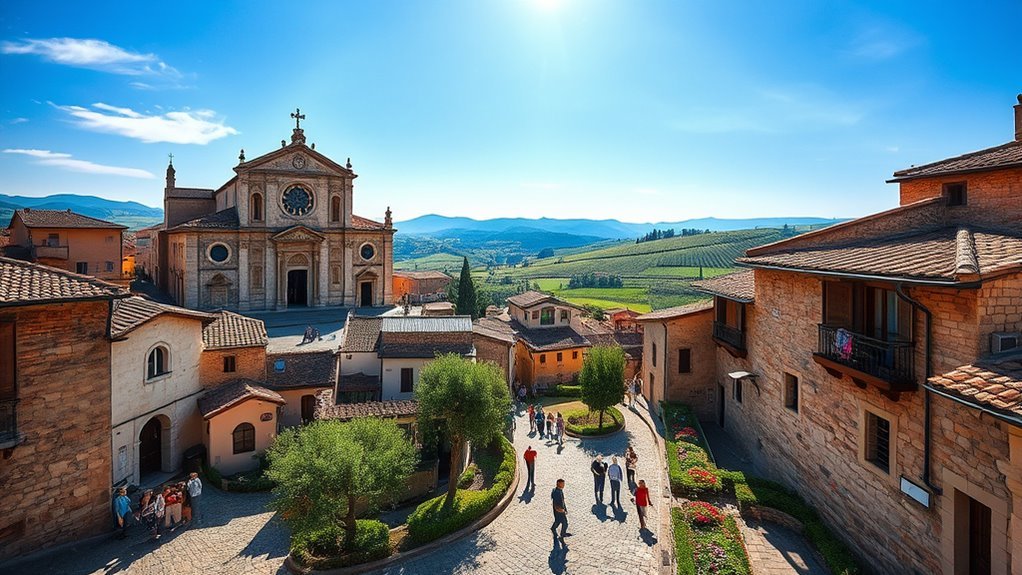
Assisi is one of Umbria’s essential stops. The hill town is the birthplace of St. Francis and forms part of the UNESCO property Assisi, the Basilica of San Francesco and Other Franciscan Sites, inscribed in 2000. The Basilica of San Francesco is the centerpiece, with major medieval fresco cycles associated with artists including Cimabue, Pietro Lorenzetti, Simone Martini, and Giotto.
Continue through the historic center to the Basilica of Santa Chiara, dedicated to St. Clare. Beyond the busiest streets, the Eremo delle Carceri on the slopes of Monte Subasio offers a quieter Franciscan setting surrounded by woodland.
Assisi also has a strong civic identity beyond pilgrimage tourism. Calendimaggio, generally held in May, brings medieval-inspired music, costumes, competitions, and processions to the town. If your trip falls around a major religious celebration or festival, reserve accommodation early because visitor numbers can rise sharply.
Explore Perugia, the Historic Heart of Umbria
Perugia works well as either a base or a full sightseeing day. Umbria’s regional capital combines Etruscan remains, medieval civic architecture, art museums, university life, and a strong food culture. Its historic core is compact enough to explore on foot, though the slopes can be steep.
Vibrant Cultural Scene
The city hosts Umbria Jazz, one of Italy’s best-known jazz festivals. The 2026 edition took place from July 3 through July 12. Another major event, Eurochocolate, is scheduled for November 13–22, 2026, in Perugia’s historic center. Future dates should always be checked on the official festival websites because schedules shift from year to year.
The Università per Stranieri di Perugia also contributes to the international atmosphere, bringing students of Italian language and culture from around the world.
Historic Landmarks and Architecture
Start at Piazza IV Novembre, where the medieval Fontana Maggiore stands between the cathedral and Palazzo dei Priori. Palazzo dei Priori is one of the city’s great Gothic civic buildings and houses the National Gallery of Umbria.
Perugia’s older layers are equally compelling. The municipal tourism service dates the Etruscan Well to the second half of the 3rd century BC. The monumental Etruscan Arch and surviving wall sections reveal the scale of ancient Perusia. At the other end of the historical timeline, Rocca Paolina preserves atmospheric underground spaces created beneath the 16th-century papal fortress.
Culinary Delights and Markets
Skip the previously suggested pici cacio e pepe and focus on foods with a clearer Umbrian identity. Try torta al testo, a griddle-cooked flatbread often filled with sausage, greens, cured meat, or cheese. Around Gubbio, a related flatbread is commonly called crescia. Fresh pasta may appear as strangozzi, stringozzi, or umbricelli depending on the area.
Other regional flavors include extra-virgin olive oil, black truffle, Norcia-style cured meats, pecorino, porchetta, legumes, and unsalted local bread. Chocolate remains closely associated with Perugia, and travelers interested in production can check current visitor arrangements for Perugina’s chocolate experience in the San Sisto area.
Wander Through the Picturesque Streets of Gubbio
Gubbio has one of Umbria’s most distinctive medieval skylines, with gray limestone buildings rising along the slopes of Monte Ingino. The town is especially rewarding for travelers interested in medieval civic architecture, local traditions, Roman archaeology, and panoramic viewpoints.
Must-See Attractions
Festa dei Ceri takes place every year on May 15, the eve of the feast of Gubbio’s patron Saint Ubaldo. The municipality describes the event as a dramatic procession and race in which three enormous wooden structures are carried through the city toward the Basilica of Sant’Ubaldo.
For a very different experience, the Funivia Colle Eletto climbs from Gubbio toward the basilica area in roughly six minutes. Check seasonal operating hours before making the trip.
| Attraction | What It Is | Why Go |
|---|---|---|
| Festa dei Ceri | Annual May 15 tradition | One of Gubbio’s defining civic celebrations |
| Funivia Colle Eletto | Cableway toward Sant’Ubaldo | Wide views over Gubbio and the surrounding landscape |
| Roman Theater | Late 1st-century-BC theater | Important evidence of Roman Iguvium |
Local Culinary Delights
Gubbio is a good place to try crescia, the local name for the Umbrian griddle bread served with cured meats, cheese, sausage, or vegetables. Truffles, mushrooms, game, olive oil, and hearty pasta dishes also appear frequently on local menus.
Markets, small food shops, and traditional restaurants are better places to explore the town’s culinary identity than relying on a single named gelateria. If you drink wine, ask for Umbrian labels and treat Sagrantino as a regional specialty rather than a Gubbio-specific wine.
Scenic Views and Walks
Walk through the steep medieval lanes toward Palazzo dei Consoli and Piazza Grande before continuing upward or taking the Funivia toward the Basilica of Sant’Ubaldo. The elevated position reveals how tightly the historic town sits against Monte Ingino.
Below the medieval center, Gubbio’s Roman Theater provides a striking contrast with the later city. The municipality dates the monument to the end of the 1st century BC, and the nearby archaeological area adds context to Gubbio’s much older urban history.
Marvel at the Stunning Duomo in Orvieto
The Duomo di Orvieto is one of Umbria’s great monuments. Its first stone was laid in 1290, while work on the celebrated façade began around 1310 and continued for centuries. The result combines Romanesque-Gothic architecture, sculpted reliefs, mosaics, a rose window, and an unusually rich decorative program.
Inside, the Chapel of San Brizio is essential. Fra Angelico began part of its fresco program in the 15th century, and Luca Signorelli completed the famous cycle of the Last Days between 1499 and 1504.
Three experiences deserve extra time:
- The Chapel of San Brizio: Study Signorelli’s dramatic scenes of the end of the world, resurrection, judgment, and salvation.
- The Façade: Look closely at the relief sculpture, mosaics, pinnacles, and rose window rather than viewing it only from across the piazza.
- The Cliff-Top Setting: Walk beyond Piazza del Duomo to appreciate Orvieto’s position on a high tuff plateau above the Umbrian countryside.
Orvieto is one of the easiest Umbrian destinations to combine with Rome because its railway station sits on the main north-south line and the historic center can be reached using the local funicular connection.
Wine Tasting in Charming Montefalco
Montefalco is one of Umbria’s key wine destinations. Its best-known denomination is Montefalco Sagrantino DOCG, which the Consorzio Tutela Vini Montefalco specifies as 100% Sagrantino grapes.
Use Montefalco as a base for exploring wineries around the surrounding hills. Producers range from internationally recognized estates to smaller family-run operations. Tastings frequently cover Sagrantino alongside Montefalco Rosso and local white wines.
Pro Tip: Reserve winery visits rather than assuming you can walk in. Tasting rooms may have limited hours, scheduled tours, harvest-related closures, or minimum booking requirements.
Back in town, spend time around the central piazza and historic streets. Wine is the headline experience, but olive oil, cured meats, legumes, and local cheeses make it easy to turn the visit into a broader food-and-wine day.
Experience the Historical and Artistic Richness of Spoleto
Spoleto combines Roman archaeology, medieval and Renaissance architecture, mountain scenery, and one of Italy’s major performing-arts traditions. It deserves more than a rushed stop if your itinerary allows.
Architectural Marvels and Landmarks
- Rocca Albornoziana: The 14th-century fortress dominates the upper city and provides broad views over Spoleto and the surrounding hills.
- Duomo di Spoleto: The cathedral is known for its imposing façade and important frescoes by Filippo Lippi in the apse.
- Roman Theater: The archaeological complex reveals Spoleto’s importance long before the medieval city developed around it.
Use the city’s escalators and mechanized routes where useful; Spoleto’s steep topography can otherwise turn a short sightseeing route into a substantial climb.
Festivals and Cultural Events
| Festival/Event | 2026 Timing | Highlights |
|---|---|---|
| Festival dei Due Mondi | June 26–July 12 | Opera, music, dance, theater, art |
| Accade d’estate a Spoleto e nei borghi | July 18–September 21 | Local theater, music, cultural events, community programming |
| Spoleto Jazz | Autumn 2026 | Jazz performances at venues around the city |
The flagship Festival dei Due Mondi transforms Spoleto into a major performance center each summer. If attending during the festival, book both rooms and high-demand performances early.
Culinary Delights to Savor
Spoleto is well positioned for exploring classic Umbrian flavors. Three worthwhile food experiences are:
- Truffle Experiences: Join a reputable local guide or producer for a seasonal truffle-focused outing or tasting.
- Olive Oil Tasting: Visit an olive mill or producer to understand the peppery, grassy character associated with high-quality regional extra-virgin olive oil.
- Try Strangozzi: The official regional tourism portal identifies strangozzi alla spoletina as a typical local first course. Other versions may be served with truffle, mushrooms, or seasonal ingredients.
Take an Optional Day Trip to Civita di Bagnoregio in Lazio
Note: Civita di Bagnoregio is not in Umbria. It is in the Lazio region, in the Province of Viterbo. Keep it in an Umbria itinerary only as an optional cross-regional day trip, particularly if you are staying around Orvieto.
Civita di Bagnoregio is a dramatic medieval settlement perched on a fragile tuff outcrop above eroded valleys. UNESCO currently lists the Cultural Landscape of Civita di Bagnoregio on Italy’s Tentative List; it is not currently an inscribed UNESCO World Heritage Site.
Visitors reach the village by a modern pedestrian access bridge. Inside, stone houses and narrow lanes create the compact medieval atmosphere for which Civita is famous. UNESCO describes the settlement as having only a small number of permanent resident families, but there is no need to rely on an exact resident count because it changes over time.
Walk slowly, take in the views across the surrounding badlands, and allow time for a meal or coffee rather than treating the village as a photo stop. Local cuisine here belongs to Lazio, so it should not be presented as an Umbrian food experience.
Experience the Cascata delle Marmore Waterfalls
The Cascata delle Marmore near Terni is an extraordinary combination of landscape and ancient hydraulic engineering. Official regional tourism material gives the cascade a total drop of 165 meters, or about 541 feet, and traces its artificial origins to Roman works begun in the 3rd century BC.
Marmore’s roughly 165-meter drop is impressive, but the most important planning fact is that the full water flow is controlled rather than constant.
The official attraction explains that water is diverted for hydroelectric generation when the falls are not operating at full flow. For the most dramatic experience, check the official park and water-release schedule shortly before your visit.
Three ways to make the most of the park are:
- Time the Water Release: Arrive before a scheduled full-flow period so you can watch the cascade intensify.
- Walk the Trails: Different paths and viewpoints reveal the falls from above, below, and across the valley.
- Use Terni as a Transport Hub: Travelers without a car can check Marmore Link, which combines rail travel to Terni with onward bus service.
Warning: Spray can make paths and viewpoints wet and slippery during strong releases. Wear shoes with reliable grip, protect electronics from water, and follow any trail closures or safety instructions.
Stroll Through the Flower Fields of Castelluccio di Norcia
Castelluccio di Norcia sits above the broad Piano Grande in the Sibillini Mountains. Its most famous seasonal spectacle is the flowering, when lentils and numerous wild species create large bands of white, red, violet, yellow, and blue across the plateau.
The official Umbria tourism guide places the usual flowering period between the beginning of June and the end of July. The exact peak is never guaranteed because temperature, rain, and growing conditions affect the timing and appearance each year.
Combine the scenery with a walk or hike suited to your fitness level, but remember that much of the colorful landscape is working agricultural land rather than a public flower garden.
Warning: Stay on appropriate paths and roads, and do not walk through cultivated lentil fields for photographs. Flowering weekends can also bring heavy traffic and temporary access controls, so check local conditions before driving into the plateau.
Even outside peak flowering season, the high plateau, mountain backdrop, and nearby Norcia make this area worthwhile for travelers interested in landscapes, hiking, and regional food.
Uncover Art and Culture in Deruta
Deruta is one of Umbria’s great craft towns and is internationally associated with painted majolica ceramics. The tradition is visible in workshops, shops, architectural decoration, and the town’s museum collections.
Three worthwhile activities are:
- Visit Ceramic Workshops: Watch artisans shape, glaze, and decorate pottery using techniques rooted in Deruta’s long ceramic tradition. Some studios also offer hands-on sessions.
- Explore the Museo Regionale della Ceramica: The Regional Ceramics Museum, founded in 1898, documents Deruta production from the Middle Ages through modern times and is described by Umbria tourism as Italy’s oldest museum of its kind.
- Check Temporary Exhibitions and Artisan Events: Instead of relying on an unverified annual “International Ceramics Exhibition,” check current museum and municipal calendars for rotating shows, demonstrations, and craft events during your visit.
Deruta makes an easy cultural stop between Perugia and the southern part of the region, especially for travelers who want to bring home something locally made rather than mass-produced.
More Places Worth Visiting in Umbria
Spello
Spello is a compact hill town between Assisi and Foligno, making it easy to combine with either. Its stone lanes, Roman remains, flower-filled streets, and Renaissance art make it one of the most useful additions to a short Umbria itinerary.
Lake Trasimeno
Lake Trasimeno offers a slower contrast to Umbria’s hill towns. Passignano sul Trasimeno and Castiglione del Lago are popular bases for lakeside walks, meals, and views, while seasonal navigation services connect some points around the lake. Rail connections make several lakeside towns accessible from Perugia.
Todi and Norcia
Todi is another classic Umbrian hill town with an attractive central piazza and layers of medieval and earlier history. Norcia, farther east in the mountains, is closely associated with cured meats, black truffles, lentils, and access to the Sibillini landscape. Norcia also pairs naturally with a trip to Castelluccio.
What to Eat in Umbria
Food changes from town to town, but several specialties are worth watching for across the region:
- Torta al testo or crescia: Griddle bread filled or served with sausage, greens, cured meat, or cheese.
- Strangozzi, stringozzi, or umbricelli: Rustic pasta found in several local variations.
- Norcineria: Umbrian cured-meat traditions, particularly associated with Norcia.
- Truffles: Black truffles appear in pasta, sauces, eggs, and other simple preparations.
- Extra-virgin olive oil: Look for mills, tastings, and bruschetta dressed with new-season oil.
- Legumes: Castelluccio lentils are among the region’s best-known agricultural products.
- Local wines: Montefalco Sagrantino DOCG, Montefalco Rosso, Grechetto, and other Umbrian wines vary by area.
Frequently Asked Questions
What is the most beautiful part of Umbria?
There is no single objectively most beautiful area. Assisi is outstanding for architecture and spiritual history, the Sibillini Mountains and Castelluccio for dramatic landscapes, Orvieto for its cliff-top setting, and smaller towns such as Spello for classic Umbrian streets and views.
What is the best town to stay in Umbria?
Perugia is one of the most practical bases if you want restaurants, cultural attractions, and useful public transport. Assisi suits travelers who prefer a smaller historic setting, while Orvieto works especially well for trips connected with Rome. A car makes countryside bases more practical.
Is Umbria nicer than Tuscany?
Neither region is universally better. Umbria generally appeals to travelers looking for a more compact inland region with fewer globally famous tourist centers, while Tuscany offers Florence, Siena, a larger wine-tourism industry, and a wider variety of landscapes. Choose based on the experiences you want rather than treating one as a replacement for the other.
Where does Ed Sheeran live in Italy?
Ed Sheeran has publicly discussed owning a home in Umbria, and published reports have associated the property with the Paciano and Lake Trasimeno area. The earlier claim that his Italian residence is in Torre del Lago is incorrect. Precise private residential details are unnecessary for travel planning.
How many days do you need in Umbria?
Three days is enough for a fast introduction, but four or five days is much better for Perugia, Assisi, Spello, Montefalco, Spoleto, and Orvieto. Allow a week if you also want Gubbio, Lake Trasimeno, Marmore Falls, Norcia, Castelluccio, Deruta, or slower countryside days.
Can you visit Umbria without a car?
Yes. Perugia, Assisi, Spello, Foligno, Spoleto, Terni, and Orvieto can be combined using rail and local connections. A car is more convenient for Montefalco wineries, smaller villages, Gubbio, rural accommodation, and the Sibillini Mountains. Integrated services such as Assisi Link, Spoleto Link, Orvieto Link, and Marmore Link help close some transport gaps.
Conclusion
Umbria packs an unusual amount of variety into a relatively compact region. You can move from the Franciscan art of Assisi to Perugia’s Etruscan layers, Gubbio’s medieval streets, Orvieto’s cathedral, Montefalco’s vineyards, Spoleto’s performing arts, the engineered spectacle of Marmore Falls, and the mountain landscape around Castelluccio. Build your route around geography rather than trying to collect towns, leave room for local food and slower walks, and verify seasonal events and attraction schedules shortly before you travel.
Sources
- UNESCO World Heritage Centre — Assisi, the Basilica of San Francesco and Other Franciscan Sites — UNESCO status and Franciscan-site context.
- Umbria Tourism — Moving in Umbria — rail, bus, airport, navigation, and integrated transport connections.
- Opera del Duomo di Orvieto — cathedral history, façade, Chapel of San Brizio, and visitor information.
- Consorzio Tutela Vini Montefalco — Montefalco Sagrantino DOCG production rules and wine information.
- UNESCO World Heritage Centre — Cultural Landscape of Civita di Bagnoregio — Lazio location and Tentative List status.
- Cascata delle Marmore Official Site — Opening and Water-Release Hours — controlled flow and current visitor scheduling.
