
Last Updated on September 10, 2026 by Daniel Globe
Your electric scooter tire keeps going flat because you likely have a puncture, low tire pressure, a pinch flat, or a faulty valve stem. Check the tire with a gauge, inspect the valve for cracks or loose cores, and make sure the tube isn’t pinched during installation. Look for nails, glass, or worn rubber that can cause leaks. Keep pressure in range, and you’ll see which fix works best as you go.
Disclosure: As an Amazon Associate I earn from qualifying purchases. Some links on this page are affiliate links, at no extra cost to you.
Why Does Your Scooter Tire Keep Going Flat?
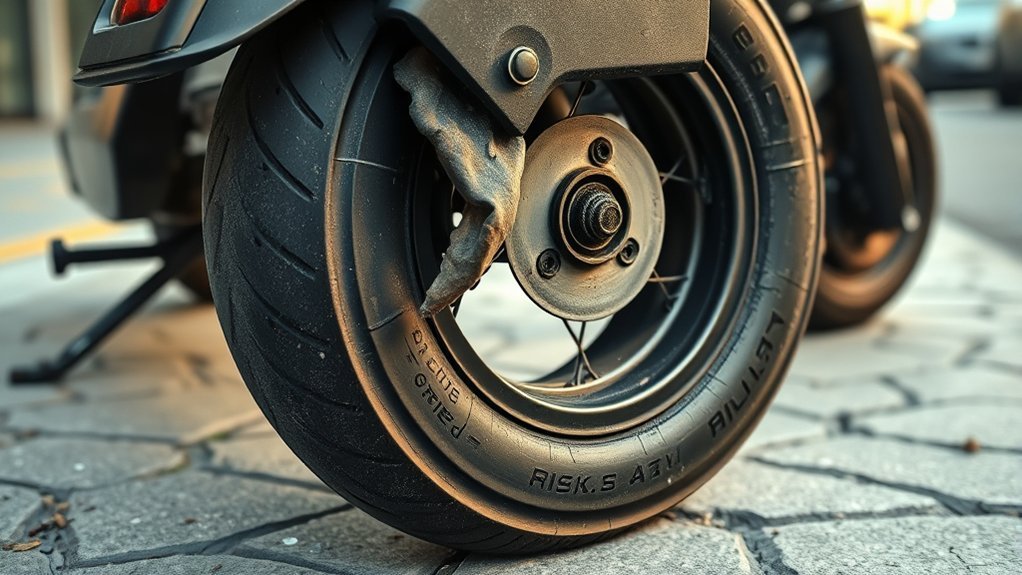
If your scooter tire keeps going flat, the cause is usually one of a few common issues: punctures from nails, glass, or thorns; low tire pressure that leads to pinch flats; or a bad tube installation that pinches the inner tube or damages the valve stem. You can reduce repeat flats by treating tire maintenance as routine freedom work, not an afterthought. Inspect the tread and sidewalls for cuts, cracks, embedded debris, and wear. Replace aging or damaged tires before they fail. If you use sealants or liners, they can block small punctures and add protection against sharp debris. Also, your riding habits matter: avoid loose litter, broken pavement, and construction zones when you can. Smooth, alert riding lowers impact damage and helps you stay mobile. When flats keep coming back, trace the pattern, fix the source, and don’t let preventable tire failures control your commute.
Check Tire Pressure and Valve Stems
Keeping your scooter tire at the correct pressure is one of the simplest ways to prevent flats and improve ride quality. For effective tire maintenance, check pressure with a reliable gauge before each ride or at least weekly. Compare your reading with the maximum recommended pressure in your scooter’s manual, then inflate accordingly. Under-inflated tires flex too much, making them more vulnerable to pinch flats and quick punctures. Over-inflation can also reduce traction and wear the tire faster.
Do a quick valve inspection while you’re there. Look for cracks, bent stems, or loose cores, since damaged valve stems can leak air slowly and leave you stranded. If you keep losing air even after proper inflation, replace the valve stem or core. That small repair can stop repeated flats and restore dependable performance. Consistent pressure checks keep you moving freely and reduce avoidable downtime.
Fix Pinch Flats and Installation Problems
To prevent pinch flats, keep your tire pressure in range so the tube can absorb impacts without getting trapped between the rim and the tire. When you install a tube, inflate it slightly first, then seat it evenly to avoid pinching it under the bead. Check the rim, tube position, and valve stem before you close the tire up, since a poor install can cause immediate flats.
Prevent Tube Pinching
Prevent pinch flats by slightly inflating the inner tube before installation so it can’t fold, twist, or get trapped between the tire and rim. Use tube maintenance tips and pinch prevention techniques to keep the setup clean and controlled. Inspect the rim for burrs, debris, and sharp edges that can cut the tube when the tire compresses. Keep pressure at the manual’s spec; low pressure lets impacts crush the tube. Avoid potholes and rough edges when you can, because forceful hits can pinch the tube fast.
| Check | Risk | Action |
|---|---|---|
| Rim edge | Cut tube | Deburr |
| Tire pressure | Impact pinch | Inflate correctly |
| Road hazards | Tube crush | Slow down |
You’re freeing your scooter from repeated flats by staying precise, calm, and disciplined.
Install Tubes Correctly
Even with the right tire pressure and careful riding, a bad installation can still pinch the tube and cause repeat flats. Before you mount the tire, add a little air so the tube holds its shape and won’t fold or snag. Check rim alignment, clear any sharp edges, and inspect split rim parts so they seat cleanly. Use reliable installation tools, especially a tire lever that won’t gouge the tube, and don’t force the bead over the rim. Follow the manufacturer’s steps exactly; they’re designed to prevent damage and keep the fit secure. Good tube maintenance starts here: a careful install gives you freer, longer-lasting rides and cuts the cycle of flats.
Stop Road Hazard Flats and Tire Wear
You can prevent road hazard flats by inspecting your tires often for nails, glass, and other debris, and by adjusting pressure so they’re less likely to pinch on potholes or rough surfaces. Use thorn-resistant tubes or tire liners if you ride in debris-prone areas. Replace worn or cracked tires promptly, since damaged rubber fails faster and wears out unevenly.
Prevent Road Hazard Flats
Road hazard flats usually start with small, preventable problems, so inspect your tires regularly for nails, glass, thorns, and other debris. This tire maintenance step protects your freedom to ride without interruptions and supports road safety. Keep your tires at the recommended pressure; under-inflated tires pinch easier on sharp edges and potholes. For extra defense, install tire liners between the tire and tube, or choose heavy-duty thorn-resistant tubes and sealants. These upgrades can stop many punctures before they sideline you. Ride with awareness, too: avoid streets, shoulders, and bike paths known for broken glass or construction debris. When you scan the route first, you reduce risk, preserve your scooter’s performance, and keep your commute moving on your terms.
Reduce Tire Wear
Staying ahead of tire wear means catching problems before they turn into flats. Inspect your tires for nails, glass, and cuts every ride, and remove debris before it works deeper. Keep pressure at the maker’s spec; under-inflated tires pinch easier and wear faster on impacts. Add tire liners or thorn-resistant inner tubes if you ride through hazard-heavy streets. Tighten your riding habits: slow for curbs, avoid rough terrain, and don’t blast through potholes. That reduces sidewall stress and tread damage. Make tire maintenance routine, not optional. Check tread depth, cracks, and bulges weekly, then replace worn tires immediately. Old rubber loses strength, creating weak spots that fail under load. With disciplined care, you keep your scooter moving freely and cut flat risks at the source.
Pick the Best Flat-Prevention Fix
When flat prevention matters most, the best fix depends on how you ride and what kind of tires your scooter uses. Start with sealant options if you want fast protection; a quality sealant like Armor Dilloz can close punctures up to 1/4″ and keep defending the tube. If you want more mechanical defense, weigh liner benefits, because a flexible liner like Mr. Tuffy sits between tube and tire and blocks thorns, glass, and debris. You should also check pressure often; under-inflation invites pinch flats and wastes range. If sharp-road punctures keep happening, upgrade to heavy-duty thorn-resistant tubes for tougher daily use. For maximum flat resistance, solid tires end punctures entirely, but they trade away comfort and grip. Pick the fix that matches your terrain, maintenance habits, and need for freedom from roadside repairs.
Choose Sealant, Liners, or Solid Tires
If flat prevention is your priority, choose the fix that matches your tire type and how often you deal with punctures. Sealant benefits work best in pneumatic tires: you pour it in, and it can seal holes up to 1/4″ before air escapes. Liners add a physical shield between the tube and tire, giving liner advantages when you install them correctly. Solid tires remove flats entirely, but check the solid tire downsides: more rolling resistance, less grip, and a harsher ride.
| Option | Best use | Trade-off |
|---|---|---|
| Sealant | Small punctures | Needs periodic refresh |
| Liners | Repeated debris hits | Must fit correctly |
| Solid tires | Zero-flat priority | Less comfort |
Your maintenance tips matter either way: inspect for glass, nails, and embedded wire, and keep pressure in range. That routine protects your setup and keeps you riding with more autonomy, less downtime, and fewer roadside repairs.
Frequently Asked Questions
Why Does My Electric Scooter Tire Keep Losing Air?
You’re likely losing air from punctures, damaged valve stems, or poor air pressure. Check tire maintenance regularly, keep air pressure in spec, and use sealant to stop minor leaks before they slow you down.
What Is the 3 Tire Rule?
The 3 tire rule means you inspect your tire, tube, and valve after three flats. You’ll spot pressure problems, damage, or installation errors, then use maintenance tips to prevent repeat failures and ride freer.
Why Does My Tire Keep Going Flat but There Is No Damage?
Your tire’s likely losing air through low tire pressure, valve-stem wear, or tiny air leaks you can’t see. Check for pinch flats, inspect the tube, and inflate to spec—you’re preventing repeated flats through control.
How Do You Fix a Tire That Keeps Deflating?
You fix it by finding the leak, patching the puncture, replacing damaged valves, and restoring correct air pressure. Check tread, bead, and rim for hidden damage, then add sealant or swap worn parts if it persists.
Conclusion
If your scooter tire keeps going flat, you’re probably not cursed—you’re just meeting the usual suspects: low pressure, a naughty valve stem, a pinch flat from sloppy installation, or road debris doing its tiny sabotage routine. Check inflation, inspect the stem, and look for wear or embedded junk. Then choose your fix wisely: sealant for punctures, liners for protection, or solid tires if you’re done playing air-based roulette.

