

Last Updated on July 25, 2026 by Daniel Globe
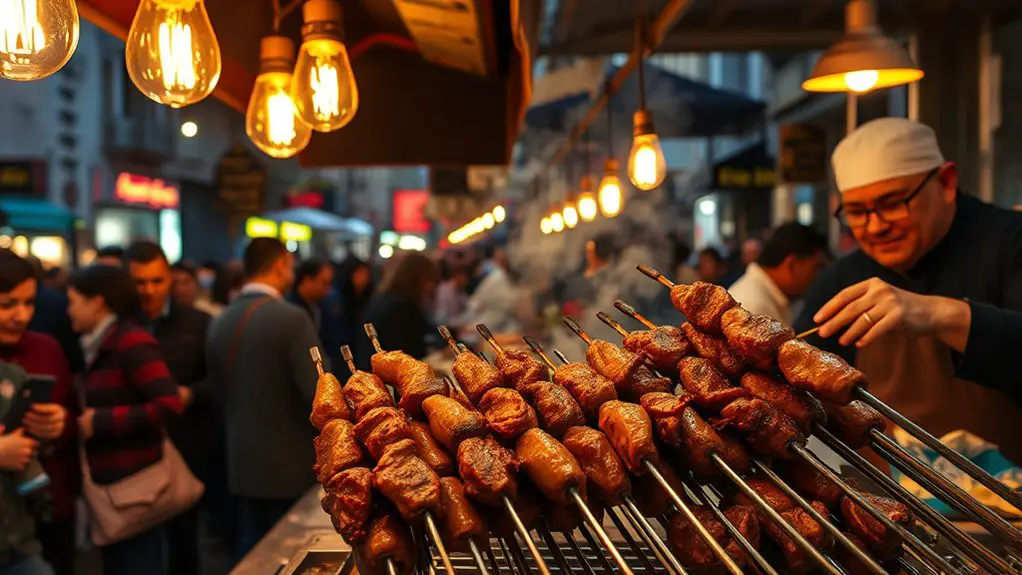
Kokoreç is one of Istanbul’s boldest street-food experiences: seasoned sheep or lamb intestine and offal cooked on a rotating spit, chopped, and usually tucked into warm bread. The best place to try it depends on where you are staying and whether you prefer a coarse, meat-forward version, a finely chopped Istanbul-style sandwich, or a smoky late-night serving.
Quick Answer
For a first kokoreç in Istanbul, Kral Kokoreç in Sirkeci and Kokoreççiler Kralı Zülfü Usta near the Grand Bazaar are strong Old City choices. Reks Büfe suits a Kadıköy night out, while Çengelköy Kokoreççisi, Zeynep Kamil Kokoreç, Lokal Kokoreç, and Ozzie’s give you good options elsewhere in the city.
Key Takeaways
- For visitors staying in Sultanahmet or the Old City, Sirkeci and Mercan offer some of the easiest respected kokoreç stops to reach.
- Kadıköy, Cihangir, Çengelköy, Üsküdar, Ortaköy, and Dolapdere all have established alternatives if you are exploring outside the historic center.
- Order kokoreç in a quarter or half loaf for the classic street-food experience, or ask for a plate if you want to taste the filling without as much bread.
- Because kokoreç is offal, choose a trusted shop and eat it freshly cooked and piping hot rather than buying a lukewarm portion that has been sitting out.
What Is Kokoreç?
Türkiye’s official tourism portal describes kokoreç as well-cleaned sheep intestines grilled over a fire and seasoned with ingredients such as black pepper, chili flakes, thyme, and salt. Depending on the maker, the preparation can include other offal as well as cooked tomato or pepper.
After roasting, the kokoreç is chopped on a hot griddle, seasoned again, and most commonly served inside crusty bread. The flavor is rich, savory, fatty, peppery, and slightly smoky when the grill is doing its job well.
Its history is more complicated than a simple “Ottoman dish” label suggests. A 2022 study of kokoreç in Turkish food culture discusses an 1894 Ottoman cookbook containing a kokoreç recipe while also tracing related preparations much further back.
Kokoreç is usually simple food: carefully prepared offal, heat, bread, herbs, pepper, and enough technique to make the crisp edges and juicy center work together.
Food-safety note: Offal requires careful handling and thorough cooking. The CDC advises travelers who choose street food to eat food that is thoroughly cooked and served steaming hot. Choose a busy, reputable shop, avoid lukewarm portions, and be especially cautious if you are pregnant, older, immunocompromised, or otherwise at increased risk from foodborne illness.
Best Kokoreç in Istanbul at a Glance
| Place | Area | Best For |
|---|---|---|
| Kral Kokoreç | Sirkeci | A convenient first taste near the Old City |
| Kokoreççi Şeref Usta | Multiple Istanbul branches | A long-running specialist with several preparation styles |
| Çengelköy Kokoreççisi | Çengelköy | Asian-side and late-night eating |
| Reks Büfe | Kadıköy | Combining kokoreç with a Kadıköy night out |
| Ozzie’s Kokoreç | Dolapdere | A more specialized, made-with-care approach |
| Gala Kokoreç | Multiple branches | A convenient established chain |
| Özen Kokoreç | Ortaköy | Pairing street food with a Bosphorus visit |
| Kokoreççiler Kralı Zülfü Usta | Mercan | Smoky kokoreç near the Grand Bazaar |
| Lokal Kokoreç | Cihangir | Beyoğlu and Cihangir nightlife |
| Zeynep Kamil Kokoreç | Üsküdar | A long-established Asian-side stop |
Restaurant hours, prices, branches, and service policies can change quickly in Istanbul. Check the establishment’s current listing or official site before crossing the city specifically for one shop.
Kral Kokoreç in Sirkeci
Kral Kokoreç on Büyük Postane Caddesi in Sirkeci is one of the easiest specialist stops to work into an Old City itinerary. It is within the broader Eminönü and Sirkeci area, so you can fit it around the Spice Bazaar, waterfront, or historic peninsula instead of making a separate trip across Istanbul.
The shop is known for offering different preparation styles rather than treating every order the same. For a first visit, ask what is being prepared fresh and choose your preferred spice level. A bread-free plate can make the kokoreç itself easier to judge, while a sandwich gives you the classic street-food balance of crisp bread and rich filling.
Pro Tip: If this is your first kokoreç, start with a smaller bread portion rather than committing to a full loaf. You can always order more once you know how you feel about the texture and richness.
Kokoreççi Şeref Usta
Kokoreççi Şeref Usta is one of the original article’s recommendations that does have a clear current footprint. Its official website says the business has operated since 1993 and lists multiple Istanbul locations.
Rather than relying on vague claims about décor or atmosphere, the useful reason to consider Şeref Usta is its focus on kokoreç itself. Its current offerings include different cuts and preparations, giving experienced diners more choice than a stall serving only one standard sandwich.
Because the company operates more than one branch, check the official location information before visiting. That matters in Istanbul, where two branches of the same business can be a long journey apart.
Çengelköy Kokoreççisi
Çengelköy Kokoreççisi is a useful Asian-side choice if your Istanbul plans take you along the Bosphorus rather than through the historic peninsula. The shop is associated with Halk Caddesi in Çengelköy and is particularly practical for an evening or late-night stop.
Its style is often described as juicy and tomato-forward. That makes it a useful contrast with more meat-focused versions in which the seasoning and offal stay at center stage.
Combine the stop with a walk around Çengelköy or an Asian-side Bosphorus outing rather than traveling there solely for a quick sandwich from Sultanahmet.
Reks Büfe in Kadıköy
Reks Büfe, also listed as Reks Kokoreç, sits around Kadife Sokak in Kadıköy’s Caferağa neighborhood. This is one of the easiest choices for travelers already spending an evening around Kadıköy’s bars, cafés, markets, and busy side streets.
The neighborhood setting is part of the appeal: kokoreç works naturally as a late snack here rather than a formal meal. Ask for your preferred spice level and add ayran if you want a cooling drink alongside the peppery, fatty filling.
Reks also makes sense for mixed groups because a typical büfe menu offers alternatives for someone who decides that offal is not for them.
Ozzie’s Kokoreç in Dolapdere
Ozzie’s in Dolapdere, downhill from the Taksim area, takes a more specialized approach than a basic grab-and-go kiosk. Its official website focuses heavily on kokoreç and related offal products.
This is the kind of stop to research before simply walking over. Availability and reservation practices can change, so confirm how the restaurant is operating on the day you plan to visit.
For travelers staying around Taksim, Cihangir, or central Beyoğlu, Dolapdere is far more practical than crossing Istanbul purely for kokoreç.
Gala Kokoreç
Gala is the easiest option on this list for travelers who value convenience. The company’s official site says the brand has operated since 1987 and maintains multiple locations.
A chain is not automatically the most exciting choice for a dedicated food trip, but it can be useful when you want a recognizable specialist without reorganizing your sightseeing route. Check the current branch list, then choose the location closest to where you already plan to be.
Gala also works well for first-timers who would rather order from a larger menu than approach a tiny specialty counter with little explanation.
Özen Kokoreç in Ortaköy
If you are sightseeing around Ortaköy, Özen Kokoreç gives you an easy way to add the dish to a Bosphorus outing. The shop is associated with Dereboyu Caddesi, away from the most crowded line of waterfront snack stalls.
Kokoreç is the reason to stop, but this type of menu also suits groups with different tastes because other grilled items are usually available. Quarter bread is a sensible choice when you are sampling several foods around Ortaköy rather than sitting down for one large meal.
Do not confuse proximity to a major tourist district with a guarantee of low prices. Check the current menu before ordering if budget matters.
Kokoreççiler Kralı Zülfü Usta in Mercan
Kokoreççiler Kralı Zülfü Usta is a particularly convenient choice if you are already exploring the Grand Bazaar, Mercan, Eminönü, or the streets descending toward the Golden Horn.
The appeal here is a more direct, smoky style. The grill does much of the work, so the dish does not need to be buried under sauces or an excessive amount of seasoning.
This is a small, straightforward stop rather than a leisurely restaurant experience. That suits kokoreç well: watch what is being cooked, order a fresh portion, eat it while it is hot, and continue exploring the Old City.
Lokal Kokoreç in Cihangir
Cihangir remains one of the better neighborhoods for combining food with Istanbul nightlife, but a useful recommendation needs to be more specific than the original article’s generic “Cihangir Kokoreç.” Lokal Kokoreç on Bakraç Sokak provides a clearer current destination.
The location works especially well if you are moving between Cihangir, Çukurcuma, İstiklal Avenue, and central Beyoğlu. Instead of treating kokoreç as a sightseeing destination in itself, make it the late meal or snack that closes out an evening in the neighborhood.
Because smaller independent places can change their weekly schedule, verify that it is open before heading over.
Zeynep Kamil Kokoreç in Üsküdar
Zeynep Kamil Kokoreç is one of the better-documented long-running businesses on this list. According to its official website, Recep Usta began selling from a street cart in 1992 and established the Zeynep Kamil Kokoreç brand in 2005.
The restaurant is on Dr. Fahri Atabey Caddesi in Üsküdar, making it a logical Asian-side stop for travelers staying around Üsküdar or combining the district with a ferry trip.
The official site currently lists kokoreç alongside items such as köfte and midye dolma, which makes this another useful choice when not everyone in your group wants offal.
Istanbul-Style vs. İzmir-Style Kokoreç
You may see both İstanbul usulü and İzmir usulü on menus. The labels are not applied identically at every shop, but there is a useful general distinction.
- İzmir-style: usually cut into larger or coarser pieces with fewer additions, keeping more attention on the flavor and texture of the kokoreç itself.
- Istanbul-style: often chopped more finely and may be mixed with cooked tomato, pepper, or other vegetables before going into the bread.
Neither is automatically better. If texture worries you, the finely chopped version can be an easier introduction. If you specifically want to taste the offal rather than the vegetables and bread, ask for a coarser preparation.
Note: Style names vary by shop. Ask how that restaurant prepares its İzmir and Istanbul versions instead of assuming every menu follows exactly the same recipe.
How to Order Kokoreç in Istanbul
You do not need fluent Turkish to order kokoreç. A few words make the process much easier:
- Çeyrek ekmek: quarter loaf; a good tasting portion.
- Yarım ekmek: half loaf; a more substantial sandwich.
- Tam ekmek: full loaf.
- Porsiyon: a plate portion without relying on bread as the main serving format.
- Acılı: spicy.
- Acısız: not spicy.
- Az acılı: mildly spicy.
- İzmir usulü: İzmir-style.
- İstanbul usulü: Istanbul-style.
A simple order such as “Bir çeyrek kokoreç, az acılı” asks for one quarter-bread kokoreç with mild spice.
Pickled peppers or other pickles are a natural sharp counterpoint to the rich meat. Ayran is a mild yogurt drink that helps cool the spice, while şalgam offers a stronger, tangier option.
Pro Tip: Order the kokoreç to be chopped and finished fresh rather than choosing a portion that has been sitting lukewarm. You will get better texture as well as a safer serving temperature.
Which Kokoreç Spot Fits Your Istanbul Itinerary?
Staying in Sultanahmet or the Old City? Start with Kral Kokoreç in Sirkeci or Zülfü Usta in Mercan. Both avoid a long cross-city trip.
Going out in Kadıköy? Reks Büfe fits naturally into an evening around Caferağa and Kadife Sokak.
Exploring the Asian-side Bosphorus? Çengelköy Kokoreççisi or Zeynep Kamil Kokoreç are more sensible than returning to the European side just for a sandwich.
Staying near Taksim or Cihangir? Lokal Kokoreç and Ozzie’s keep you around Beyoğlu instead of sending you across Istanbul.
Visiting Ortaköy? Özen Kokoreç can be folded into the same outing.
Want the easiest branch-based option? Check Gala’s current branch list and choose whichever location matches your route.
Frequently Asked Questions
What is kokoreç made from?
Traditional kokoreç is an offal dish centered on thoroughly cleaned sheep or lamb intestine wrapped around or combined with other offal, depending on the preparation. It is roasted, chopped, seasoned, and commonly served in bread. It is not simply ordinary minced meat.
Is kokoreç safe for vegetarians?
No. Traditional kokoreç contains animal intestine and usually other offal, so it is neither vegetarian nor vegan. A vegetable product marketed as “vegetarian kokoreç” is an imitation rather than traditional kokoreç.
How is kokoreç traditionally served?
The classic street-food serving is chopped kokoreç inside warm, crusty bread, often as a quarter or half loaf. Many specialists also sell it as a plate portion. Chili, oregano or thyme, pepper, and other seasonings vary by shop.
What is the difference between Istanbul-style and İzmir-style kokoreç?
The terminology varies, but İzmir-style is commonly associated with a coarser, meat-forward cut and fewer vegetable additions. Istanbul-style is often chopped more finely and may include cooked tomato and pepper. Ask the shop how it defines each version.
Can kokoreç be found outside Istanbul?
Yes. Kokoreç is eaten in many parts of Türkiye, and related dishes are also found elsewhere in the Balkans and eastern Mediterranean. Regional preparation and seasoning can vary, so an Istanbul sandwich is not the only version you may encounter.
What goes well with kokoreç?
Pickled peppers and other pickles help cut through the richness. Ayran is a mild, cooling drink, while şalgam offers a salty, tangy contrast. Many diners simply order kokoreç in bread with a drink rather than treating it as a meal that needs several side dishes.
Is kokoreç safe to eat?
As with other offal and street foods, safe handling and thorough cooking matter. Choose a reputable, busy shop and eat kokoreç freshly cooked and steaming hot. People at increased risk from foodborne illness should be especially careful with offal and street food.
Conclusion
Istanbul has no single kokoreç shop that will suit every traveler. Kral and Zülfü Usta are convenient choices around the historic peninsula, Reks works naturally with a Kadıköy evening, and Çengelköy, Zeynep Kamil, Lokal, Ozzie’s, Özen, Şeref Usta, and Gala cover other parts of the city.
Wherever you go, start with a freshly cooked quarter or half bread, choose the spice level you actually enjoy, and pay attention to how the shop handles and serves the food. Kokoreç is at its best when it reaches you straight from the grill: hot, crisp at the edges, juicy inside, and seasoned without hiding the character of the dish.
Sources
- GoTürkiye — Iconic Street Food from İstanbul — official description of kokoreç, its common ingredients, seasoning, and sandwich serving style.
- CDC Travelers’ Health — Food and Drink Considerations When Traveling — guidance on street food, thorough cooking, and eating hot food while traveling.
- Kocatepe Veterinary Journal — Microbiological Quality of a Traditional Turkish Food Kokorec in Türkiye — 2025 research on microbiological risks and safe processing.
- Anadolu Akademi Sosyal Bilimler Dergisi — Historical Adventure of Kokoreç in Turkish Culture — research on the documented history of kokoreç and related preparations.
- Kokoreççi Şeref Usta Official Website — business history and current branch information.
- Zeynep Kamil Kokoreç Official Website — business history, location, and current service information.