
Last Updated on July 27, 2026 by Daniel Globe
Istanbul is one of the easiest cities in Türkiye to explore through food, with kebabs, meze, seafood, vegetable dishes, street snacks, and syrupy desserts available across the city. For halal-conscious travelers, though, the key is not simply finding Turkish food. You also need to know whether the meat is halal, whether certification matters to you, and whether the restaurant serves alcohol or uses it in cooking.
Quick Answer
Istanbul has abundant halal-friendly dining, from kebab and döner shops to meze restaurants and dessert cafés. However, do not assume every Turkish restaurant is formally halal-certified or alcohol-free. If strict compliance matters, ask about meat certification, alcohol, and preparation practices and verify the certificate issuer when one is displayed.
Key Takeaways
- Halal certification is not automatic. Türkiye’s Halal Accreditation Agency accredits certification bodies rather than issuing restaurant certificates itself.
- Ask separately about halal meat, alcohol service, alcohol in sauces, and shared preparation if those issues matter to you.
- Kebabs, döner, lentil dishes, olive-oil vegetables, simit, meze, and baklava are among Istanbul’s essential foods.
- Traditional baklava commonly contains butter and sugar syrup, so choose a specifically labeled vegan version if you avoid dairy.
- Restaurant hours, payment methods, menus, and certification can change, so check with the venue shortly before visiting.
Disclosure: As an Amazon Associate I earn from qualifying purchases. Some links on this page are affiliate links, at no extra cost to you.
How to Check Halal Restaurants in Istanbul
The word halal can mean different things in restaurant listings. A venue might serve halal-sourced meat without holding formal certification. Another may have certified food but also serve alcoholic drinks. A third may have an independently certified kitchen or food-service operation.
Türkiye’s Halal Accreditation Agency (HAK) explains that it does not issue halal certificates directly. Instead, it evaluates and accredits organizations that perform halal conformity assessment. HAK maintains a current list of accredited halal conformity-assessment bodies.
If a restaurant displays a halal certificate, look for the certification body’s name and the certificate’s validity period. If formal certification matters to you, you can then check whether the certifier is recognized through HAK.
Warning: A restaurant serving halal meat is not necessarily an alcohol-free establishment. If avoiding alcohol on the premises, in sauces, or in desserts is important to you, ask about it separately.
Questions to Ask Before Ordering
- Is the meat halal-certified? If so, ask which supplier or certification body is used.
- Does the restaurant serve pork or pork-derived ingredients?
- Is alcohol used in sauces, marinades, desserts, or cooking?
- Does the restaurant serve alcoholic drinks? This may matter even when the food itself is halal.
- Are separate preparation areas important to you? Ask about shared grills, fryers, knives, or cooking surfaces when necessary.
Pro Tip: Two useful questions are “Etiniz helal sertifikalı mı?” meaning “Is your meat halal-certified?” and “Yemekte alkol var mı?” meaning “Is there alcohol in the dish?” Showing the questions on your phone can help when language is a barrier.
Traditional Turkish Kebabs: A Must-Try
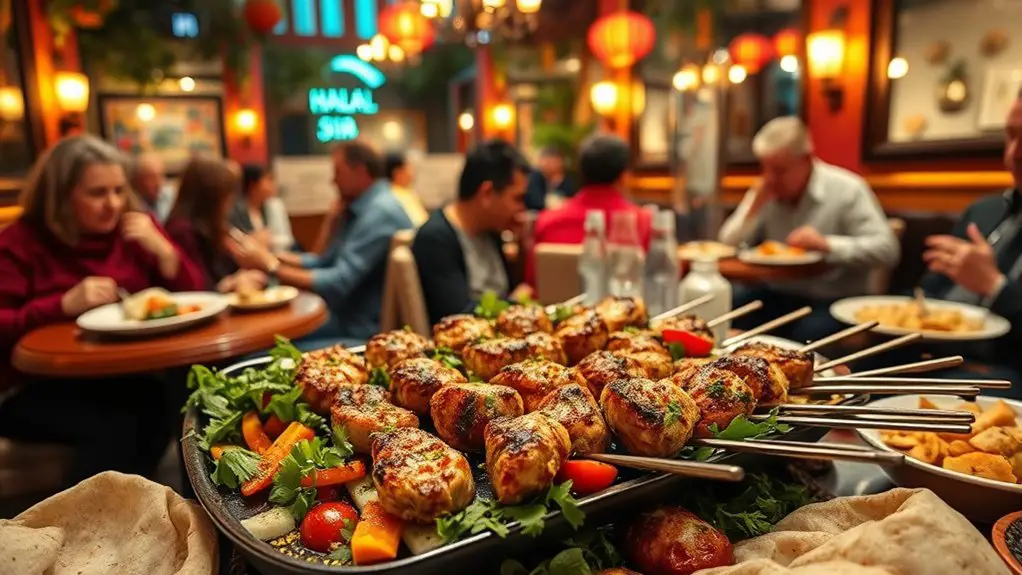
Kebab is not one single dish. Across Türkiye, the term covers many regional styles made with minced meat, whole pieces of meat, vegetables, flatbread, sauces, and different grilling methods. Istanbul brings many of those regional traditions together in one city.
Popular choices include Adana kebab, usually made with seasoned minced meat; milder Urfa-style kebab; şiş kebab, cooked on skewers; and döner, sliced from meat cooked on a vertical spit. Türkiye’s official tourism portal highlights the wide regional variety of kebabs and their importance in the country’s food culture.
Some preparations use marinades, while others rely mainly on the quality of the meat, seasoning, fat, and charcoal or wood-fired cooking. Avoid assuming that every kebab is yogurt-marinated or prepared in the same way.
For halal-conscious diners, the most useful question is not simply “Is this a kebab restaurant?” but “Can the restaurant confirm the source and halal status of its meat?”
Popular Kebab Stops to Check
Ortaklar Kebap Restaurant in the Çemberlitaş area has an extensive menu of kebabs, pide, soups, salads, and meze. Its official website provides its current menu and location. Travelers who require formal halal certification should still ask the restaurant to confirm its current meat sourcing or certificate rather than relying only on travel-site labels.
Bayramoğlu Döner in Beykoz is another well-known option for traditional döner. Its official site describes döner cooked over wood fire. Because restaurant policies and suppliers can change, confirm halal requirements directly before making a special trip.
Flavorful Meze: Small Plates, Big Taste
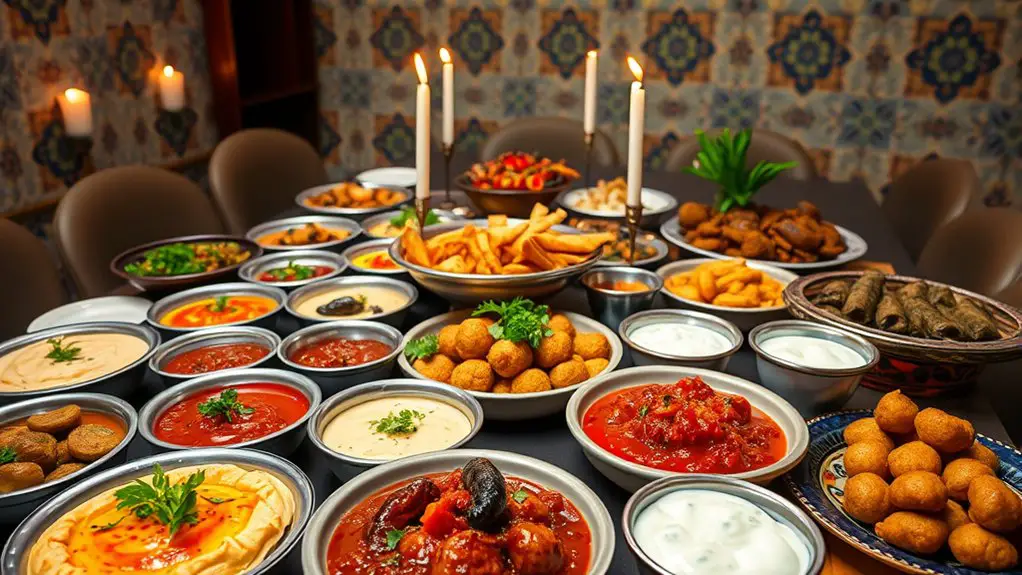
Meze is one of the easiest ways to sample several Turkish flavors in one meal. Small dishes are placed on the table for sharing, and many are based on vegetables, yogurt, beans, herbs, olive oil, or eggplant.
Common choices include haydari, hummus, fava, stuffed grape leaves, roasted eggplant dishes, ezme, and seasonal olive-oil vegetables. Exact selections vary by restaurant and region.
Traditional Turkish Meze Varieties
Meze can range from mild and creamy to smoky, sour, garlicky, or spicy. Haydari is a thick yogurt-based dish, while ezme combines finely chopped vegetables and seasonings. Stuffed grape leaves may contain rice, herbs, meat, or different combinations depending on the recipe.
Eggplant also appears in several forms, including roasted salads and regional dishes such as babagannuş. Ordering several small plates lets a group compare textures and flavors before moving on to grilled meat or seafood.
Halal-Friendly Drink Pairings
For a halal-focused meal, ayran is one of the most natural pairings. This cold drink made with yogurt, water, and salt works especially well with kebab, pide, and spicy dishes.
Other alcohol-free choices include Turkish tea, mineral water, fresh juice, pomegranate juice where available, and şalgam, a tangy fermented turnip drink often served with grilled meat.
Note: Traditional meze culture can also include alcoholic drinks such as rakı. A restaurant offering meze should therefore not automatically be assumed to be alcohol-free.
Seafood Restaurants and Halal Considerations
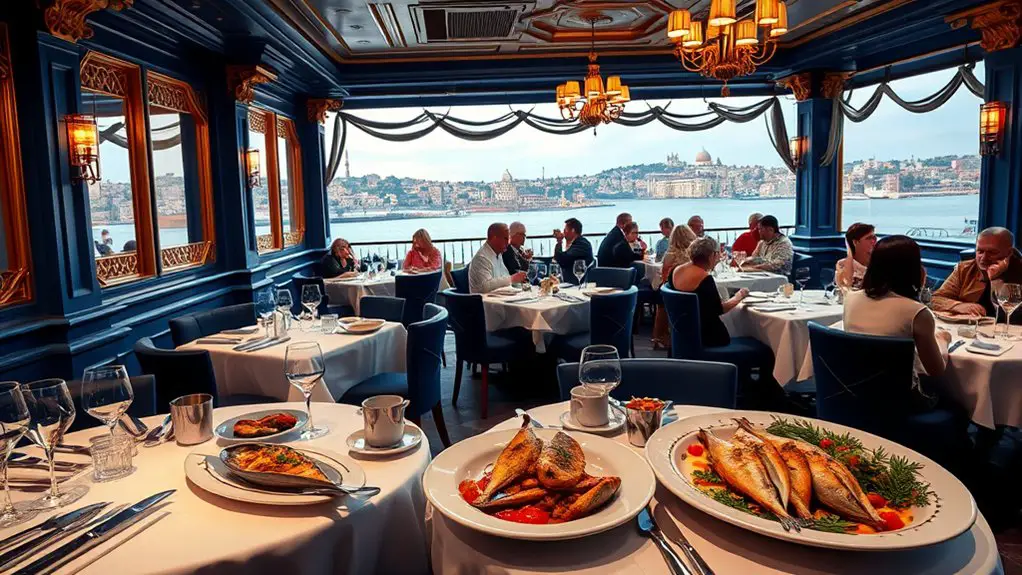
Istanbul’s position on the Bosphorus makes fish and seafood an important part of its dining culture. Türkiye’s official tourism material highlights dishes such as grilled bluefish, anchovies, horse mackerel, bonito, cod, and turbot as part of Istanbul’s seafood scene.
For halal-conscious diners, seafood can still require a few questions. Personal interpretations concerning particular types of shellfish can differ, and restaurant preparation may involve wine, other alcoholic ingredients, or shared kitchen equipment.
| What to Check | Why It Matters |
|---|---|
| Type of seafood | Choose according to the halal standard you personally follow. |
| Sauces and marinades | Some restaurant recipes may contain wine or other alcohol. |
| Shared cooking surfaces | This can matter to diners who require stricter separation. |
| Alcohol service | Seafood restaurants may serve alcoholic drinks even when the chosen food contains no alcohol. |
For the simplest order, look for plainly grilled or baked fish and ask what is used in the marinade, sauce, and cooking process.
Sweet Delights: Baklava in Istanbul
Baklava is one of Istanbul’s signature sweets, but traditional recipes are better described as layers of thin pastry, nuts, butter, and syrup rather than as a honey-based dessert.
The registered specification for Antep Baklavası/Gaziantep Baklavası describes Antep pistachios, filo pastry, plain butter, syrup, and semolina cream in the fresh version. The product received EU Protected Geographical Indication registration in 2013.
Traditional Baklava Varieties
You will find many versions in Istanbul, including:
- Pistachio baklava: one of the classic styles associated especially with Gaziantep.
- Walnut baklava: a common alternative with a deeper, less pistachio-forward flavor.
- Kuru baklava: a drier style designed to contain less free syrup than standard fresh baklava.
- Şöbiyet: a related pastry filled with nuts and a creamy semolina-based filling.
- Fıstık sarma: a pistachio-heavy sweet for diners who want a more intense nut flavor.
Vegan and Modern Baklava
Traditional baklava commonly uses butter, so it should not automatically be treated as vegan. Dedicated plant-based versions do exist. For example, Karaköy Güllüoğlu currently lists vegan baklava among its product categories alongside traditional pistachio and walnut varieties.
Chocolate, hazelnut, milk-based, and other modern variations are also available around the city. Ingredients differ substantially, so ask when allergies, dairy avoidance, or other dietary restrictions matter.
Vegetarian and Vegan Halal Options
Istanbul has many meat-free dishes rooted in Turkish cooking rather than created as substitutes for meat. Olive-oil vegetable dishes, lentils, beans, salads, stuffed vegetables, and breads can make it easy to build a filling vegetarian meal.
Popular options include:
- Mercimek köftesi: lentils and bulgur seasoned with herbs and spices.
- İmam bayıldı: eggplant cooked with onions, tomato, garlic, and olive oil.
- Mercimek çorbası: Turkish lentil soup, although stock ingredients should be checked when necessary.
- Fava: a smooth broad-bean meze commonly served with olive oil.
- Zeytinyağlı dishes: vegetables cooked and served with olive oil.
- Çiğ köfte: commonly sold today in a meat-free form, but check the individual recipe.
Vegetarian or vegan food avoids the question of halal slaughter, but strict diners may still want to ask about alcohol, animal-derived stock, dairy, gelatin, or shared cooking surfaces.
Street Food Favorites: Quick Bites on the Go
Street food is one of the easiest ways to eat your way through Istanbul, particularly around busy transport hubs, markets, and commercial districts.
Simit is one of the simplest choices. Türkiye’s official tourism portal describes it as a round bread covered with sesame seeds and closely associated with Turkish breakfast and everyday snacking.
Döner is another staple, sold from dedicated shops and counters throughout the city. It can be served in bread, wrapped in dürüm, or plated with rice and vegetables. Because it contains meat, ask about halal sourcing when that is important to you rather than assuming from the dish alone.
Other foods worth looking for include roasted chestnuts, corn, pide, lahmacun, börek, and kumpir. Some fillings contain meat or dairy, so ingredient checks are useful.
Pair a savory snack with ayran, tea, or bottled water for an easy alcohol-free meal.
Where to Look for Halal Food in Istanbul
Sultanahmet, Fatih, and Eminönü
The historic peninsula is convenient for travelers visiting Hagia Sophia, the Blue Mosque, Grand Bazaar, and Spice Bazaar. You will find kebab shops, lokantas, pide restaurants, dessert shops, and tourist-oriented dining within walking distance of the main sights.
Because the area serves huge numbers of visitors, compare menus and prices before sitting down. A visible “halal” claim can be useful, but ask for details when formal certification or an alcohol-free environment is important.
Karaköy and Beyoğlu
Karaköy is particularly useful for cafés, bakeries, desserts, and access to both the historic peninsula and Beyoğlu. It is an easy area to combine a meal with a baklava stop.
Beyoğlu has a broader nightlife and restaurant scene. That also means alcohol service is common in parts of the district, so travelers looking specifically for an alcohol-free environment should check the venue rather than judging by the cuisine alone.
Üsküdar and Kadıköy
The Asian side offers everything from traditional lokantas to grills, bakeries, markets, and contemporary restaurants. Kadıköy is especially known for its busy food scene, while Üsküdar provides plenty of traditional Turkish dining choices.
Neither neighborhood itself guarantees halal certification. Treat location as a way to find food, not as proof of a restaurant’s religious compliance.
Fine Dining Experiences in Istanbul
Istanbul’s fine-dining scene ranges from modern interpretations of Anatolian cuisine to elaborate Ottoman-inspired menus. These restaurants may use seasonal produce, regional ingredients, tasting menus, and more complex preparation than a neighborhood kebab shop.
Fine dining requires extra attention if you follow strict halal rules. A restaurant may use halal meat yet serve wine, offer cocktails, or cook certain sauces with alcohol. Ask about individual dishes rather than assuming the whole tasting menu is suitable.
Reservations are also more useful at this level. Check the restaurant’s current menu, booking policy, opening hours, and halal practices before making a special trip.
Note: “Halal options” and “fully halal-certified, alcohol-free restaurant” are not interchangeable descriptions. Decide which standard matters to you before choosing a venue.
Practical Tips for Halal Dining in Istanbul
Restaurant details can change faster than a travel article. Suppliers change, certificates expire, menus are revised, and seasonal opening hours shift.
- Check the restaurant’s official website or current contact details shortly before visiting.
- For formal certification, ask to see the current certificate and note the issuing body.
- Use HAK’s accredited-body register when you want to verify the certifier.
- Carry a physical credit or debit card as well as some Turkish lira. Do not depend solely on a mobile wallet.
- Ask about prices before ordering market seafood or items without clearly displayed prices.
- Reserve ahead for popular upscale restaurants, especially at dinner.
- During Ramadan, confirm opening and meal-service times because some restaurants adjust their schedules around iftar.
Sources
- Türkiye Halal Accreditation Agency (HAK) — explains halal accreditation and the distinction between accreditation and certification.
- HAK Accredited Halal Conformity Assessment Bodies — current register for checking accredited certification organizations.
- GoTürkiye: Turkish Cuisine — supports information on meze, kebab, ayran, simit, seafood, and vegetarian dishes.
- GoTürkiye: Istanbul, a Gastronomy Capital — official overview of Istanbul’s kebab, seafood, breakfast, and regional food culture.
- EUR-Lex: Antep Baklavası/Gaziantep Baklavası Specification — documents the protected baklava’s ingredients and production characteristics.
- Karaköy Güllüoğlu — current official product information, including traditional and vegan baklava categories.
Frequently Asked Questions
Are all halal restaurants in Istanbul certified halal?
No. A restaurant may state that it uses halal meat without holding a formal restaurant-level halal certificate. Türkiye’s Halal Accreditation Agency accredits certification bodies rather than issuing the certificates itself. If formal certification matters to you, ask the restaurant to show its current certificate and identify the issuing organization.
Does halal meat mean the restaurant is alcohol-free?
No. A restaurant can use halal meat while still selling alcoholic drinks or using alcohol in particular recipes. Ask separately about meat sourcing, alcohol service, and alcohol used in cooking if those distinctions matter to you.
What payment methods are accepted at Istanbul halal restaurants?
Payment methods vary by restaurant. Many established venues take payment cards, while smaller shops may also rely heavily on cash. Carry a physical card and some Turkish lira, and ask before ordering if you plan to depend on a particular contactless or mobile-wallet service.
Do restaurants offer vegetarian options alongside halal meals?
Yes. Lentil soup, mercimek köftesi, imam bayıldı, fava, salads, stuffed vegetables, and olive-oil dishes are common choices. Strict diners may still want to ask about stock, alcohol, animal-derived ingredients, or shared cooking equipment.
Are reservations recommended for popular halal restaurants in Istanbul?
Booking ahead is sensible for popular restaurants, rooftop venues, and fine dining, especially at dinner or on weekends. Casual kebab, döner, and lokanta-style restaurants may accept walk-ins, but policies vary, so check directly when a particular restaurant is important to your plans.
What are the typical operating hours for halal restaurants in Istanbul?
There is no reliable citywide schedule. Breakfast cafés, lunch restaurants, kebab shops, dessert shops, and fine-dining venues all keep different hours. Check the restaurant’s current information on the day you visit, particularly during Ramadan and public holidays.
How do I ask whether food is halal in Turkish?
You can ask “Etiniz helal sertifikalı mı?” for “Is your meat halal-certified?” To ask whether a dish contains alcohol, say “Yemekte alkol var mı?” You can also show the questions on your phone if pronunciation is difficult.
Conclusion
Istanbul offers an exceptional range of food for halal-conscious travelers, from smoky kebabs and fresh meze to simit, vegetable dishes, seafood, and pistachio baklava. The safest approach is to enjoy that variety without treating every Turkish restaurant as automatically certified. Ask about meat, alcohol, and preparation when necessary, verify formal certification when it matters to you, and check current restaurant details before visiting. With those few precautions, Istanbul’s food scene becomes much easier to explore with confidence.
