
Last Updated on September 11, 2026 by Daniel Globe
Traveling alone can be simple and rewarding when you prepare the parts that matter most: entry requirements, accommodation, transportation, money, health, communication, and emergency backups. Plan enough to avoid preventable problems, but leave room to change your schedule once you arrive. The goal is not to control every hour; it is to give yourself reliable options when you are the only person responsible for the next decision.
Quick Answer
To travel solo confidently, research entry rules and safety, book your first nights in a well-reviewed area, share your itinerary with someone you trust, prepare backup money and document copies, pack light, download useful offline information, and plan a safe arrival. Keep your schedule flexible and leave any situation that feels wrong.
Key Takeaways
- Check passport validity, visas, health requirements, travel advisories, local laws, and medication restrictions before departure.
- Book at least your first accommodation and know how you will reach it using a reputable transport option.
- Share your itinerary and accommodation details with someone you trust and agree on a reasonable check-in routine.
- Carry document copies, more than one way to access money, and offline copies of important addresses and phone numbers.
- Pack according to your airline’s actual baggage rules rather than relying on a universal carry-on weight limit.
- Consider travel medical and evacuation insurance, especially when your normal health coverage does not protect you abroad.
At a Glance
| Time Required | Allow at least a few focused planning sessions before departure; visas, vaccines, and insurance may require additional lead time. |
| Difficulty | Beginner-friendly with advance preparation. |
| Tools Needed | Passport or ID, booking confirmations, phone, emergency contacts, payment methods, document copies, and destination information. |
| Cost | Planning itself can be free; visas, vaccines, insurance, data service, transportation, and accommodation vary by destination and traveler. |
Disclosure: As an Amazon Associate I earn from qualifying purchases. Some links on this page are affiliate links, at no extra cost to you.
Pre-Trip Solo Travel Checklist
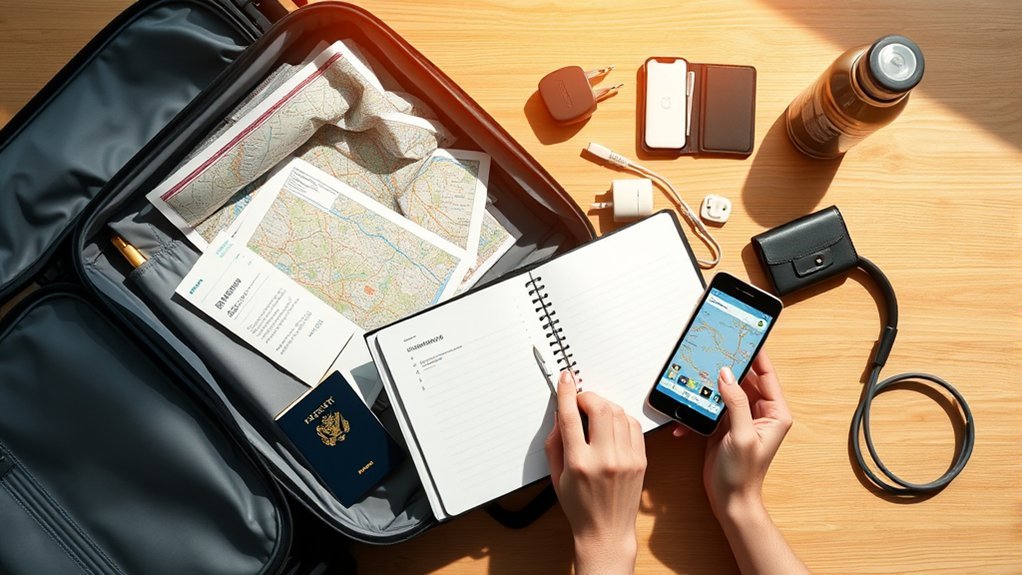
Before your solo trip, build one checklist covering documents, health, money, transportation, communication, and accommodation. Start with the items that could prevent you from entering the destination or continuing your trip if something goes wrong.
- Passport and entry documents: Confirm passport validity, visa or electronic authorization requirements, onward-ticket rules, and any destination-specific entry conditions.
- Health: Check destination-specific vaccine and medicine recommendations and make sure routine vaccinations are current.
- Accommodation: Reserve your first stay and save its full address, phone number, check-in instructions, and transport options.
- Transportation: Know how you will travel from the airport, station, or port to your accommodation.
- Money: Plan at least two ways to access funds and keep a small backup separate from your main wallet.
- Documents: Keep copies of important travel documents separate from the originals and give a copy of your itinerary to someone you trust.
- Emergency information: Save local emergency numbers, your accommodation contact, insurance assistance number, and relevant embassy or consulate details.
- Budget: Estimate lodging, food, transportation, attractions, fees, and a realistic emergency cushion.
For international trips, the IATA Travel Centre can help you check passport, visa, and health-document requirements, but also confirm important entry rules through the destination’s government or embassy because requirements can change.
Pro Tip: Save your accommodation address, transport instructions, passport copy, insurance details, and emergency numbers somewhere you can reach even if your normal mobile connection stops working.
Plan Your First Few Solo Travel Days
Your first few solo travel days should have more structure than the rest of the trip. Book your first nights before arrival, understand the route from your arrival point to your lodging, and identify a few activities that are easy to reach. A guided walking tour, museum visit, food tour, or small-group activity can help you learn the area while meeting people without committing your entire itinerary to a group.
Keep some open time for local food, markets, parks, neighborhoods, or recommendations you discover after arriving. You do not need to schedule every hour. What matters most is knowing where you will sleep, how you will get there, and what alternatives you have if the original plan fails.
For a first solo trip, it can also help to avoid making your arrival day overly ambitious. Travel delays, immigration, baggage collection, unfamiliar transit, jet lag, and finding your accommodation can take more energy than expected.
Best Solo Trip Apps and Tech Tools
A few well-chosen apps can reduce how often you need to solve problems from scratch. Download and test them before departure rather than waiting until you are already navigating an unfamiliar city.
- Google Maps: Download the area around your accommodation and major destinations in advance. Google Maps can provide offline driving navigation in downloaded areas, but offline public-transit, cycling, and walking directions are not available. See Google’s offline Maps instructions.
- Google Translate: Download supported language packs before departure so basic translation can continue without an internet connection. See Google Translate’s offline-language guidance.
- XE Currency: Useful for checking and comparing exchange rates. Treat any offline or previously loaded information as a reference rather than assuming it represents the current live rate.
- TripIt: Can organize flight, hotel, rental-car, and other confirmation information into an itinerary, making important booking details easier to find.
- Hostelworld, Booking.com, Airbnb, and similar platforms: Useful for comparing accommodation, but always evaluate the location, recent reviews, cancellation rules, security features, and who else may have access to the property.
- Your airline and transport apps: Useful for schedule changes, boarding information, digital tickets, and service disruptions.
Note: Do not make your phone your only copy of critical information. A dead, damaged, lost, or stolen phone should not leave you without your accommodation address, emergency contacts, or essential booking details.
Research Visas, Safety, and Local Customs
Before traveling internationally, verify entry and exit requirements, passport validity rules, visa requirements, local laws, travel advisories, health requirements, and any restrictions that could affect your medication or activities.
Use the IATA Travel Centre as one documentation resource, then check official government or embassy information for your destination. Travelers should also review the travel advice issued by their own government.
For U.S. citizens traveling abroad, the Smart Traveler Enrollment Program (STEP) can provide embassy or consulate alerts and help U.S. officials contact travelers or their emergency contacts during some emergencies. Travelers from other countries should check whether their own foreign ministry offers a comparable registration or alert service.
Local customs deserve the same attention as formal laws. Learn expectations around clothing, religious sites, photography, public behavior, greetings, alcohol, dining, and tipping. For example, the Japan National Tourism Organization explains that Japan does not have a general tipping culture and that tipping can create confusion in ordinary service situations.
Learning a few local phrases can also make everyday situations easier. Prioritize practical language such as “hello,” “thank you,” “I need help,” “police,” “hospital,” “where is…?” and “I don’t understand.” Language-learning apps such as Duolingo can help, but save important emergency phrases separately so they are easy to find.
Warning: Travel advice is not permanent. Recheck entry requirements, transport disruptions, health notices, and official travel advisories shortly before departure and again during the trip when conditions are changing.
Choose Solo-Friendly Accommodation
Solo-friendly accommodation should make it easy to enter and leave, reach transportation, contact staff or a host, and return after normal sightseeing hours. Look beyond price and photos. Check the neighborhood, recent reviews, reception or host availability, door security, fire exits, and how you would reach an alternative property if your original stay becomes unsuitable.
Hostels For Social Stays
Hostels can make meeting other travelers easier because many have lounges, shared kitchens, tours, and organized activities. Dorm rooms can also reduce costs. However, shared accommodation creates privacy and security tradeoffs, so review locker availability, room access, reception hours, guest feedback, and whether mixed or single-gender dorm options are available if that matters to you.
Communal spaces are usually better places to socialize than relying on strangers in your sleeping area. When joining pub crawls, group outings, or nightlife activities, keep control of your own transport home and avoid depending on someone you just met for access to your room, money, or documents.
Private Rooms For Comfort
A private hostel room, hotel room, guesthouse, or carefully reviewed rental can provide better sleep and personal space while still allowing you to meet people in shared areas. An en-suite bathroom, secure door, staffed reception, kitchen access, or a central location may be worth paying more for when you are traveling alone.
| Feature | Why It Matters |
|---|---|
| Privacy | Gives you a quieter place to rest and organize valuables. |
| Cost | Can cost more than a dorm but may still be cheaper than a comparable hotel. |
| Safety | Reduces the number of people with direct access to your sleeping area. |
| Access | Shared lounges or kitchens can provide social contact without sharing a bedroom. |
| Local Tips | Staff or experienced hosts may help with transport, neighborhoods, and practical local information. |
Choose the type of stay that matches your budget, privacy needs, planned arrival time, and comfort level rather than assuming one accommodation type is best for every solo traveler.
Central Spots For Ease
A well-connected location can reduce long commutes and make food, attractions, and transportation easier to reach. “Central” does not automatically mean safer, however, so evaluate the specific neighborhood rather than relying only on distance from tourist attractions.
Read recent reviews from solo travelers, look at public-transport options, check the route you would take after dark, and confirm how late reception or building access remains available. If a very cheap room leaves you dependent on isolated late-night transportation, the lower nightly price may not be the best overall value.
Pack Light for Your Solo Trip
Packing light makes airports, stairs, buses, trains, and accommodation changes easier to manage without another person helping with luggage. A carry-on and small day bag can work for many trips, but the right setup depends on the destination, climate, activities, airline rules, and trip length.
Smart Packing Essentials
Build a flexible wardrobe with clothes that can be worn in several combinations and layers. Add weather-appropriate outerwear, essential toiletries, prescription medicine, basic first aid, charging equipment, and footwear suited to the activities you actually plan to do.
Useful solo-travel items can include:
- Phone charger and compatible plug adapter
- Power bank
- Reusable water bottle where tap-water conditions allow it
- Small first-aid kit
- Prescription medicine in appropriate packaging
- Lightweight rain layer or weather protection
- Packing cubes or compression organizers
- Small day bag that closes securely
- Copies of critical documents stored separately from originals
Keep power banks and spare lithium batteries in carry-on baggage according to applicable airline and aviation-safety rules. IATA’s passenger baggage guidance notes that airline conditions still control the exact baggage allowance.
Travel With Less
Before packing, check the baggage allowance for the operating airline, cabin, fare, and route. Carry-on size and weight rules are not universal, and they can differ even between airlines operating similar routes.
Lay out everything you plan to take, remove items that duplicate the same function, and prioritize clothing you can wear more than once. Limit bulky footwear when practical and use small containers for toiletries where airport security rules permit them.
Multi-purpose items can be useful, but do not pack something only because it has several theoretical uses. The best minimalist packing list is the one built around your actual weather, activities, cultural expectations, and laundry options.
Set Your Solo Travel Intentions
Before departure, decide what you want from the trip. Your goal might be relaxation, independence, food, museums, hiking, photography, meeting people, cultural learning, or simply proving to yourself that you can manage a trip alone.
Those priorities can guide daily decisions. If your goal is cultural immersion, schedule time outside major attractions. If you want confidence and independence, leave some activities unstructured so you practice making decisions on the road. If rest is the goal, do not turn the trip into a contest to visit every attraction.
Review your plan when your energy or circumstances change. Changing an itinerary is not failure; it is one of the advantages of traveling independently.
Share Your Itinerary and Set a Check-In Plan
Give a trusted person enough information to understand where you are expected to be without publishing your movements publicly. Share flight or transport details, accommodation names and addresses, general travel dates, insurance information, and a way to contact you.
Agree on a realistic check-in routine. That might mean a message after changing cities, a daily check-in during a higher-risk activity, or less frequent contact on a straightforward trip. Also tell your contact when you expect to be offline so a normal loss of signal does not create unnecessary concern.
If your itinerary changes significantly, update the person who has your plan. Keep copies of your passport, visa, insurance policy, and important booking information separate from the originals. The U.S. State Department International Travel Checklist recommends organizing travel documents and keeping multiple copies.
A strong solo-travel plan does not eliminate uncertainty; it gives you a practical backup when the original plan stops working.
Protect Your Documents, Money, and Connectivity
Avoid keeping every important item in one wallet or bag. Carry your normal payment method, but keep a backup card or emergency funds in a separate secure location. Do not carry more cash than you reasonably need for the day, and use reputable ATMs rather than accepting street-based currency exchanges from strangers.
Before traveling, know how to freeze or replace a lost card and how you could access emergency funds if your wallet disappeared. Check your bank’s current international-use and fraud-alert policies rather than assuming you must notify the bank before every trip.
Your phone deserves the same backup planning. Use a device passcode, enable account protections that suit your device, and know how you would remotely locate or disable the phone if it were lost. Avoid exposing sensitive financial information on networks you do not trust.
Plan connectivity before arrival. Depending on your destination, that could mean international roaming, a local SIM, an eSIM, or Wi-Fi. Save offline maps, booking details, emergency numbers, and your first accommodation address before leaving the airport or station.
Travel Insurance and Health Preparation
Check destination-specific health information well before departure. The CDC’s pre-travel guidance recommends checking destination health risks, routine vaccinations, and any vaccines or medicines that may be needed. When a travel-health appointment is appropriate, arranging it several weeks before departure gives more time to complete recommended preparation.
If you take prescription medication, verify the rules for every country you will enter or transit. A medicine that is legal at home may be restricted elsewhere. Carry enough for the trip when permitted, keep medicine appropriately labeled, and bring supporting documentation when destination rules require it.
Also check whether your normal health insurance covers medical treatment abroad. The U.S. State Department’s travel-insurance guidance recommends considering travel health insurance and, depending on the destination and circumstances, medical evacuation coverage.
Read policy exclusions instead of assuming “travel insurance” covers everything. Check destinations covered, trip length, medical treatment, evacuation, pre-existing-condition rules, planned activities, trip interruption, and how to reach assistance during an emergency.
Arrive Safely on Day One
When practical, arriving during daylight can make an unfamiliar destination easier to navigate. If your flight or train arrives late, plan transportation and check-in before departure instead of improvising after you land.
Know the official or reputable transport options available from the airport, station, or port. Pre-book when that makes sense, or learn where licensed taxis, ride services, buses, or trains depart. Be cautious about unsolicited transport offers when you cannot verify the operator.
Keep your passport or required identification, accommodation address, transport information, and emergency contacts accessible but secure. Avoid displaying large amounts of cash or announcing your room number or exact accommodation location to strangers.
Once inside your room, notice the nearest exit and confirm that doors and windows secure properly. If something about the property or neighborhood feels materially different from what you booked, contact the property or booking platform and use your backup accommodation plan if necessary.
Research local emergency numbers before departure. In an immediate medical, fire, crime, or safety emergency, contact the appropriate local emergency service first. Your embassy or consulate, insurer, accommodation, tour operator, and trusted contacts can provide additional help depending on the situation.
Sources
- U.S. Department of State — International Travel Checklist — entry requirements, travel documents, advisories, safety planning, and pre-trip preparation.
- CDC Travelers’ Health — Before You Travel — destination health risks, vaccinations, medicines, and health preparation.
- IATA Travel Centre — passport, visa, and health-documentation requirements.
- IATA Passenger Baggage Rules — airline-specific baggage allowances and carry-on safety information.
- Google Maps Help — Offline Maps — downloading maps and offline-navigation limitations.
- U.S. Department of State — Travel Insurance — travel health, medical evacuation, and trip-insurance considerations.
Frequently Asked Questions
How do I meet people while traveling alone?
Join hostel activities, walking tours, cooking classes, small-group excursions, language exchanges, local events, or other public activities built around shared interests. Stay social without giving new acquaintances immediate access to your accommodation, money, documents, or transport plans.
What should I do if I feel lonely on the road?
Call someone you know, journal, take a familiar routine into your day, join a group activity, spend time in a café or other social public space, or shorten an isolated part of your itinerary. Solo travel does not require spending every day alone.
How do I handle money exchange safely abroad?
Use reputable banks, official exchange services, or legitimate ATMs; check exchange rates and fees before accepting a transaction; avoid unsolicited street exchanges; and keep cash discreet. Carry a backup payment method separately from your primary wallet.
How can I stay healthy during a solo trip?
Get enough sleep, stay hydrated, practice good hand hygiene, follow destination-specific food and water precautions, carry required medicines, and check health guidance before departure. Seek professional medical care when symptoms or injuries require it rather than relying only on self-treatment.
What should I do in an emergency overseas?
For an immediate threat, serious injury, fire, or crime, contact the appropriate local emergency service first. Move to a safer place when possible, then contact your embassy or consulate, insurer, accommodation, tour provider, and trusted emergency contact as the situation requires. Keep your identification and important phone numbers accessible.
Should I share my solo travel itinerary with someone?
Yes. Share your general itinerary, transportation details, accommodation information, and emergency contact details with someone you trust. Agree on reasonable check-ins and update them when your plans change significantly.
Do I need travel insurance for a solo trip?
It depends on your existing coverage, destination, trip cost, activities, and risk tolerance, but travel medical and evacuation coverage can be especially important when your regular health insurance does not cover treatment or transportation abroad. Read the policy’s exclusions before buying.
Is a hostel or hotel better for a solo traveler?
Neither is automatically better. Hostels can be cheaper and more social, while hotels and private rooms generally offer more privacy. Compare the neighborhood, recent reviews, access control, transport, reception or host support, cancellation rules, and your own comfort level.
Conclusion
Solo travel works best when independence is supported by preparation. Check the rules that can affect your trip, choose accommodation and transportation carefully, pack what you can manage yourself, protect your documents and money, and give someone you trust a basic plan. Then leave enough space for the experiences you could not have scheduled in advance. A good solo trip is not one where nothing unexpected happens; it is one where you have enough information and backup options to make the next decision confidently.

