
Last Updated on September 11, 2026 by Daniel Globe
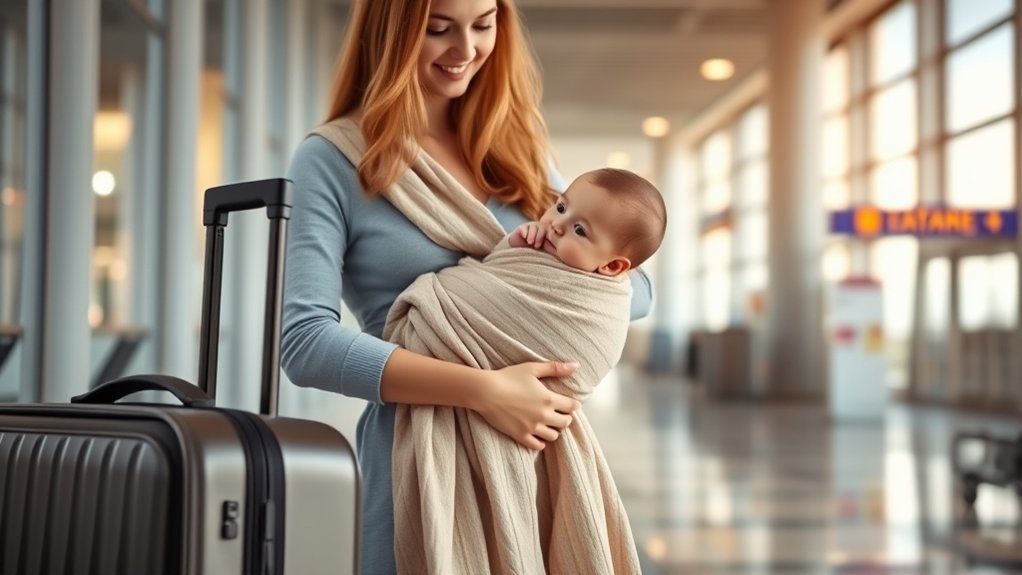
Traveling with a 3-month-old baby is often possible, but the safest plan depends on your baby’s health, your route, and how you will handle feeding, restraints, and sleep. A little preparation can make flying or driving easier while helping you avoid common problems with ear pressure, airport screening, documents, and unfamiliar sleeping spaces.
Quick Answer
Yes. A healthy, full-term 3-month-old can usually travel by air or car. Ask the pediatrician first if your baby was premature, has heart or lung problems, is sick, or recently had an ear infection. For flights, the safest setup is a purchased seat with an aircraft-certified rear-facing car seat.
Key Takeaways
- Most healthy, full-term babies can travel at 3 months, but medical conditions or current illness may change the recommendation.
- A separate airplane seat with an approved child restraint system offers better protection than holding a lap infant.
- Nursing, bottle-feeding, or offering a pacifier during ascent and especially descent may reduce ear discomfort.
- Breast milk, formula, baby food, and cooling packs can go through U.S. airport security in quantities above the normal liquids limit.
- Plan a firm, flat, empty sleep space at your destination instead of using a car seat, adult bed, or lounger for routine sleep.
At a Glance
| Time Required | About 30–60 minutes for the packing and document check, plus the arrival time recommended by your airline and airport |
| Difficulty | Moderate; most of the work involves planning for feeding, delays, restraints, and sleep |
| Tools Needed | Aircraft-certified car seat, diaper bag, feeding supplies, carrier or stroller, clothing, health items, and required documents |
| Cost | Varies by airline, child ticket, baggage rules, passport needs, insurance, and rented baby equipment |
Is It Safe to Fly With a 3-Month-Old?
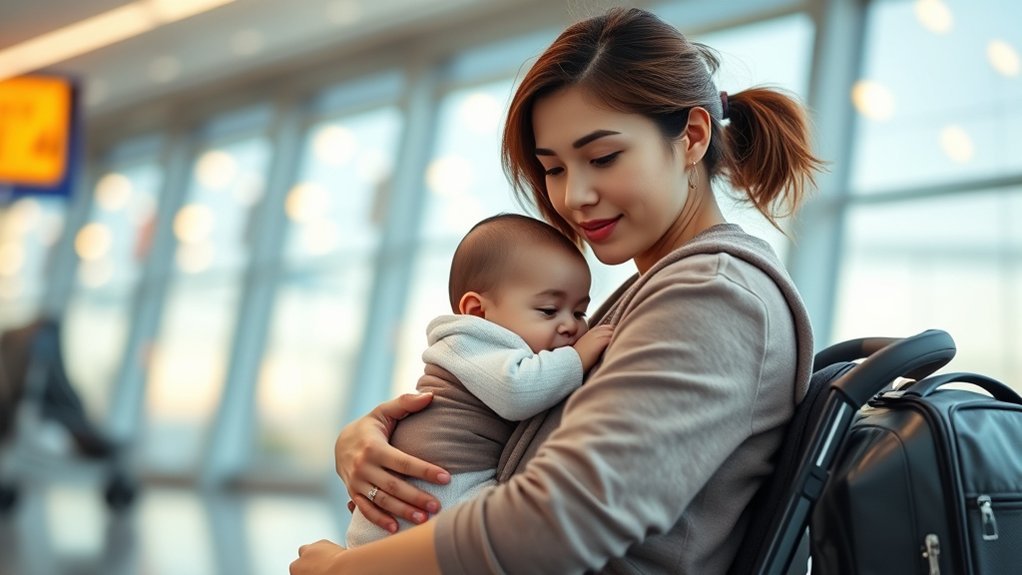
Air travel is generally safe for a healthy, full-term 3-month-old. The American Academy of Pediatrics’ parent guidance says it is ideal to wait until a baby is about 2 to 3 months old when possible because crowded airports and airplanes can expose young infants to respiratory infections. The CDC also states that air travel is safe for most newborns, infants, and children.
Your baby’s health matters more than age alone. Ask your pediatrician before booking if your baby was premature or has a chronic heart condition, lung condition, breathing problem, sickle cell disease, a need for supplemental oxygen, or another condition that could be affected by the lower oxygen level in an aircraft cabin.
Note: This guide provides general travel information and does not replace medical advice from a clinician who knows your baby’s health history.
When to Call the Pediatrician Before Travel
Contact your baby’s clinician before the trip if your baby:
- Was born prematurely or recently left neonatal care
- Has heart, lung, airway, blood, or immune-system problems
- Has a fever, breathing difficulty, poor feeding, repeated vomiting, unusual sleepiness, or signs of dehydration
- Has a current respiratory infection or severe congestion
- Had an ear infection or ear surgery shortly before the flight
- Needs medicine, oxygen, or medical equipment during travel
- Will travel internationally, especially to a destination with vaccine, mosquito, malaria, food, or water risks
International travel deserves extra planning because some destination-related vaccines cannot be given to a 3-month-old. Review the route with the pediatrician before paying for nonrefundable reservations.
Warning: Do not give an infant an antihistamine, decongestant, sleep aid, or other medicine to prevent ear pain or make the baby sleep unless the baby’s clinician specifically directs you to do so. These products have not been shown to prevent flight-related ear pressure in children and may be unsafe for young infants.
Before You Book: Health, Timing, and Airline Rules
Start by checking the airline’s infant policy. Although children under 2 may be accepted as lap infants on many flights, fees, minimum ages, documentation requirements, and rules for international routes vary. A lap arrangement is legal where the airline permits it, but it does not offer the same protection as a certified child restraint during turbulence.
Buying a separate ticket is the only way to guarantee that your baby can use an approved car seat throughout the flight. Before paying, check:
- The airline’s minimum infant age and lap-child policy
- Whether proof of age is required for a lap infant
- The aircraft’s seat width and your car seat’s widest measurement
- Car-seat placement and installation rules
- Family seating and preboarding policies
- Stroller and car-seat gate-check rules
- Bassinet availability and age or weight limits on long-haul flights
A direct flight is often easier because it reduces boarding, connections, missed-flight risk, and the number of times your baby experiences cabin-pressure changes. Scheduling the flight near a normal sleep period may help, but keep expectations flexible because delays and a new environment can change your baby’s routine.
What to Pack for a 3-Month-Old’s Trip
Pack for the planned journey and add enough supplies to cover a meaningful delay. Keep the items needed in transit in your carry-on rather than checked baggage.
| Category | What to Pack | Why It Matters |
|---|---|---|
| Feeding | Breast milk or formula, bottles, nipples, burp cloths, nursing cover if used, bibs, insulated cooler and ice packs, and an optional portable bottle warmer for the destination | Keeps normal feeds available during delays and helps you transport milk safely |
| Diapering | Diapers for the expected journey plus several extras, wipes, disposable bags, changing pad, diaper cream, and hand-cleaning supplies | Lets you handle missed connections, leaks, and limited changing facilities |
| Clothing | Layered outfit, sleepwear, two or more spare baby outfits, socks, sleep sack, and a spare shirt for the caregiver | Covers temperature changes, spit-up, diaper leaks, and baggage delays |
| Comfort | Pacifiers, one or two familiar comfort items, baby carrier, and a portable white noise machine for low-volume use at the destination | Provides familiar cues without filling the bag with unnecessary toys |
| Health | Thermometer, prescribed medicines, dosing device, health-insurance information, pediatrician contact details, and a brief health summary if your baby has a medical condition | Helps you respond to illness and explain medical needs away from home |
| Safety and Sleep | Aircraft-certified rear-facing car seat, manual, stroller if useful, fitted crib sheet, and a verified crib, bassinet, portable crib, or play yard at the destination | Provides safe restraints in transit and a firm, flat sleep space after arrival |
| Documents | Reservation details, any airline-requested proof of age, passport for international air travel, birth-certificate copy when appropriate, consent documents, and travel-insurance information | Reduces problems at check-in, border control, medical facilities, and car-rental desks |
A baby carrier can keep your hands free while walking through the terminal, but it does not replace a certified car seat on the aircraft. A white noise machine may help maintain a familiar sleep cue at your lodging; keep it at a low level and away from the baby’s head.
Pro Tip: Put one complete diaper change, one spare outfit, wipes, and a disposable bag in a small pouch at the top of your carry-on. You can take the pouch into a cramped airplane restroom instead of carrying the entire diaper bag.
Airport Security, Feeding, and Travel Documents
Breast Milk, Formula, and Baby Food at Security
Under current TSA guidance for traveling with children, breast milk, formula, toddler drinks, and baby food may be carried through a U.S. checkpoint in quantities greater than 3.4 ounces or 100 milliliters. They do not have to fit inside the standard quart-size liquids bag.
Ice packs, freezer packs, and related cooling accessories are also allowed for infant feeding supplies. Tell the TSA officer about these items at the beginning of screening and remove them from the carry-on when requested. Additional screening may be required.
Strollers, carriers, car seats, and backpacks must also be screened. Follow the officer’s directions about removing your baby from the stroller or car seat. Items too large for the X-ray machine may be inspected separately.
Does a 3-Month-Old Need Identification to Fly?
For U.S. domestic security screening, TSA does not require identification from children under 18. The airline may still request a birth certificate or other proof that a lap infant is under 2, so check its policy before leaving home.
For international air travel, a U.S. citizen infant needs a passport. A child under 16 must apply through the separate State Department child-passport process. If only one parent is traveling, the destination may also require a birth certificate, custody document, or notarized consent from the non-traveling parent. Review the destination-specific rules for traveling with minors.
How to Keep a 3-Month-Old Comfortable on the Plane
Comfort usually comes from meeting basic needs quickly rather than packing many gadgets. Keep feeding, diapering, and clothing supplies where you can reach them without opening an overhead bag.
- Dress your baby in light layers. Add or remove a layer as the cabin temperature changes.
- Change the diaper shortly before boarding. This may reduce the need to use a small aircraft restroom early in the flight.
- Offer normal feeds. Feed on demand rather than trying to delay a hungry baby until takeoff.
- Use a pacifier when appropriate. Sucking may help with pressure changes when the baby is not ready to feed.
- Watch familiar cues. Rooting may suggest hunger, while yawning, looking away, or rubbing the face may signal tiredness or overstimulation.
- Keep one comfort item nearby. A familiar pacifier, cloth, or soothing routine is usually more useful than several new toys.
- Use a carrier in the airport when helpful. Follow crew instructions on board because a carrier cannot be used as the baby’s restraint during taxi, takeoff, or landing.
How to Help a Baby’s Ears on a Flight
Cabin-pressure changes can cause discomfort, especially during descent. Nursing, bottle-feeding, or sucking on a pacifier encourages swallowing and may help the middle ear adjust. Begin when the aircraft starts a noticeable climb or descent rather than waiting until your baby is already upset.
Earplugs and infant hearing protectors may reduce cabin noise, but they do not equalize middle-ear pressure. If your baby has severe congestion, a recent ear infection, ear drainage, or recent ear surgery, ask the pediatrician whether the flight should be delayed.
Car Seat Rules for Flying With a 3-Month-Old
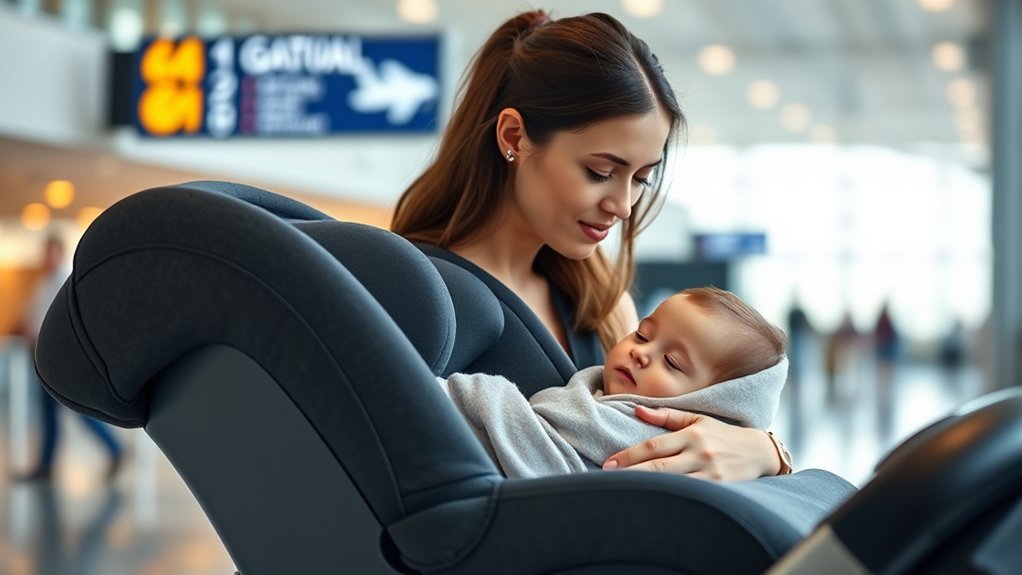
The FAA strongly recommends that children under 2 travel in an approved child restraint system instead of being held on an adult’s lap. Your arms may not hold a baby securely during sudden turbulence.
A purchased seat with a correctly installed, aircraft-certified car seat gives a young infant the best protection during unexpected turbulence.
Follow these steps before your flight:
- Find the certification label. A U.S. car seat approved for aircraft use should state, “This restraint is certified for use in motor vehicles and aircraft.”
- Confirm the seat fits your baby. Use the restraint within its stated height and weight limits.
- Keep a young infant rear-facing. Install the seat in the direction required by the manufacturer for your baby’s size.
- Measure the car seat. Compare its widest point with the aircraft seat-width information provided by the airline.
- Practice before leaving home. Read the manual and practice the approved airplane-seat-belt installation.
- Choose an allowed location. Car seats are generally installed at a window, cannot be placed in an exit row, and must not block another passenger’s escape route.
- Ask for help when needed. If a ticketed infant’s properly certified restraint does not fit the assigned seat, speak with the crew about another suitable seat in the same cabin.
If you buy a ticket for your baby and bring an appropriately labeled restraint, the airline must allow its use when the child is properly secured and the restraint can be installed in an approved location. Airline and aircraft-specific seating rules still apply.
Warning: A baby carrier, booster seat, backless restraint, or adult seat belt alone is not an approved substitute for an infant car seat during taxi, takeoff, or landing. The CARES aviation harness is intended for larger children who can sit upright and is not suitable for a typical 3-month-old infant.
Road Trips and Safe Sleep at Your Destination
Road-Trip Safety for a 3-Month-Old
Use a correctly installed rear-facing car seat for every drive. Never remove the baby from the restraint for feeding, soothing, or diapering while the vehicle is moving. Stop in a safe location instead.
Plan regular stops so you can feed the baby, change diapers, check the harness, and take the baby out of the seat. The driver should also stop whenever tired. Do not place thick coats or bulky padding under the harness because they can prevent a snug fit.
If your baby falls asleep in the car seat, the seat may continue to be used while it is properly installed in the moving vehicle. Once you arrive, move the baby to an appropriate sleep surface rather than leaving the seat on a bed, sofa, table, or floor for routine sleep.
Safe Infant Sleep While Traveling
Keep the same safe-sleep practices you use at home. The American Academy of Pediatrics recommends placing babies on their backs on a firm, flat, non-inclined sleep surface.
Use a safety-compliant crib, bassinet, portable crib, or play yard with:
- A firm mattress made for that sleep product
- A tightly fitted sheet
- No pillows, loose blankets, stuffed toys, bumpers, positioners, or extra padding
- No gaps, broken hardware, loose sides, or missing parts
Inspect a hotel or rental crib before use. Ask for another unit if it is damaged, unstable, dirty, or fitted with an unsuitable mattress. A sleep sack can provide warmth without loose bedding.
Note: An adult bed, sofa, armchair, infant lounger, stroller, carrier, or car seat outside active travel is not a substitute for a firm, flat infant sleep space.
Travel Tips for a Smooth Trip With a 3-Month-Old
- Choose the simplest route. A direct flight or a road trip with flexible stops usually creates fewer disruptions.
- Check in early. Confirm the infant reservation, documents, family seating, car-seat use, and gate-check plan before reaching the gate.
- Use preboarding when it helps. Extra time can make car-seat installation easier, although one adult may prefer to board first while another waits with the baby when two caregivers are traveling.
- Place the infant restraint correctly. The baby’s car seat will usually be at the window, with the accompanying adult beside it. Do not select an aisle position for the car seat if it would block another passenger.
- Treat bassinets as an optional extra. Some bulkhead seats have airline bassinets, but availability and limits vary. A bassinet does not replace an approved restraint during turbulence, taxi, takeoff, or landing.
- Keep the cabin bag organized. Separate feeding, diapering, clothing, and document items into small labeled pouches.
- Expect the schedule to shift. Booking near a normal sleep period may help, but feed and soothe your baby according to their cues.
- Review insurance. Confirm whether your health and travel coverage includes infant care, cancellations, delays, and treatment at the destination.
- Stay flexible. A slow boarding process, extra screening, or a crying spell does not mean the trip is going badly. Focus on one need at a time.
Frequently Asked Questions
Is it a good idea to travel with a 3-month-old baby?
It can be reasonable when the baby is healthy, full-term, feeding well, and able to travel without special medical support. Ask the pediatrician first if the baby was premature, is currently sick, has heart or lung problems, or will visit a destination with special health risks.
What is the 3-6-9 rule for babies?
There is no single recognized medical “3-6-9 rule.” The phrase is used informally for different ideas about growth spurts, sleep changes, or development, so it should not be treated as a clinical schedule. Use your pediatrician’s advice and validated age-based milestone guidance instead.
How do you travel with a 3-month-old baby on a flight?
Choose a simple route, check the airline’s infant rules, use a ticketed seat with an aircraft-certified rear-facing car seat when possible, and keep feeding and diaper supplies in your carry-on. Feed or offer a pacifier during ascent and descent, and plan a safe sleep space for the destination.
How do I protect my baby’s ears when flying?
Nursing, bottle-feeding, or sucking on a pacifier encourages swallowing and may help equalize pressure, especially during descent. Hearing protectors may reduce noise but do not fix pressure changes. Ask the pediatrician before flying if your baby has severe congestion, a recent ear infection, or recent ear surgery.
Can a 3-month-old fly as a lap infant?
Many airlines permit children under 2 to fly on an adult’s lap, although fees and policies vary. The FAA recommends buying the baby a separate seat and using an approved child restraint system because an adult may not be able to hold the baby securely during sudden turbulence.
Does a 3-month-old need identification for a domestic flight?
TSA does not require identification from children under 18 for U.S. domestic security screening. However, the airline may ask for proof that a lap infant is under 2. Check the airline’s policy and carry the requested document.
Can breast milk and formula go through airport security?
Yes. TSA permits breast milk, formula, baby food, and related cooling packs in reasonable quantities above the normal 3.4-ounce liquids limit. Declare them to the officer and remove them from your bag when requested for separate screening.
Can my baby sleep in the car seat after we arrive?
Move your baby to a firm, flat crib, bassinet, portable crib, or play yard as soon as practical after active travel ends. A car seat is designed to protect a properly restrained baby in a vehicle or aircraft, not to serve as a routine sleep space at the destination.
Sources
- American Academy of Pediatrics: Flying With Baby — infant flying age, restraint safety, ear discomfort, and flight preparation
- CDC Yellow Book: Traveling Safely With Infants and Children — medical conditions, air travel, ear pressure, medication cautions, and international health planning
- Federal Aviation Administration: Flying With Children — approved restraints, certification labels, installation, and lap-infant safety
- Transportation Security Administration: Traveling With Children and TSA Identification Requirements — formula, breast milk, baby equipment screening, and domestic child identification
- U.S. State Department: Child Passports and Travel With Minors — infant passports, parental documentation, and destination requirements
- American Academy of Pediatrics: Safe Infant Sleep — firm, flat sleep surfaces and moving babies out of sitting devices after travel
Conclusion
A healthy, full-term 3-month-old can usually travel safely when you plan around the baby’s medical needs, feeding, restraints, documents, and sleep. Check with the pediatrician when your baby was premature, has a health condition, is currently sick, or will travel internationally. On a flight, a purchased seat with an aircraft-certified rear-facing car seat is safer than holding a lap infant. Keep feeding and diaper supplies close, use swallowing to ease ear pressure, and follow TSA and airline rules. After arrival, return your baby to a firm, flat, empty sleep space. A simple route, realistic schedule, and well-organized carry-on can make the trip much easier for both of you.
