
Last Updated on September 27, 2026 by Daniel Globe
The Exodus route from Egypt to Canaan follows the Israelites’ biblical journey from slavery to the Promised Land. Led by Moses, they departed from Rameses, crossed the sea, camped at Mount Sinai, and traveled through the wilderness toward the Jordan River. The Bible records the major stops, although the exact locations of several landmarks remain debated.
Quick Answer
The biblical Exodus route runs from Rameses in Egypt through Sukkoth, the Red Sea crossing, Marah, Elim, Rephidim, Mount Sinai, Kadesh-Barnea, and the region around Edom to the plains of Moab. The journey lasted approximately 40 years. Moses died before entering Canaan, and Joshua led the Israelites across the Jordan River.
Key Takeaways
- Numbers 33 provides the main biblical itinerary, recording 40 camping sites between the departure point and the final destination.
- The Israelites avoided the direct coastal road through Philistine territory and traveled through the wilderness.
- Mount Sinai was the setting for the covenant, Ten Commandments, and construction of the tabernacle.
- The Israelites’ refusal to enter Canaan after the spies’ report led to the prolonged wilderness journey.
- The traditional locations of the sea crossing and Mount Sinai are not established archaeological facts.
Disclosure: As an Amazon Associate I earn from qualifying purchases. Some links on this page are affiliate links, at no extra cost to you.
Exodus Route Map
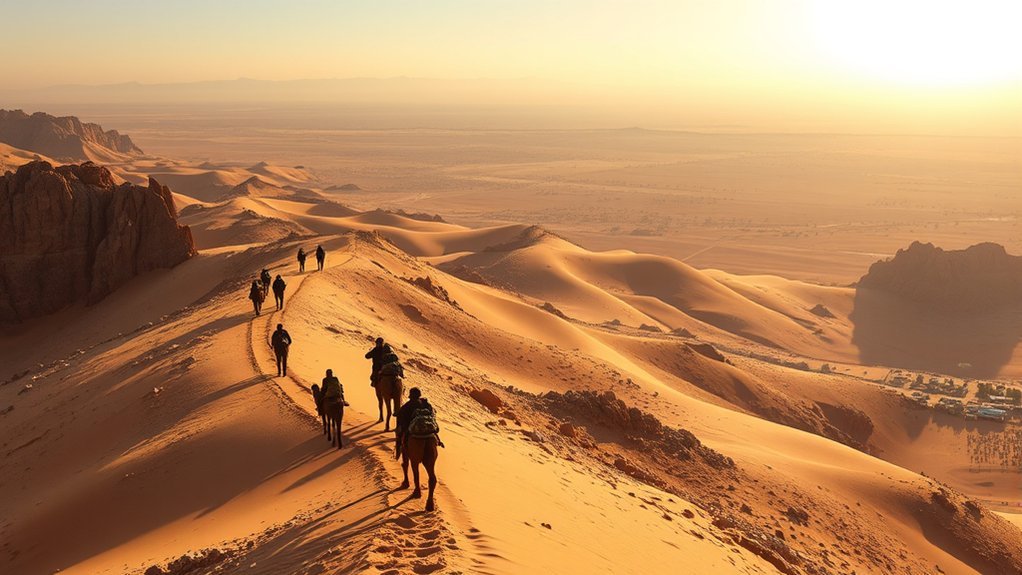
An Exodus route map shows the journey from Egypt’s eastern Nile Delta toward the wilderness, Mount Sinai, Kadesh-Barnea, and the Jordan Valley. It is best understood as a biblical route reconstruction, not a confirmed ancient road map.
The most detailed itinerary appears in Numbers 33, which records the stages of Israel’s journey. The chapter identifies 40 intermediate camping sites, excluding the starting point at Rameses and the destination on the plains of Moab.
The main landmarks are:
- Rameses and Goshen: The departure region in Egypt.
- Sukkoth and Etham: Early stops near the edge of the wilderness.
- Pi-hahiroth: The encampment before the sea crossing.
- Marah and Elim: Stops associated with water and rest.
- Rephidim: The location of the first water-from-the-rock account.
- Mount Sinai: The covenant and tabernacle encampment.
- Kadesh-Barnea: The setting for the spies’ report and the decision to delay entry into Canaan.
- Mount Hor and the region around Edom: Part of the later wilderness journey.
- Plains of Moab: The final encampment east of the Jordan, opposite Jericho.
Some biblical locations can be associated with broad geographical regions, but many precise identifications remain uncertain.
The crossing point is especially debated. The Hebrew name Yam Suph is traditionally translated as Red Sea and is also rendered Sea of Reeds. Proposed locations include lakes near Egypt’s eastern frontier and areas associated with the Gulf of Suez.
Mount Sinai is traditionally associated with Jebel Musa in southern Sinai. However, the biblical text does not provide enough geographical detail to establish its location beyond dispute.
The Exodus Route From Egypt to Canaan
The Exodus journey begins with Israel’s departure from Egypt and ends with the people preparing to enter Canaan from the east. Exodus describes the escape and Sinai covenant, Numbers follows the wilderness journey, and Deuteronomy records Moses’ final instructions.
The account continues into Joshua, where the Israelites finally cross the Jordan River.
How Long Was the Exodus Journey?
The biblical journey lasted approximately 40 years, but the Israelites did not spend that entire period walking. Much of the narrative involves encampments, worship, conflict, and waiting.
| Stage | Biblical timeline | Main event |
|---|---|---|
| Departure from Egypt | First year, first month | Israel leaves Rameses after Passover. |
| Arrival at Sinai | Third month after departure | The people gather at the mountain. |
| Departure from Sinai | Second year, second month | The community resumes its journey. |
| Wilderness period | Approximately 40 years overall | The generation that refused to enter Canaan dies in the wilderness. |
| Final encampment | Fortieth year | Israel reaches the plains of Moab and prepares to cross the Jordan. |
These dates follow the biblical chronology rather than a reconstructed modern calendar.
What Is Known About the Historical Date?
The exact historical date of the Exodus is disputed. Some biblical chronologies propose 1446 BC, while other interpretations place the possible events later.
The biblical narrative does not identify the Exodus pharaoh by name. Therefore, identifying Thutmose III or another ruler as the pharaoh of the Exodus remains an interpretation rather than an established fact.
The original biblical population figure also requires care. Exodus 12:37 describes approximately 600,000 men on foot, excluding children. Estimates of a total population exceeding two million are calculations based on that passage, not independently verified population records.
According to the Society for Old Testament Study’s historical overview, the Exodus remains difficult to establish archaeologically. The account is central to biblical faith and Israel’s cultural memory, but the complete route has not been independently confirmed.
For the same reason, a precise total distance cannot be established. Mileage depends on which proposed locations and connecting routes a map uses.
Goshen to the Red Sea
The journey begins in Goshen, the region where the Israelites lived in Egypt. Exodus identifies Rameses as their departure point and Sukkoth as their first recorded destination.
Rather than following the shortest road toward Canaan, they traveled toward the wilderness and the sea.
Goshen Departure
Goshen was associated with Egypt’s fertile eastern Nile Delta. The Israelites left Rameses with their families, livestock, and provisions, beginning their movement away from Egyptian control.
The early sequence is Rameses, Sukkoth, Etham, and Pi-hahiroth.
According to Exodus 13:17–22, God did not lead Israel along the shorter road through Philistine territory. The passage explains that the people might turn back toward Egypt if they encountered war.
Instead, they followed the wilderness route under divine guidance, represented by a pillar of cloud during the day and fire at night.
This decision establishes an important feature of the Exodus story: the journey was not simply about reaching Canaan as quickly as possible.
Red Sea Crossing
The sea crossing is the defining event of Israel’s escape from Egypt. Exodus 14 describes Pharaoh’s forces pursuing the Israelites until they were trapped between the approaching army and the water.
Moses stretched out his hand, and the narrative describes the sea dividing so the Israelites could pass through on dry ground.
| Scene | Meaning |
|---|---|
| Water blocking the route | An apparently impossible obstacle |
| Passage through the sea | Deliverance from Egyptian pursuit |
| The far shore | Freedom, gratitude, and the song of praise |
Exodus 15 records the song celebrating the deliverance. The people then continue into the wilderness, where the challenges of freedom become more practical.
Marah comes after the crossing, followed by Elim. The biblical narrative identifies their sequence but does not establish a precise modern crossing point.
Mount Sinai and the Covenant Stop
Mount Sinai is where the Exodus journey changes from escape to the formation of a covenant community. The Israelites receive the law, establish their worship, and prepare to continue toward Canaan.
Exodus 19 places their arrival in the third month after leaving Egypt.
Sinai Covenant Arrival
The Israelites camp at the mountain while Moses receives instructions from God. The narrative describes thunder, lightning, cloud, and the sounding of a trumpet.
These events introduce the covenant, the binding relationship between God and Israel.
Sinai also becomes the setting for communal responsibilities. The people are learning how to live together after generations of slavery.
They remain in the Sinai region for nearly a year. Numbers 10:11 records their departure on the twentieth day of the second month in the second year.
Commandments and Tabernacle
The Ten Commandments form the central moral teaching of the Sinai covenant. They address worship, family responsibilities, truthfulness, and conduct toward others.
The full commandments appear in Exodus 20:1–17.
The tabernacle is another major part of the Sinai encampment. It serves as a portable sanctuary where the community worships during its journey.
- Receive the covenant: Israel accepts its responsibilities before God.
- Construct the tabernacle: The people prepare a central place for worship.
- Organize the community: Religious duties, leadership, and daily practices take shape.
Exodus 40 records the tabernacle’s completion in the second year after departure. The cloud representing God’s presence then guides the people through their remaining journey.
Manna in the Wilderness
Manna was the food God provided to the Israelites during their wilderness journey. Its daily appearance addressed their hunger while teaching them to depend on provision rather than stored supplies.
The account begins in the wilderness of Sin, between Elim and Sinai.
In Exodus 16, the people complain about hunger, and God provides manna and quail.
The chapter describes manna as a small, seed-like substance. The Israelites gathered what they needed each morning, while the heat caused what remained outside to disappear.
Its collection followed a weekly pattern:
- On ordinary days, each household gathered enough for its needs.
- On the sixth day, the people collected a double portion.
- On the seventh day, they rested instead of gathering manna.
This pattern connected food, work, and Sabbath observance.
Exodus 16:35 states that Israel ate manna for 40 years, until reaching the borders of Canaan. Joshua 5:12 later records that the manna ceased after the people began eating produce from the land.
Within the biblical account, manna represents daily provision. It also reminds readers that the journey required more than physical endurance: the community needed patience, cooperation, and trust.
The Golden Calf and Israel’s Impatience
The golden calf incident occurs during Israel’s encampment at Mount Sinai. While Moses remains on the mountain, the people grow impatient and ask Aaron to make a visible object for worship.
Aaron collects gold and fashions a calf, creating a direct conflict with the covenant’s prohibition against idol worship.
The events are described in Exodus 32.
The incident exposes the tension between the people’s recent liberation and their struggle to remain faithful during uncertainty.
- Impatience: Moses’ delayed return creates anxiety about leadership.
- Idolatry: The people turn toward a visible object instead of following the covenant.
- Intercession: Moses appeals to God on behalf of the community.
The episode is followed by judgment, intercession, and the renewal of the covenant in the surrounding chapters.
Its spiritual lesson is closely tied to the larger Exodus journey: freedom does not remove the need for responsibility, patience, and faithfulness.
Kadesh-Barnea’s Long Detour
Kadesh-Barnea marks a major turning point in the journey toward Canaan. From this region, Moses sends twelve men to explore the land, but their report leaves much of the community afraid to enter.
Numbers 13–14 explains how this refusal leads to the prolonged wilderness period.
The scouts spend 40 days exploring Canaan. Although Joshua and Caleb encourage the people to proceed, the community rejects their advice.
According to Numbers 14:33–34, the resulting judgment is 40 years of wandering, corresponding to the 40 days of exploration.
| Moment | Meaning | Lesson |
|---|---|---|
| The scouts’ report | Concern about Canaan’s inhabitants | Consider evidence without surrendering to fear |
| Joshua and Caleb | Confidence in the promised destination | Courage can challenge the majority |
| Rebellion | Refusal to proceed | Decisions carry consequences |
| Wilderness years | A generation passes before entry | The journey requires patience |
Did the Israelites Stay at Kadesh-Barnea for 38 Years?
The Bible does not establish that the Israelites remained continuously at Kadesh-Barnea for 38 years.
Deuteronomy 2:14 measures 38 years from their departure from Kadesh-Barnea until their crossing of the Zered Valley.
That passage describes a period between two geographical points, rather than proving that the community remained at a single campsite throughout it.
Numbers 33 also records additional wilderness encampments. Their precise locations and the time spent at each stop are not fully known.
The account does not provide enough information to reconstruct every movement during those years.
What Happened to the Passover Celebration?
Passover remained part of Israel’s covenant identity during the journey. The Bible records a Passover celebration at Sinai in Numbers 9.
Another celebration occurs at Gilgal after the Jordan crossing, as described in Joshua 5.
The biblical text does not identify a third Passover celebration at Kadesh-Barnea, so that event should not be assigned to the location as an established fact.
Water From Rock in the Desert
The Bible records two important water-from-the-rock episodes during the wilderness journey. One occurs at Rephidim before the Sinai encampment. The other takes place at Kadesh in the wilderness of Zin.
They are separate accounts and should not be placed at the same stop on an Exodus map.
Water at Rephidim
Exodus 17 describes the Israelites complaining because they have no water to drink.
God instructs Moses to strike a rock at Horeb with his staff. Water flows from it, meeting the community’s immediate need.
The place receives the names Massah and Meribah, associated with testing and quarreling.
Water at Kadesh
The second account occurs much later in Numbers 20. The Israelites again face a shortage of water, this time at Kadesh.
God tells Moses to speak to the rock, but Moses strikes it twice. Water comes out, providing for the people and their livestock.
The passage also records that Moses and Aaron will not lead the community into the Promised Land because of their failure to honor God’s instruction.
Both episodes emphasize provision during scarcity, while the second adds a lesson about leadership and accountability.
Final Approach Through Edom and Moab
The final approach takes Israel around Edom and toward the plains of Moab, east of the Jordan River. This part of the route brings the community close to Canaan after the long wilderness period.
It also includes the death of Aaron, encounters with neighboring peoples, and preparations for the next generation’s leadership.
Why Did Israel Travel Around Edom?
Israel asked the king of Edom for permission to travel through his territory along the King’s Highway.
According to Numbers 20:14–21, Edom refused the request and threatened military action.
Israel therefore turned away rather than forcing passage through the territory.
From Kadesh, the community continued to Mount Hor, near Edom’s border. Aaron died there, and his son Eleazar succeeded him as high priest.
Numbers 21 describes the Israelites taking the road toward the Red Sea to bypass Edom.
What Happened Near Moab?
The Israelites eventually traveled east of Moab and toward the territory of the Amorites.
Numbers 21 records their encounters with Sihon, king of the Amorites, and Og, king of Bashan.
The community then reached the plains of Moab, beside the Jordan River and opposite Jericho.
This was the final major encampment before entering Canaan. It was not the completion of the journey under Moses, however.
Did Moses Enter the Promised Land?
Moses did not enter Canaan. Deuteronomy 34 records that he viewed the land from Mount Nebo before dying in Moab.
Joshua became the leader responsible for bringing the Israelites across the Jordan.
Joshua 3 describes the river crossing, while Joshua 4 records the memorial stones placed at Gilgal.
The journey therefore ends with a change in leadership and the beginning of a new period in Israel’s biblical history.
Lessons From the Exodus Route
The route from Egypt to Canaan is more than a sequence of ancient place names. In the biblical narrative, each major stop contributes to the development of a people learning to live in freedom.
The journey combines deliverance, provision, covenant responsibilities, leadership struggles, and the consequences of collective decisions.
Faith is formed through uncertainty, responsibility, and the experience of provision along the journey.
The major lessons include:
- Freedom requires direction. Leaving Egypt is the beginning of the story, not its final goal.
- Daily needs matter. The manna and water accounts show how hunger and thirst shape the community’s experience.
- Leadership carries responsibility. Moses must respond to conflict, uncertainty, and the needs of the people.
- Decisions affect the future. The refusal to enter Canaan at Kadesh-Barnea changes the course of the journey.
- Preparation takes time. Sinai provides the laws and shared practices that establish Israel’s covenant identity.
For readers studying the Exodus spiritually, these events connect freedom with trust, patience, and responsibility.
For readers interested in geography or history, the essential distinction is between the biblical sequence of events and the modern attempts to identify their exact locations.
The sequence is preserved in the text, but archaeological uncertainty means that no single modern route map should be treated as definitive.
Frequently Asked Questions
What Was the Route the Israelites Used From Egypt to Canaan?
The biblical route began at Rameses in Egypt, continued through Sukkoth and the sea crossing, and reached Mount Sinai. The Israelites later traveled through the wilderness toward Kadesh-Barnea, bypassed Edom, and reached the plains of Moab. Joshua then led them across the Jordan River into Canaan.
How Long Should the Journey From Egypt to Canaan Have Taken?
The Bible does not give an exact normal travel time for the complete route from Egypt to Canaan. Deuteronomy 1:2 mentions an eleven-day journey from Horeb, or Mount Sinai, to Kadesh-Barnea by way of Mount Seir. That figure refers to one section of the route, not the entire journey from Egypt.
How Long Would It Take to Get From Egypt to Canaan?
A direct journey could be much shorter than the biblical 40-year period, but no reliable travel-time calculation exists for the complete Exodus route. The crossing point, Mount Sinai’s location, and several wilderness stops are uncertain. The biblical timeline includes long encampments and delays rather than continuous walking.
What Was the Route of Moses’ Escape From Egypt?
Moses led the Israelites from Rameses to Sukkoth, Etham, and Pi-hahiroth before the sea crossing. They then traveled through the wilderness toward Marah, Elim, Rephidim, and Mount Sinai. The complete route later continued toward Kadesh-Barnea, Edom, and Moab, as recorded in Exodus and Numbers.
Where Did the Israelites Cross the Red Sea?
The exact crossing location is unknown. Proposed sites include bodies of water near Egypt’s eastern border and areas associated with the Gulf of Suez. The Hebrew name Yam Suph is traditionally translated as Red Sea and is also rendered Sea of Reeds. No proposed crossing location has been established conclusively.
Did Moses Enter Canaan?
No. Deuteronomy 34 records that Moses viewed the Promised Land from Mount Nebo before dying in Moab. Joshua succeeded him as leader and brought the Israelites across the Jordan River. The crossing is described in Joshua 3, and the people subsequently established their camp at Gilgal.
Conclusion
The Exodus route from Egypt to Canaan follows a journey of liberation, covenant, and preparation. Its major landmarks include the Red Sea, Mount Sinai, Kadesh-Barnea, and the plains of Moab.
Although the exact geographical route remains uncertain, the biblical sequence reveals how the Israelites moved from slavery toward a new identity. For a clear understanding of the complete journey, read Exodus 12–40, Numbers 10–33, Deuteronomy, and Joshua 1–5 together.
Sources
- USCCB — Numbers 33: The recorded itinerary, camping sites, and final encampment in Moab.
- Society for Old Testament Study — Exodus: Historical interpretation, archaeological limitations, and the significance of the biblical narrative.
- USCCB — Exodus 13: The departure route, avoidance of Philistine territory, and divine guidance.
- USCCB — Exodus 20: The Ten Commandments and Sinai covenant.
- USCCB — Exodus 16: Manna, the Sabbath collection pattern, and the 40-year provision.
- USCCB — Exodus 32: The golden calf incident and Moses’ intercession.
- USCCB — Numbers 14: The scouts’ report, rebellion, and wilderness judgment.
- Bible Gateway — Deuteronomy 2:14: The 38-year period between Kadesh-Barnea and the Zered Valley.
- USCCB — Numbers 20: Water at Kadesh, Edom’s refusal, and Aaron’s death.
- Bible Gateway — Deuteronomy 1:2: The eleven-day journey from Horeb to Kadesh-Barnea.
