
Last Updated on August 26, 2026 by Daniel Globe
The intersection of space exploration and Christian theology raises profound questions about humanity’s place in the universe. As robotic probes explore the outer reaches of the solar system and human crews prepare for return missions to the Moon and Mars, believers and scholars increasingly examine how the vastness of the cosmos aligns with biblical teachings on creation, divine sovereignty, and redemption. Far from diminishing spiritual faith, the exploration of the heavens offers a deeper engagement with ancient scriptures that speak to the majesty and order of the cosmos.
Quick Answer
The Bible does not explicitly mention modern space travel, but it repeatedly affirms that the heavens declare God’s glory (Psalm 19:1). Scripture presents the cosmos as an orderly creation under divine sovereignty, framing humanity’s exploration as an extension of God-given curiosity and responsible stewardship, provided it honors creation and respects ethical boundaries.
Key Takeaways
- Biblical Affirmation of the Heavens: Scriptures such as Psalm 19:1 and Psalm 8:3–4 present the scale of the cosmos as evidence of divine glory, not a challenge to God’s existence.
- Stewardship Extends Off-World: The mandate in Genesis 1:28 and Genesis 2:15 to care for creation applies ethically to orbital space, lunar environments, and planetary bodies.
- Theology and Astrobiology: Christian theologians increasingly address the potential discovery of extraterrestrial life through frameworks of cosmic grace and universal divine sovereignty.
- Faith in Spaceflight History: Astronauts have long integrated personal faith with space exploration, from the Apollo 8 Christmas Eve Genesis reading to Apollo 11’s communion on the lunar surface.
Disclosure: As an Amazon Associate I earn from qualifying purchases. Some links on this page are affiliate links, at no extra cost to you.
Historical Perspectives on Space and the Bible
Humanity’s view of outer space has evolved across millennia, transitioning from ancient cosmological models to modern astrophysics. Throughout these transitions, biblical interpretation has engaged directly with expanding astronomical discoveries.
The Shift from Geocentric to Heliocentric Models
During the Renaissance and early modern eras, astronomical observations began to challenge long-standing geocentric models popularized by Ptolemy and integrated into medieval Christian thought. When Nicolaus Copernicus formulated a mathematically based heliocentric model and Galileo Galilei confirmed planetary phases through his telescope, it sparked intense theological debates regarding the literal reading of texts like Joshua 10:12–13 and Psalm 104:5. Over time, Christian scholars recognized that biblical authors employed phenomenological language—describing events from the perspective of an Earth-bound observer—rather than delivering technical astronomical treatises.
Tensions and Dialogue Between Science and Scripture
While some historic religious institutions feared that removing Earth from the physical center of the universe would diminish the importance of humanity, many pioneering astronomers were themselves devout Christians. Figures such as Johannes Kepler regarded scientific inquiry as “thinking God’s thoughts after Him.” This perspective established that discovering physical laws governing planetary orbits enhances, rather than undermines, theological reverence for divine order.
Contemporary Astrotheology
Modern theological inquiry, often termed astrotheology, examines the implications of contemporary space science. Scholars like Ted Peters and institutions such as the Vatican Observatory actively study how cosmology, the Big Bang theory, and exoplanet discovery intersect with Christian doctrines of creation and providence.
“When I consider your heavens, the work of your fingers, the moon and the stars, which you have set in place, what is mankind that you are mindful of them, human beings that you care for them?” — Psalm 8:3–4
Ethical Considerations for Space Travel in Light of Biblical Teachings
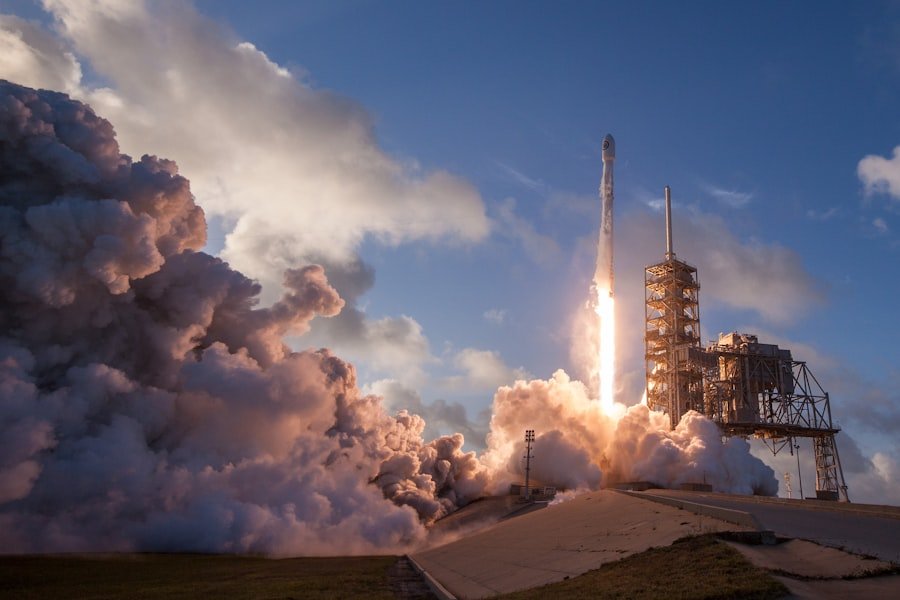
As national space agencies and private aerospace companies advance human spaceflight, ethical questions regarding our behavior in the cosmos have become urgent. Biblical ethics provide foundational principles for addressing these challenges.
The concept of stewardship is central to biblical ecology. In Genesis 1:28, humanity is given dominion over the Earth, but biblical scholars emphasize that this command must be understood in tandem with Genesis 2:15, where humanity is placed in creation to “work it and take care of it” (from the Hebrew abad and shamar, meaning to serve and protect). Applying this mandate beyond Earth requires responsible stewardship rather than destructive exploitation.
Note on Planetary Protection: International policies established by the Committee on Space Research (COSPAR) require spacecraft sterilization to avoid biological contamination of other worlds. This scientific standard directly reflects the theological principle of preserving pristine natural environments from reckless human harm.
Key ethical issues facing long-term space exploration include:
- Resource Extraction: Asteroid mining and lunar harvesting must prioritize the common good and avoid creating unconstrained monopolies that exacerbate global inequality on Earth.
- Orbital Debris: The proliferation of space junk in Low Earth Orbit (LEO) violates ecological care, threatening global communication systems and future scientific exploration.
- Human Risk and Sacrifice: Missions involving human crews must balance the pursuit of knowledge with biblical teachings on the sacredness and preservation of human life.
The Role of Religion in Shaping Public Opinion on Space Exploration
Religious beliefs play a substantial role in public support for scientific endeavors, including federal space budgets and colonization initiatives.
| Religious Tradition | General Perspective on Space Exploration |
|---|---|
| Christianity | Widely views cosmic exploration as uncovering the majesty of creation; focuses on ethical stewardship and prioritizing humanitarian needs alongside exploration. |
| Islam | Encourages scientific exploration to contemplate Allah’s vast creation (Surah Ar-Rahman 55:33); scholars have issued guidelines for prayer and fasting in orbit. |
| Judaism | Emphasizes Tikkun Olam (repairing the world) and the pursuit of knowledge; Halakhic authorities actively evaluate the observance of Shabbat in microgravity environments. |
| Hinduism | Integrates vast cyclical cosmic timescales into its cosmology, generally viewing astrophysics and space missions as complementary to spiritual growth. |
| Buddhism | Views the universe as interconnected and infinite; evaluates space ventures through the lens of ethical intent, resource use, and relieving suffering. |
According to sociological research published by the Pew Research Center, public attitudes toward space funding correlate with education, scientific literacy, and theological viewpoints regarding societal priorities. Many religious groups strongly support scientific exploration when it operates collaboratively with humanitarian stewardship on Earth.
The Potential Impact of Space Travel on Religious Beliefs and Practices
Direct exposure to spaceflight often deepens personal faith rather than diminishing it. Astronauts from diverse faith backgrounds have experienced what psychologists and philosophers call the “Overview Effect”—a profound cognitive and spiritual shift that occurs when viewing Earth suspended in the blackness of space.
Pro Tip: When examining historical space missions, note how astronauts integrated their faith: on Christmas Eve 1968, the Apollo 8 crew read Genesis 1:1–10 during the first crewed lunar orbit broadcast, and in July 1969, astronaut Buzz Aldrin took Christian communion on the lunar surface prior to stepping out onto the Moon.
As human presence extends to permanent lunar bases or Martian settlements, religious communities will adapt their liturgical practices. Determining the direction of prayer (such as the Christian East or Islamic Qibla), defining the Sabbath cycle in non-24-hour solar days, and celebrating religious holidays on other planets represent practical theological questions already being addressed by international religious councils.
Biblical Interpretations of Extraterrestrial Life

The question of whether intelligent life exists beyond Earth is one of the most intriguing frontiers in theology. While the Bible focuses primarily on humanity’s covenantal relationship with God on Earth, it nowhere states that Earth is the exclusive home of divine creation.
Several theological frameworks address astrobiology and intelligent extraterrestrial life:
- The Sovereignty of the Creator: Scripture affirms that God created all things visible and invisible (Colossians 1:16). Divine creative freedom is not restricted to a single planet.
- The Meaning of the Image of God (Imago Dei): Theologians debate whether the image of God (Genesis 1:26–27) is strictly physical or relational and rational. If relational, non-human intelligences could also reflect divine relational attributes within their own habitats.
- Ezekiel’s Vision: While modern popular culture sometimes speculates about Ezekiel’s vision of “wheels within wheels” (Ezekiel 1:15–21) in technological or extraterrestrial terms, orthodox biblical scholarship interprets the passage as a prophetic theophany—a symbolic vision of God’s mobile, omnipotent glory.
- Universal Reconciliation: Christian thinkers such as C.S. Lewis suggested in his theological essays that if unfallen extraterrestrial species exist, they would live in direct harmony with God; if fallen, they would be covered under the universal scope of divine grace and love.
The Future of Space Exploration and Its Relationship to Biblical Prophecy
Biblical prophecy frequently uses cosmic imagery—such as the darkening of the sun, falling stars, and the shaking of the heavens (Matthew 24:29, Revelation 6:12–14)—to convey divine judgment and the culmination of history. These passages employ apocalyptic literary conventions rather than predictive manuals for rocketry.
As humanity develops technologies for deep-space travel and long-term habitats, theologians emphasize that human expansion into space does not circumvent divine providence. Rather, human history remains within God’s ultimate plan, which culminates not in the abandonment of physical reality, but in the renewal of creation described in Revelation 21:1 as a “new heaven and a new earth.”
The Intersection of Science, Faith, and the Cosmos
The dialogue between space science and Christian theology demonstrates that empirical observation and spiritual meaning are complementary disciplines. Science explores how the universe functions through natural laws, while biblical theology examines why the cosmos exists and the moral responsibilities assigned to humanity.
By engaging with space exploration through sound biblical exegesis, believers can support scientific inquiry while offering a vital ethical voice. As humanity ventures further into the solar system, scripture continues to offer timeless wisdom regarding humility, creation care, and awe before the Creator of the cosmos.
Frequently Asked Questions
What does the Bible say about space travel?
The Bible does not explicitly mention modern space travel because it was written in an ancient pre-industrial context. However, scripture consistently speaks of the heavens as part of God’s purposeful creation (Psalm 19:1) and encourages the righteous pursuit of wisdom, understanding, and responsible stewardship over nature.
Does the Bible mention outer space or the universe?
Yes. The Bible refers to outer space using terms like the “heavens,” the “firmament,” and the “host of heaven” (Genesis 1:1, Isaiah 40:26, Psalm 8:3). While ancient authors used phenomenological language to describe what they saw with the naked eye, these passages describe the physical sky and the vast celestial realm beyond Earth.
Is space exploration against the teachings of the Bible?
No, space exploration is not considered against biblical teachings. Most theologians and Christian denominations view scientific discovery and peaceful space exploration as legitimate expressions of human inquiry and stewardship, provided missions are conducted ethically, avoid environmental harm, and do not neglect urgent human needs on Earth.
How would the discovery of extraterrestrial life impact Christian theology?
Major Christian scholars and denominations hold that the discovery of microbial or intelligent extraterrestrial life would not invalidate biblical faith. Theologians note that God’s creative power and love are infinite, meaning extraterrestrial life would simply represent another dimension of God’s vast creation under divine sovereignty.
Sources
- Vatican Observatory (Specola Vaticana) — Research and theological reflections on astronomy, planetary science, and cosmology.
- Committee on Space Research (COSPAR) — International planetary protection guidelines and planetary stewardship frameworks.
- Pew Research Center: Religion & Science — Demographic studies and surveys on religious attitudes toward science and space exploration.
- NASA History Division — Historical records of the Apollo missions, including the Apollo 8 Genesis broadcast and Apollo 11 surface activities.
