
Last Updated on July 23, 2026 by Caleb Warren
You may be able to donate an electric scooter to a mobility-equipment reuse program, veteran organization, local disability charity, thrift organization, school, or community repair group. The best destination depends on whether you have a seated mobility scooter or a stand-up electric kick scooter. Check the battery, charger, condition, service area, and current acceptance policy before transporting it.
Quick Answer
Donate a working mobility scooter to an assistive-technology reuse program, medical-equipment lending closet, veteran mobility organization, or approved local charity. A stand-up electric scooter may be better suited to a youth program, repair nonprofit, school, or thrift organization. Always call first because acceptance and pickup rules vary.
Key Takeaways
- Identify whether you have a medical mobility scooter or a stand-up electric kick scooter before choosing a charity.
- Local assistive-technology reuse programs and medical-equipment lending closets are often the best fit for mobility scooters.
- Goodwill, Project C.U.R.E., MedShare, and other large organizations have location-specific or equipment-specific restrictions, so approval is not automatic.
- Do not donate or charge a scooter with a swollen, leaking, recalled, burned, punctured, or impact-damaged battery.
- Pickup and tax-deduction rules vary. Confirm the service area, obtain a receipt, and keep records of the scooter’s condition and fair market value.
At a Glance
| Time Required | About 20 to 45 minutes to inspect, clean, photograph, and contact an organization |
| Difficulty | Easy, although moving a heavy mobility scooter may require help |
| Tools Needed | Soft cloth, mild cleaner, tire gauge if applicable, phone or camera, charger, keys, and manual |
| Cost | Usually free, but you may need to pay for transport, a minor repair, or approved battery recycling |
Note: This guide is mainly for donations in the United States. Charity, tax, transportation, and battery-disposal rules may differ in other countries.
Disclosure: As an Amazon Associate I earn from qualifying purchases. Some links on this page are affiliate links, at no extra cost to you.
Where Can You Donate an Electric Scooter?
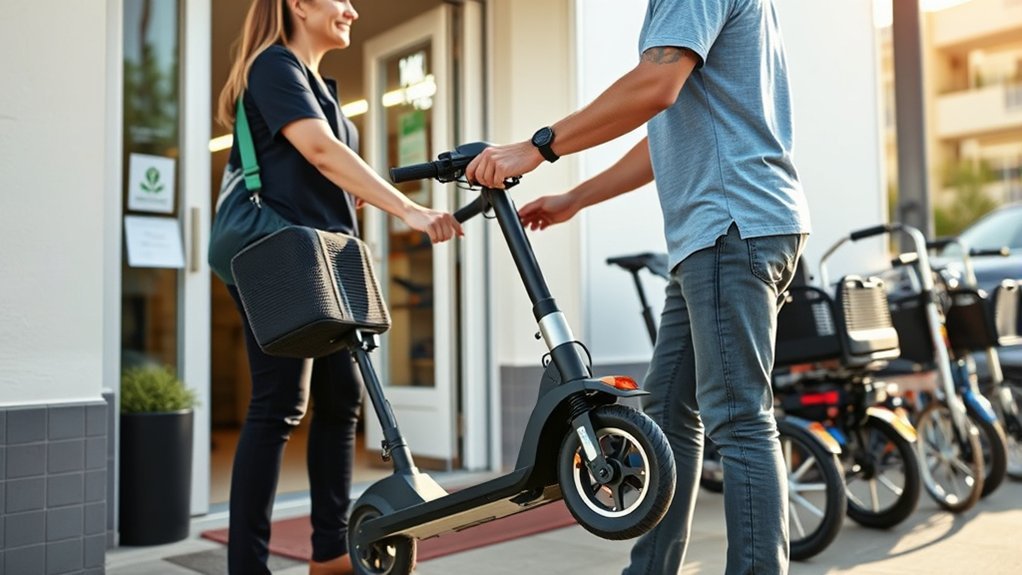
The best place to donate an electric scooter depends on its design and intended rider. A seated mobility scooter is assistive medical equipment, while a stand-up electric scooter is a micromobility or recreational device. Many organizations that accept one type will not accept the other.
Identify Your Scooter Type First
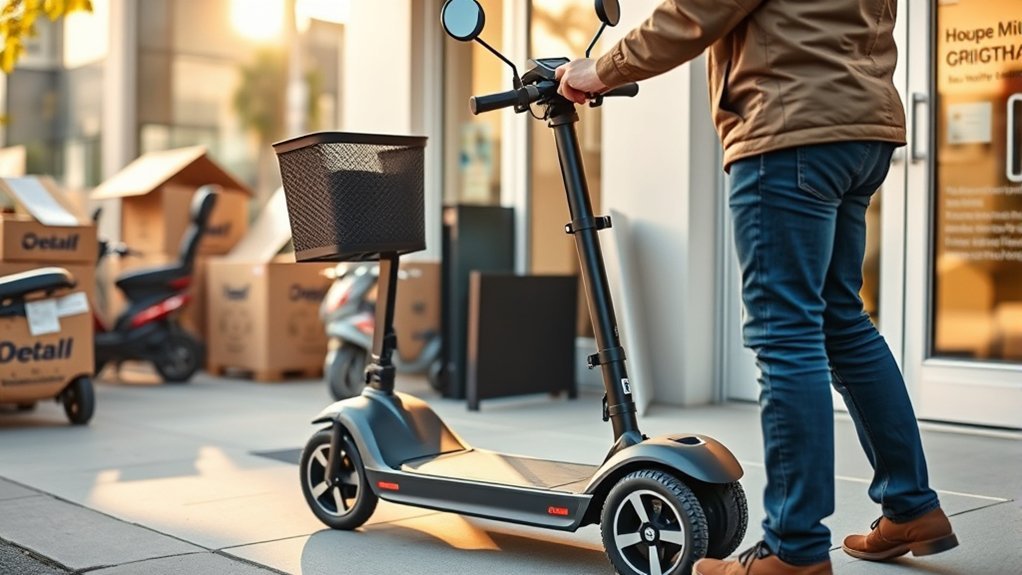
A mobility scooter normally has a seat, steering tiller, floorboard, rechargeable battery, and three or four wheels. It is designed for a person with limited mobility. These scooters are most useful to durable-medical-equipment reuse programs, disability organizations, veteran groups, and lending closets.
A stand-up electric kick scooter has handlebars and a narrow deck but no medical seat. It may be useful to a youth program, vocational school, community repair organization, bicycle cooperative, thrift organization, or local mutual-aid group if it is safe and legal to transfer.
Pro Tip: When you contact an organization, say “powered mobility scooter” or “stand-up electric kick scooter” instead of only saying “electric scooter.” This prevents confusion and helps the staff give you a reliable answer.
Which Charities Accept Electric Scooters?
No single charity accepts every scooter in every location. Start with organizations that match the scooter’s purpose, then confirm the model, condition, battery type, weight, and pickup location before making the trip.
Assistive-Technology Reuse Programs
State and regional assistive-technology programs are often the strongest option for a working mobility scooter. These programs may repair, exchange, loan, sell at low cost, or redistribute assistive devices. The federally supported AT3 Center state-program directory can help you locate an assistive-technology program in your state.
Ask whether the program accepts powered scooters, how old the equipment may be, whether batteries must hold a charge, and whether the program provides pickup. Some programs operate directly, while others refer donors to a partner reuse center.
Medical-Equipment Lending Closets
Local medical-equipment lending closets, disability resource centers, senior organizations, independent-living centers, rehabilitation programs, and faith-based assistance groups may accept mobility scooters. These organizations commonly serve a limited city, county, or state area, so local programs may be more practical than a national charity.
Project MEND is one verified example. It lists scooters among the equipment it accepts and offers pickup in San Antonio, Texas, and surrounding counties. Its service area is local, which shows why you should search for a similar medical-equipment reuse program near you rather than assume a national organization will collect the scooter.
Goodwill Scooter Donations
Your regional Goodwill may accept a mobility scooter or stand-up electric scooter, but acceptance is not guaranteed. Goodwill Industries International explains that regional Goodwill organizations set their own donation policies. A location may reject a scooter because of battery condition, storage limits, local resale rules, missing parts, or transportation concerns.
Some regional Goodwill organizations provide household pickup for selected large items. This is not the same as guaranteed free towing, and not every location offers the service. Call the regional organization, describe the exact scooter, and ask for written or email confirmation when possible.
Veteran Mobility Charities
Veteran Mobility states that it accepts electric scooters, wheelchairs, golf carts, and vehicles to support its work with disabled veterans. Its website also advertises donation pickup and documentation. Contact the organization before donating to confirm that it serves your location and accepts the scooter’s model, battery, and condition.
| Published donation feature | What you should confirm |
|---|---|
| Electric-scooter donations | Accepted scooter types and minimum condition |
| Donation pickup | Geographic coverage and loading requirements |
| Receipt and documentation | What records will be supplied after collection |
| Veteran-focused mission | How donated devices are repaired, sold, or distributed |
Project C.U.R.E. and MedShare
Project C.U.R.E. accepts several types of durable medical equipment from individuals, including wheelchairs, walkers, beds, lifts, commodes, and canes. Its standard individual-donation list does not specifically name mobility scooters. The organization asks donors to contact it about other durable medical equipment, so obtain approval before transporting a scooter. Distribution centers may accept equipment, while smaller collection centers may accept supplies only.
MedShare’s current equipment guidelines do not list mobility scooters and expressly say that motorized wheelchairs are not accepted. MedShare also says that it normally cannot pick up small household donations. Do not treat it as a guaranteed scooter-donation option. Submit the organization’s donation form or request written approval first.
Other Local Donation Options
Depending on the scooter type, you can also contact:
- Centers for independent living and disability support organizations
- Senior centers and aging-services organizations
- Hospice equipment-reuse programs
- Veterans service organizations and local veteran resource centers
- Community medical-equipment lending closets
- Vocational schools with small-engine, electronics, or repair programs
- Bicycle cooperatives and micromobility repair nonprofits
- Youth transportation programs that are legally able to accept stand-up scooters
- Community mutual-aid groups and verified local nonprofits
A nursing home, clinic, or individual family may not be able to accept used powered equipment because of liability, maintenance, sanitation, or insurance rules. Ask before delivering it.
How Do You Prepare an Electric Scooter for Donation?
A clean, complete, accurately described scooter is easier for an organization to evaluate and reuse. Follow these steps before requesting pickup or drop-off.
- Record the scooter details. Photograph the scooter and note the manufacturer, model, serial number, approximate age, weight, battery type, and maximum user weight if shown on the label.
- Check for recalls. Search the manufacturer’s website and the U.S. Consumer Product Safety Commission recall database. Follow the official remedy for any recalled scooter or battery.
- Inspect the frame and controls. Check the handlebars or tiller, brakes, throttle, steering, wheels, tires, cables, lights, seat, armrests, folding joints, and frame.
- Inspect the battery. Look for swelling, leaking, corrosion, unusual heat, burned areas, punctures, cracked casing, water damage, or evidence of an impact.
- Test it only when safe. If the battery appears normal, use the manufacturer-supplied or manufacturer-approved charger and test basic operation in a safe area. Do not use an unknown universal charger.
- Clean the scooter. Wipe hard surfaces with a mild cleaner that is safe for the material. Do not spray liquid into the battery compartment, charging port, controller, motor, or display.
- Gather all parts. Include the correct charger, keys, basket, seat, armrests, battery, manual, tool kit, and removable accessories.
- Remove personal information. Delete saved Bluetooth or app connections, remove account access when possible, and take off prescription labels, name tags, addresses, or insurance stickers.
- Describe problems honestly. Tell the organization about weak range, damaged plastic, tire wear, missing accessories, error codes, unusual noise, or repairs.
Warning: Do not charge, ride, ship, or donate a scooter with a swollen, leaking, smoking, burned, punctured, recalled, modified, or impact-damaged lithium battery. Move away from immediate danger, follow local emergency guidance when necessary, and contact the manufacturer, battery recycler, or household hazardous-waste program for instructions.
The CPSC micromobility guidance recommends checking the frame, brakes, throttle, tires, cables, and other components for damage. It also advises using only a charger supplied or approved by the manufacturer.
How Do Free Scooter Pickups Work?
Free pickup is available from some organizations, but it is not a standard service. The process, coverage area, waiting time, loading requirements, and communication method depend on the organization and its transport partners.
Pickup Request Details
When requesting pickup, be ready to provide:
- Your full pickup address and contact information
- The scooter type, brand, model, and approximate age
- Current working condition and known faults
- Battery type and whether it holds a charge
- Approximate weight and dimensions
- Whether it can be folded or disassembled
- Whether stairs, narrow doors, elevators, or gated access are involved
- Whether another adult can help move it
- Photographs of the scooter, battery label, charger, and damaged areas
The organization may accept the scooter, request more photographs, place you on a waiting list, ask you to deliver it, or decline it. Do not move a heavy scooter to the curb until the organization confirms where and when it should be placed.
Route Scheduling Updates
After approval, the organization may give you a pickup date or a broader collection window. Some programs call or text before arrival, while others use a third-party transport service. Live tracking and next-day arrival notices are not guaranteed.
- Confirm the date and approximate collection window.
- Ask whether the driver will enter the home.
- Ask whether the scooter must be outside, in a garage, or at the curb.
- Confirm who is responsible for lifting or loading it.
- Request a contact number for delays or access problems.
- Ask when and how you will receive a donation receipt.
Donation Day Handoff
Keep the scooter dry and accessible on donation day. Place the charger, keys, manual, and accessories together so they are not left behind. Do not leave a powered scooter unattended on a public sidewalk unless the organization specifically instructs you to do so.
| Step | What to do |
|---|---|
| Before booking | Send accurate details and photographs |
| After approval | Confirm the date, access instructions, and loading responsibility |
| Donation day | Provide the scooter, approved charger, keys, and accessories |
| After collection | Save the receipt, photographs, and written donation records |
What Happens After an Electric Scooter Donation?
The outcome depends on the receiving organization. A reuse program may inspect, sanitize, repair, test, and redistribute a mobility scooter. A thrift organization may sell it and use the proceeds to support its programs. A vocational program may use an approved scooter for repair training. An organization may also recycle the battery or reject the scooter if inspection reveals an unsafe condition.
- The organization records and inspects the scooter.
- Staff or qualified volunteers test the controls, brakes, frame, tires, charger, and battery.
- Reusable equipment may be cleaned and repaired.
- A mobility scooter may be loaned, sold at low cost, or provided to an eligible recipient.
- A thrift organization may sell the scooter rather than give it directly to a rider.
- Unsafe batteries or unusable components may be sent to an approved recycler.
Ask how the organization normally handles donated scooters when the final destination matters to you. A direct medical-equipment reuse program is generally a better choice than a resale store when your goal is to place a mobility device with someone who needs it.
What Should You Check Before Donating?
Complete this checklist before loading the scooter or scheduling transportation:
- Acceptance: Has the organization confirmed that it accepts your exact scooter type?
- Service area: Does it serve your city or pickup address?
- Condition: Does the scooter meet its minimum working and cosmetic requirements?
- Battery: Is the battery undamaged, unrecalled, and correctly identified?
- Charger: Do you have the original or manufacturer-approved charger?
- Completeness: Are the keys, seat, basket, armrests, manual, and removable parts included?
- Transport: Who will lift, load, and secure the scooter?
- Documentation: Will the organization provide a donation receipt?
- Privacy: Have you removed labels, accounts, and app connections?
- Honesty: Have you disclosed every known fault?
Pro Tip: Email photographs before arranging transport. A clear picture of the full scooter, model label, battery label, charger label, tires, seat, and any damage can prevent a rejected drop-off.
Can You Claim a Tax Deduction for a Donated Scooter?
A U.S. donation receipt does not automatically create a tax deduction. The organization must generally be eligible to receive deductible charitable contributions, and the donor must meet the applicable federal and state requirements.
The IRS Tax Exempt Organization Search lets you check whether an organization is eligible to receive tax-deductible contributions. The IRS generally bases a noncash property deduction on fair market value, not the scooter’s original purchase price. Taxpayers may also need to itemize deductions and keep supporting records.
Save the following:
- The organization’s legal name and address
- The donation date
- A description of the scooter and accessories
- Photographs showing its condition
- The written receipt
- Your reasonable fair-market-value calculation
- Repair records, comparable used listings, or other valuation evidence
Note: This is general information, not individual tax advice. Noncash-donation rules can depend on the item’s value, condition, use, and the donor’s tax situation.
What If the Scooter Is Broken or Rejected?
A scooter that is unsafe, incomplete, or too expensive to repair may not be suitable for donation. You may still have responsible alternatives.
Repair Before Donation
Ask the receiving organization whether it accepts repairable scooters before paying for work. A fresh tire, correct charger, key, fuse, or simple adjustment may make a scooter reusable. A failed controller, damaged frame, unavailable battery, or severe corrosion may cost more to repair than the scooter is worth.
Sell or Give It Away for Parts
A repair shop, vocational program, hobbyist, or owner of the same model may use safe parts. Describe the condition clearly and do not advertise a damaged scooter as rideable. Remove or separately manage an unsafe battery before transferring the remaining parts, following professional guidance.
Recycle the Battery and Scooter
Do not place a lithium-ion scooter battery in household trash or a normal curbside recycling bin. The U.S. Environmental Protection Agency recommends using a specialized battery recycler, retailer take-back service, manufacturer program, or local household hazardous-waste service.
Mobility scooters may use sealed lead-acid batteries instead of lithium-ion batteries. Ask a battery retailer, mobility-equipment dealer, recycling center, or local waste authority where to take the specific battery chemistry. The metal frame and electronic components may need separate recycling.
Frequently Asked Questions
Who can I donate an electric scooter to?
A working mobility scooter may be accepted by an assistive-technology reuse program, medical-equipment lending closet, disability organization, veteran mobility group, or approved thrift organization. A stand-up electric scooter may be better suited to a repair nonprofit, school, bicycle cooperative, youth program, or thrift organization. Confirm acceptance first.
What can I do with my old electric scooter?
You can donate it, repair it, sell or give it away with an honest condition description, use safe components for parts, or recycle it. A damaged lithium battery must go to an approved battery recycler or hazardous-waste program rather than household trash.
Can you donate a scooter to Goodwill?
Possibly. Regional Goodwill organizations set their own acceptance rules. Call your local organization and provide the scooter type, model, condition, battery information, weight, and photographs. Do not assume that another region’s policy applies to your location.
How do I get rid of a scooter that no charity accepts?
Contact a mobility-equipment dealer, repair shop, assistive-technology program, vocational school, electronics recycler, battery recycler, or local household hazardous-waste program. The battery, electronics, and metal frame may need to be handled separately.
Will a charity pick up a mobility scooter for free?
Some organizations offer free pickup within a defined service area, but many require drop-off. Confirm the address, stairs, scooter weight, loading responsibility, waiting time, and whether the driver can enter your home before booking.
Can I donate a scooter with a dead battery?
Only when the organization specifically accepts scooters needing batteries or repairs. Disclose the problem before delivery. Do not attempt to charge a swollen, leaking, recalled, burned, modified, or impact-damaged battery.
Is an electric scooter donation tax deductible?
It may be deductible under U.S. tax rules when it is given to an eligible organization and the donor meets the applicable itemization, valuation, condition, and recordkeeping requirements. A receipt supports your records but does not guarantee a deduction.
Sources
- Veteran Mobility donation information — accepted donation types, pickup, and documentation
- Goodwill Industries International donation guidance — regional acceptance and pickup differences
- Project MEND equipment donation page — scooter acceptance and local pickup coverage
- AT3 Center state assistive-technology programs — locating device-reuse services
- U.S. Consumer Product Safety Commission micromobility guidance — scooter inspection, charging, and battery safety
- IRS Tax Exempt Organization Search — checking eligibility for deductible charitable contributions
Conclusion
Donating an electric scooter can keep useful equipment in service, but the right destination depends on the scooter type. A working mobility scooter is usually best offered to an assistive-technology reuse program, medical-equipment lending closet, disability organization, or veteran mobility group. A stand-up scooter may fit a repair, education, youth, or thrift program.
Call before transporting it, describe its condition honestly, include the correct charger and accessories, and never donate an unsafe battery. When donation is not possible, use an approved repair, battery-recycling, electronics-recycling, or household hazardous-waste service instead of placing the scooter in household trash.
