
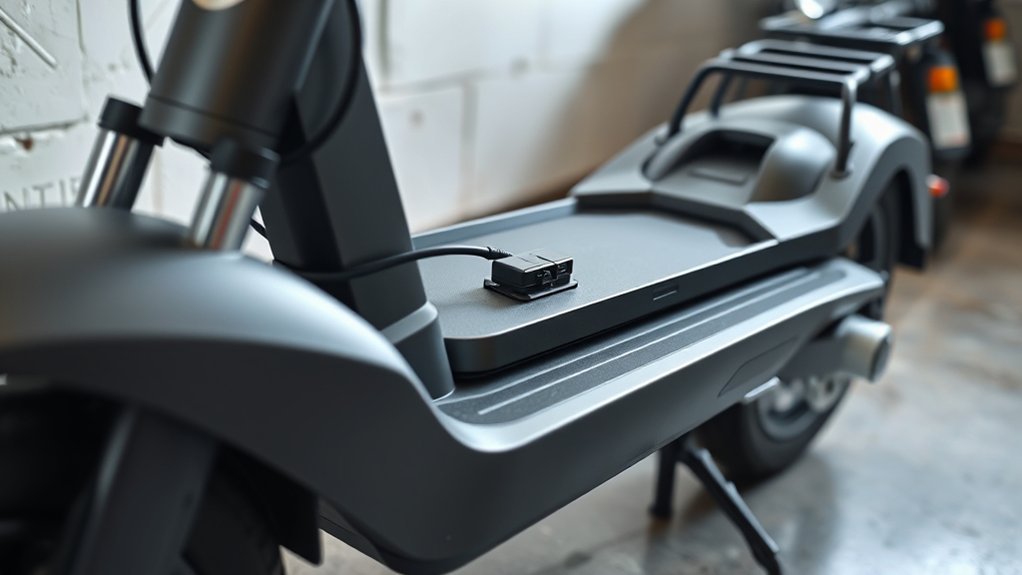
Last Updated on August 26, 2026 by Caleb Warren
An electric scooter may use a manual circuit breaker, a replaceable fuse, electronic battery protection, or a combination of these systems. The exact design depends on the model, so the safest first step is to identify your scooter and check its owner’s manual before removing a deck plate or battery cover. Some Razor E-series scooters, for example, use a physical reset-button circuit breaker connected to the battery system.
Quick Answer
Some electric scooters—especially certain Razor E-series models—use a manual reset circuit breaker in or beside the battery tray under the deck. Others have a fuse, electronic battery protection, or no user-accessible breaker at all. Check your exact model manual before removing panels, then reset only after checking why the protection device tripped.
Key Takeaways
- Not every electric scooter has a physical circuit breaker or reset button.
- On some scooters, including certain Razor E-series models, the reset breaker is connected to the battery system beneath the deck.
- Never open or repair a sealed lithium-ion battery pack unless the manufacturer specifically authorizes the procedure.
- A breaker that repeatedly trips usually indicates an unresolved overload, mechanical, wiring, battery, controller, or motor problem.
- Use the owner’s manual to identify the correct protection device and reset or replacement procedure for your exact model.
At a Glance
| Time Required | About 5–20 minutes for a basic manual check, visual inspection, and user-accessible reset |
| Difficulty | Easy if the reset button is externally accessible; stop if the procedure requires battery-pack disassembly or electrical repair not authorized by the manufacturer |
| Tools Needed | Owner’s manual; screwdriver or hex key only when the manual specifically instructs you to remove an access panel |
| Cost | Usually $0 for inspection or resetting; fuse, breaker, wiring, battery, controller, or professional-service costs vary by model |
Warning: Turn the scooter off and disconnect it from the charger before inspecting a user-serviceable electrical area. Do not puncture, open, modify, or repair a sealed lithium-ion battery pack. If you see swelling, melting, burned wiring, smoke, unusual heat, or battery damage, stop using and charging the scooter and follow the manufacturer’s service instructions.
Disclosure: As an Amazon Associate I earn from qualifying purchases. Some links on this page are affiliate links, at no extra cost to you.
Where Is the Electric Scooter Circuit Breaker?
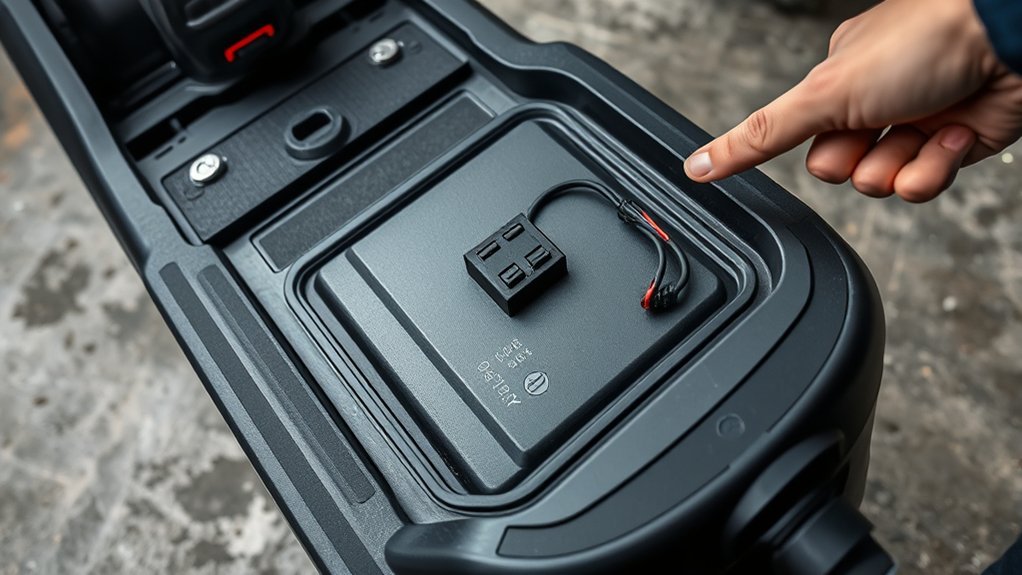
There is no single circuit-breaker location shared by every electric scooter. Some models have a physical reset button connected to the battery circuit, while others use a conventional fuse, a resettable electronic protection device, or protection built into the battery and controller. Start with your exact model number and owner’s manual rather than identifying a part by its color or shape.
For a documented example, certain Razor E100, E200, and E300-series scooters use a reset-button circuit breaker associated with the battery tray beneath the deck. Razor provides both E-series owner’s manuals and service resources and a reset-button replacement guide showing the device connected to the battery wiring.
Note: A physical reset button is not a standard feature on all modern electric scooters. If your manual does not identify a circuit breaker or user-serviceable fuse, do not open the deck simply to search for one.
Check the Battery Compartment First
If your manual says the scooter has a manual circuit breaker, check the location identified by the manufacturer. On some designs, the protection device is mounted in or near the battery tray so the main battery circuit can be interrupted during an overload.
Before opening any user-serviceable compartment:
- Turn the scooter completely off.
- Disconnect the charger.
- Allow the scooter to remain stationary.
- Confirm in the manual that the panel is intended to be removed by the owner.
- Use the diagram or part label in the manual to identify the reset device.
Do not rely on descriptions such as “small red or blue button.” Button colors, housings, fuse holders, wiring layouts, and access points differ between manufacturers and model revisions.
Look Under the Deck for the Breaker
The underside of the deck is a common service-access area because many scooters place the battery, controller, and wiring inside the deck. However, that does not mean every scooter has a user-resettable breaker there.
If your manual specifically directs you to remove a deck plate, follow its fastener sequence and service instructions. Once the approved access panel is removed, identify only the components shown in the manufacturer’s diagram. Do not probe connectors, bridge terminals, bypass a fuse, or short contacts while trying to find the protection device.
- Confirm the scooter is off and unplugged from the charger.
- Open only the access panel the manual identifies as user-serviceable.
- Compare the visible components with the manual or service diagram.
- Inspect for obvious heat damage, melted insulation, loose plugs, or moisture without dismantling the battery pack.
Pro Tip: Before removing a permitted access cover, take a clear photo of its original fastener positions and cable routing. It can help you reinstall the cover correctly without moving or pinching wiring.
Circuit Breaker or Fuse?
A circuit breaker and a fuse both provide overcurrent protection, but they do not necessarily work or reset in the same way. According to Eaton’s circuit-protection guidance, a conventional one-time fuse must be replaced after it interrupts an overcurrent, while a circuit breaker may be reset after it trips.
There are also resettable PTC protection devices used in electronics, so do not assume every component described as a “resettable fuse” is a push-button circuit breaker. Your scooter’s parts diagram or service manual should identify what the manufacturer actually installed.
Circuit Breaker Purpose
A scooter circuit breaker is an overcurrent-protection device. When its trip condition is reached, it interrupts the circuit to help protect electrical components. The exact breaker construction and trip characteristics vary, so it is better to follow the manufacturer’s specifications than to assume the unit uses a particular thermal, magnetic, or electronic mechanism.
During a permitted visual inspection, check for:
- cracked or heat-damaged breaker housing;
- loose connectors that are visibly accessible;
- melted insulation or discoloration;
- a reset button that will not remain in its normal position after the underlying problem has been addressed.
If the breaker trips again immediately, do not keep resetting it. The trip is a symptom, not the repair.
Fuse Versus Breaker
If your scooter uses a conventional replaceable fuse instead of a circuit breaker, the fuse opens the circuit once its rated conditions are exceeded and normally must be replaced. Never install a higher-amperage fuse simply because the original keeps opening. Use only the exact fuse type and rating specified by the manufacturer.
A manually resettable breaker, by contrast, can normally be returned to service after the cause of the trip has been corrected. Its location could be near the battery, within a battery tray, behind a service panel, or elsewhere according to the design. Fuse location is equally model-specific.
Reset the Electric Scooter Circuit Breaker
Reset a circuit breaker only when the manufacturer identifies it as a user-resettable device. Turn the scooter off first, disconnect the charger, and determine why it may have tripped. If the manual specifies a cooldown or waiting period, follow that exact instruction rather than using a generic 10- or 15-minute rule.
For example, the Razor E300/E300S owner’s manual says its reset button can trip if the motor is overloaded and instructs the user to wait a few seconds before pressing the reset button. That procedure applies to the documented Razor model and should not automatically be copied to another scooter.
Locating The Breaker
If your scooter suddenly loses power, use this sequence before assuming the circuit breaker is responsible:
- Turn the scooter off.
- Check the owner’s manual for a circuit breaker, reset button, fuse, or protection-device diagram.
- Confirm that the battery has charge and the charger is disconnected before troubleshooting.
- Inspect any externally accessible reset button identified in the manual.
- If access requires removing a panel, proceed only when the manual identifies that panel as owner-serviceable.
Do not repeatedly press an unidentified button or disconnect battery wiring in an attempt to force a reset. If your scooter has an app or display error code, check that code in the manufacturer documentation because the shutdown may be electronic rather than a physical breaker trip.
Resetting The Breaker
Once you have positively identified a user-resettable circuit breaker, follow the model-specific procedure. A typical sequence for a simple push-button breaker is:
| Step | Action |
|---|---|
| 1 | Turn the scooter off and disconnect the charger. |
| 2 | Identify the exact breaker/reset button from the manual. |
| 3 | Address an obvious overload condition and wait for any manufacturer-specified cooldown period. |
| 4 | Press or operate the reset control exactly as the manual directs. |
| 5 | Reassemble any approved access panel before powering the scooter on. |
| 6 | Test at low load. Stop if the breaker trips again. |
A breaker that will not reset, immediately trips again, becomes unusually hot, or shows physical damage needs further diagnosis. Do not bypass it or replace it with a device of a different current rating.
If the Breaker Keeps Tripping
Repeated trips mean something is continuing to demand more current than the protection system allows or another fault remains unresolved. Start with the least invasive checks.
- Reduce load. Stay within the scooter’s published rider-weight limit and do not tow loads unless the manufacturer allows it.
- Avoid steep climbs while testing. High motor load can increase current demand. Razor specifically lists an excessively heavy rider and a steep hill as examples that may overload the motor on its E300/E300S.
- Check for wheel or brake drag. With the scooter off, verify that the wheels rotate as the manual specifies and that a brake is not binding.
- Look for visible cable damage. Stop if you see melted insulation, pinched wiring, burned connectors, water intrusion, or corrosion around electrical components.
- Check manufacturer error codes. A controller, motor, battery-management, or sensor fault may cause a shutdown that resembles a breaker problem.
On applicable Razor E200/E300 chain-driven scooters, Razor’s service bulletin for repeated circuit-breaker trips includes checks for chain tension, rear-wheel alignment, and excessive brake drag. Those procedures are model-specific and should not be assumed to apply to hub-motor scooters.
A circuit breaker that keeps tripping is warning you about an unresolved condition. Repeatedly forcing it back on can hide the symptom without correcting the cause.
If trips continue after you have removed obvious overload conditions, stop riding and arrange manufacturer or qualified service. Repeated tripping can involve electrical faults that are not appropriate for trial-and-error repair.
Check the Wiring and Power Switch
If the scooter will not power on, verify the controls your model actually uses. Some scooters have a mechanical power switch or key switch; others use an electronic power button. Check that the control operates normally and inspect only externally accessible wiring or connectors identified in the manual.
Look for:
- loose external plugs;
- pinched or frayed insulation;
- heat discoloration;
- water or corrosion around connectors;
- a cracked or intermittent power switch.
Do not cut, splice, bypass, or replace internal battery wiring simply because the scooter will not start. Internal lithium-battery and controller work can involve substantial current and fire risk.
Inspect the Battery and Motor Connections
Battery and motor connections can interrupt power when they become loose, damaged, overheated, or corroded. However, how far an owner should inspect those connections depends on the manufacturer’s service instructions.
If connectors are exposed through a user-serviceable area, inspect them visually with the scooter off and disconnected from the charger. Do not place metal tools across terminals or attempt to open a sealed battery enclosure.
Segway’s battery safety guidance, for example, warns against removing a battery without professional guidance, disassembling the battery, touching battery contacts, or allowing metal objects to short the contacts. Follow similarly restrictive instructions whenever your scooter manufacturer provides them.
- If an approved plug is obviously loose, follow the manual’s reconnection procedure.
- If a connector is burned, melted, badly corroded, or wet, stop using the scooter.
- If battery casing is swollen, cracked, punctured, or unusually hot, do not charge the scooter.
- Use manufacturer-approved replacement components rather than improvised wiring or battery packs.
The U.S. Consumer Product Safety Commission also advises consumers to use manufacturer-approved replacement battery packs and not to use micromobility batteries that have been modified or reworked by unqualified personnel.
Use the Manual or Get Help
Your owner’s manual is the most reliable way to find the correct circuit breaker, fuse, reset control, and access procedure because the electrical layout can change between brands, models, and even hardware revisions of the same model.
| Clue | What to Do |
|---|---|
| Manual shows a reset button | Use the exact reset procedure and waiting period listed for your model. |
| Manual shows a replaceable fuse | Use only the specified fuse type and rating. |
| No breaker or fuse is listed | Do not dismantle the deck or battery merely to search for one; follow the manufacturer’s diagnostic procedure. |
| Breaker trips repeatedly | Stop repeatedly resetting it and diagnose the overload or seek service. |
| Burned, swollen, melted, or damaged battery components | Stop using and charging the scooter and contact the manufacturer or qualified service provider. |
If the manual is unclear, use the manufacturer’s official support site with the model and serial/revision information. A photo of the scooter label and any accessible reset device can also help an authorized service provider identify the correct component.
Frequently Asked Questions
Do Electric Scooters Have a Reset Button?
Some do, but many do not have a physical user-accessible reset button. Certain Razor E-series scooters use a reset-button circuit breaker, while other scooters depend on fuses, electronic controls, or battery-management protection. Check your exact model manual before looking inside the deck.
What Is a Circuit Breaker on a Scooter?
A circuit breaker is an overcurrent-protection device that interrupts the electrical circuit when its trip condition is reached. If it is designed to be manually reset, it can normally be returned to service after the underlying overload or fault has been addressed.
Where Is the Fuse Located on an Electric Scooter?
There is no universal fuse location. A scooter may place a fuse near the battery circuit, inside an approved service compartment, in a wiring harness, or elsewhere. Some scooters do not provide a user-replaceable fuse at all. Use the manufacturer’s wiring diagram or service instructions to identify it.
How Do I Fix My Electric Scooter That Won’t Turn On?
Start with the battery charge, charger status, power control, displayed error codes, and externally accessible connectors. If the manual identifies a resettable breaker or fuse, inspect it using the specified procedure. Stop if you find burned wiring, battery damage, repeated breaker trips, or a repair that requires opening a sealed battery pack.
Why Does My Electric Scooter Circuit Breaker Keep Tripping?
Possible causes include excessive motor load, steep climbing, a rider/load above the scooter’s limit, wheel or brake drag, damaged wiring, controller or motor faults, or another electrical problem. The exact causes depend on the scooter design. Do not repeatedly reset a breaker that continues to trip.
Can I Replace an Electric Scooter Fuse With a Higher-Amp Fuse?
No. Use only the fuse type and current rating specified by the scooter manufacturer. Installing a higher-rated fuse can allow wiring or other components to carry more current than the electrical system was designed to handle.
Conclusion
An electric scooter’s circuit protection may be a resettable breaker, conventional fuse, electronic protection system, or a combination of devices. Some Razor E-series scooters place a manual reset breaker in the battery system beneath the deck, but that location and procedure should not be generalized to every scooter.
If your scooter loses power, identify the exact model, check its manual, inspect only user-serviceable components, and address the cause before resetting a breaker. Repeated trips, burned wiring, battery damage, unusual heat, or repairs involving a sealed lithium-ion battery are reasons to stop troubleshooting and use manufacturer or qualified professional service.
Sources
- Razor E-Series Support — owner’s manuals, reset-button resources, and model-specific service information.
- Razor E300/E300S Owner’s Manual — documents overload conditions and the model’s reset-button procedure.
- Razor E200/E300 Circuit Breaker Service Bulletin — supports checks for brake drag, chain tension, and rear-wheel alignment on applicable models.
- U.S. Consumer Product Safety Commission Micromobility Safety Center — battery, charging, replacement-pack, and fire-safety guidance.
- Segway Safety Guidance — battery handling, disassembly, contact, and short-circuit precautions.
- Eaton Circuit Breaker Fundamentals — explains the general distinction between circuit breakers and conventional fuses.
