
Last Updated on August 22, 2026 by Caleb Warren
Your electric scooter tires usually need a pressure setting somewhere around 35–55 PSI, but the correct number depends on your scooter model, tire size, tire construction, rider weight, and the manufacturer’s recommendation. Always check the tire sidewall or owner’s manual first. Proper tire pressure improves handling, efficiency, comfort, and tire life.
Quick Answer
Most electric scooter tires work best within about 35–55 PSI, but your scooter’s manual is the final authority. Many 10-inch pneumatic tires fall near 40–50 PSI, while some tubeless models use different ranges. Check pressure with a gauge when tires are cold.
Key Takeaways
- Always follow your scooter manufacturer’s PSI recommendation before using general guidelines.
- Low pressure can reduce stability, increase tire wear, and create more rolling resistance.
- Higher pressure may improve efficiency but can reduce comfort and grip.
- Check tire pressure regularly with a reliable gauge.
At a Glance
| Time Required | 5–10 minutes |
| Difficulty | Easy |
| Tools Needed | Pressure gauge and compatible pump |
| Cost | Usually free if you own the tools |
Disclosure: As an Amazon Associate I earn from qualifying purchases. Some links on this page are affiliate links, at no extra cost to you.
What PSI Should Your Scooter Tires Be?
The correct PSI for an electric scooter depends on the specific tire and scooter model. Many pneumatic scooter tires use a range around 40–50 PSI, but some models require different settings. For example, Segway recommends 40–45 PSI for certain 10-inch pneumatic tires and 42–48 PSI for some tubeless models. :contentReference[oaicite:7]{index=7}
Use your manufacturer’s recommendation as the starting point. If you carry heavier loads, ride long distances, or frequently ride on rough surfaces, small pressure adjustments may improve stability. Avoid changing pressure dramatically without checking your scooter’s specifications.
Warning: Riding with incorrect tire pressure can reduce grip, increase wear, and affect braking control.
How Does Tire Type Affect Scooter PSI?
Tire construction changes the ideal pressure. Solid tires do not require inflation, but they usually provide a firmer ride because they contain no air cushion.
Tubed pneumatic tires commonly require regular pressure checks because low air pressure can increase the chance of pinch flats. Tubeless pneumatic tires may resist some punctures better, but their recommended PSI still depends on the manufacturer. Some tubeless scooters require pressures above 40 PSI, so do not automatically reduce pressure just because the tire is tubeless.
Pro Tip: Write your ideal PSI on a small note or save it in your phone so you do not have to search for the correct number every time.
How Should Rider Weight and Terrain Change PSI?
Your body weight and riding environment affect how your scooter tires perform. Heavier riders may need pressure closer to the upper end of the recommended range, while lighter riders may prefer the middle of the range for comfort.
For smooth pavement, slightly higher pressure can reduce rolling resistance. For rough surfaces, staying within the recommended range can help maintain traction and comfort.
What Do Wrong Tire Pressures Do?
| Pressure State | What You Feel | Main Risk |
|---|---|---|
| Too low | Heavy steering and slower response | Extra wear and possible tire damage |
| Too low | More rolling resistance | Reduced efficiency |
| Too high | Hard, uncomfortable ride | Reduced grip |
| Too high | Less tire contact area | Handling problems |
Keeping tires within the recommended range helps your scooter maintain predictable handling and efficient performance.
How Do You Check and Maintain Scooter PSI?
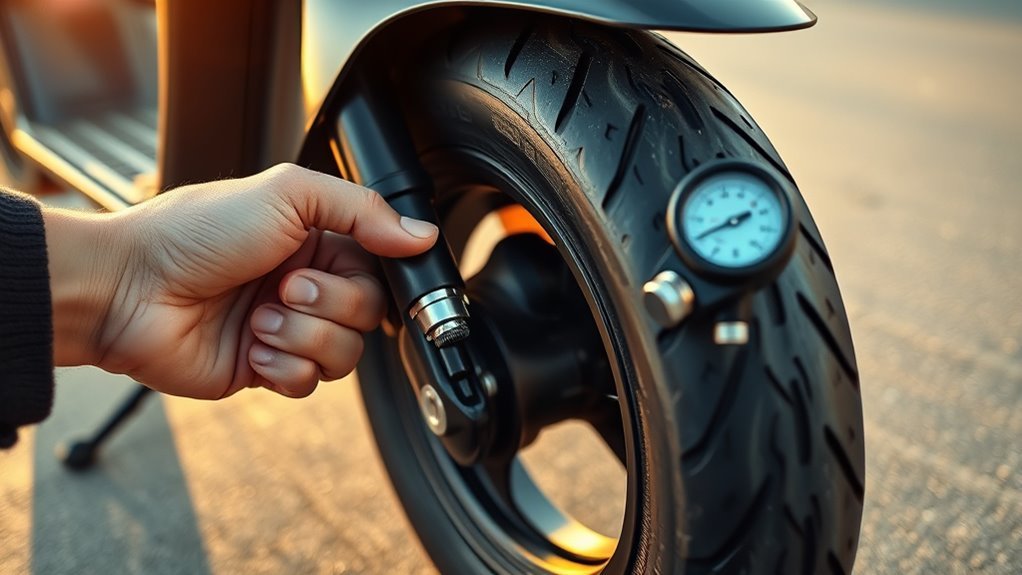
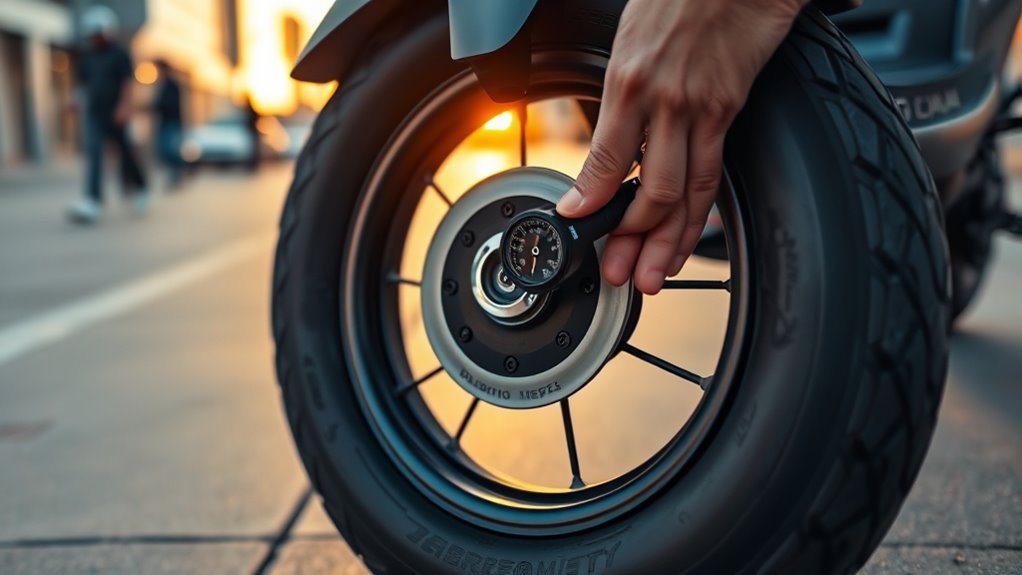
Check your tire pressure when the tires are cold. Use a reliable gauge, compare the reading with the manufacturer’s recommendation, and adjust slowly.
- Turn off the scooter and let the tires cool.
- Remove the valve cap.
- Measure PSI with a gauge.
- Add or release air gradually.
- Replace the valve cap and check again.
Regular checks help prevent uneven wear and unexpected handling changes. Some manufacturers recommend monthly checks, while frequent riders may benefit from checking more often. :contentReference[oaicite:8]{index=8}
Frequently Asked Questions
What is the best PSI for electric scooter tires?
The best PSI depends on your scooter model. Many pneumatic tires fall between 35 and 55 PSI, but the owner’s manual and tire markings should always be followed first.
Is 40 PSI too high for a scooter?
No. For many scooter tires, 40 PSI is within the normal range. Always compare it with your specific tire recommendation.
Is 25 PSI dangerously low?
It may be too low for many pneumatic scooter tires, but the correct judgment depends on the tire specification. Check the recommended PSI before riding.
Conclusion
Your electric scooter tires work best when their pressure matches the scooter, rider, and riding conditions. Instead of chasing one universal PSI number, use the manufacturer’s recommendation as your foundation. Regular checks with a gauge help protect range, comfort, handling, and tire life.
Sources
- Segway Support — manufacturer tire pressure specifications. :contentReference[oaicite:9]{index=9}
- Xiaomi Support — scooter tire inflation guidance. :contentReference[oaicite:10]{index=10}
