
Last Updated on September 10, 2026 by Daniel Globe
Electric scooter tires usually last 1,000 to 3,000 miles, but your exact lifespan depends on tire type, rider weight, terrain, and riding style. Pneumatic tires often wear out sooner, around 500 to 1,500 miles, while solid tires can exceed 5,000 miles. Rough roads, aggressive acceleration, and poor pressure control accelerate wear. Check for cracks, bald spots, or tread below 1.6 mm, and you’ll know when replacement is near, with more detail ahead.
Disclosure: As an Amazon Associate I earn from qualifying purchases. Some links on this page are affiliate links, at no extra cost to you.
How Long Do Electric Scooter Tires Last?
Electric scooter tires typically last about 1,000 to 3,000 miles, but the exact lifespan depends on tire type and riding conditions. If you ride on pneumatic tires, expect replacement around 500 to 1,500 miles; solid tires can reach 5,000 miles or more. Your actual result depends on your weight, riding style, and terrain, so use mileage tracking to estimate wear objectively. Rough pavement and frequent impacts shorten service life, while moderate conditions help preserve integrity. Apply tire maintenance tips: keep inflation correct, inspect sidewalls and tread regularly, and replace tires when tread falls below 1/16 inch, or when you see cracks or bald spots. Under-inflation can increase wear by 30% to 40%, so pressure checks matter. When you maintain your scooter well, you keep mobility efficient, autonomous, and reliable.
What Shortens Scooter Tire Life?
Your scooter tire life drops fastest when tire type, road conditions, and riding habits create higher wear loads. Pneumatic tires usually wear out sooner than solid tires, rough or uneven surfaces can cut lifespan by up to 50%, and hard braking or sharp turns can reduce longevity by 40–60%. If you ride aggressively on poor pavement, you’re compounding stress and accelerating tread loss.
Tire Type Matters
Tire type is one of the biggest determinants of scooter tire life, because pneumatic tires usually wear out after about 1,000 to 2,500 miles, while solid tires can last roughly 3,000 to 5,000 miles. You can use that gap to choose tire materials and tread design that fit your riding goals. Pneumatic tires flex and grip better, but they lose life faster, especially if you run them underinflated. Solid tires resist punctures and deformation, so they last longer, though they usually deliver less compliance. If you want maximum autonomy, match the tire to your load, speed, and terrain demands. A lighter rider with disciplined throttle and braking inputs will preserve either type longer, but the tire’s construction still sets the baseline for wear, durability, and replacement frequency.
Road Conditions
Road conditions can shorten scooter tire life quickly, especially when you ride on gravel, uneven pavement, or other rough surfaces that can increase wear by more than 50% versus smooth roads. This terrain impact matters because irregular contact patches raise abrasion, heat buildup, and rubber fatigue. Surface effects from potholes, glass, and sharp debris also trigger cuts and punctures, forcing earlier replacement, particularly with pneumatic tires. High heat and freezing temperatures further degrade compounds, reducing flexibility and structural integrity. If you ride in harsh environments, you’re accelerating tire loss through repeated impact loading and material breakdown. Smooth, clean pavement preserves tread and sidewall life far better, so choosing better routes can extend performance and keep you moving with more freedom, less maintenance, and fewer interruptions.
Riding Habits
Riding habits can cut scooter tire life dramatically, especially when you brake hard, accelerate suddenly, or take sharp turns at speed. Your braking techniques matter: aggressive stops can reduce tire life by 40-60% versus smooth inputs. Refine acceleration habits and speed control to limit heat and shear on the tread. Use disciplined turning strategies, because abrupt cornering concentrates stress and causes uneven wear. Maintain surface awareness; rough or uneven paths can halve expected lifespan. Check weight distribution, since every extra 50 lbs over the limit can trim lifespan by 10-15%. Consistent riding frequency also compounds wear. Protect your freedom by treating tire maintenance as nonnegotiable: verify pressure, inspect tread, and rotate tires on schedule. These choices preserve grip, efficiency, and range longer.
Signs Your Scooter Tires Need Replacement
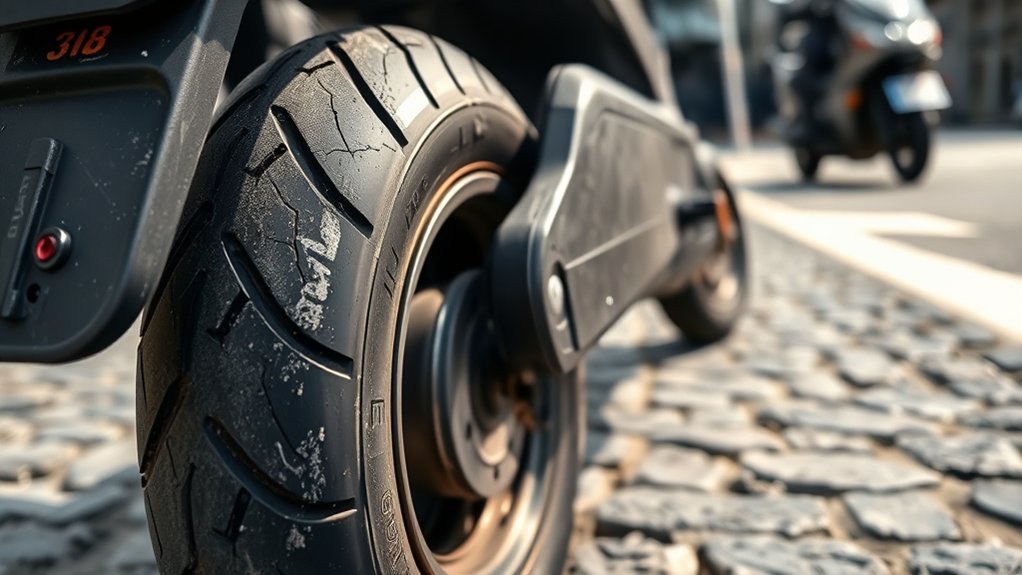
You should inspect your scooter tires for worn tread patterns, since tread depth below 1/16 inch (1.6 mm) reduces grip and weakens wet-road performance. You should also check for cracks, bulges, or dry rot on the sidewall and contact surface, because these defects indicate material degradation and a higher failure risk. If you see either condition, replace the tire promptly to maintain safe traction and structural integrity.
Worn Tread Patterns
Worn tread patterns are one of the clearest signs that an electric scooter tire needs replacement, because bald spots, uneven wear, or a tread depth below 1/16 inch (1.6 mm) can sharply reduce grip and raise accident risk, especially on wet pavement. You should inspect tread maintenance regularly and treat any visible flattening as a performance deficit, not a cosmetic issue. When the contact patch loses defined channels, water dispersal drops and grip safety declines, making braking and cornering less predictable. Check your tires every 3–6 months, or sooner if you ride hard, to catch wear before it undermines control. Replacing worn tires restores traction, improves stability, and keeps your ride responsive, so you can move freely with confidence.
Cracks And Bulges
Cracks and bulges are two of the most serious visual warning signs on an electric scooter tire, because they point to rubber aging or internal structural damage that can quickly compromise grip and safety. You should inspect both sidewalls and the tread during routine tire maintenance, since visible cracks mean the rubber’s elasticity is failing and your traction is dropping. Bulges or bubbles signal a broken carcass, and that defect can trigger a sudden blowout while you ride. Don’t ignore either condition. Replace the tire immediately if you find pronounced cracking or swelling. Keeping pressure within the manufacturer’s range helps reduce stress, slow deterioration, and extend tire life. Consistent checks protect your mobility, limit safety concerns, and keep your scooter performing as intended.
How to Extend Scooter Tire Life
To extend scooter tire life, maintain proper tire pressure, since pneumatic tires typically perform best at 40–65 PSI and underinflation accelerates wear while reducing efficiency. Make pressure checks part of your tire maintenance tips, because stable inflation preserves contact patch geometry and reduces heat buildup. Rotate tires every 500–750 miles so wear distributes evenly across the tread and casing, not just one load path. Choose the tire type that matches your routes: solid tires can last up to 5,000 miles, while pneumatic tires usually deliver 1,000–3,000 miles. If you ride on broken pavement, slow down and avoid potholes, curbs, and sharp debris; impact loading and puncture stress shorten service life fast. Clean tires regularly, too. Removing grit, oil, and embedded debris helps preserve traction and limits abrasive wear. These habits keep your scooter responsive, efficient, and free from unnecessary tire dependence.
When to Replace Scooter Tires
Even with proper pressure, rotation, and route management, scooter tires don’t last forever, so you need clear replacement criteria. Replace a tire when tread depth drops below 1/16 inch (1.6 mm); at that point, grip degrades sharply and your control becomes less reliable. During tire maintenance, inspect the sidewalls and contact patch for cracks, bulges, or bald spots, because these show material fatigue and compromised structure. If your pneumatic tire keeps puncturing or flattening, it’s losing resilience and no longer supports safe riding. A tire that loses air quickly after repair likely has internal damage, so replace it immediately. Check your tires every 3–6 months to catch these failures early and keep your replacement frequency tied to condition, not guesswork. That approach lets you stay mobile, independent, and safer on every ride.
Choosing the Right Scooter Tire Type
Choosing the right scooter tire type starts with matching the tire’s structure to your route and riding demands. If you ride rough pavement or broken paths, pneumatic tires give you the best shock absorption and tire performance, typically lasting 1,500 to 2,500 miles, but they can flat and demand regular maintenance tips. For smooth urban commuting, solid tires free you from flats and upkeep, and they usually run 3,000 to 4,000 miles, though you’ll feel more road vibration. Tubeless tires sit between those extremes: they keep air-filled comfort, resist punctures better than tube setups, and make repairs simpler when you do need them. Honeycomb tires add a cellular structure that balances durability, comfort, and puncture resistance, which helps on mixed terrain. You should choose based on terrain, mileage goals, and how much maintenance you’re willing to trade for freedom.
Frequently Asked Questions
How Often Should I Replace E-Scooter Tires?
You should replace e-scooter tires when tire wear appears, usually every 1,000–3,000 miles for pneumatic or 2,000–5,000 for solid tire types. Check tread, cracks, and your riding habits; regular maintenance tips help you decide.
How Much Does a New Scooter Tire Cost?
A new scooter tire usually costs $20-$60 each; budget models run $20-$30, premium ones $45-$60+. Use tire maintenance tips and tire wear indicators to reduce replacement frequency, protect your budget, and keep riding freely.
What Happens if You Don’t Move Your Electric Scooter for 3 Months?
Out of sight, out of mind: after three months, your scooter tires can flat-spot, lose pressure, and suffer tire degradation, while battery maintenance lapses reduce capacity; inspect, inflate, and charge to restore safe performance.
Is It Okay to Use 7 Year Old Tires?
No, you shouldn’t use 7-year-old tires; tire degradation can weaken rubber and cause safety concerns. You’ll risk cracks, dry rot, bulges, and blowouts, so replace them before riding to keep your machine reliable and free.
Conclusion
You now know electric scooter tire life depends on mileage, terrain, pressure, and riding style. If you ride on rough roads or underinflate tires, wear accelerates fast. Inspect tread, sidewalls, and punctures regularly, and replace tires before grip drops or damage spreads. Choosing the right tire type and maintaining correct pressure will extend service life. Treat your tires like critical hardware, not afterthoughts, and they’ll keep your ride safe and efficient.
