
Last Updated on August 25, 2026 by Caleb Warren
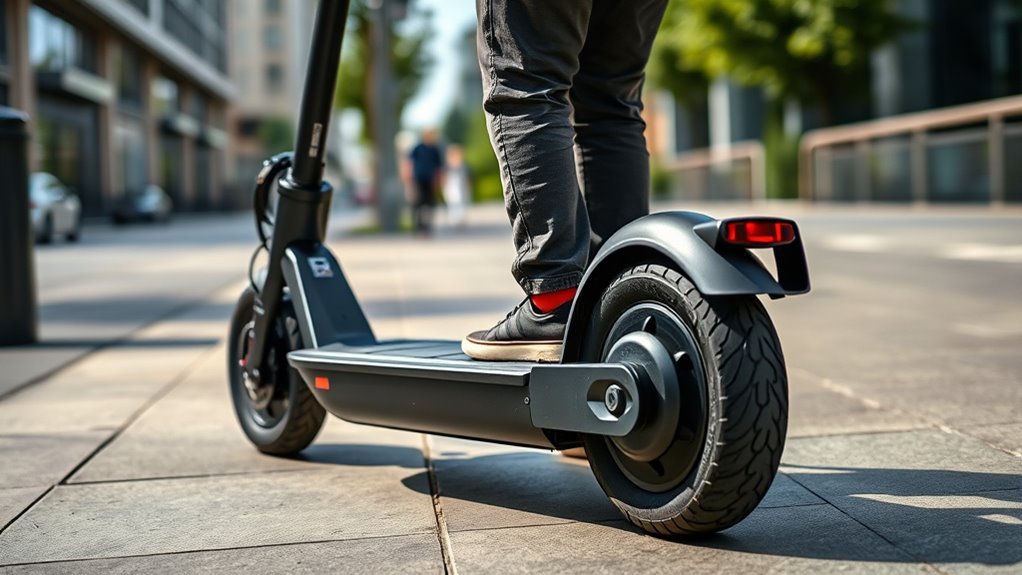
Electric scooter weight limits range from 220 lbs (100 kg) on standard commuter models to over 400 lbs (181 kg) on reinforced heavy-duty models. Operating an electric scooter within its rated weight capacity ensures structural integrity, responsive braking, optimal battery range, and motor longevity. Because your total load consists of your body weight plus all gear, backpacks, and accessories, selecting a scooter with a payload capacity at least 15 to 20 lbs higher than your combined weight provides essential mechanical headroom and preserves ride performance.
Quick Answer
Most standard adult electric scooters support a maximum weight limit of 220 to 265 lbs (100 to 120 kg). Heavier adults (250+ lbs) require heavy-duty electric scooters with reinforced aviation-grade frames, dual motors (1000W+ combined), dual suspension, and hydraulic disc brakes, which support payload capacities between 330 and 400+ lbs (150 to 181+ kg).
Key Takeaways
- Standard vs. Heavy-Duty: Entry-level commuters max out at 220 lbs (100 kg), mid-tier models hold 265 lbs (120 kg), and heavy-duty performance scooters carry 330 to 440 lbs (150 to 200 kg).
- Performance Penalties: Exceeding payload ratings can reduce top speed and battery range by 30% to 50% while significantly increasing stopping distances.
- State Laws Focus on Scooter Weight: State statutes setting a “100-pound limit” (e.g., Virginia, Georgia) regulate the unladen weight of the scooter itself, not the rider’s body weight.
- Critical Components: Heavier riders need dual motors (minimum 500W–1000W sustained), hydraulic brakes, pneumatic tires with adjusted PSI, and adjustable coil or hydraulic suspension.
Disclosure: As an Amazon Associate I earn from qualifying purchases. Some links on this page are affiliate links, at no extra cost to you.
What Is the Electric Scooter Weight Limit?
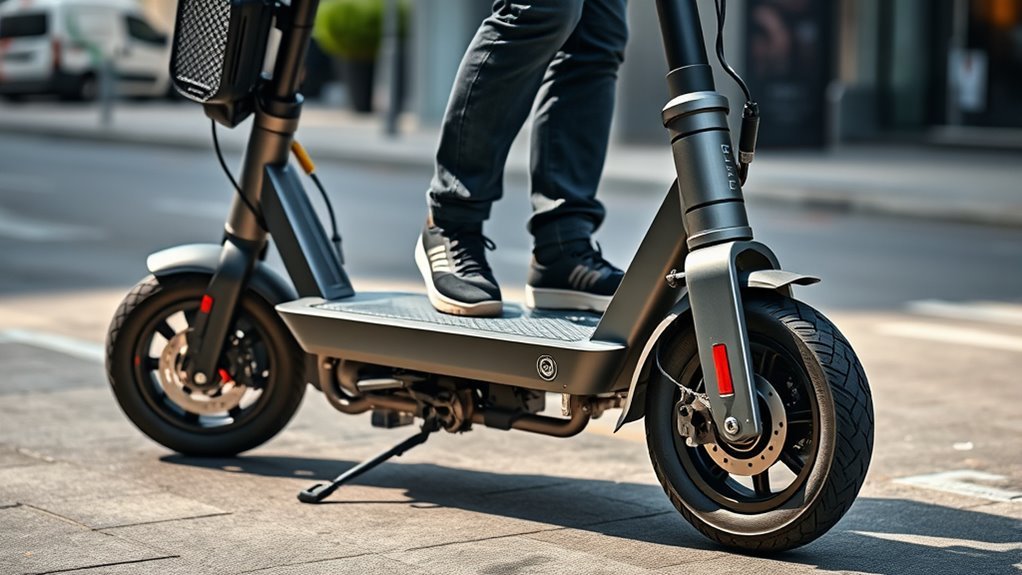
An electric scooter’s weight limit (maximum payload capacity) represents the maximum load the vehicle can carry safely without risking mechanical failure, thermal overload, or compromised handling. Manufacturers establish these ratings based on strict stress-testing of structural weld joints, motor torque thresholds, electronic controller current capacity, and braking efficiency.
Weight capacities fall into distinct categories based on chassis design and intended riding environment:
| Scooter Category | Weight Capacity | Motor Configuration | Recommended Rider Weight |
|---|---|---|---|
| Kids & Teens | 120–175 lbs (54–80 kg) | 150W – 250W Single | Under 140 lbs (63 kg) |
| Standard Commuter | 220 lbs (100 kg) | 250W – 350W Single | Up to 200 lbs (90 kg) |
| Mid-Range Commuter | 265 lbs (120 kg) | 500W – 800W Single/Dual | 200–245 lbs (90–111 kg) |
| Heavy-Duty / High-Power | 330–440 lbs (150–200 kg) | 1000W – 3000W+ Dual | 250–380+ lbs (113–172+ kg) |
Why Electric Scooter Weight Limits Matter
Operating within specified weight boundaries is essential for safety, operational efficiency, and vehicle durability. Exceeding rated capacity introduces cascading mechanical and electrical failures.
Exceeding rated payload limits accelerates thermal degradation in motor controllers, reduces battery range by up to 50%, and exponentially increases braking distances.
- Braking Distance and Safety: Kinetic energy increases proportionally with total vehicle mass ($E_k = \frac{1}{2}mv^2$). A heavily loaded scooter requires substantially more friction to stop, lengthening emergency braking distances and risking brake pad glaze or rotor warping.
- Motor Overheating & Thermal Throttling: Forcing a low-wattage motor to move excess mass creates continuous high-amp draw from the battery. This spikes controller temperatures, leading to automatic thermal throttling or permanent brushless DC motor burnout.
- Structural Metal Fatigue: Overloading concentrates severe cyclic stress on the steering stem folding mechanism, neck joint, and deck welds, risking catastrophic frame failure when encountering potholes or road seams.
- Battery Voltage Sag & Range Loss: Excess payload forces the battery pack to discharge at higher continuous C-rates, causing steep voltage drop (voltage sag) and reducing effective range to less than half the advertised mileage.
- Warranty Invalidation: Most major manufacturers equip motor controllers with onboard logging that flags sustained overcurrent events, allowing service centers to void warranty coverage for overload damage.
Warning: The folding latch and stem locking ring on entry-level scooters are structural weak points. Riding near or over maximum payload on rough pavement can crack locking pins and result in sudden stem collapse.
Typical Electric Scooter Weight Limits by Type
Electric scooters are engineered for specific rider profiles. Matching the category to your total payload prevents poor ride dynamics and premature component wear.
- Youth & Child Scooters (120–175 lbs limit): Designed with narrow standing decks, composite or plastic-reinforced frames, and low-torque motors (100W–200W). Adults should never ride these models due to frame deflection and immediate motor stall.
- Entry-Level Ultraportables (220 lbs limit): Models such as the Segway Ninebot E-series or basic commuter units prioritize low overall weight (25–30 lbs) for portability. They utilize thin-wall aluminum frames and single 250W–300W hub motors that struggle under riders exceeding 190 lbs.
- Full-Featured Daily Commuters (265 lbs limit): The industry benchmark for adult daily commuting (e.g., Segway Ninebot Max G2, NIU KQi3 Max). Built with 6061-T6 aluminum alloys, 350W–500W rear hub motors, and 10-inch tubeless pneumatic tires to comfortably carry adults up to 240 lbs.
- Heavy-Duty & High-Performance Scooters (330–440 lbs limit): Purpose-built utility and performance scooters (e.g., EMOVE Cruiser S, Kaabo Wolf Warrior series). Engineered with dual-tube stems, hydraulic motorcycle-grade suspension, massive battery packs (1500Wh+), and dual motors yielding 2000W+ peak output.
What Determines Scooter Weight Capacity?
A scooter’s rated capacity is the result of four interdependent engineering systems:
- Frame Metallurgy and Geometry: Aviation-grade 6061-T6 aluminum alloy and heat-treated chromoly steel offer superior tensile strength over cast aluminum. Gusseted deck plates and reinforced forged neck stems resist buckling under load.
- Suspension Kinematics: Heavier payloads quickly bottom out basic spring suspension. True high-capacity scooters utilize dual adjustable hydraulic shocks or high-durometer PU elastomer blocks to dissipate road shocks effectively.
- Tire Construction & Volume: Large-volume 10-to-11-inch pneumatic tubeless tires distribute payload across a wider contact patch, preserving traction and protecting rims from impact damage.
- Motor Torque & Continuous Power: Hub motors require high phase wire current and robust magnet configurations to generate the sustained torque necessary to propel larger riders up hills without thermal stall.
Pro Tip: Check your tire pressure weekly. For riders above 220 lbs, inflate pneumatic tires 3 to 5 PSI above standard recommendations (up to the maximum sidewall rating) to reduce rolling resistance and prevent pinch flats.
Motor Power and Battery Capacity for Heavy Riders
For heavier riders, raw power is not just about top speed—it provides hill-climbing ability and emergency acceleration.
- Motor Wattage Recommendations:
- Riders 200–250 lbs: Single motor with at least 500W continuous output (800W–1000W peak) or dual 350W motors.
- Riders 250–300+ lbs: Dual motors delivering a minimum of 1000W to 2000W combined continuous output. Dual-wheel drive prevents front-wheel slip on steep inclines.
- System Voltage (48V, 52V, 60V, 72V): Higher nominal voltage delivers more power at lower amperage ($P = V \times I$). A 60V system generates less heat in the wiring harness and controller than a 36V system under the same rider weight, dramatically improving efficiency.
- Battery Capacity (Amp-Hours & Watt-Hours): A minimum battery size of 650Wh (approx. 48V 13Ah) is recommended for riders over 220 lbs to achieve at least 15–20 miles of real-world range. For riders over 280 lbs, aim for 1000Wh to 1500Wh+.
Key Scooter Features for Heavy Riders
When selecting a high-capacity electric scooter, prioritize durability, stopping power, and thermal management:
- Braking Systems: Dual hydraulic disc brakes with 140mm or 160mm rotors. Hydraulic calipers provide immediate stopping power with minimal hand lever effort, preventing brake fade.
- Deck Dimensions: A deck width of at least 8 inches (20 cm) and length of 20+ inches (50 cm) allows a stable offset stance, lowering the center of gravity.
- Suspension Adjustability: Preload-adjustable hydraulic or dual-spring suspension allows riders to stiffen the suspension travel to match their exact weight, preventing bottom-outs on bumps.
- IP Water-Resistance Rating: Minimum IPX5 rating ensures electrical components and high-output battery enclosures remain sealed against road spray and moisture.
What Happens If You Exceed the Weight Limit?
Exceeding manufacturer payload limits leads to immediate performance degradation and long-term mechanical breakdown:
- Loss of Gradeability: Hill climbing capability drops drastically. A scooter rated to climb 15% grades under a 165 lb rider may stall completely on a 5% incline under an overloaded payload.
- Accelerated Battery Cell Degradation: Continuous maximum amp draw generates internal cell heat, degrading lithium-ion chemistry and permanently shortening overall battery cycle life.
- Structural Fatigue and Weld Failure: Repeated road vibration under excessive mass causes micro-fractures along aluminum deck welds and stress points on the folding joint.
- Frequent Flat Tires: Heavier loads compress pneumatic tubes against the rim flange, causing friction pinch flats, while solid rubber tires transfer unbuffered road shocks directly to motor axles and wheel bearings.
US State Electric Scooter Weight Regulations (Unladen vs. Payload Weight)
Riders often confuse state statutory definitions with individual payload limits. In the United States, several states (such as Georgia, Iowa, Nevada, and Virginia) include weight thresholds in their statutory definition of an electric personal assistive mobility device or motorized scooter:
- Gross Vehicle (Unladen) Weight vs. Rider Payload: State statutes specifying a 100 lb (45.3 kg) weight cap refer strictly to the empty weight of the scooter itself, not the weight of the rider.
- Traffic Code Classification: If a stand-up electric scooter weighs over 100 lbs unladen, state statutes may classify it as a moped, motor-driven cycle, or limited-use motorcycle, requiring DMV registration, license plates, and motorcycle insurance.
- Rider Weight Legality: There are no state or federal laws setting maximum body weight limits for riders; rider payload limits remain purely a manufacturer engineering and safety standard.
Note: Always verify whether local city bylaws restrict scooter operation on sidewalks based on vehicle speed or total curb weight.
How to Choose the Right Scooter Weight Limit
Selecting the proper weight capacity involves calculating your true operating mass and matching it against critical performance factors.
1. Calculate Your Real-World Operating Payload
Weigh yourself while wearing full riding gear, including helmet, jacket, heavy footwear, and any loaded backpack or commuter bag. A commuter weighing 210 lbs body weight frequently carries 15 to 20 lbs of work gear, pushing their true payload to 230 lbs—exceeding a standard 220 lb commuter limit.
2. Maintain a 15% Safety and Performance Buffer
Target a scooter with a stated weight capacity at least 15% to 20% higher than your gross loaded weight. If your total payload with gear is 240 lbs, choose a model rated for 280 to 330 lbs. This buffer ensures the motor operates below peak thermal strain and preserves your suspension travel.
3. Verify Terrain and Hill Grade Requirements
If your commute includes steep hills (grades greater than 10%), prioritize dual-motor configurations regardless of your weight. A 230 lb rider on a dual 1000W scooter will climb effortlessly, whereas a single 500W motor will struggle, overheat, and draw heavy battery current.
Frequently Asked Questions
Can a 300 lb person ride an electric scooter?
Yes. A 300 lb adult can safely ride an electric scooter by choosing a heavy-duty model rated for 330 lbs to 400+ lbs. Suitable options feature reinforced aviation-grade aluminum frames, dual motors (minimum 1000W combined sustained power), dual hydraulic suspension, and hydraulic disc brakes to ensure safe handling and climbing torque.
Am I too heavy for an electric scooter?
You are only too heavy if your total weight (including clothing and cargo) exceeds the specific model’s published payload limit. While standard rental and commuter scooters cap out at 220 lbs, heavy-duty and performance electric scooters support riders up to 400 to 500 lbs.
How much weight can a standard electric scooter hold?
Standard adult commuter electric scooters hold between 220 lbs (100 kg) and 265 lbs (120 kg). High-performance, dual-motor, and heavy-duty electric scooters carry between 330 lbs (150 kg) and 440 lbs (200 kg).
What are the best electric scooters for heavy adults?
Top electric scooters for heavy adults include the EMOVE Cruiser S (352 lbs capacity, large battery, semi-hydraulic brakes), Kaabo Wolf Warrior / King series (330–400 lbs capacity, dual motorcycle-grade inverted hydraulic fork suspension), and Segway Ninebot Max G2 (265 lbs capacity for mid-weight commuters).
Conclusion
Choosing an electric scooter with the right weight limit is essential for your safety, vehicle reliability, and riding satisfaction. Exceeding rated payload capacities strains structural welds, overheats motor controllers, drains battery range, and dangerously increases stopping distances. Always calculate your gross payload by combining your body weight with riding gear and cargo, then select a scooter that provides a 15% to 20% safety margin above that total. For riders over 220 lbs, investing in a heavy-duty model with dual motors, hydraulic brakes, and adjustable suspension ensures dependable performance on every commute.
Sources
- Code of Virginia § 46.2-100 — Statutory definitions of electric personal assistive mobility devices and vehicle unladen weight restrictions.
- U.S. Consumer Product Safety Commission (CPSC) — Micromobility safety standards, structural guidance, and battery electrical guidelines.
- SAE International Standard J3194 — Taxonomy and classification of powered micromobility vehicles.
