
Last Updated on September 10, 2026 by Caleb Warren
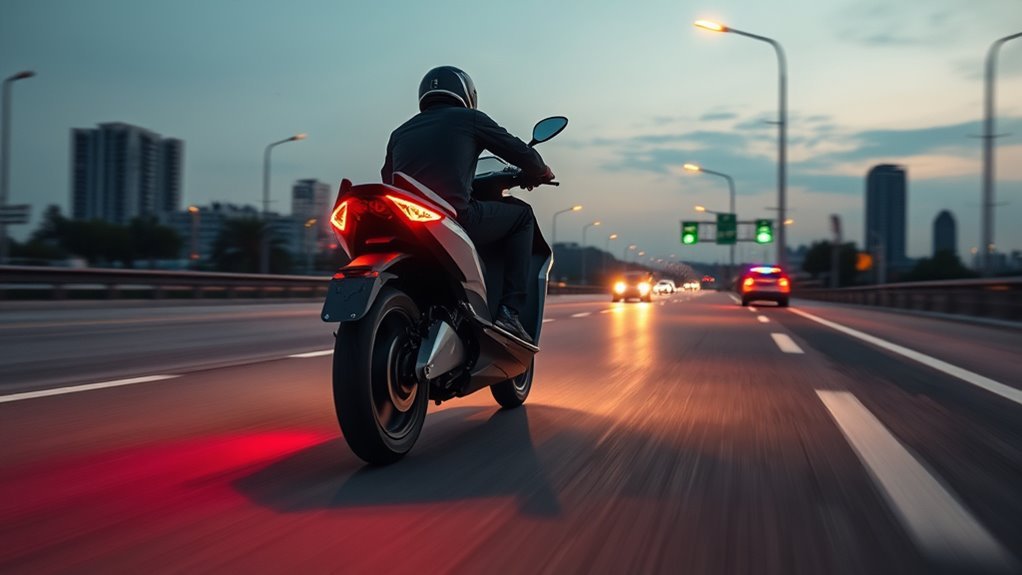
Yes, an electric scooter can be designed for a manufacturer-listed top speed of about 100 mph (161 km/h), but that puts it far outside normal commuter-scooter territory. Machines in this class need purpose-built motors, batteries, chassis components, brakes, tires, cooling, and stability systems. They are better understood as specialist performance vehicles for controlled environments, not everyday street transport.
Quick Answer
Yes. Bo currently lists its M-Turbo electric scooter at 100 mph with more than 24,000W of power and a 2,530Wh battery. However, a manufacturer-listed top speed is not automatically the same as an independently measured or officially certified speed record, and 100-mph scooters are generally unsuitable for ordinary public-road use.
Key Takeaways
- A purpose-built electric scooter can be engineered around a 100-mph target, but ordinary commuter scooters are not designed for it.
- Bo currently lists the M-Turbo at 100 mph, more than 24,000W, a 2,530Wh battery, and up to 150 miles of range.
- Motor wattage alone does not determine top speed; voltage, controllers, motor design, tires, aerodynamics, load, and electronic limits all matter.
- Public-road e-scooter rules are normally far more restrictive and vary by country, state, and city.
- At extreme speeds, motorcycle-grade protective equipment and a controlled riding environment are essential, but no protective gear can remove the underlying risk.
Disclosure: As an Amazon Associate I earn from qualifying purchases. Some links on this page are affiliate links, at no extra cost to you.
Can an Electric Scooter Go 100 Mph?
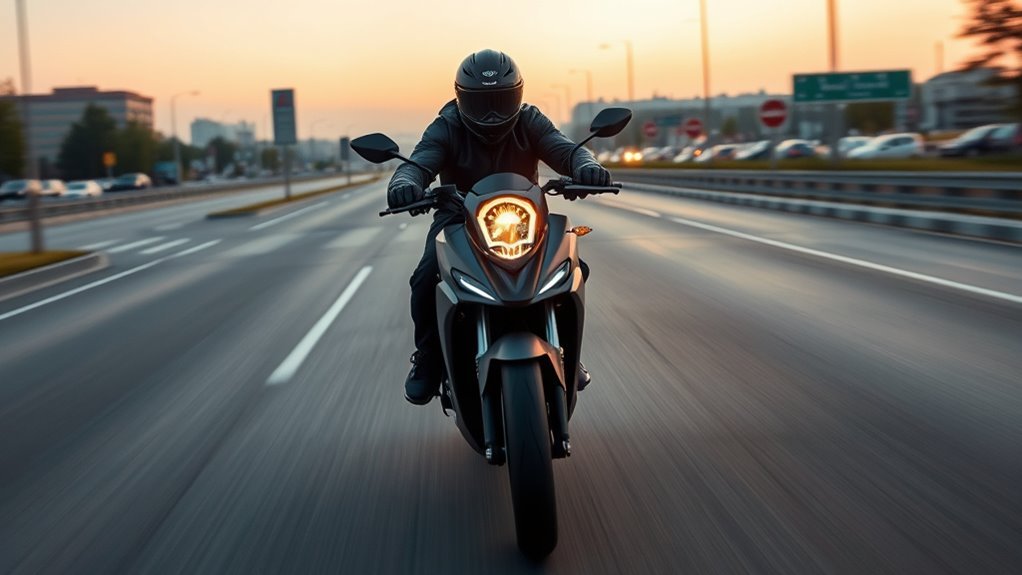
Yes, but the wording matters. A normal commuter electric scooter is not a 100-mph vehicle. The machines associated with triple-digit speed are highly specialized performance platforms with motorcycle-like power levels and components.
As of August 2026, Bo lists its M-Turbo with a 100 mph speed specification, more than 24,000W of dual-motor power, a 2,530Wh battery, and a claimed range of up to 150 miles. Those are manufacturer-published specifications, so they should not be confused with an independently certified world speed record.
Warning: Do not attempt to turn an ordinary commuter scooter into a 100-mph machine by simply fitting larger motors, controllers, or batteries. The frame, steering system, wheels, tires, brakes, thermal management, electrical system, and rider protection all become safety-critical at extreme speed. A purpose-built, professionally engineered platform and controlled course are fundamentally different from a modified street scooter.
What a Scooter Needs to Hit 100 Mph
Reaching 100 mph on a standing electric scooter requires far more than adding motor wattage. The whole vehicle must be engineered as one system. At this level, power delivery, structural strength, steering stability, braking, tire capability, battery protection, cooling, and aerodynamics all affect whether the vehicle can operate predictably.
- High-power propulsion: A specialist dual-motor system and controllers capable of delivering very high current are needed to overcome rolling resistance and rapidly increasing aerodynamic drag.
- High-energy battery system: The battery, battery-management system, wiring, connectors, and controllers must safely support the required current without excessive heat or voltage drop.
- Rigid chassis and stable steering: Frame flex or steering instability that feels minor at commuter speeds can become dangerous as speed increases.
- High-performance brakes and tires: Braking hardware, tire construction, grip, wheel integrity, and heat management must suit the intended performance.
- Thermal management: Motors, controllers, batteries, and brakes all generate heat, especially during repeated acceleration and braking.
- Professional testing: Development should take place on a controlled course with experienced personnel, proper inspection procedures, and suitable emergency support.
The important point is that a 100-mph scooter is not simply a more powerful version of a 20-mph scooter. It is a different engineering problem.
Motor Power Does Not Determine Top Speed by Itself
A common mistake is to assume that a certain wattage automatically produces a certain top speed. It does not. Two scooters advertised with the same motor power can have very different maximum speeds.
Top speed also depends on battery voltage, controller limits, motor winding and design, wheel diameter, gearing or hub-motor characteristics, rider and vehicle mass, tire pressure, aerodynamic drag, battery state of charge, voltage sag, terrain, wind, and software speed limits. That is why a statement such as “5,000W equals 50 mph” is not reliable without knowing the specific scooter and how its power rating is defined.
Why the Bo M-Turbo Pushes the Limits
The Bo M-Turbo is notable because Bo designed it around an extreme performance target rather than ordinary commuting. According to the current manufacturer specifications, its dual-motor race powertrain delivers more than 24,000W, while advanced traction control adjusts power between the wheels.
Bo also lists a 2,530Wh battery, a 100-mph speed specification, and up to 150 miles of range. The 150-mile figure should be understood as a manufacturer range claim under suitable riding conditions; it does not mean the scooter will travel 150 miles while being ridden continuously at 100 mph. Energy consumption rises sharply as speed and aerodynamic drag increase.
For braking, Bo specifies front and rear Hope V4 quad-piston disc brakes with floating rotors intended to manage repeated high-energy braking. The company also says its chassis uses principles from its Safesteer system to improve stability at speed.
Bo further claims that the Turbo has a higher power-to-weight ratio than a Bugatti Veyron. That comparison is useful for illustrating the project’s design goal, but it should be treated as a manufacturer claim, not an independent test result.
Note: Earlier launch-era material described a 1,800Wh battery. Bo’s current M-Turbo product page now lists 2,530Wh, so the newer figure is used here.
Advertised, Tested, and Record Speeds Are Not the Same
When comparing very fast electric scooters, check what a speed number actually represents. A manufacturer may publish a design target or product specification, while reviewers may report GPS-tested speed under specific conditions. A recognized speed record introduces another layer because the run normally has to meet the rules of the organization certifying it.
For that reason, the safest wording for the Bo M-Turbo is that Bo currently lists it at 100 mph. That supports the answer that a standing electric scooter can be engineered around triple-digit performance, but it should not be automatically described as the holder of an independently certified world record without documentation from the relevant record authority.
A “100 mph” manufacturer specification, a GPS-tested 100 mph run, and an officially certified 100 mph record are three different claims.
How Scooter Speed Limits Vary by Region
Public-road rules for electric scooters vary by jurisdiction, and an extreme-performance machine may fall outside the legal definition of an ordinary e-scooter entirely. Do not assume that a scooter is street legal simply because it can be purchased.
United States
There is no single nationwide operating rule that makes every standing electric scooter legal at the same speed. State and local vehicle classifications matter. For example, the California DMV states that motorized scooters cannot exceed 15 mph and also imposes licensing and operating requirements.
Other states and cities use different definitions and restrictions. A machine capable of 100 mph may not qualify for the ordinary scooter rules at all, so riders need to check their state motor-vehicle law and local rules before using any high-performance model on public roads.
Germany
Germany provides a clear example of why the original 45 km/h figure is misleading. Under the current Elektrokleinstfahrzeuge-Verordnung (eKFV), qualifying electric small vehicles have a design speed of more than 6 km/h and no more than 20 km/h.
The regulation also contains equipment and approval requirements. A 100-mph performance scooter therefore should not be treated as an ordinary road-legal German e-scooter.
United Kingdom
The UK takes another approach. According to GOV.UK guidance updated in July 2026, privately owned e-scooters remain illegal to use on public land. Approved rental scooters can be used under the rules of official trial areas.
This illustrates why there is no useful worldwide “legal scooter speed” number. Vehicle classification, ownership, insurance, licensing, road type, and local regulations can matter as much as maximum speed.
What Gear You Need for High-Speed Riding
Extreme-speed riding calls for motorcycle-level protective equipment and a controlled environment. Even then, protective gear can only reduce some injury risks; it cannot make a 100-mph crash safe.
The U.S. Consumer Product Safety Commission recommends wearing a helmet on an e-scooter, checking the scooter for damage, and testing the brakes before riding. At speeds far beyond normal micromobility use, those basic precautions become even more important.
Full-Face Helmet
A full-face motorcycle helmet offers more head and facial coverage than an open-face design. For a closed-course high-speed scooter, use a helmet that meets an appropriate recognized motorcycle standard and the rules of the venue or sanctioning organization.
In the United States, NHTSA advises riders to look for the DOT label showing manufacturer certification to FMVSS No. 218. NHTSA does not individually approve helmets; manufacturers certify compliance, and the agency performs compliance testing and can take enforcement action.
- Check that the helmet meets the appropriate standard for your location and activity.
- Make sure it fits snugly and remains secure with the retention strap fastened.
- Inspect the shell, liner, visor, and strap for damage.
- Use a clear, undamaged visor that provides adequate visibility.
Armored Riding Gear
At extreme scooter speeds, abrasion and impact protection should be treated similarly to high-speed motorcycle riding. A protective jacket and pants with impact armor can provide more coverage than ordinary clothing, while knee and elbow protection helps protect vulnerable joints.
Fit is also important. Loose material can flap heavily at speed, while badly positioned armor may move away from the area it is supposed to protect. Inspect seams, closures, and armor placement before riding.
No jacket or armor eliminates the consequences of hitting a fixed object or another vehicle at extreme speed. Protective clothing is a last line of defense, not a substitute for a safe environment and speed choice.
Protective Gloves And Boots
Your hands and feet also need protection. Motorcycle-style gloves can improve abrasion and impact protection while maintaining grip on the controls. Boots should cover and support the ankles and have secure closures that cannot easily catch on the scooter.
- Gloves: abrasion-resistant construction, secure wrist closure, reinforced impact areas, and good control feel.
- Boots: ankle coverage, reinforced toe and heel areas, secure fastening, and a sole that maintains grip.
- Fit: secure enough to keep protective areas in place without restricting normal control movement.
Pre-Ride Checks for a High-Performance Scooter
A basic inspection is worthwhile before every ride, even on an ordinary scooter. CPSC guidance specifically recommends checking the handlebars, brakes, throttle, bell, lights, tires, cables, and frame for damage and confirming that the brakes work as expected.
For a specialist high-performance machine, inspection should follow the manufacturer’s procedures and any closed-course requirements. Pay particular attention to wheels and tires, brake condition, steering play, visible frame damage, fasteners, battery or wiring damage, and unusual heat or warning messages.
Pro Tip: Treat any unexplained steering movement, tire damage, brake problem, battery warning, loose component, or structural damage as a reason not to ride until the machine has been properly inspected.
Are 100 Mph Electric Scooters Practical?
For most people, no. Triple-digit performance is impressive from an engineering perspective, but it conflicts with the qualities that make ordinary electric scooters useful: moderate speed, simple operation, portability, low running cost, and compatibility with local micromobility rules.
Real-World Usability
A 100 mph electric scooter is poorly matched to normal urban commuting. Public-road rules commonly keep ordinary scooters at much lower speeds, and some jurisdictions do not permit privately owned e-scooters on public roads at all.
- Legal reality: The vehicle may not fit your jurisdiction’s legal e-scooter definition.
- Infrastructure reality: Potholes, road debris, drainage covers, pavement joints, crosswinds, traffic, and pedestrians make extreme speed unsuitable for normal micromobility environments.
- Portability reality: A reinforced high-power machine is generally heavier and less convenient than a commuter scooter.
- Range reality: Maximum manufacturer range and maximum speed should not be assumed to occur at the same time.
For everyday transport, a well-built scooter operated within local rules will usually provide far more useful mobility than a machine designed around a triple-digit headline figure.
Safety And Control
At very high speed, control becomes the central issue. More powerful brakes alone do not solve the problem because braking performance also depends on tire grip, road surface, vehicle geometry, temperature, suspension behavior, and rider inputs.
| Risk | What Matters | Why |
|---|---|---|
| Extreme speed | Brakes, tires, surface, heat management | Available grip and braking consistency limit how quickly the scooter can slow down. |
| Steering instability | Chassis stiffness, steering geometry, wheel condition | Small disturbances become much more consequential as speed rises. |
| Impact injury | Full-face helmet and protective clothing | Protective equipment may reduce some injuries but cannot remove crash forces. |
| Electrical or battery failure | Compatible battery, charger, BMS, wiring, and thermal protection | High-current systems place greater demands on electrical and thermal safety. |
| Operator error | Experience, controlled venue, inspection, conservative decisions | At extreme speed, there is less time and space to recover from a mistake. |
Cost Vs Performance
Extreme scooters also make a difficult value proposition. When the Bo Turbo project was introduced in 2025, Bo reported a planned limited built-to-order run starting at about $29,500. Its current M-Turbo page does not display that launch price, so $29,500 should be treated as an announced launch-era figure rather than a guaranteed current quote.
- Cost: Specialist engineering and low-volume production make extreme machines expensive.
- Legality: Their full performance is usually incompatible with ordinary e-scooter road rules.
- Convenience: Higher-power components and stronger structures reduce the portability advantage of a normal scooter.
- Usable performance: Most riders gain more practical value from predictable handling, braking, range, serviceability, and legal road use than from a 100-mph maximum.
Frequently Asked Questions
Is There an Electric Scooter That Goes 100 Mph?
Bo currently lists the M-Turbo at 100 mph with more than 24,000W of power. Treat 100 mph as a manufacturer-published specification unless you also have independent testing or an official record result confirming the exact speed under defined conditions.
Is 100 Mph Fast for a Scooter?
Yes. One hundred mph, or about 161 km/h, is extreme for a standing scooter and far beyond normal commuter use. At that speed, chassis stability, braking, tires, road surface, aerodynamics, protective equipment, and professional testing become critical.
How Fast Does a 5000W Electric Scooter Go?
You cannot reliably calculate top speed from a 5,000W rating alone. Battery voltage, controller limits, motor design, wheel size, rider weight, aerodynamics, terrain, state of charge, and electronic speed limiting all affect the result. Use the specific model’s manufacturer data and independent GPS testing instead of a universal watt-to-speed estimate.
What Is the Highest Speed for an Electric Scooter?
For standing electric scooters, manufacturers now publish specifications around the 100-mph mark, including Bo’s M-Turbo. However, “highest speed” can mean an advertised specification, a measured test result, or an officially certified record. Those categories should not be treated as interchangeable.
Can I Modify a Normal Electric Scooter to Reach 100 Mph?
A normal commuter scooter should not be treated as a safe foundation for a 100-mph conversion. Extreme speed changes the structural, steering, braking, tire, thermal, and electrical requirements of the entire vehicle. Purpose-built professional engineering and controlled testing are fundamentally different from adding more power to a consumer scooter.
Is a 100 Mph Electric Scooter Street Legal?
Do not assume so. Scooter classifications and public-road rules vary by jurisdiction. California, for example, limits motorized scooters to 15 mph, Germany’s eKFV category tops out at 20 km/h, and privately owned e-scooters remain illegal on UK public land. Check the exact law where you plan to ride.
Conclusion
A 100 mph electric scooter is technically possible as a specialist performance vehicle, and Bo currently publishes a 100-mph specification for its M-Turbo. But the number needs context. It does not make an ordinary commuter scooter capable of the same performance, nor does it automatically establish an independently certified speed record.
For most riders, legal operating speed, reliable braking, stable handling, battery safety, range, serviceability, and protective equipment matter much more than a triple-digit maximum. If extreme-speed scooters interest you, treat them as purpose-built closed-course machines rather than everyday micromobility vehicles.
Sources
- Bo M-Turbo — current manufacturer specifications for power, battery capacity, speed, range, braking, traction control, and chassis claims.
- U.S. Consumer Product Safety Commission: Electric-Powered Scooters Safety Alert — helmet, brake-testing, inspection, and visibility guidance.
- NHTSA: Choose the Right Motorcycle Helmet — FMVSS No. 218 and DOT helmet-label guidance.
- Germany: Elektrokleinstfahrzeuge-Verordnung (eKFV) — current German electric small-vehicle requirements and 20 km/h category limit.
- California DMV: Motorcycles, Mopeds, and Scooters — California motorized-scooter classification and 15 mph operating limit.
- GOV.UK: Using a Rental E-Scooter — current UK public-use rules for rental and privately owned e-scooters.
