

Last Updated on September 27, 2026 by Caleb Warren
In New York City, the legal electric scooter age depends on whether you own the scooter or rent one. Teenagers can ride privately owned e-scooters under specific rules, while the city’s shared rental program has a higher minimum age. Knowing the difference helps you avoid fines and understand where you can legally ride.
Quick Answer
You must be at least 16 years old to ride a privately owned electric scooter in NYC. Riders aged 16 or 17 must wear a helmet. Adults aged 18 and older are not legally required to wear one, although helmets are recommended. NYC’s official shared e-scooter rental program requires riders to be at least 18.
Disclosure: As an Amazon Associate I earn from qualifying purchases. Some links on this page are affiliate links, at no extra cost to you.
What Is the Legal Age to Ride an Electric Scooter in NYC?
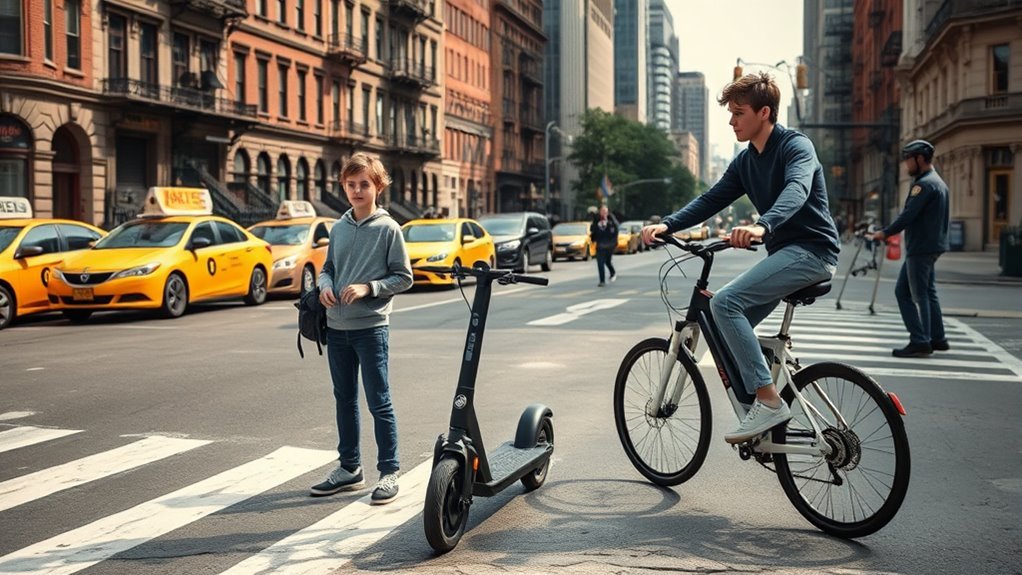
The minimum age to operate a privately owned electric scooter in New York City is 16 years old. The same minimum applies to riding as a passenger, although New York law separately prohibits carrying more than one person on an e-scooter.
These requirements come from New York State Vehicle and Traffic Law §1282.
However, the legal minimum age for a private scooter is different from the age required to use NYC’s shared rental scooters.
| Rider age | Private electric scooter | NYC shared rental | Helmet requirement |
|---|---|---|---|
| Under 16 | Not permitted | Not permitted | Wearing a helmet does not make electric scooter riding legal. |
| 16–17 | Permitted | Not permitted | Mandatory |
| 18 and older | Permitted | Permitted | Recommended |
Can a 16-Year-Old Rent an Electric Scooter in NYC?
No. Although a 16-year-old can legally ride a private electric scooter, NYC’s official shared-scooter program requires participants to be at least 18.
The program operates in the East Bronx and Eastern Queens through Bird, Lime, and Veo. Riders use the companies’ smartphone apps to locate and rent scooters.
These requirements are confirmed by the NYC311 Shared E-Scooter Program guidance.
Rental operators may require identity or age verification. Allowing an underage person to use an adult’s rental account does not override the program’s age requirement.
Electric Scooter Helmet Rules for Teen Riders
In NYC, electric scooter riders aged 16 and 17 must wear a helmet that meets the applicable safety standards.
The helmet must fit properly, sit securely on your head, and have its straps fastened. Simply carrying a helmet or wearing one with loose straps does not satisfy the requirement.
Under New York Vehicle and Traffic Law §1286, violating the helmet requirement carries a civil fine of up to $50.
For a first violation, the court must waive the fine when the rider provides qualifying proof of purchasing or renting a compliant helmet between the violation date and the appearance date. The law also provides a hardship-related waiver.
These waivers do not apply to second or subsequent violations.
Adults aged 18 and older are not required by this particular e-scooter helmet rule to wear one. However, NYC DOT recommends helmets for everyone because falls and collisions can cause serious head injuries.
Do not confuse electric scooter rules with Class III e-bike rules. Different vehicle categories can have different helmet requirements.
Where You Can Legally Ride in NYC
You can ride a legal electric scooter in designated bicycle lanes and on streets with posted speed limits of 30 mph or less. Riding on sidewalks is prohibited.
The NYC Department of Transportation’s electric scooter guidance explains where these vehicles may operate.
Generally permitted riding locations include:
- Designated bicycle lanes.
- Streets with posted speed limits of 30 mph or less.
- Bridge bicycle lanes where electric scooters are allowed.
- Permitted park drives and greenways, subject to posted restrictions.
You cannot ride an electric scooter on ordinary sidewalks, highways, or expressways. Do not use vehicle-only bridge or tunnel routes where scooters are prohibited.
Park rules also matter. Permission to use a park drive or designated greenway does not mean you can ride on pedestrian-only paths.
Must You Use a Bike Lane When One Is Available?
Yes. Under New York’s electric scooter roadway rules, riders generally must use a usable bicycle lane when one is provided.
If there is no usable bike lane, ride near the right-hand edge of the roadway or on a usable right shoulder.
The law provides exceptions when preparing for a left turn or avoiding unsafe conditions, including road hazards, parked vehicles, and lanes too narrow for safe side-by-side travel.
Plan your route around legal streets and bike lanes rather than assuming that every road is open to scooters.
NYC Electric Scooter Speed Limits and Traffic Rules
The maximum operating speed for an electric scooter in NYC is 15 mph. This applies even when the surrounding street has a higher speed limit.
You must also obey traffic signals, stop signs, road markings, and applicable bicycle traffic rules.
Follow these requirements:
- Ride at or below 15 mph and slow down when conditions require it.
- Yield the right of way to pedestrians.
- Do not carry a passenger. Electric scooters are limited to one person at a time.
- Keep at least one hand on the handlebars.
- Do not carry anything that blocks your view or prevents safe control.
- Use appropriate lights and required safety equipment.
What Equipment Must an Electric Scooter Have?
New York law requires electric scooters to have a working brake and a bell or another permitted audible warning device.
During the period from half an hour after sunset to half an hour before sunrise, the scooter must also have:
- A white front light visible from at least 500 feet.
- A red rear light visible from at least 300 feet.
- At least one light visible from 200 feet on each side.
These requirements come from Vehicle and Traffic Law §1285.
Reflective clothing can improve visibility, but it does not replace the legally required lights.
Scooter Fines and Penalties in NYC
Breaking NYC’s electric scooter rules can lead to civil fines, traffic penalties, or more serious legal consequences.
The penalty depends on the violation. A minor age-related infraction is not treated the same way as impaired riding or leaving an injury scene.
Common Scooter Violations
Under New York’s scooter laws, common violations include riding underage, exceeding the speed limit, carrying a passenger, failing to yield, and riding on sidewalks.
Violations of specified provisions of VTL §1282 carry a civil fine of up to $50.
Other traffic violations may be subject to separate penalties. Improperly parked rental scooters can also trigger operator enforcement or charges under the rental agreement.
Remember that a street’s posted speed limit does not replace the separate 15 mph electric scooter limit.
Penalties and Legal Risks
New York law also addresses underage operation, helmet violations, impaired riding, and incidents involving injuries.
Important consequences include:
- Underage riding: A summons under VTL §1282 may be issued to a parent or guardian when the violation occurs in that adult’s presence and the adult is at least 18.
- Helmet violation: A rider aged 16 or 17 can face a civil fine of up to $50.
- Impaired riding: Alcohol- or drug-related offenses can carry substantially greater penalties, including possible criminal consequences.
Under New York’s impaired electric scooter operation law, a first alcohol-impaired operation offense can carry a fine of up to $300, imprisonment of up to 15 days, or both.
Warning: Never operate an electric scooter after drinking alcohol or using drugs that impair your ability to ride. The same applies to medications that cause dizziness, drowsiness, or slowed reactions.
Electric Scooter Parking Rules in New York City
Electric scooter parking rules depend on whether the scooter is privately owned or part of NYC’s shared rental program.
You must not park in a way that blocks pedestrians, building entrances, accessibility ramps, or other essential access points.
Designated Parking Zones
NYC’s shared-scooter program uses both mandatory parking corrals and free-floating parking areas.
According to the city’s official shared-scooter parking guidance, the applicable rule depends on the location within the service area.
There are two main parking arrangements:
- Mandatory corral zones: You must leave the rental scooter inside a designated parking corral to end your trip.
- Free-floating zones: You may park the scooter upright in the sidewalk furniture zone, provided you do not obstruct pedestrian access or other restricted areas.
The furniture zone is the portion of the sidewalk closest to the roadway, where items such as trees, benches, and parking signs are commonly located.
Check the rental app’s parking map before ending your trip. It identifies the permitted parking arrangement for your location.
Sidewalk Blocking Prohibited
Parking on a sidewalk is not automatically prohibited, but blocking pedestrian movement is.
For a privately owned electric scooter used personally, New York law permits sidewalk parking when it does not interfere with the free passage of pedestrians.
For shared rental scooters, follow the designated parking rules for that specific service area.
Never leave a scooter where it blocks:
- A pedestrian travel path or accessibility ramp.
- A building entrance or driveway.
- A curb cut or bus stop.
- A fire hydrant or other essential infrastructure.
Keep the scooter upright and stable so it does not fall into the pedestrian path.
After an Electric Scooter Accident
If you are involved in an electric scooter crash, first check for injuries and move away from traffic when it is safe.
Call 911 if anyone is seriously injured, immediate medical assistance is needed, or there is an ongoing danger.
New York’s accident-reporting requirements distinguish electric scooters from motor vehicles, so the same reporting threshold does not automatically apply to every type of crash.
Under Vehicle and Traffic Law §605(b), an electric scooter operator involved in a public-highway accident must submit a written report to the DMV when another person is killed or suffers serious physical injury.
The report is generally due within 10 days after the operator learns of the death or serious injury. The law provides additional rules for physical incapacity and certain minor operators.
The familiar $1,000 property-damage reporting threshold under §605(a) applies to motor vehicle operators. It should not be presented as the automatic reporting rule for every electric scooter incident.
What Should You Do Immediately After a Crash?
- Stop and assess injuries. Request emergency assistance when necessary.
- Move to a safe location if doing so will not endanger anyone.
- Exchange relevant contact information with the people involved.
- Photograph the scene, vehicle positions, damage, and relevant road conditions when safe.
- Seek medical care and retain treatment records.
- Notify the rental operator or relevant insurer when applicable.
- Complete any legally required accident report.
For adult riders, VTL §1287 also establishes duties when scooter operation causes physical injury to another person.
These duties include stopping, providing identifying information, and reporting the incident to an appropriate authority when required.
Leaving the scene of a serious injury incident can carry more severe consequences.
Note: If a crash involves significant injuries, disputed fault, or uncertainty about reporting duties, consult a qualified New York attorney. Reporting requirements, insurance coverage, and potential compensation depend on the circumstances.
Frequently Asked Questions
Can a 10-Year-Old Ride an Adult Electric Scooter?
No. A 10-year-old cannot legally operate an electric scooter on NYC public roads or other locations covered by the operating rules. The minimum age is 16, and adult supervision does not create an exception. A nonmotorized kick scooter is a different vehicle category with different rules.
Can a 13-Year-Old Have an Electric Scooter?
A 13-year-old may own an electric scooter, but ownership does not provide permission to operate it on NYC public streets. The minimum legal riding age is 16. Parental consent and helmet use do not override this requirement.
Can a 14-Year-Old Use an Electric Scooter?
No. A 14-year-old is below NYC’s minimum electric scooter riding age. The legal minimum is 16 for a privately owned scooter and 18 for the city’s shared rental program. A parent or guardian cannot waive these requirements.
What Happens if a Child Gets Caught on an Electric Scooter?
An underage rider may be stopped for violating NYC’s electric scooter rules. Under VTL §1282, a summons may be issued to a parent or guardian when the violation occurs in that adult’s presence and the adult is at least 18. The law does not make every underage incident an automatic parental summons.
Can a 16-Year-Old Use a Lime, Bird, or Veo Scooter in NYC?
No. NYC’s official shared electric scooter program requires riders to be at least 18 years old. A 16-year-old may legally operate a privately owned scooter while following the applicable helmet, speed, and traffic rules.
Do You Need a Driver’s License to Ride an Electric Scooter in NYC?
No. You do not need a driver’s license or DMV registration to operate a legal electric scooter in NYC. However, you must satisfy the applicable minimum age and operating requirements. Mopeds are a different vehicle category and have separate licensing and registration rules.
Conclusion
The minimum electric scooter age in NYC is 16 for privately owned scooters and 18 for the official shared rental program. If you’re 16 or 17, a properly fitted helmet is mandatory.
Before riding, make sure your scooter is legal, follow the 15 mph speed limit, use permitted routes, and park without blocking pedestrians. These simple checks help you avoid common violations and ride more safely.
Sources
- New York State Vehicle and Traffic Law §1282: Minimum age, passenger restrictions, operating limits, sidewalk parking, and civil penalties.
- NYC311 Shared E-Scooter Program: Rental minimum age, participating companies, and service areas.
- New York Vehicle and Traffic Law §1286: Helmet requirements, fines, and waivers.
- NYC Department of Transportation: Electric Bicycles & More: Electric scooter speed limits, permitted riding locations, and safety guidance.
- New York Vehicle and Traffic Law §1284: Bicycle-lane and roadway positioning requirements.
- New York Vehicle and Traffic Law §1285: Required lights, warning devices, and brakes.
- New York Vehicle and Traffic Law §1289: Alcohol- and drug-related scooter offenses and penalties.
- NYC DOT Shared E-Scooter Program FAQ: Shared-scooter parking arrangements and operating requirements.
- New York Vehicle and Traffic Law §605: Accident-reporting duties and applicable thresholds.
- New York Vehicle and Traffic Law §1287: Requirements following scooter incidents involving physical injury.

