
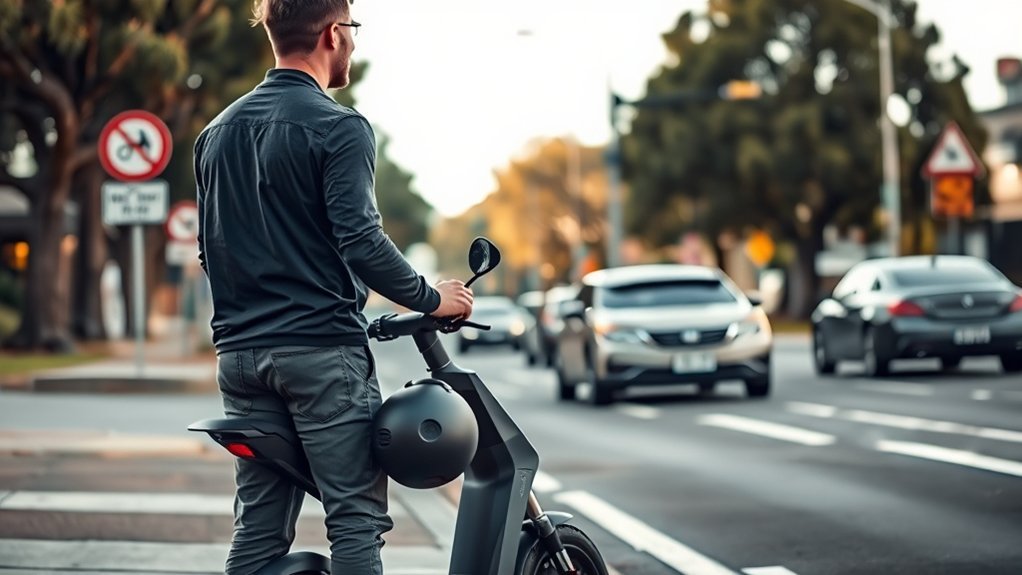
Last Updated on September 10, 2026 by Daniel Globe
In New South Wales, privately owned electric scooters cannot legally be ridden on public roads, footpaths, shared pathways, or bicycle lanes. The only place you can lawfully ride a personal e-scooter is on private property with the landowner’s permission. Public e-scooter riding is restricted exclusively to approved council trial areas using designated commercial shared fleet e-scooters, where riders must adhere to strict speed, helmet, and age mandates.
Quick Answer
Privately owned electric scooters are illegal to ride on all public roads, footpaths, and cycleways across NSW. You may only ride an e-scooter publicly if you are at least 16 years old, wearing an approved helmet, and using an authorised commercial hire scooter within a gazetted Transport for NSW trial zone.
Key Takeaways
- Personal E-Scooters: 100% prohibited on public roads and paths; permitted solely on private land.
- Trial Shared E-Scooters: Permitted only in gazetted trial locations (e.g., Lake Macquarie, Wollongong, Kogarah Bay).
- Speed Limits: Maximum 20 km/h on approved roads/bike lanes; maximum 10 km/h on shared paths.
- Footpaths Are Prohibited: Riding on pedestrian-only footpaths is illegal across all of NSW.
- Rider Requirements: Minimum age of 16, mandatory approved bicycle or motorcycle helmet, BAC under 0.05, and zero passengers.
Disclosure: As an Amazon Associate I earn from qualifying purchases. Some links on this page are affiliate links, at no extra cost to you.
Are Electric Scooters Legal in NSW?
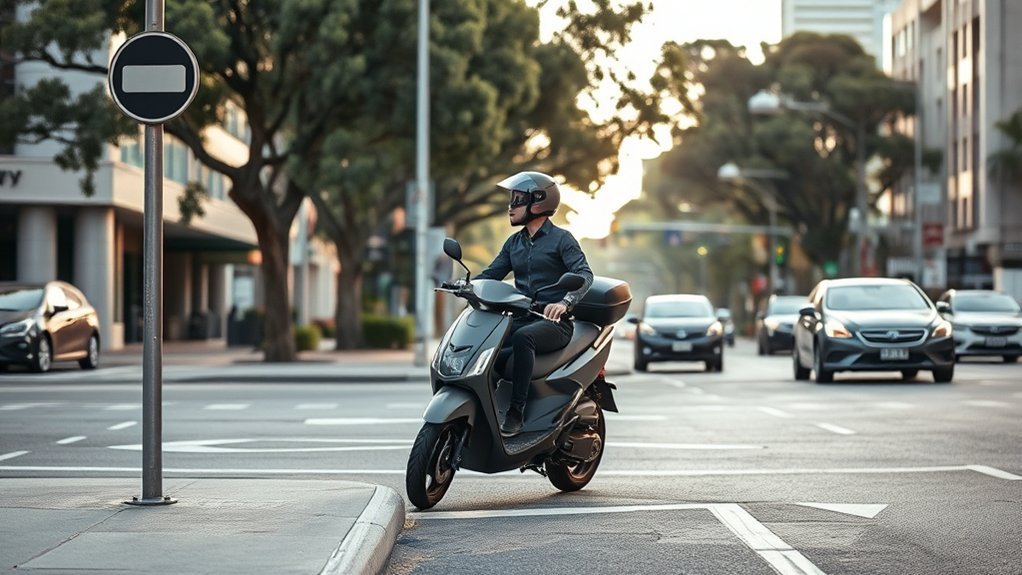
Under the NSW Road Rules and the Road Transport Act 2013, personal electric scooters fall into the classification of motor vehicles. Because personal e-scooters do not meet Australian Design Rules for vehicle registration, insurance, and roadworthiness, they cannot be registered or insured in NSW. As a result, operating a privately owned e-scooter on any public street, footpath, nature strip, car park, or cycle path is an offence.
Warning: Riding a private e-scooter on public infrastructure can result in cumulative fines exceeding $2,500 AUD for driving an unregistered vehicle, driving an uninsured vehicle, and operating an unlicensed conveyance.
Where Shared E-Scooters Are Allowed in NSW
To evaluate long-term micro-mobility integration, the NSW Government and Transport for NSW run controlled trials allowing licensed commercial hire operators (such as Beam and Neuron) to deploy geofenced e-scooters. You can only ride these shared e-scooters within explicitly gazetted trial boundaries.
Active and past NSW trial locations include:
- Lake Macquarie: Designated tracks along the Fernleigh Track, Croudace Bay, Speers Point, and Warners Bay.
- Georges River / Kogarah Bay: Selected shared paths and connected low-speed trial road networks.
- Wollongong: Coastal shared pathways and designated urban zones connecting innovation hubs and transit stops.
- Western Sydney Parklands: Specific off-road recreational paths within Bungarribee Park.
- Northern Beaches & Regional Sites: Select local government trial corridors under continuous safety evaluation.
Pro Tip: Hire provider apps automatically enforce geographic boundaries via GPS geofencing. If you attempt to ride outside the approved council trial boundary, the scooter’s motor will safely throttle down to a complete stop.
NSW E-Scooter Rules You Must Follow
When participating in an official shared e-scooter trial in NSW, riders are subject to strict operating regulations under the NSW Road Rules.
| Category | Legal Requirement | Condition Details |
|---|---|---|
| Age Limit | 16+ years old | Underage riding is prohibited; IDs are verified via app registration. |
| Helmet | Mandatory at all times | Must meet AS/NZS 2063 standards and be securely fastened. |
| Speed: Shared Paths | 10 km/h maximum | Must give way to all pedestrians and ring your bell when approaching. |
| Speed: Roads & Bike Lanes | 20 km/h maximum | Permitted only on roads with posted limits of 50 km/h or less. |
| Footpaths | Strictly Prohibited | Standard pedestrian pavements are illegal to ride on at any speed. |
| BAC Limit | Under 0.05 BAC | Drink and drug riding laws apply equivalent to motor vehicle drivers. |
| Passengers / Doubling | 1 Rider Only | Carrying passengers, children, or animals is strictly illegal. |
| Mobile Phones | Hands-Free Only | Holding or manipulating a mobile phone while riding attracts heavy fines. |
Note: Trial e-scooters come integrated with working front white lights, rear red lights, side reflectors, and an audible warning bell or horn. If riding in low-light conditions, ensure the illumination features are active before unlocking.
NSW Shared E-Scooter Safety & Parking Guidelines
To prevent sidewalk clutter and maintain pedestrian access, local councils enforce mandatory parking standards for trial devices:
- Use Designated Parking Bays: Always end your trip inside marked e-scooter corral zones where available.
- Maintain Clear Walkways: When street parking in open zones, leave at least 1.5 metres of clear clearance on the kerb side so you do not block wheelchairs, prams, or visually impaired pedestrians.
- Never Park on Narrow Pavements: Avoid parking near fire hydrants, driveways, transit stops, or accessibility ramps.
- Take a Verification Photo: Most provider applications require an end-of-ride photograph to prove the scooter is upright and unobtrusive.
“NSW e-scooter trial frameworks are designed to test real-world community safety. Respecting speed caps on shared pathways and keeping footpaths clear protects pedestrian access for everyone.”
NSW E-Scooter Fines and Penalties
The NSW Police Force enforces road rules for both private e-scooter use and trial non-compliance. Common penalties include:
- Riding a private e-scooter on a road or path: Fines often exceed $2,500 AUD (combined charges for unregistered vehicle, uninsured vehicle, and unlicensed use).
- Riding without an approved helmet: $344 fine.
- Riding on a pedestrian footpath: $116 fine.
- Exceeding speed limits: Tiered speeding fines depending on excess speed over 10 km/h or 20 km/h limits.
- Using a mobile phone while riding: $362+ fine.
- Riding under the influence (PCA): Subject to mandatory court appearance, criminal conviction, large monetary penalties, and driver licence disqualification.
What NSW E-Scooter Laws Could Change Next?
Transport for NSW continues to assess usage statistics, hospital trauma admission data, and pedestrian feedback from ongoing trials. Potential future regulatory updates may include:
- Legalising Privately Owned E-Scooters: Standardising technical construction criteria (e.g., maximum unladen power output and weight limits) to permit private scooters on public bike paths.
- Expanding Trial Zones: Progressively opening more suburban and regional local government areas to commercial share schemes.
- Mandatory Hardware Standards: Standardising minimum wheel diameters and dual braking systems across all permitted devices.
- Point-to-Point Enforcement: Tighter integration of municipal parking enforcement and automated speed zone caps.
Frequently Asked Questions
Where can you legally ride an electric scooter in NSW?
You can legally ride an approved shared trial e-scooter on designated shared paths (up to 10 km/h), bike lanes, and public roads with posted speed limits of 50 km/h or less (up to 20 km/h) within active council trial zones. Privately owned e-scooters are legal only on private property.
Why are personal e-scooters illegal on public roads in NSW?
Under NSW motor traffic legislation, personal e-scooters are classified as motor vehicles but lack compliance with Australian Design Rules for vehicle registration, compulsory third-party (CTP) insurance, and braking standards. As such, they cannot be lawfully registered for public road or footpath use.
What happens if I get caught riding a private electric scooter in NSW?
If NSW Police stop you on a private e-scooter in a public space, you can be issued infringements for driving an unregistered vehicle, driving an uninsured vehicle, and unlicensed operation, which together can total several thousand dollars.
What is the penalty for riding without a helmet or on a footpath in NSW?
Riding an e-scooter without an approved, securely fastened bicycle or motorcycle helmet incurs a $344 fine. Riding an e-scooter on a standard pedestrian footpath carries an on-the-spot fine of $116.
Conclusion
While electric scooters represent a flexible and sustainable micro-mobility solution, New South Wales strictly enforces its road transport framework. Keep your personal e-scooter on private property, and when riding in an authorised shared trial zone, always buckle an approved helmet, stay off pedestrian footpaths, and respect posted speed limits to ride safely and avoid costly fines.
Sources
- Transport for NSW — Official regulatory guidelines and legal framework for NSW e-scooter trials.
- NSW Government Road Safety Portal — State rules, authorized trial locations, and speed restrictions.
- NSW Legislation: Road Transport Act 2013 — Statutory definitions for vehicle registration and penalties.
