
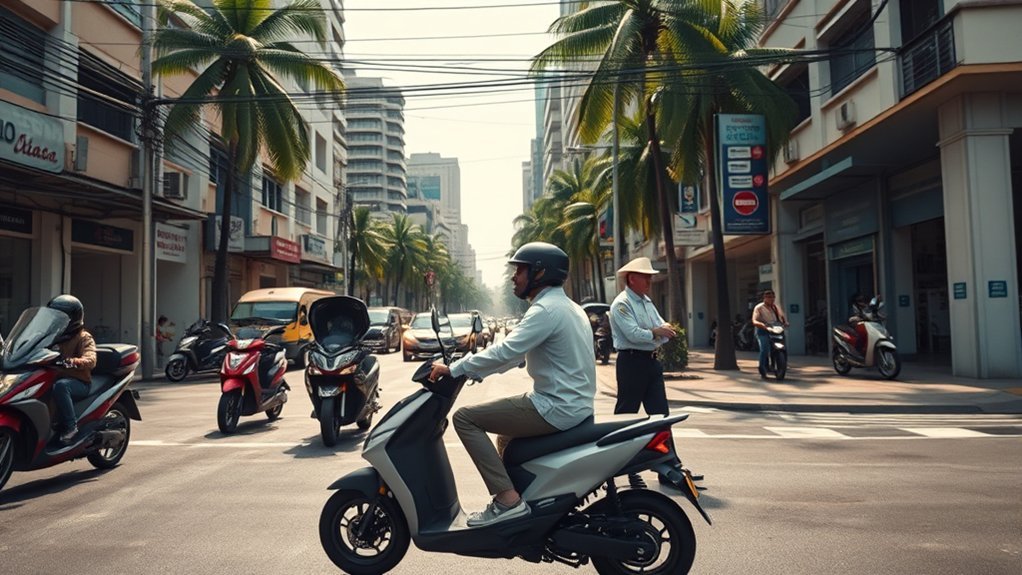
Last Updated on September 10, 2026 by Daniel Globe
Electric scooters are fully legal to own and ride in the Philippines, provided riders comply with the classification, safety, and road usage guidelines established by the Land Transportation Office (LTO) and the Metropolitan Manila Development Authority (MMDA). Under current transportation frameworks, standard stand-up electric kick scooters that do not exceed 25 km/h are classified as Personal Mobility Devices (PMDs) or Category L1a light electric vehicles. These low-speed models do not require LTO registration or a driver’s license, but they are strictly restricted to barangay roads, local access streets, and designated bicycle lanes.
Quick Answer
Yes, electric scooters are legal in the Philippines. E-scooters with a maximum design speed up to 25 km/h require no LTO registration or driver’s license, but they may only be operated on barangay roads, local streets, and designated bike lanes. They are strictly prohibited on major national highways, radial roads, and circumferential roads across Metro Manila, except when crossing at designated intersections.
Key Takeaways
- Registration & Licensing: Personal Mobility Devices and e-scooters with top speeds of 25 km/h or below are exempt from LTO registration and driver’s licensing requirements.
- Speed Thresholds: E-scooters capable of 26 km/h to 50 km/h (Category L1b) require LTO registration, a valid driver’s license (DL Code A or A1), and an approved motorcycle helmet.
- Allowed Thoroughfares: Operation is restricted to barangay roads, interior residential streets, and designated Class 1, 2, or 3 bicycle lanes.
- National Road Restrictions: MMDA Regulation No. 24-022 prohibits e-scooters on primary national roads in Metro Manila (including EDSA, C-5, and Commonwealth Avenue), carrying a ₱2,500 fine for violations.
- Mandatory Safety Equipment: Riders must wear protective helmets, ensure functional front white headlights and rear red taillights for night riding, and yield to pedestrian traffic at all times.
Disclosure: As an Amazon Associate I earn from qualifying purchases. Some links on this page are affiliate links, at no extra cost to you.
Is an Electric Scooter Legal in the Philippines?
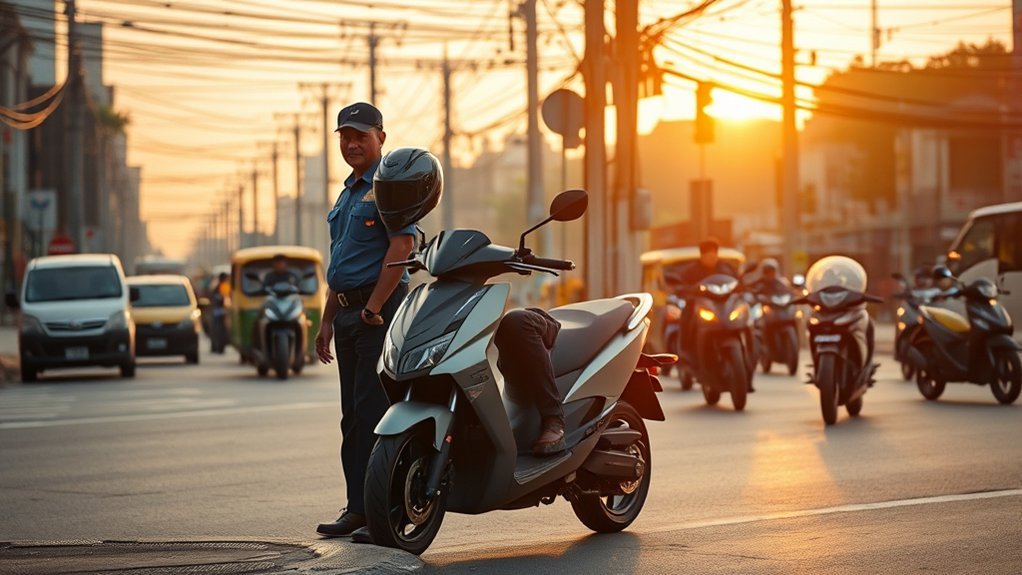
Electric scooters are legal across the Philippine archipelago under the regulatory framework of Republic Act No. 11697, also known as the Electric Vehicle Industry Development Act (EVIDA), and Land Transportation Office (LTO) Administrative Order No. 2021-039. The Philippine government recognizes Light Electric Vehicles (LEVs) as viable, environmentally sustainable micro-mobility alternatives for urban commuting. However, legality is tied directly to vehicle specifications, operating speeds, and approved road tiers.
While ownership is unrestricted, road access is strictly managed. Low-speed electric kick scooters cannot share lanes with heavy automotive traffic on national thoroughfares. Operating an e-scooter within the bounds of the law requires an understanding of vehicle classifications, local government unit (LGU) ordinances, and the jurisdictional boundaries between local neighborhood streets and national transit corridors.
What Makes an E-Scooter Street-Legal?
An electric scooter is deemed street-legal in the Philippines when it complies with the specific technical parameters, safety equipment standards, and operational limits outlined by national transport authorities. Street legality is determined by three core criteria: speed capability, structural classification, and road tier compliance.
Speed and Vehicle Class
The Land Transportation Office classifies two-wheeled electric mobility devices based on maximum speed capability and motor power rating under Administrative Order No. 2021-039. Understanding your scooter’s technical tier is critical for determining whether licensing and registration apply.
| Vehicle Category | Max Speed | LTO Registration | Driver’s License | Permitted Roads |
|---|---|---|---|---|
| Personal Mobility Device (PMD / Kick Scooter) | Up to 25 km/h | Not Required | Not Required | Barangay roads, bike lanes, private roads |
| Category L1a | Up to 25 km/h | Not Required | Not Required | Barangay roads, designated bike lanes |
| Category L1b | 26 km/h to 50 km/h | Mandatory | Mandatory (DL Code A/A1) | Local roads, outer lanes of tertiary roads |
| Category L2a / L2b (Electric 3-Wheelers) | Up to 50 km/h | Mandatory | Mandatory (DL Code A) | Barangay and local city roads only |
Road Use Limits
Operating an electric scooter requires adhering to specific road tiers established by national transport guidelines:
- Dedicated Bike Lanes: E-scooters are permitted in designated bicycle lanes, including protected bike corridors established along national highways, provided riders maintain safe following distances and do not exceed local bike lane speed limits (typically 20 km/h).
- Barangay and Interior Streets: Commuters may operate unhindered on neighborhood and community access roads where vehicular speed limits are naturally low.
- Primary Arterials: Direct travel along main traffic lanes of national highways, radial roads, and circumferential corridors is strictly prohibited.
Warning: Modifying an e-scooter’s controller firmware or hardware to exceed 25 km/h automatically reclassifies the vehicle into Category L1b. Operating an unclassified, modified e-scooter without LTO registration and a valid driver’s license exposes the rider to impoundment and fines exceeding ₱3,000 under LTO traffic enforcement protocols.
Helmet and Compliance
Helmet requirements in the Philippines are dictated by the vehicle’s speed capability:
- Sub-25 km/h E-Scooters (PMDs / Category L1a): Riders must wear a properly fitted protective bicycle or skate-standard safety helmet compliant with European (EN 1078), American (CPSC), or Philippine National Standards (PNS).
- Category L1b E-Scooters (26–50 km/h): Riders are legally mandated under Republic Act No. 10054 (the Motorcycle Helmet Act) to wear a standard full-face or open-face motorcycle helmet bearing the Philippine Standard (PS) mark or Import Commodity Clearance (ICC) sticker.
Which E-Scooters Need No Registration?
In the Philippines, you are exempt from vehicle registration and licensing duties if your electric scooter meets all of the following statutory thresholds:
- Speed Constraint: The vehicle has a factory-governed maximum design speed of no more than 25 km/h (15.5 mph).
- Form Factor: The device is a stand-up or sit-down Personal Mobility Device (electric kick scooter) with a motor rated under 300 to 500 watts.
- Operational Scope: The vehicle is ridden exclusively on designated bicycle lanes, barangay roads, private subdivisions, or university campuses.
If an electric scooter meets these requirements, traffic enforcers cannot demand vehicle registration documents (OR/CR) or a Land Transportation Office driver’s license during routine road stops.
Where Can You Ride an E-Scooter?
Safe and legal electric scooter travel in the Philippines depends on choosing the correct road networks and respecting municipal boundaries.
Barangay Roads
Barangay roads are the standard legal operational zone for e-scooters. These local public streets connect residential areas and commercial zones within a single barangay. While e-scooters enjoy unrestricted access to these roads, riders must obey local traffic rules, maintain right-side positioning, and yield to pedestrians.
Bike Lane Access
The establishment of the National Active Transport Network allows e-scooters to utilize designated bicycle infrastructure. When utilizing bike lanes:
- Keep Right: Maintain single-file travel on the right-hand side of the lane.
- Audible Passing: Use a bell or horn when overtaking manual bicycle riders.
- Speed Limits: Keep speeds manageable within congested bike lanes, observing the standard 20 km/h active-mobility threshold.
National Road Crossing
While long-distance travel along major national highways is banned, riders may cross national, circumferential, or radial roads under strict conditions:
- Crossings must take place at official signalized intersections or designated pedestrian/bicycle crossing zones.
- Riders must come to a complete stop, yield to on-coming vehicular traffic, and proceed only when traffic signals indicate a safe crossing cycle.
- Where traffic volume is exceptionally high and dedicated bicycle crossing signals are absent, dismounting and walking the scooter across pedestrian crosswalks is standard practice.
What Roads Are Off-Limits?
Under MMDA Regulation No. 24-022 (Series of 2024) and joint transport agency resolutions, light electric vehicles, e-bikes, and e-scooters are prohibited from traveling along the main vehicular lanes of major thoroughfares in Metro Manila. Operating on these roads endangers micro-mobility riders due to substantial speed differentials with heavy motor vehicles.
| Road Classification | Key Prohibited Thoroughfares (Metro Manila) | Allowed Exceptions |
|---|---|---|
| Circumferential Roads (C-Roads) | C-1 (Recto), C-2 (Pres. Quirino), C-3 (G. Araneta), C-4 (EDSA), C-5 (CP Garcia), C-6 | Perpendicular crossing at intersections; protected bike lanes where physically partitioned |
| Radial Roads (R-Roads) | R-1 (Roxas Blvd), R-2 (Taft Ave), R-3 (SLEX access), R-4 (Shaw Blvd), R-5 (Ortigas Ave), R-6 (Magsaysay/Aurora), R-7 (Quezon Ave/Commonwealth), R-8 (A. Bonifacio), R-9 (Rizal Ave), R-10 (Del Pan) | Designated active transport bike lanes; signalized perpendicular crossings |
| Major Arterials & Highways | Marcos Highway, Katipunan Avenue, Boni Avenue, Bonifacio Avenue, Macapagal Boulevard | Direct crossing only |
| Limited Access Expressways | NLEX, SLEX, Skyway, CAVITEX, NAIAX, MCX, CALAX, CCLEX | Strictly prohibited (no exceptions) |
Pro Tip: When route-planning in Metro Manila, utilize localized secondary street networks (Mabuhay Lanes) or dedicated active transport corridors established along Pasig, Taguig, Quezon City, and Marikina to bypass restricted national highways entirely.
What Safety Gear Is Required?
Philippine transport laws and local city ordinances mandate clear safety standards for micro-mobility riders to minimize head trauma and enhance low-light visibility.
- Approved Protective Helmet: A properly strapped bicycle helmet (for $\le$25 km/h PMDs) or an approved motorcycle helmet with PS/ICC validation (for speeds exceeding 25 km/h).
- Front Illumination: A functional front-mounted white headlight capable of illuminating the road surface at least 15 meters ahead during nighttime and low-visibility weather.
- Rear Warning Lights: A red rear taillight or active flashing red LED beacon paired with passive red reflectors to alert following motorists.
- High-Visibility Garments: Reflective vests, high-visibility sashes, or bright outerwear are mandatory under multiple municipal ordinances (e.g., Quezon City and Pasig City Active Transport codes) when riding between 6:00 PM and 6:00 AM.
- Audible Warning Device: An operable mechanical bell or electric horn audible from a distance of at least 30 meters.
When Can an E-Scooter Be Impounded?
Enforcement personnel from the MMDA, LTO, and municipal traffic bureaus are legally empowered to issue traffic violation tickets and impound electric scooters under specific statutory violations:
- Traversing Restricted Thoroughfares: Operating on prohibited national, radial, or circumferential roads outside of designated bike lanes results in an immediate ₱2,500 fine under MMDA Regulation No. 24-022. Repeat offenders or uncooperative operators face vehicle impoundment.
- Unregistered Category L1b Operation: Riding an e-scooter capable of over 25 km/h on public roads without official LTO registration papers and license plates.
- Unlicensed Operation of High-Speed LEVs: Driving an L1b or L2a vehicle without a valid driver’s license (or with an expired license).
- Failure to Present Ownership Proof: Inability to demonstrate legitimate ownership (such as a sales invoice or official receipt) during roadside verification if the vehicle matches stolen property descriptions.
- Reckless or Intoxicated Operation: Operating an e-scooter while under the influence of alcohol or prohibited substances under the provisions of Republic Act No. 10586 (Anti-Drunk and Drugged Driving Act).
Note: Impounded e-scooters are held at designated government impounding facilities (such as the MMDA Impounding Area in Tumana, Marikina City). Retrieving an impounded scooter requires settling all outstanding violation citations, presenting original proof of purchase/ownership, and paying daily storage and towing fees.
What Does the LTO Currently Require?
The Land Transportation Office maintains a tiered approach toward light electric vehicle regulation, balancing commuter mobility with public road order:
“Light electric vehicles operating at speeds not exceeding 25 km/h serve as vital personal mobility devices. They remain exempt from mandatory registration and driver’s licensing, provided their operation is restricted to local community roads, private estates, and dedicated bicycle networks.” — LTO AO 2021-039 Regulatory Scope
Under these active mandates, the responsibilities of standard e-scooter riders remain distinct:
- Keep operational speeds at or below the 25 km/h threshold.
- Do not enter expressways, flyovers, underpasses, or national arterial lanes.
- Wear protective headgear at all times.
- Yield right-of-way to pedestrian traffic on shared walkways and zebra crossings.
What Future Rules Could Change?
As micro-mobility adoption expands across urban centers like Metro Manila, Metro Cebu, and Metro Davao, the Department of Transportation (DOTr) and the LTO continue to evaluate regulatory frameworks. Anticipated regulatory developments include:
| Prospective Policy | Target Vehicle Group | Primary Regulatory Objective |
|---|---|---|
| Mandatory Digital Micro-Registration | All PMDs and E-Kick Scooters | Anti-theft tracking and standardized ownership databases via online LGU portals |
| Compulsory Third-Party Liability (CTPL) Insurance | Category L1b and L2 LEVs | Pedestrian accident protection and property damage coverage |
| Minimum Age Harmonization (16+ or 18+) | All public road e-scooter riders | Standardizing national age minimums to eliminate conflicting municipal rules |
| BMS & Battery Safety Certification | Commercial electric scooter imports | DTI-BPS import quality standards to prevent lithium-ion battery fires |
Frequently Asked Questions
Do you need a driver’s license for an electric scooter in the Philippines?
No, you do not need a driver’s license if your electric scooter has a maximum design speed of 25 km/h or below (classified as a Personal Mobility Device or Category L1a). However, if your electric scooter can travel between 26 km/h and 50 km/h (Category L1b), you are legally required to hold a valid LTO Driver’s License with Driver’s License Code A or A1.
What happens if you get caught riding an e-scooter on EDSA or other national roads?
Under MMDA Regulation No. 24-022, operating an e-scooter on restricted national roads, circumferential roads (such as EDSA or C-5), or radial roads in Metro Manila carries a fine of ₱2,500. If the operator does not possess a driver’s license or proof of vehicle ownership when operating a non-compliant or high-speed model, the electric scooter may be impounded.
Where are e-bikes and e-scooters prohibited in the Philippines?
Electric scooters and e-bikes are prohibited on all limited-access expressways (NLEX, SLEX, Skyway, etc.) and primary national highways across Metro Manila, including EDSA, C-5, Roxas Boulevard, Commonwealth Avenue, and Quezon Avenue. They are restricted to barangay roads, local interior streets, and designated bicycle lanes.
How much does a street-legal commuter electric scooter cost in the Philippines?
Entry-level electric kick scooters range from ₱12,000 to ₱18,000. Reliable, commuter-grade models from reputable brands (offering 25 km/h governed speeds, pneumatic tires, and reliable electronic braking systems) generally cost between ₱22,000 and ₱45,000. High-performance dual-motor scooters capable of higher speeds exceed ₱55,000.
Sources
- Official Gazette of the Republic of the Philippines — Republic Act No. 11697 (Electric Vehicle Industry Development Act – EVIDA).
- Land Transportation Office (LTO) — Administrative Order No. 2021-039: Consolidated Guidelines in the Classification, Registration, and Operation of Electric Vehicles.
- Metropolitan Manila Development Authority (MMDA) — MMDA Regulation No. 24-022 (Series of 2024): Guidelines on the Prohibition of Light Electric Vehicles on National Roads.
- Official Gazette of the Republic of the Philippines — Republic Act No. 10054 (Motorcycle Helmet Act of 2009).
Conclusion
Electric scooters provide an efficient, eco-friendly solution for navigating urban traffic in the Philippines, but lawful operation requires strict adherence to national and local transportation laws. Standard electric kick scooters governed at 25 km/h offer the benefit of zero registration fees and no driver’s license requirements, provided riders restrict their travel to barangay streets and established bike lanes. By wearing the proper safety helmet, equipping your scooter with high-visibility lighting, staying off major national highways, and respecting municipal traffic codes, you can enjoy the advantages of micro-mobility while avoiding fines and ensuring road safety.
