
Last Updated on September 10, 2026 by Daniel Globe
Electric scooters are legal to own and operate in New York City if you are at least 16 years old and adhere to New York State Vehicle and Traffic Law (VTL Article 34-D) and New York City Department of Transportation (NYC DOT) municipal regulations. Riders do not need a driver’s license, vehicle registration, or license plates, but they must follow strict operational restrictions, including a statutory speed cap of 15 miles per hour, mandatory bicycle lane utilization, and complete prohibition on sidewalk riding.
Quick Answer
Yes, electric scooters are legal in NYC for riders aged 16 and older. You do not need a license or DMV registration. You must ride in bike lanes or on streets with speed limits of 30 mph or lower at a maximum speed of 15 mph. Riding on sidewalks is strictly illegal, and helmets are mandatory for riders aged 16–17.
Key Takeaways
- Age & Licensing: Minimum operating age is 16; no DMV license, permit, or vehicle registration is required.
- Speed & Road Access: Top motor speed is capped at 15 mph. You may ride in designated bike lanes and on streets with posted limits up to 30 mph.
- Sidewalk Ban: Riding on any pedestrian sidewalk is strictly illegal and subject to immediate NYPD fines and confiscation.
- Safety Equipment: Scooters must have front white lights, rear red lights, side reflectors, working brakes, a bell or horn, and UL 2272 battery certification.
- Helmet Laws: Mandatory for riders aged 16 and 17, and required for all commercial delivery couriers; strongly advised for all adults.
Disclosure: As an Amazon Associate I earn from qualifying purchases. Some links on this page are affiliate links, at no extra cost to you.
Is an Electric Scooter Legal in NYC?
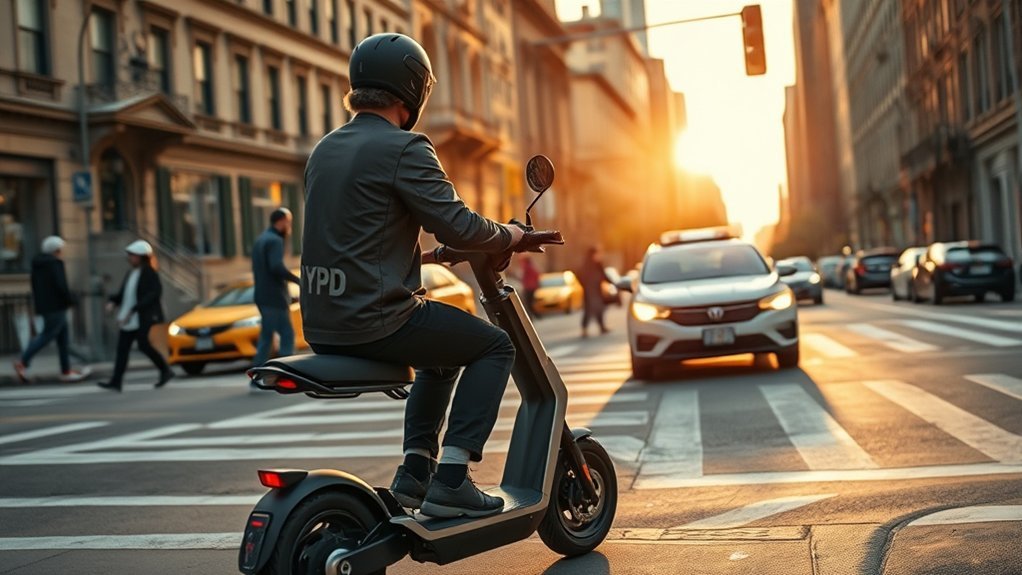
Under New York State law (NYS VTL Article 34-D), an electric scooter is defined as a device weighing less than 100 pounds with handlebars, a floorboard or seat, and an electric motor that can be powered by motor or human propulsion with a maximum design speed of no more than 20 mph. However, New York City exercises its municipal authority to cap maximum operational e-scooter speeds at 15 mph.
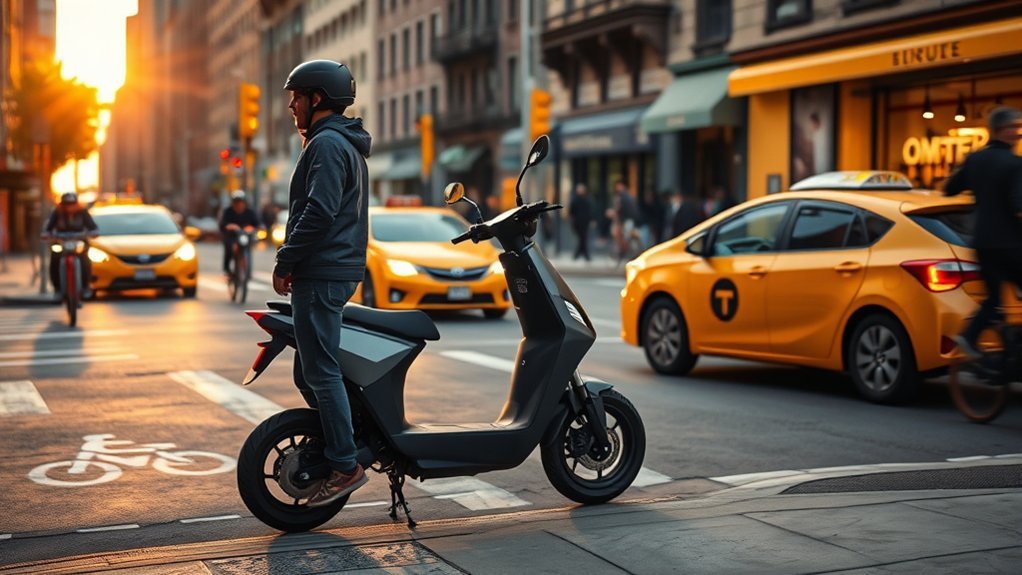
You can operate privately owned e-scooters across all five boroughs—Manhattan, Brooklyn, Queens, the Bronx, and Staten Island—provided your scooter complies with standard safety equipment criteria. In addition, the NYC DOT Micromobility Program manages official dockless shared e-scooter systems (such as Lime, Bird, and Veo) in designated operating zones, primarily in the East Bronx and Eastern Queens.
NYC E-Scooter Riding Rules & Speed Limits
When operating an e-scooter on New York City roadways, the law considers you a bicycle-equivalent road user. This means you have the same rights and duties as a motor vehicle driver or cyclist under local traffic statutes.
- Obey All Traffic Control Devices: You must stop at red lights, obey stop signs, yield to pedestrians at crosswalks, and travel in the direction of traffic. Riding against traffic on one-way streets is illegal unless a marked contraflow bike lane is present.
- 15 MPH Citywide Speed Cap: Even if your scooter’s motor can physically reach 20 to 30 mph, operating it faster than 15 mph on NYC public rights-of-way violates city regulations.
- Yield to Pedestrians: Pedestrians maintain the right-of-way at all marked and unmarked intersections, crossings, and walkway curb transitions.
- No Distracted Riding: Operating an e-scooter while holding or using a mobile phone, texting, or using audio devices that cover both ears (such as dual headphones or noise-cancelling earbuds) is prohibited.
Pro Tip: Keep single-ear audio only if navigating via GPS. Wearing dual earbuds prevents you from hearing emergency vehicle sirens or bicycle overtaking bells and can lead to a moving violation ticket.
Where You Can and Cannot Ride in New York City
Understanding which corridors are open to micromobility devices is critical to avoiding heavy fines and dangerous traffic interactions.
Authorized Riding Zones
- Protected and Dedicated Bike Lanes: Conventional painted bike lanes and physical barrier-protected bike lanes (such as those on 1st, 2nd, 8th, and 9th Avenues in Manhattan).
- Public Streets (≤ 30 MPH Limits): Any roadway with a posted speed limit of 30 mph or less when bike lanes are absent. You must position yourself on the right side of the travel lane or in the right shoulder area.
- Designated Park Drives & Greenways: Paved multi-use paths like the Central Park Drives, Prospect Park Loop, and authorized segments of the East River Greenway, subject to posted park speed limits (often 10–12 mph).
Strictly Prohibited Zones
- Sidewalks: Sidewalk riding is 100% illegal in New York City. You must dismount and walk your scooter when on any pedestrian sidewalk.
- Highways, Parkways, and Expressways: Highways such as the FDR Drive, West Side Highway (NY-9A), Brooklyn-Queens Expressway (I-278), Major Deegan Expressway, and Cross Bronx Expressway are strictly off-limits.
- Tunnels and Bridges: Vehicular tunnels (Holland, Lincoln, Midtown, Battery) are illegal for e-scooters. On bridges, e-scooters are prohibited from vehicular roadways and narrow pedestrian promenades; riders must use the dedicated bridge bicycle paths (e.g., Manhattan Bridge, Williamsburg Bridge, Brooklyn Bridge dedicated bike lane).
- Hudson River Greenway: Under New York State Parks and Hudson River Park Trust rules, motorized e-scooters are technically prohibited on the Hudson River Greenway path unless authorized under specific municipal pilot exemptions.
Warning: The NYPD routinely runs enforcement operations near bridge exits and subway plazas. Stepping or riding onto the sidewalk for even 10 feet to bypass traffic can result in a direct summons of up to $100.
E-Scooter vs. E-Bike vs. Moped: NYC Classification Differences
New York law separates electric two-wheeled transportation into three distinct legal classes. Understanding these differences ensures you do not inadvertently purchase or operate a vehicle requiring licensing and registration.
At a Glance: Micromobility Legal Matrix
| Device Category | Max Legal Speed | DMV Registration | Driver’s License | Bike Lane Allowed? |
| Electric Scooter | 15 mph (NYC limit) | No | No | Yes |
| Class 1 & 2 E-Bikes | 20 mph | No | No | Yes |
| Class 3 Throttle E-Bike | 25 mph | No | No | Yes |
| Moped (Class A, B, C) | 20 to 40+ mph | Yes (Plates Req.) | Yes (Class M/MJ or standard) | No (Street only) |
Required Equipment and Helmet Regulations
To ride legally on any public street in NYC, your scooter must meet specific hardware requirements outlined in New York State VTL § 1285:
- Braking System: Functional mechanical or electrical brakes capable of stopping the scooter within 25 feet from a speed of 15 mph on dry, level pavement.
- Front Headlight: A white light on the front visible from at least 500 feet away during darkness or low-visibility conditions.
- Rear Taillight & Reflectors: A red rear light visible from at least 300 feet away, along with red side reflectors visible between 200 and 600 feet.
- Audible Warning Device: An operable bell, horn, or whistle capable of being heard from a distance of at least 100 feet. (Sirens and whistles mimicking emergency vehicles are prohibited.)
- Helmet Requirements:
- Ages 16 and 17: Helmets meeting Consumer Product Safety Commission (CPSC) or ASTM standards are legally mandatory.
- Ages 18 and older: Helmets are not mandated by state law for leisure riders, but are strongly encouraged by NYC DOT.
- Commercial Delivery Riders: Helmets are mandatory for all ages operating micromobility devices for commercial delivery purposes under NYC administrative rules.
Battery Safety and NYC UL Certification Standards
Under NYC Local Law 39 (effective September 2023) and subsequent municipal enforcement updates, all powered mobility devices and lithium-ion batteries distributed, sold, or leased within New York City must be certified to recognized safety standards.
- Electric Scooters: Must be certified to UL 2272 (Standard for Electrical Systems for Personal E-Mobility Devices).
- E-Bikes: Must be certified to UL 2849 (Standard for Electrical Systems for eBikes).
- Replacement Batteries: Must be tested and certified to UL 2271.
Uncertified, generic aftermarket batteries, modified battery packs, and non-certified rapid chargers present severe fire hazards and can be confiscated during inspections at commercial hubs.
Where to Park Your E-Scooter
Improperly parked scooters create severe accessibility barriers for pedestrians, wheelchair users, and emergency personnel. NYC enforces precise parking rules for both private and shared mobility vehicles.
Designated Bike Parking and Racks
Park private e-scooters at standard city bicycle racks (inverted-U racks or corral stations) whenever possible. If locking to municipal infrastructure, use a heavy-duty U-lock or folding lock around the frame (not solely through the front wheel).
Sidewalk Clearance Guidelines
If locking or setting down your scooter on the sidewalk near the curb, you must maintain at least 5 feet of unobstructed walking path for pedestrian and ADA clearance. Never park your scooter:
- Directly in front of building doors, subway entrances, or emergency fire exits.
- Within 10 feet of a fire hydrant or fire department connection (FDC).
- Across curb cuts, accessibility ramps, or pedestrian crosswalk corners.
- Attached to trees, historic landmarks, or private property fences without permission.
Taking E-Scooters on the MTA (Subway, Buses, & Commuter Rail)
The Metropolitan Transportation Authority (MTA) permits personal micromobility devices under specific transit conditions:
- NYC Subway: Foldable e-scooters are permitted on subway cars and platforms. They must remain completely powered off and folded during travel. Never ride or roll an e-scooter inside subway stations, mezzanines, or platforms.
- MTA Buses: Only compact, fully folded e-scooters that can be safely stowed under a seat or held securely on your lap without blocking the center aisle are allowed. Bulkier, non-folding scooters may be refused entry by bus operators.
- LIRR & Metro-North: Folded electric scooters are allowed on commuter rail trains. However, charging batteries on board or on station outlets is strictly prohibited.
Note: During high-capacity weather events or transit alerts, the MTA reserves the right to restrict oversized micromobility equipment on trains.
What to Do After an E-Scooter Crash in NYC
Collisions involving e-scooters, pedestrians, or motor vehicles require immediate legal and medical documentation.
- Ensure Immediate Safety and Call 911: Move out of active traffic lanes. If anyone is injured, call 911 immediately to dispatch emergency medical services (EMS) and the NYPD.
- Obtain an Official Police Accident Report (MV-104AN): If an incident involves a motor vehicle or property damage exceeding $1,000, ensure responding NYPD officers complete an official collision report.
- Document the Scene: Capture detailed photographs and video of vehicle positions, scooter damage, traffic signals, road pavement conditions (such as potholes or construction debris), and all visible injuries.
- Exchange Information: Collect driver’s license numbers, vehicle license plate numbers, insurance policy details, and contact information from all parties and independent witnesses.
- Understand Insurance Complexities: New York is a “No-Fault” motor vehicle state (Article 51 of the NY Insurance Law). However, electric scooters are not classified as motor vehicles under No-Fault coverage, meaning PIP (Personal Injury Protection) coverage from an auto policy may not automatically apply. Consult an attorney familiar with New York micromobility litigation before giving statements to third-party insurance adjusters.
Penalties for Violating NYC E-Scooter Rules
The NYPD, NYC Parks Enforcement Patrol, and Department of Transportation actively enforce micromobility compliance across key transit corridors.
- Riding on the Sidewalk: Civil summons and fines ranging from $50 to $100+ (NYC Admin Code § 19-176.2).
- Exceeding 15 MPH Speed Cap: Moving violation summons with fines typically starting at $50 to $150.
- Running Red Lights / Stop Signs: Standard bicycle traffic summons ranging from $50 to $270 depending on prior infractions.
- Unregistered Moped Impoundment: Operating a sit-down throttle moped lacking DMV registration or plates under the mistaken belief it is an e-scooter results in immediate NYPD vehicle seizure and impound fees exceeding $500.
Frequently Asked Questions
Can I ride an electric scooter in NYC without a driver’s license?
Yes. You do not need a driver’s license, permit, or special endorsement to ride an electric scooter in NYC. However, you must be at least 16 years of age and follow all standard traffic control laws and speed limits.
What happens if I get caught riding an e-scooter on the sidewalk?
Riding an electric scooter on an NYC sidewalk is illegal. If caught by the NYPD, you can receive a traffic summons carrying a fine between $50 and $100. Repeat or reckless infractions can lead to device impoundment.
What kind of scooter does not require a license or registration in New York?
Stand-up or seated electric scooters weighing under 100 pounds with a maximum motor design speed of 20 mph (capped at 15 mph in NYC) do not require DMV registration or a license. Any two-wheeled vehicle exceeding these thresholds is categorized as a limited-use motorcycle (moped), which requires a valid driver’s license and DMV license plates.
Do electric scooters need to be registered with the NY DMV?
No. Under NYS VTL Article 34-D, electric scooters are classified as micromobility devices rather than motor vehicles, making them exempt from state DMV title, registration, and license plate mandates.
Are helmets legally required when riding an e-scooter in NYC?
Helmets are legally mandatory for all riders aged 16 and 17 under New York State law, as well as for all commercial delivery workers regardless of age. Helmets are optional but strongly recommended for non-commercial adult riders aged 18 and older.
Conclusion
Electric scooters provide an efficient, low-cost way to navigate New York City’s dense transit corridors, but lawful operation requires strict adherence to state and local rules. By staying within the 15 mph speed ceiling, keeping off pedestrian sidewalks, using dedicated bike lanes, and verifying that your device meets UL 2272 battery safety certifications, you can ride confidently while avoiding costly NYPD citations and protecting public safety.
Sources
- NYC DOT — E-Bikes and E-Scooters Regulations — Official municipal micromobility guidelines and speed limits.
- New York State Senate — VTL Article 34-D — Statutory definitions, operating rules, and equipment requirements for electric scooters.
- NYC 311 Portal — Electric Bicycles and Scooters Guidance — Official city enforcement policies and sidewalk regulations.
- Metropolitan Transportation Authority (MTA) — Micromobility Policy — Transit vehicle rules for carrying foldable electric devices.
