Last Updated on September 10, 2026 by Daniel Globe
Making an electric scooter road legal in the U.S. is mainly a classification-and-law problem, not a simple parts checklist. Lights, reflectors, brakes, or a speed limiter may be required, but those upgrades do not automatically legalize a scooter that your state classifies as a moped, low-power scooter, motor-driven cycle, motorcycle, or another regulated vehicle. Start with state law, then check city or county rules and your scooter’s documented specifications.
Quick Answer
To make an electric scooter legal for public-road use, first identify how your state classifies that exact scooter, then confirm local rules for speed, weight, motor output, age, licensing, registration, insurance, equipment, and riding locations. There is no single U.S. conversion standard; a scooter legal in one state may be prohibited in another.
Key Takeaways
- There is no nationwide rule saying every road-legal electric scooter must be limited to 20 mph, 1,000 watts, or 100 pounds.
- Identify the scooter’s legal vehicle class before spending money on lights, speed limiters, registration, or other modifications.
- State rules and city ordinances can separately control rider age, licensing, helmets, road access, sidewalks, trails, parking, and operating speed.
- Registration and insurance apply to some vehicle classes but are unnecessary—or unavailable—for others.
- Avoid unsafe battery, controller, or charger modifications while trying to meet legal requirements.
At a Glance
| Time Required | About 30–60 minutes for legal research; longer if equipment, registration, inspection, or insurance is required |
| Difficulty | Moderate because vehicle classifications and local ordinances vary |
| Tools Needed | Scooter manual/specification sheet, model number, state law or DMV website, municipal code, and basic tools only if legal equipment must be fitted |
| Cost | Legal research is free; equipment, registration, insurance, inspection, or professional work varies by jurisdiction and scooter class |
Warning: This guide provides general U.S. legal and safety information, not legal advice. Electric-scooter definitions and operating rules can change. Check the current state statute, DMV or transportation-agency guidance, and municipal code for the exact place where you intend to ride.
Disclosure: As an Amazon Associate I earn from qualifying purchases. Some links on this page are affiliate links, at no extra cost to you.
What Makes an Electric Scooter Road Legal
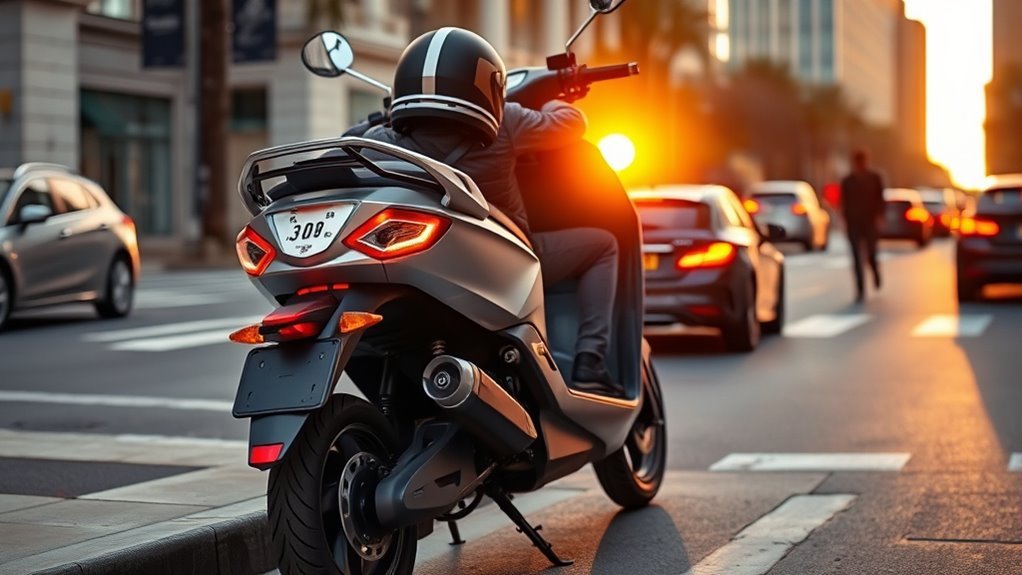
An electric scooter becomes legal for public use only when the scooter, rider, equipment, and riding location all comply with the applicable law. The first question is not which accessories to install. It is whether your model fits the legal definition of an electric scooter in your state.
State definitions commonly consider factors such as vehicle weight, number of wheels, handlebars, standing platform, motor type, maximum design speed, and sometimes motor output. The National Conference of State Legislatures documents substantial differences among state e-scooter laws, including speed, age, equipment, and roadway restrictions.
A scooter is a legal vehicle category first and a hardware checklist second. Adding lights or reducing speed cannot always convert an otherwise prohibited vehicle into a legal e-scooter.
Identify Your Scooter’s Legal Classification
Before modifying anything, write down the scooter’s model, weight, factory-rated maximum speed, motor rating, number of wheels, and whether it has a seat. Compare those specifications with your state’s statutory definition.
This matters because similar-looking vehicles can fall into very different categories. Colorado, for example, legally distinguishes an ordinary “electric scooter” from a “low-power scooter.” A qualifying Colorado electric scooter weighs less than 100 pounds and has a maximum motor-powered speed of 20 mph on level pavement. Colorado’s guidance says electric-scooter riders are exempt from motor-vehicle registration and license requirements. A separately classified Colorado low-power scooter is subject to different rules.
Follow This Road-Legal Checklist
- Classify the scooter. Match its factory specifications to the exact state-law definition.
- Check rider requirements. Verify age, driver-license or permit rules, helmet requirements, and passenger restrictions.
- Check the vehicle requirements. Confirm maximum design speed, legal operating speed, brakes, lights, reflectors, warning devices, registration, insurance, and any inspection requirement that applies to that vehicle class.
- Check the route. Confirm whether the scooter may use the street, bicycle lane, sidewalk, shared path, trail, park, or other facility you plan to enter.
- Check city and county ordinances. Local rules may regulate speed, parking, trails, sidewalks, rental devices, and other operating conditions.
Check Your State And City Scooter Laws
You need both levels of law. State law normally determines the basic vehicle classification and statewide operating framework, while cities and other local authorities may control issues such as sidewalk riding, local paths, parking, speed zones, and access to specific facilities.
State Scooter Rules
Do not rely on a generic online statement such as “electric scooters are legal under 20 mph.” Start with the state legislature, DMV, department of transportation, or another official agency.
| Rule | What to Verify | Why It Matters |
|---|---|---|
| Vehicle definition | Weight, wheels, platform, seat, motor, design speed, power if specified | Determines which body of law applies |
| Rider eligibility | Minimum age, driver license or permit, helmet | Requirements vary substantially by state |
| Registration and insurance | Whether the exact vehicle class requires either one | Not every scooter can or must be registered |
| Speed | Maximum design speed and maximum operating speed | Those two limits may be different |
| Equipment | Brakes, lights, reflectors, audible warning device | Requirements differ by jurisdiction and riding conditions |
| Road access | Streets, bike lanes, sidewalks, trails, highways | A legal scooter is not automatically permitted everywhere |
City Ordinance Limits
Local ordinances can materially change where and how you may ride. Greenwood Village, Colorado, is a useful example. In 2026 the city amended its rules to prohibit low-power e-scooters from city paths, trails, and sidewalks. The city separately regulates other electric vehicles and posts a 15 mph limit for permitted users of its trails and paths.
That is why a state-level statement such as “scooters may use bicycle facilities” is not enough. Check the municipality’s current traffic, parks, transportation, and parking rules before riding.
Local Riding Zones
Verify each type of facility you plan to use. A jurisdiction may treat a bike lane differently from a sidewalk, shared-use trail, park path, or ordinary street. Restrictions may also change by downtown district, park, posted speed zone, or facility owner.
Follow posted signs, yield where required, keep a predictable line, and park without blocking sidewalks, curb ramps, doorways, transit stops, or pedestrian routes. Local parking rules are especially important for shared or rental scooters.
Pro Tip: Search the official municipal code for “electric scooter,” “motorized scooter,” “micromobility,” “bicycle,” and “sidewalk.” A city may regulate your scooter under a term different from the one used by the manufacturer.
Add The Required Safety Features
Once you know the legal vehicle class, compare your scooter with the equipment requirements that actually apply in your jurisdiction. Depending on the law and riding conditions, those requirements may include a working brake, front light, rear light or reflector, side reflectors, and an audible warning device.
Do not assume every state uses the same equipment standard. California, for example, expressly requires a motorized scooter to have a brake meeting its statutory requirement. Other jurisdictions specify lighting or reflector requirements for nighttime use.
Inspect the scooter before riding. Confirm that the brake works smoothly, the tires are in safe condition, the steering and folding mechanism are secure, and required lighting is visible. If you add equipment, mount it so cables and hardware cannot interfere with the steering, wheels, brake controls, or folding mechanism.
Electrical safety deserves separate attention. The U.S. Consumer Product Safety Commission advises riders to use micromobility devices and batteries designed and certified for applicable safety standards, follow the manufacturer’s charging instructions, use the supplied or manufacturer-approved charger, and avoid battery packs modified or rebuilt by unqualified personnel.
Note: Electrical certification and safe charging practices are important safety considerations, but they do not replace state and local road-use requirements. A safely certified scooter can still be illegal to operate on a particular public road.
Stay Within Speed And Power Limits
Speed is one of the most misunderstood parts of electric-scooter law. Check both the scooter’s maximum design or manufactured speed and the maximum speed you are legally allowed to operate it. They are not always the same number.
Arkansas illustrates the distinction: its electric-motorized-scooter definition covers qualifying devices capable of up to 20 mph, while the statewide operating rule prohibits riding one faster than 15 mph. California also limits motorized-scooter operation to 15 mph.
Motor wattage must be handled the same way. Some jurisdictions use a motor-output threshold as part of a vehicle definition; others do not. Colorado’s statutory definition of an ordinary electric scooter, for example, focuses on a weight below 100 pounds and a maximum motor-powered speed of 20 mph rather than applying the draft article’s supposed nationwide 1,000-watt rule.
If your scooter exceeds the limits for your jurisdiction’s e-scooter category, do not assume that selecting a slower riding mode automatically changes its legal classification. Some laws look at the vehicle’s design capability rather than the speed you happen to ride.
Likewise, controller, firmware, battery, or motor modifications can increase the scooter’s capability enough to place it outside the original legal definition. Check the law again after any performance modification.
Register, Insure, And License Your Scooter
Registration, insurance, and driver licensing depend on vehicle classification and jurisdiction. Do not start a registration process until you know that your scooter belongs to a class that can or must be registered.
Colorado shows why this distinction matters. Colorado’s ordinary statutory “electric scooter” category is different from its “low-power scooter” category. The state says qualifying electric-scooter riders are exempt from motor-vehicle registration and license requirements. By contrast, Colorado’s separate low-power-scooter category requires a driver license, registration, and motor-vehicle insurance.
For a Colorado vehicle that truly qualifies as a low-power scooter, the current DMV DR 2701 Low-Power Scooter Registration Application requires ownership documentation and proof of insurance. The June 16, 2025 version lists a total amount due of $5.49 and provides mailing and Lakewood submission instructions. Those requirements should not be applied to an ordinary Colorado electric scooter without first confirming the vehicle’s classification.
California provides a different model. A motorized scooter does not require motor-vehicle registration, but the rider must have a valid driver’s license or instruction permit. California also prohibits ordinary sidewalk operation and limits motorized-scooter operation to 15 mph.
Arkansas is different again: its statewide electric-motorized-scooter law sets a minimum operator age of 16 and a maximum operating speed of 15 mph rather than imposing California’s driver-license rule.
Warning: Registration is not a universal way to “legalize” an electric scooter. In some jurisdictions the ordinary scooter category is exempt from registration; in others, a particular device may not qualify for legal public-road operation at all.
Know Where You Can Ride It
A scooter that satisfies your state’s vehicle definition is not automatically legal on every street, bike lane, sidewalk, trail, or highway. Location rules must be checked separately.
Permitted Riding Locations
Use this route check before each unfamiliar trip:
- Confirm that your scooter class may operate on the street you intend to use.
- Check the posted road speed and whether the law requires you to use a bicycle lane.
- Verify whether scooters are permitted on adjacent bike paths or shared-use paths.
- Check municipal rules for sidewalks, parks, trails, downtown districts, and other restricted areas.
- Obey signs that impose a lower speed or prohibit motorized devices.
California demonstrates how specific these rules can be. Its Vehicle Code generally bars a motorized scooter from a highway with a speed limit above 25 mph unless the scooter is operated in a qualifying Class II or Class IV bikeway. A local authority may authorize certain operation on roads up to 35 mph, but the scooter’s own 15 mph operating limit still applies.
Colorado uses a different system. Qualifying electric scooters generally receive rights and duties similar to electric bicycles, but local jurisdictions retain authority over bicycle and pedestrian paths.
Sidewalk And Trail Rules
There is no nationwide sidewalk rule. Some jurisdictions prohibit scooter riding on sidewalks, some let cities decide, and others allow limited sidewalk use subject to pedestrian protections.
California generally prohibits motorized-scooter riding on sidewalks except when necessary to enter or leave adjacent property. Greenwood Village’s 2026 rules prohibit its separately classified low-power e-scooters from city paths, trails, and sidewalks.
Trails can also have their own rules even when the surrounding state permits scooters on bicycle facilities. Always obey facility-specific signs and yield requirements.
Roadway And Path Limits
Once you confirm that a route is legal, follow the traffic rules that apply to your scooter. Keep a predictable line, obey traffic-control devices, yield when required, avoid carrying anything that prevents safe control, and use required lighting after dark.
Do not enter an interstate or other limited-access highway simply because your scooter is technically road legal. High-speed and controlled-access roads are commonly subject to separate prohibitions or restrictions.
Pennsylvania provides an especially important exception to assumptions about public-road access. PennDOT’s June 2026 micromobility guidance says the stand-up “Electric Scooter” category is not specifically classified or defined in the Pennsylvania Vehicle Code. PennDOT states that devices not defined in Pennsylvania law may not legally operate on Pennsylvania highways, a term that includes roads, bike lanes, and sidewalks.
Sources
- National Conference of State Legislatures — States Roll Out Electric Scooter Laws — state definitions, age rules, speed limits, equipment, and roadway-use differences.
- Colorado General Assembly — Electric Bicycles and Electric Scooters — Colorado electric-scooter definition, registration/licensing treatment, and path rules.
- California Legislative Information — Vehicle Code §§21220–21235 — license, helmet, brake, roadway, sidewalk, and operating requirements.
- Arkansas Motor Vehicle and Traffic Laws — Electric Motorized Scooter Act — scooter definition, minimum age, and operating-speed requirement.
- PennDOT PUB 944 — PA Micromobility Information Sheet, June 2026 — current Pennsylvania classification and public-highway guidance.
- U.S. Consumer Product Safety Commission — Micromobility Information Center — battery, charger, riding, and fire-safety guidance.
Frequently Asked Questions
How to Get Rid of Speed Limiter on Electric Scooter?
Do not remove or bypass a speed limiter merely to make the scooter faster. Increasing its maximum capability may move it outside your state’s legal e-scooter definition and can also affect braking, battery, controller, warranty, and electrical safety. If a limiter is configurable, use only manufacturer-supported settings and keep the scooter within every applicable legal limit.
What Happens if I Get Caught on My Electric Scooter?
Consequences depend on the jurisdiction and violation. You may receive a warning, traffic citation, fine, or another local penalty for riding in a prohibited area, exceeding the legal speed, lacking required equipment, or operating a vehicle that is not lawful on public roads. Check the actual state and municipal penalty provisions rather than assuming one nationwide penalty applies.
Are Electric Scooters Legal in PA?
PennDOT’s June 2026 PUB 944 says the stand-up “Electric Scooter” category is not specifically classified or defined in the Pennsylvania Vehicle Code. PennDOT further states that devices not defined in Pennsylvania law may not legally operate on highways, including roads, bike lanes, and sidewalks. Private-property use is subject to the property owner’s permission and any other applicable rules.
Can You Go on the Highway With an Electric Scooter?
Do not assume you can use an interstate, freeway, or other high-speed highway. States commonly impose roadway-speed or controlled-access restrictions. California, for example, generally restricts motorized scooters on roads posted above 25 mph unless specific bikeway or local-authority conditions apply. Check the exact road classification before riding.
Do I Need a License, Registration, or Insurance for an Electric Scooter?
It depends on the state and the scooter’s legal classification. California requires a valid driver’s license or instruction permit for its motorized-scooter category but does not require motor-vehicle registration. Colorado exempts qualifying ordinary electric scooters from motor-vehicle registration and licensing, while its separate low-power-scooter category requires registration, insurance, and a driver license.
Can I Make a Fast Electric Scooter Legal by Limiting It to 20 MPH?
Not necessarily. Some laws classify the vehicle according to its maximum design capability rather than the speed mode you select while riding. Weight, motor output, seating configuration, registration category, or other specifications may also matter. Confirm the statutory vehicle definition before relying on a software or controller speed setting.
Does UL 2272 Certification Make an Electric Scooter Road Legal?
No. Electrical safety certification and road legality are different issues. CPSC encourages consumers to use micromobility products designed and certified for applicable safety standards, but state and local traffic laws still determine whether and where the scooter may be operated.
Conclusion
Making your electric scooter road legal starts with identifying its legal classification, not buying a standard set of accessories. Verify the scooter’s factory specifications, state definition, rider requirements, speed rules, equipment, registration or insurance obligations, and every local riding restriction that applies. If the scooter falls outside the legal e-scooter category, lights or a speed limiter may not be enough to make it lawful on public roads. Recheck the current state and municipal rules whenever you modify the scooter or ride in a new jurisdiction.