Last Updated on August 26, 2026 by Caleb Warren
A suspension system backpack uses a combination of shoulder straps, a back panel, a frame or frame sheet, and—on many load-bearing packs—a hip belt to keep the pack stable and transfer weight more comfortably. The right system matters most when you carry heavier gear or wear a backpack for hours, but fit is just as important as padding or ventilation.
Quick Answer
A suspension system backpack uses straps, back support and often a frame and hip belt to stabilize the load and move some weight away from the shoulders. For the best comfort, choose a pack that matches your torso length, fits securely around your hips and has enough structure for the weight you plan to carry.
Key Takeaways
- A backpack suspension system may include a frame or frame sheet, shoulder harness, back panel, hip belt, sternum strap, load lifters and stabilizer straps.
- Heavier loads benefit most from a supportive frame and a correctly positioned hip belt that transfers part of the load to your hips.
- Fit matters more than extra padding. Size a backpack by torso length and hip measurements rather than height alone.
- Ventilated back panels can reduce heat buildup, but they do not make a backpack waterproof.
- For backpacking, REI uses about 20% of body weight as a general upper guideline for a loaded pack and about 10% for day hiking, while noting that individual needs vary.
Disclosure: As an Amazon Associate I earn from qualifying purchases. Some links on this page are affiliate links, at no extra cost to you.
Understanding the Suspension System in Backpacks
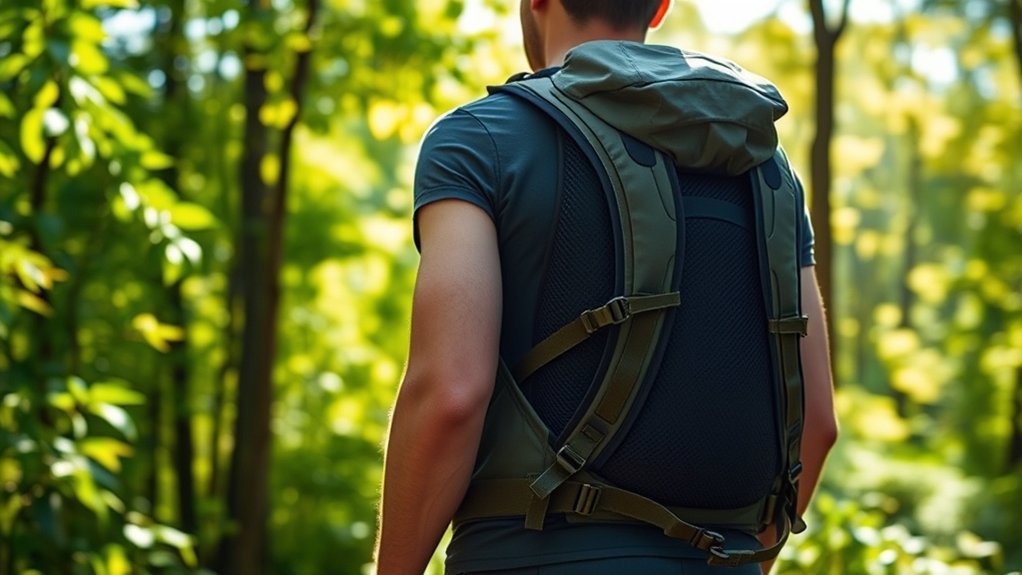
When you put on a backpack, its suspension system is the group of parts that connects the load to your body. Depending on the design, that system can include a structural frame or frame sheet, shoulder straps, a back panel, hip belt, sternum strap, load lifters and stabilizer straps. Together, these parts help control how close the load sits to your body, how much it moves and where you feel the weight.
Not every backpack needs the same suspension. A light commuter bag may rely mostly on padded shoulder straps and a flexible back panel. A larger hiking or backpacking pack usually needs more structure so some of the load can be supported at the hips instead of hanging entirely from the shoulders.
Current Vanquest suspension guidance, for example, describes different systems for messenger bags, convertible sling packs, everyday backpacks and larger outdoor packs. Its TRIDENT-21 and TRIDENT-32 use structured, ventilated suspension components, while larger packs such as the IBEX-35 add adjustable torso support, a frame, load lifters and a padded waist belt.
Key Components of an Effective Suspension System
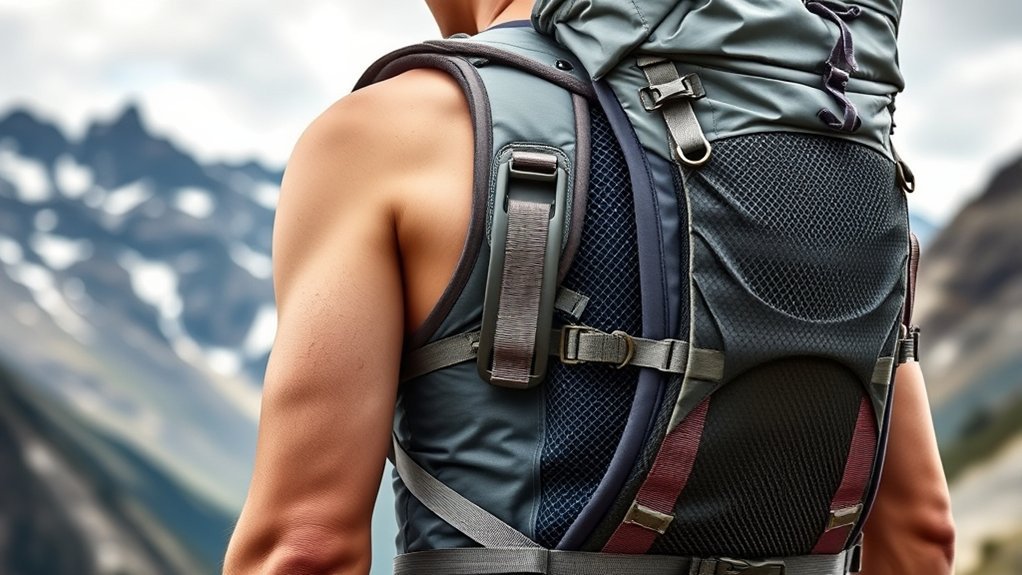
An effective suspension system does not have to contain one fixed set of parts, but load-bearing backpacks commonly use several of the following components:
- Frame or frame sheet: Adds structure, limits sagging and helps direct load toward the hip belt on packs designed for heavier weight.
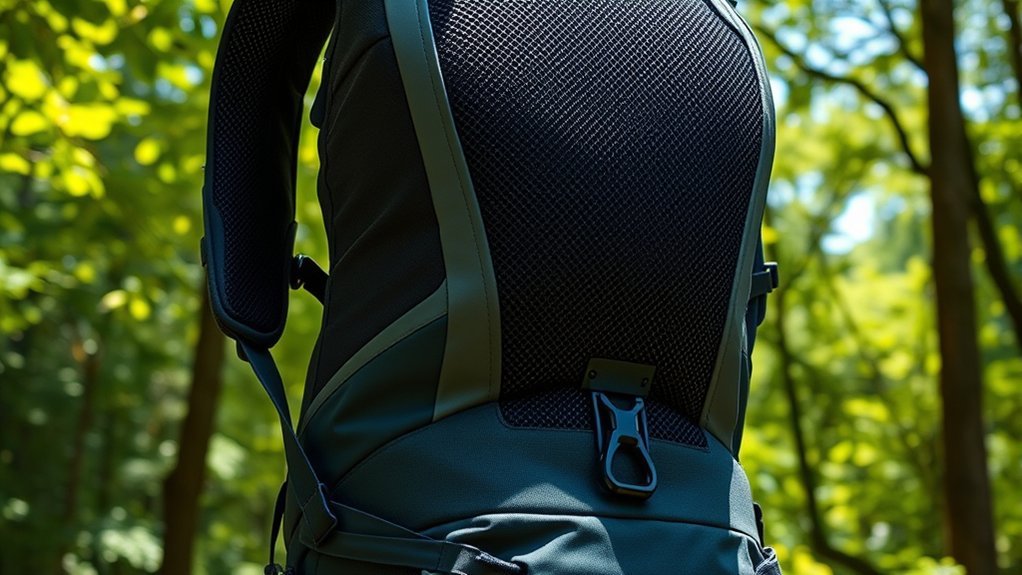
- Back panel: Creates the contact surface between you and the pack. Foam channels or mesh can improve ventilation.
- Shoulder harness: Holds the upper portion of the pack close to your torso and should follow your shoulders without creating pressure points.
- Hip belt: On larger load-bearing packs, a supportive belt wraps the hip bones so part of the load can be carried by the pelvis rather than entirely by the shoulders.
- Load lifters: Straps near the tops of the shoulder harness that help control the angle and position of the upper pack.
- Sternum strap: Connects the shoulder straps across the chest to help keep them positioned. It should not be tightened enough to restrict breathing.
- Stabilizer and compression straps: Help control side-to-side movement and keep the load closer to the body.
The exact design should match the expected load. A flexible frame sheet can be enough for everyday gear, while a larger trekking pack may use a more rigid internal frame and a substantial hip belt.
Benefits of a Well-Designed Suspension System

A well-designed backpack suspension system can make a noticeable difference when the pack is correctly sized, adjusted and loaded. The main benefits are better load control and fewer concentrated pressure points.
- Improved load transfer: A supportive frame and hip belt can move part of the pack weight from the shoulders toward the hips.
- Better stability: A close-fitting harness, sternum strap and compression system reduce excessive pack sway.
- More ventilation: Mesh, foam channels or a suspended back panel can create airflow between the pack and your back.
- More consistent fit: Adjustable torso lengths, shoulder straps and hip belts let you tune the pack to your body.
- Better control on uneven ground: Keeping dense gear close to your body and tightening appropriate stabilizer straps can reduce unwanted movement.
The best suspension system is not the one with the most padding or straps. It is the one that fits your torso and hips, supports your expected load and keeps the pack stable without creating painful pressure points.
How Suspension Systems Enhance Carry Comfort
Suspension systems improve carry comfort mainly by controlling where the pack sits and how its weight reaches your body. On a properly fitted load-bearing backpack, the hip belt supports a meaningful part of the load while the shoulder straps keep the pack close to your upper body.
Ventilation also matters. Breathable mesh and channels in the back panel can reduce heat and moisture buildup, although no back system will eliminate sweating during hard activity or hot weather.
Adjustability is equally important. A backpack with an adjustable torso length can place the shoulder harness and hip belt in the correct positions for different users. Deuter’s backpack-fitting guidance recommends positioning the hip fins over the top of the hip bones and keeping the main load on the waist belt before fine-tuning the shoulder, sternum and stabilizer straps.
Pro Tip: Test a backpack with realistic weight inside it. An empty pack can feel comfortable even when its torso length, hip belt or shoulder-harness shape is wrong for you.
Types of Suspension Systems for Different Bags
Different bag styles need different levels of support. A messenger bag designed for a laptop does not need the same frame and hip belt as a 35- or 45-liter outdoor pack.
Messenger Bag Features
Messenger bags usually rely on one adjustable shoulder strap rather than a traditional two-strap backpack harness. Some add a stabilizer strap or light frame sheet to control movement.
The current Vanquest ENVOY-13, for example, uses an adjustable removable shoulder strap with an ergonomic non-slip shoulder pad. Messenger bags work well for office, travel and quick-access use, but concentrating the load on one shoulder usually makes them less suitable than a properly fitted backpack for carrying substantial weight over long distances.
Sling Backpack Versatility
Convertible sling backpacks trade some load-carrying efficiency for fast access and versatility. Vanquest’s KATARA-16 and JAVELIN-18 are current examples that can be configured for conventional two-shoulder backpack carry or converted to a single-shoulder sling.
This hybrid approach is useful for everyday carry, photography or situations where you want to swing the bag forward without taking it off. For longer walks or heavier loads, using both shoulder straps generally spreads pressure more evenly.
Backpack Comfort Elements
Everyday and outdoor backpacks can use progressively more supportive suspension as load and trip length increase. Current Vanquest examples illustrate that range:
- TRIDENT-21 and TRIDENT-32: Use ventilated suspension components, structured back support and contoured shoulder straps.
- IBEX-35: Adds a four-position torso-adjustable shoulder harness, removable internal frame, breathable mesh back, load lifters, sternum strap and padded waist belt.
- MARKHOR-45: Uses an adjustable-height shoulder system, internal frame, load lifters and a padded waist belt for larger outdoor loads.
Common Backpack Suspension Types
Looking beyond individual models, most backpacks fall into a few broad suspension categories.
| Suspension Type | Best For | Main Trade-Off |
| Frameless | Very light loads, simple daypacks and ultralight setups | Less structure and load transfer as weight increases |
| Frame sheet | Commuting, travel and moderate everyday loads | More support than frameless designs but less than a substantial internal frame |
| Internal frame | Hiking, backpacking and heavier gear | Adds weight and requires correct torso and hip-belt fit |
| Tensioned or suspended mesh | Warm-weather hiking and users who prioritize airflow | Can hold the load farther from the back depending on the design |
Features to Look for in a Suspension System
When comparing backpacks, focus on how the system fits and supports your expected load rather than simply counting features.
Weight Distribution Efficiency
For heavier loads, look for a frame or structured frame sheet connected effectively to a supportive hip belt. The goal is not to remove all weight from your shoulders but to prevent the entire load from hanging there.
- Supportive frame: Helps the pack retain its shape and transfer load toward the hips.
- Well-shaped hip belt: Should wrap securely around the top of the hip bones without sliding down.
- Compression straps: Help prevent the load from shifting away from your center of mass.
- Load lifters: On suitable packs, help fine-tune how the upper pack sits relative to your shoulders.
Adjustable Fit Mechanisms
Backpack fit begins with the correct size. Deuter defines back length as the distance from the C7 vertebra at the base of the neck to the iliac crest at the top of the pelvis. REI likewise recommends sizing backpacking packs according to torso length and hip circumference rather than height alone.
Useful adjustment features include:
- Adjustable torso or shoulder-harness height
- Hip-belt adjustment with enough range to wrap the hips securely
- Shoulder straps that follow your shoulder shape without gaps or pinching
- Height-adjustable sternum strap
- Load lifters on larger packs
- Hip-belt stabilizers or side compression straps where appropriate
Comfort and Breathability Features
Padding should be supportive rather than simply thick. Very soft foam can compress under load, while excessively bulky padding can create heat and pressure. Look for firm but comfortable hip-belt and shoulder padding that matches your body shape.
A ventilated mesh back panel, molded foam channels or suspended mesh can improve airflow. Remember, however, that ventilation is only one part of comfort; torso fit, load weight and pack stability usually matter more during long carries.
How to Fit and Adjust a Suspension System Backpack
A good suspension system cannot compensate for a badly sized or poorly adjusted pack. Use the following sequence with a realistic test load:
- Confirm the torso size. Measure from the C7 vertebra at the base of your neck to the level of the top of your hip bones, then compare that measurement with the manufacturer’s sizing chart.
- Loosen the main straps. Start with the shoulder straps, load lifters, sternum strap and stabilizers loose enough to position the pack naturally.
- Set the hip belt first. Place the padded belt over the top of your hip bones and tighten it securely without creating painful pressure.
- Tighten the shoulder straps. Pull them until the harness follows your shoulders and holds the pack close without lifting the hip belt or putting the entire load on your shoulders.
- Adjust the load lifters. If the pack has them, snug them enough to control the upper pack. Do not crank them down simply to remove every bit of shoulder pressure.
- Set the sternum strap. Position it comfortably across the chest and tighten only enough to stabilize the shoulder straps without restricting breathing.
- Fine-tune stabilizers and compression straps. Bring the load closer to your body while maintaining comfortable movement.
- Walk with the pack. Climb stairs, bend and move for several minutes. Re-adjust if the belt slips, the pack sways or pressure builds in one spot.
Warning: Numbness, tingling, restricted breathing, sharp pain or persistent concentrated pressure are signs to stop and adjust the pack. If the problem continues, the pack may be the wrong size, shape or load rating for you.
How Loading Affects Your Suspension System
Even an excellent suspension system can feel unstable if the backpack is packed poorly. Keep dense, heavy items close to your back instead of placing them far away in outer pockets. This reduces leverage that can pull the pack backward.
Use compression straps to limit shifting inside partially filled packs. Keep frequently needed items accessible, but avoid loading several heavy objects into one side pocket because uneven weight can pull the suspension off-center.
Before a long trip, weigh the fully loaded pack. REI gives a general guideline of no more than about 20% of body weight for a loaded backpacking pack and about 10% for a loaded day-hiking pack, while noting that these percentages do not fit every person or trip. Always consider your health, experience, terrain and the backpack manufacturer’s recommendations as well.
When to Use a Suspension System Backpack
A more supportive suspension system backpack is most useful when you will carry substantial gear, walk for long periods or travel over uneven terrain. Hiking, multi-day backpacking and gear-heavy travel are common situations where a frame, supportive hip belt and multiple adjustment points can be valuable.
You may not need a complex suspension system for a light laptop, a few personal items or a short commute. In those situations, a properly shaped pair of shoulder straps and a supportive back panel may be enough, while a heavy frame and thick hip belt would only add bulk.
Warm-weather users may value a ventilated or suspended-mesh back panel. People carrying heavier loads should usually give greater priority to fit, frame support, torso adjustment and hip-belt comfort.
Comparing Suspension Systems: What You Need to Know
Compare suspension systems according to load, duration, fit and access needs rather than assuming that the most complicated design is automatically best.
- Messenger bag: Quick access and convenient for lighter office or travel loads, but weight is concentrated mainly on one shoulder.
- Convertible sling backpack: Flexible access and carrying options; two-shoulder mode is usually more appropriate as weight or walking time increases.
- Everyday framed backpack: Adds structure, ventilation and improved load control for moderate loads.
- Large outdoor backpack: Usually offers the most torso adjustment, frame support, hip-belt structure, load lifters and compression options.
The Vanquest ENVOY-13, KATARA-16, JAVELIN-18, TRIDENT-21/32 and IBEX-35 illustrate these different approaches, but the same principles apply across brands: choose enough structure for the load, then make sure the harness dimensions actually fit your body.
Tips for Choosing the Right Suspension System for Your Needs
Start with what you carry and how long you normally carry it. A commuter carrying a laptop has different needs from a backpacker carrying shelter, food and water for several days.
- Measure before buying: Use torso length and hip circumference, then compare them with the specific manufacturer’s sizing chart.
- Test with weight: Try the pack with a realistic load whenever possible.
- Match frame strength to load: A light frame sheet suits moderate everyday loads; heavier outdoor loads generally benefit from more structural support.
- Check hip-belt contact: On a load-bearing pack, the belt should wrap your hips securely rather than simply circle your waist.
- Check shoulder geometry: Straps should lie smoothly without cutting into your neck or leaving large gaps.
- Consider ventilation realistically: Mesh and channels help airflow, but they cannot eliminate sweat.
- Check adjustability: Load lifters, torso adjustment and stabilizer straps are useful only when they fall in the correct position on your body.
- Consider the pack’s own weight: More suspension hardware adds support but also increases empty pack weight.
Note: A suspension system and weather protection are separate features. A supportive backpack may still allow water through its fabric, seams or zippers unless the manufacturer specifically rates it as waterproof. For wet trips, check the pack’s weather protection and use a rain cover or waterproof liner when appropriate.
Frequently Asked Questions
Can I Use a Suspension System Backpack for Daily Commuting?
Yes. A suspension system can make commuting more comfortable when you carry a laptop, books or other substantial gear. For a light daily load, however, you may not need a heavy internal frame or large hip belt. Prioritize correct torso fit, comfortable shoulder straps and enough back support for what you actually carry.
How Do I Properly Adjust a Suspension System Backpack?
Load the pack realistically and loosen the adjustment straps. Position and tighten the hip belt over the top of your hip bones first. Then tighten the shoulder straps, gently adjust the load lifters if present, position the sternum strap without restricting breathing and fine-tune the stabilizer or compression straps.
Are Suspension System Backpacks Waterproof?
Not necessarily. Suspension describes how the backpack connects to and supports your body; waterproofing describes how the bag resists water. Check the fabric, coating, seams, zippers and manufacturer’s waterproof or water-resistant rating. A pack liner or rain cover can provide additional protection in wet conditions.
What Weight Limit Should I Observe With a Suspension System Backpack?
Follow the backpack manufacturer’s load guidance first. As a general guideline, REI suggests keeping a loaded backpacking pack to about 20% or less of body weight and a loaded day-hiking pack to about 10% or less. Those percentages are not appropriate for every person, so reduce the load if you develop pain, numbness, poor balance or excessive fatigue.
Do Suspension System Backpacks Come in Different Sizes for Different Body Types?
Yes. Many backpacks come in several torso or harness sizes, and some have adjustable back lengths. Fit should be based mainly on torso length, hip circumference and the manufacturer’s sizing range rather than overall height alone. Shoulder width and body shape can also affect which model feels best.
Is an Internal-Frame Backpack Always Better Than a Frameless Pack?
No. Internal frames are valuable when you need structure and load transfer, especially with heavier gear. Frameless packs can be lighter and simpler for small loads. The better choice depends on total pack weight, trip length, terrain and how well the pack fits you.
How Can I Tell If My Backpack Suspension Fits Poorly?
Common signs include a hip belt that constantly slides down, most of the weight hanging from your shoulders, large gaps under the shoulder straps, excessive pack sway, pressure against your neck, restricted breathing from the sternum strap, or numbness and painful hot spots after walking.
Conclusion
A suspension system backpack can make heavier or longer carries more stable and comfortable, but only when the system matches both your load and your body. Start with correct torso and hip sizing, then consider the frame, hip belt, shoulder harness, load lifters and ventilation features you actually need. Test the pack with realistic weight and adjust it before a long trip. A simpler suspension is often enough for light commuting, while hiking and multi-day loads benefit more from a supportive frame and well-fitted hip belt.
Sources
- Vanquest — Backpack Suspension System Guide — supports the descriptions of messenger, sling, everyday and outdoor suspension components.
- Vanquest — IBEX-35 Backpack — supports current frame, torso adjustment, load-lifter, mesh back and padded waist-belt details.
- REI Co-op — How Much Should Your Pack Weigh? — supports the general 20% backpacking and 10% day-hiking load guidelines and their limitations.
- Deuter — How to Adjust a Backpack — supports the hip-belt, shoulder-harness, sternum-strap and stabilizer adjustment sequence.
- Deuter — How to Measure Your Back Length — supports measuring back length between the C7 vertebra and iliac crest for pack sizing.