Last Updated on July 30, 2026 by Caleb Warren
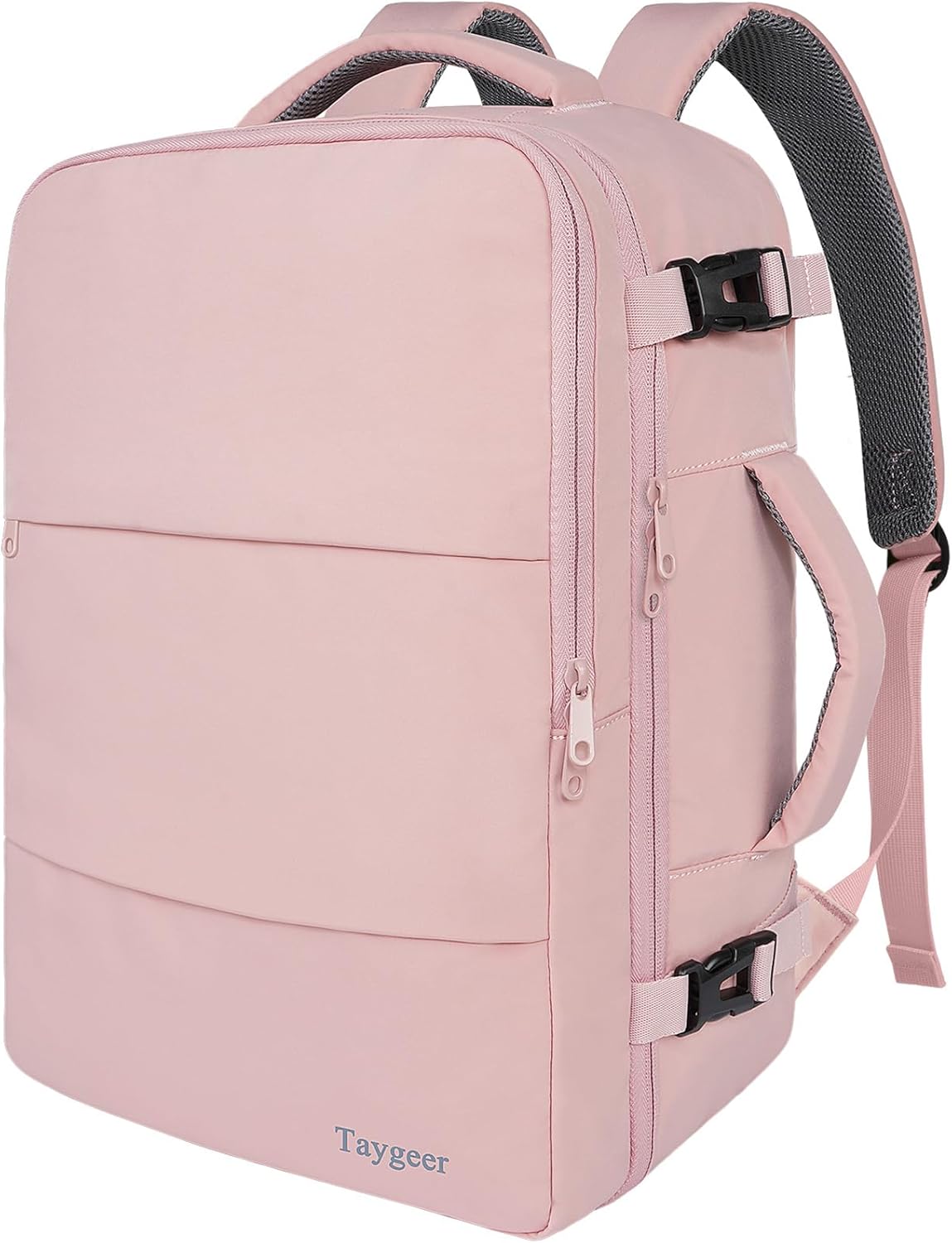
A travel backpack is a backpack designed to organize clothing, electronics, documents, and other trip essentials while remaining comfortable to carry through airports, cities, train stations, and hotels. Travel models often open like a suitcase and may include a laptop sleeve, lockable zipper pulls, compression straps, and a harness that can be covered during transit.
Quick Answer
A travel backpack combines the hands-free carrying of a backpack with the organization and wide opening of a suitcase. Capacities commonly range from small under-seat bags to larger carry-on and checked models, but airline compliance depends on the packed bag’s outside dimensions, weight, fare, and operating airline—not its liter rating alone.
Key Takeaways
- Travel backpacks prioritize organization, mobility, and easy access rather than trail-specific gear carrying.
- A 40L or 45L label does not guarantee carry-on compliance; measure the fully packed bag and check the operating airline’s rules.
- Comfort depends on torso fit, shoulder-harness shape, hip-belt position, back-panel support, and the weight you actually carry.
- Most everyday travel packs are water-resistant, not fully waterproof, so sensitive items may still need dry bags or waterproof pouches.
- Lockable zippers and hidden pockets can discourage casual theft, but they do not replace awareness or secure storage.
Disclosure: As an Amazon Associate I earn from qualifying purchases. Some links on this page are affiliate links, at no extra cost to you.
Definition of a Travel Backpack

A travel backpack is luggage built to be carried on your back while providing travel-oriented access and organization. Unlike a basic school backpack, it may include a clamshell or panel opening, compression straps, a padded electronics compartment, internal dividers, document pockets, and a harness that can be stowed behind a zippered cover.
Travel backpacks come in many capacities. Small models may fit under an airline seat, mid-size packs may qualify for an overhead bin, and larger models may need to be checked. Capacity in liters is useful when comparing storage space, but it is not an airline standard. Two bags marked 40L can have different outside dimensions because of their shape, padding, pockets, frame, and the way each manufacturer measures volume.
Comfort features may include padded shoulder straps, a shaped back panel, a sternum strap, load lifters, and a hip belt. The amount of support varies. Some urban travel bags have only light padding, while travel packs intended for heavier loads may use a more structured suspension.
Security-focused details may include zipper pulls that accept a small lock, hidden pockets, covered zipper tracks, or subdued styling. These features can make opportunistic access more difficult, but no fabric pocket or zipper lock makes a backpack theft-proof.
Key Benefits of Using a Travel Backpack

A travel backpack is useful when your trip includes stairs, public transportation, uneven sidewalks, frequent hotel changes, or places where rolling a suitcase would be awkward.
- Hands-free mobility: Both hands remain available for tickets, phones, railings, food, or another small bag.
- Organized packing: Separate pockets can keep clothing, toiletries, documents, cables, and electronics easier to find.
- Flexible storage: Soft sides and compression straps can make the bag easier to place in lockers, trunks, and luggage racks.
- Faster access: A panel or clamshell opening lets you see more of the main compartment than a narrow top opening.
- Better movement on rough surfaces: Stairs, curbs, gravel, and cobblestones do not stop the bag as they can stop small luggage wheels.
The best travel backpack is not the one with the largest liter rating. It is the smallest pack that fits your gear, your body, and the strictest transportation limit on your trip.
Ideal Scenarios for Travel Backpack Usage

A travel backpack works best when mobility and flexible storage matter more than the effortless rolling and rigid protection offered by a suitcase.
Urban Exploration Adventures
In a city, a backpack is easier to carry through subway stations, onto buses, over stairs, and across uneven pavement. A quick-access pocket can hold transit cards, maps, snacks, or a compact umbrella, while a hidden pocket may keep a passport or backup payment card less exposed.
- Move through crowded streets without pulling a suitcase behind you.
- Keep frequently used items in pockets you can reach without opening the main compartment.
- Use internal dividers or packing cubes so clothing and electronics remain separated.
A low-profile pack can also attract less attention than oversized expedition luggage. However, valuables should not be placed in an exposed outer pocket merely because the pocket is described as “anti-theft.”
Business Travel Convenience
For business trips, a travel backpack can hold a laptop, charger, documents, clothing, and toiletries in one compact bag. A separate laptop compartment is especially helpful at security checkpoints and during meetings because it limits the need to open the clothing compartment.
Look for a bag that stands upright when packed, has a professional appearance, and provides enough structure to protect electronics. A luggage pass-through sleeve is useful when the backpack will sometimes ride on top of a rolling suitcase.
When a Travel Backpack May Not Be Best
Traditional wheeled luggage may be more comfortable when you have smooth surfaces, heavy clothing, formal garments, mobility limitations, or a long airport connection. A rigid suitcase also offers better crush protection for fragile items.
A trail-oriented backpacking pack is usually the better choice for multi-day hiking. Backcountry packs are designed around torso fit, sustained load carrying, ventilation, hydration, and exterior gear attachment rather than airport organization.
Essential Features to Look For
The right features depend on your trip, but the following details have the greatest effect on daily use.
Opening Style
- Clamshell opening: Opens around three sides like a suitcase and provides a clear view of the contents.
- Panel opening: Opens widely but may not lie completely flat.
- Top loading: Can be simple and weather-resistant, but items at the bottom are harder to reach.
- Roll top: Adjusts to different loads and can improve weather protection, although it may provide less internal organization.
Organization and Electronics Protection
A dedicated laptop sleeve should hold the device firmly without forcing it against the bag’s bottom. A raised or suspended sleeve can provide extra protection when the pack is set down. Check the stated screen size as well as the sleeve’s actual dimensions, because laptops with the same screen size can have different bodies.
Useful organization may include:
- A document pocket that is easy to reach at security
- A lined pocket for glasses or small electronics
- Internal compression straps for clothing
- A separate area for shoes or laundry
- External water-bottle pockets that remain usable when the bag is full
- Small pockets that do not consume too much main-compartment space
Harness and Transit Features
For frequent flights, consider shoulder straps that can be covered or stowed. Loose straps may catch on conveyor equipment or other luggage. Side and top handles also make the pack easier to lift into an overhead bin or carry through a narrow aisle.
Compression straps can reduce depth and stabilize the contents. Check whether they compress the actual main compartment or merely cross over an outer pocket.
Carry-On Size and Volume Considerations
Airline compliance depends on the packed backpack’s external height, width, depth, weight, item allowance, and fare rules. A manufacturer’s capacity label cannot confirm that a bag will fit an airport sizer.
Warning: Never assume that a backpack is carry-on compliant because it is marketed as 40L, 45L, “cabin size,” or “international size.” Check every flight’s operating airline and measure the bag after packing it.
Airline Size Restrictions
Carry-on rules vary by airline, aircraft, travel class, fare, and route. The International Air Transport Association advises passengers that allowances vary and that the airline’s conditions apply.
As current examples, American Airlines, Delta, and United publish a maximum overhead carry-on size of about 22 × 14 × 9 inches. That does not mean every 40L or 45L backpack fits those dimensions.
International policies are not represented by one universal 40L or 10 kg rule. For example, Lufthansa currently lists a maximum of 55 × 40 × 23 cm and 8 kg for qualifying cabin bags, while some fares include only a smaller personal item.
Note: On an itinerary involving multiple airlines, check the operating carrier for each flight. Following the strictest size and weight limit reduces the chance of a problem during a connection.
Personal Item Versus Overhead Carry-On
A personal item must fit under the seat in front of you. An overhead carry-on is larger and must fit in the cabin’s baggage compartment. Airlines may allow both, one, or only a personal item depending on the fare.
A small daypack may qualify as a personal item, while many full-size travel backpacks are intended for the overhead bin. The word “backpack” does not automatically make a bag a personal item.
Volume Measurement Guidelines
Liters describe approximate internal storage. They help compare capacities, but brands may use different measurement methods. Padded laptop sleeves, curved back panels, thick fabric, frames, and external pockets can all affect the relationship between internal liters and outside dimensions.
| Approximate Capacity | Common Use | Important Limitation |
|---|---|---|
| 15–25L | Daily use, sightseeing, or minimalist overnight travel | May qualify as a personal item, but under-seat limits vary. |
| 25–35L | Short trips, warm climates, or compact business travel | Some models fit overhead limits; others are too tall or deep. |
| 35–45L | One-bag travel with clothing, toiletries, and electronics | Often marketed as carry-on size, but must be measured when full. |
| 45L+ | Bulky clothing, family gear, outdoor equipment, or extended travel | Many models exceed cabin dimensions or weight when fully packed. |
Trip length alone does not determine the required volume. Climate, footwear, laundry access, electronics, medication, formal clothing, and packing style can matter more than the number of days.
How to Measure a Packed Travel Backpack
- Pack the bag with the items you plan to carry.
- Close all expansion zippers and tighten the compression straps.
- Place the pack on a flat surface without pressing down on it.
- Measure the greatest external height, width, and depth.
- Include handles, frames, bulging pockets, and wheels if the model has them.
- Weigh the packed bag with a luggage scale.
- Compare the result with the operating airline’s current allowance.
Pro Tip: Leave a small size and weight margin instead of packing exactly to the published limit. Soft backpacks can bulge after you add a jacket, food, or duty-free purchase.
Comfort and Accessibility Features
A backpack can have thick padding and still fit poorly. Test it with realistic weight rather than judging comfort while it is empty.
The Osprey pack-fitting guide recommends positioning the hip belt over the hip bones, tightening the shoulder harness, adjusting the load lifters, and checking that the harness wraps around the shoulders without large gaps.
How a Travel Backpack Should Fit
- Torso length: The harness should match the length of your back. Adjustable packs provide more flexibility than fixed-size models.
- Hip belt: On a load-supporting pack, the padded belt should wrap around the upper hip bones rather than the waist or stomach.
- Shoulder straps: The straps should follow the shoulders without pinching the neck or leaving a large gap behind the shoulders.
- Sternum strap: It should stabilize the shoulder straps without restricting breathing.
- Load lifters: When present, they help pull the top of the load closer to the body.
- Back panel: Padding and ventilation should feel comfortable without pushing the load too far away from your back.
A supportive hip belt can shift part of the load away from the shoulders, but there is no universal percentage that applies to every pack and traveler.
Accessibility Features
- Front or clamshell access: Reduces the need to remove everything to reach one item.
- Quick-access pockets: Useful for documents, medication, glasses, and charging cables.
- Dual zippers: Allow the opening to be positioned where it is easiest to reach.
- Contrasting lining: Makes dark objects easier to find inside the bag.
- Standing base: Helps keep the pack upright during check-in or security screening.
Durability and Material Quality
Travel backpacks are commonly made from nylon, polyester, canvas, or laminated fabrics. Material weight and denier can provide useful context, but a higher denier number does not automatically mean the entire bag is stronger. Seam construction, reinforcement, zipper installation, coatings, and hardware quality also matter.
Inspect the following areas:
- Reinforced stitching where shoulder straps and handles join the pack
- Bar tacks at high-stress attachment points
- Smooth zippers that do not snag around corners
- Buckles that are easy to replace if damaged
- Abrasion-resistant fabric on the base and corners
- Compression straps anchored into structural seams
- A warranty or repair program with clear terms
Water-Resistant Versus Waterproof
Most ordinary travel backpacks should be treated as water-resistant unless the manufacturer specifically describes a waterproof construction. A water-resistant coating may handle a short shower, but water can still enter through seams, zipper tracks, openings, or saturated fabric.
A more weather-protective design may use welded or taped seams, coated zippers, a roll-top closure, and laminated fabric. Even then, “waterproof” does not always mean submersible.
Note: Store passports, medication, cameras, and electronics in waterproof pouches or dry bags when moisture damage would create a serious problem.
Security Features for Safe Travel
Security features are most useful when they slow down casual access without making the backpack difficult for you to use.
- Lockable zipper pulls: Permit a small luggage lock or cable, but ordinary zippers and fabric can still be forced.
- Hidden pockets: Keep passports and backup cards less visible when the pack is being worn.
- Covered zipper tracks: Make zipper pulls harder to grab quickly.
- Cut-resistant materials: May strengthen selected panels or straps, but protection varies by design.
- Internal key clips: Keep keys from falling out when a pocket is opened.
- Low-profile styling: May attract less attention than bags with prominent luxury or camera branding.
Do not keep every payment method and identification document in one pocket. Carry your passport and primary payment method close to your body when local conditions call for extra caution, and keep a separate backup securely stored.
Warning: Lockable zipper pulls are a deterrent, not a safe. Do not leave cash, passports, medication, or electronics unattended merely because the bag has an “anti-theft” label.
Comparison With Traditional Luggage
Travel backpacks and wheeled suitcases solve different problems. A backpack provides better mobility on stairs and uneven surfaces, while a suitcase can be easier to move through large airports when the floor is smooth.
Organization and Accessibility
A clamshell travel backpack can provide suitcase-like access while adding smaller pockets for electronics and documents. Traditional luggage may offer a larger uninterrupted compartment, which can be useful for packing cubes, formal clothing, or bulky items.
Mobility and Transportability
| Feature | Travel Backpack | Traditional Wheeled Luggage |
|---|---|---|
| Carrying method | Hands-free shoulder harness | Rolling handle or side handles |
| Stairs and rough ground | Usually easier if the load is manageable | Wheels may catch or require the case to be carried |
| Heavy loads | Weight remains on the traveler’s body | Can be rolled on smooth surfaces |
| Crush protection | Usually soft-sided with limited protection | Hard-shell models protect fragile contents better |
| Empty-bag weight | Often lighter, but structured travel packs can still be heavy | Wheels, frame, and handle add weight |
| Storage | Can compress into irregular spaces | Retains its shape and may require more space |
Safety and Security Features
A backpack stays physically connected to you while being worn, which can improve awareness of where the bag is. However, rear pockets and exposed zipper pulls may be difficult to see. A suitcase can be locked, but it may be set down or separated from you more often.
Padded compartments reduce ordinary bumps but do not guarantee that electronics or fragile items will survive rough handling. Use a protective sleeve and keep irreplaceable items with you whenever possible.
Travel Backpack Versus Hiking or Backpacking Backpack
| Design Area | Travel Backpack | Hiking or Backpacking Pack |
|---|---|---|
| Primary purpose | Airports, cities, hotels, and general transportation | Carrying equipment over trails for long periods |
| Opening | Clamshell or wide panel opening | Often top-loading with trail-access pockets |
| Suspension | Ranges from basic padding to a structured harness | Usually designed for torso adjustment and sustained load transfer |
| Exterior storage | Often streamlined for transit | May include bottle pockets, gear loops, straps, and hydration access |
Travel Backpack Versus Daypack
A daypack is generally smaller and intended for commuting, sightseeing, or a single day outdoors. It may qualify as a personal item more easily, but it usually lacks the clothing organization, large opening, compression system, and load capacity of a full travel backpack.
Tips for Choosing the Right Travel Backpack
- Start with your strictest transportation limit. Check the operating airline, fare, train, bus, or tour rules before selecting a size.
- List what you must carry. Include clothing, footwear, electronics, medication, toiletries, and special equipment.
- Choose capacity after the list. Do not buy extra volume merely because it is available; unused space encourages overpacking.
- Decide how you want the bag to open. Clamshell access is convenient for clothing, while top or roll-top designs may suit flexible loads.
- Test the fit with weight. Use a load similar to what you expect to carry and wear the pack for at least several minutes.
- Measure the packed bag. Include bulging pockets and handles rather than relying on the product’s stated liters.
- Inspect stress points. Examine handles, shoulder-strap anchors, zipper corners, base fabric, buckles, and seams.
- Confirm weather protection. Decide whether water resistance is enough or whether sensitive gear needs dry bags.
- Review the warranty and repair policy. Replaceable buckles, zipper service, and repair support can extend the pack’s useful life.
How to Pack a Travel Backpack for a Flight
Pack the bag so that security items, medication, batteries, and valuables remain accessible even if the main backpack must be checked at the gate.
- Place dense items close to your back and near the middle of the pack.
- Use packing cubes or compression straps to stop clothing from shifting.
- Keep travel documents, medication, and one essential layer in an accessible pocket.
- Place ordinary liquids, gels, creams, and pastes in containers that meet the applicable security rules. For U.S. screening, review the TSA liquids rule.
- Protect laptops and tablets in padded sleeves and shut them down when required.
- Keep power banks and spare lithium batteries in the cabin. Protect exposed battery terminals from short circuits.
- Leave enough room to close the bag without forcing the zippers or creating a large bulge.
- Measure and weigh the pack after it is fully loaded.
Warning: The Federal Aviation Administration requires spare lithium batteries and power banks to remain in carry-on baggage. If your backpack is taken for gate checking, remove these batteries and keep them with you in the cabin.
Common Travel Backpack Mistakes
- Buying by liters alone: Capacity does not confirm outside dimensions.
- Ignoring the packed depth: Shoes, bottle pockets, and expansion panels can push the bag beyond the limit.
- Testing the pack while empty: Harness problems often appear only after weight is added.
- Choosing too many pockets: Excess dividers can reduce usable space and add weight.
- Assuming water resistance is waterproofing: Rain can enter through seams and zippers.
- Overpacking because the fabric stretches: A bulging soft bag may not fit the airline sizer.
- Leaving straps exposed: Loose harness straps may catch during baggage handling.
- Putting every valuable in one pocket: Losing one compartment can then mean losing everything important.
- Forgetting gate-check preparation: Batteries, medicine, identification, and valuables should be easy to remove.
Travel Backpack Care and Maintenance
Always follow the care label or manufacturer’s instructions because coatings, foam, frames, adhesives, and wheeled systems require different treatment.
For many non-wheeled packs, basic care includes:
- Empty every compartment and shake out dirt and crumbs.
- Remove detachable components when the instructions permit it.
- Spot-clean or hand-clean with warm water, mild soap, and a soft sponge or brush.
- Rinse away all soap residue.
- Open the pockets and hang the pack in a well-ventilated area away from direct sunlight.
- Store it completely dry with the straps loosened.
Osprey’s backpack-cleaning guidance recommends mild soap, warm water, thorough rinsing, and air drying, and advises against machine washing its packs. Other brands may give different instructions, so the product label takes priority.
Inspect the backpack after each major trip. Repair loose stitching, damaged zipper pulls, torn mesh, or cracked buckles before the next journey. Replace the pack when structural seams, shoulder-strap anchors, the frame, or critical zippers can no longer be repaired safely.
Frequently Asked Questions
Can a travel backpack be used for daily commuting?
Yes. A compact travel backpack can work well for commuting when it has a comfortable harness, an appropriately sized laptop sleeve, quick-access pockets, and a shape that is not too bulky for public transportation. Large 40L or 45L packs may be excessive for everyday use.
Are travel backpacks waterproof or water-resistant?
Most ordinary travel backpacks are water-resistant rather than fully waterproof. Protection depends on the fabric coating, seams, zipper design, and closure. Use waterproof pouches or dry bags for passports, medication, cameras, and electronics when rain exposure is possible.
How do I clean my travel backpack?
Follow the manufacturer’s care label. Many packs can be cleaned with warm water, mild soap, and a soft brush or sponge, then rinsed and air-dried away from direct sunlight. Do not machine-wash or machine-dry a pack unless the manufacturer specifically permits it.
Can I use a travel backpack for camping?
A travel backpack can work for car camping, cabins, festivals, and short walks from a vehicle. For overnight hiking, a trail-oriented backpacking pack is usually better because it is designed for torso fit, sustained load carrying, ventilation, hydration, and exterior gear attachment.
What is the average lifespan of a travel backpack?
There is no reliable universal lifespan. A lightly used, repairable backpack may last many years, while frequent overloading, abrasion, moisture, damaged zippers, or poor storage can shorten its life. Inspect structural seams, handles, shoulder-strap anchors, buckles, coatings, and zippers rather than replacing the bag on a fixed schedule.
Is a 40L travel backpack always carry-on size?
No. Many 40L packs are designed around common overhead-bin limits, but some are too tall, wide, or deep when fully packed. Measure the greatest external dimensions and compare them with the operating airline’s current policy.
Can a travel backpack count as a personal item?
A small travel backpack may count as a personal item if it fits within the airline’s under-seat dimensions. Full-size travel backpacks usually count as overhead carry-ons. The airline’s measurement and fare rules determine the category, not the bag’s product name.
How heavy should a travel backpack be?
It should remain within the airline’s limit and feel stable enough for you to lift, carry, and place in an overhead bin safely. There is no single ideal percentage for every traveler. Reduce the load if the straps cause pain, the pack pulls you backward, or you cannot lift it without straining.
Conclusion
A travel backpack can be an excellent choice for airports, public transportation, city streets, business trips, and journeys that involve frequent movement. Its main advantages are hands-free carrying, flexible storage, and easier access than a narrow top-loading bag.
Choose the pack by working backward from your transportation limits, required gear, and body fit. Measure it when packed, test the harness with realistic weight, verify the level of weather protection, and treat locks and hidden pockets as deterrents rather than guarantees. The right backpack is one you can carry comfortably without exceeding the strictest rule on your trip.
Sources
- International Air Transport Association — Passenger Baggage Rules — explains that cabin-baggage dimensions and weights vary by airline, class, and aircraft.
- American Airlines — Carry-On Bags — provides a current example of a U.S. airline’s carry-on dimensions.
- Lufthansa — Carry-On Baggage — provides examples of international size, weight, fare, and personal-item restrictions.
- Federal Aviation Administration — PackSafe Lithium Batteries — supports the rules for power banks, spare batteries, watt-hour limits, and gate-checked bags.
- Transportation Security Administration — Liquids, Aerosols, and Gels Rule — supports U.S. carry-on liquid preparation.
- Osprey — Backpack Size and Fitting Guide — supports hip-belt positioning, harness adjustment, load-lifter use, and torso-fit checks.