
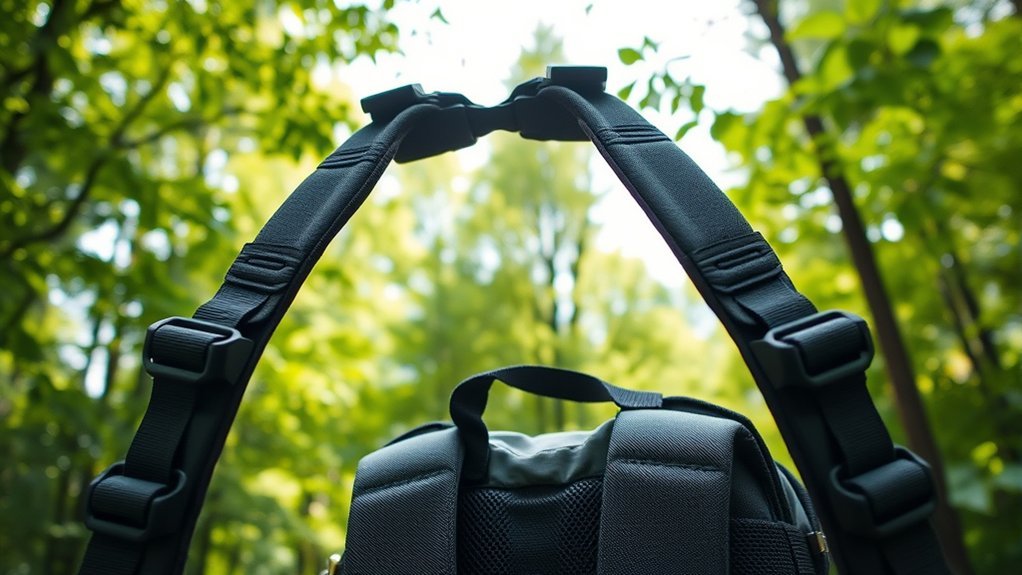
Load lifters are adjustable straps on a backpack that connect the shoulder straps to the frame, enhancing weight distribution. They improve comfort and stability, especially for loads over 25-30 pounds, making them essential for multi-day trips and rough terrain. To use them effectively, guarantee your hip belt is snug, adjust shoulder straps for comfort, and tighten the load lifters to create a 45-degree angle. Continue to explore how to optimize their use for a better hiking experience.
Understanding Load Lifters

When you’re on a multi-day hike, understanding load lifters can greatly enhance your comfort and stability. Load lifters are adjustable straps that connect your backpack’s shoulder straps to its body or frame, preventing sagging and improving weight distribution. This feature is especially beneficial when you’re carrying loads over 25-30 pounds, as it helps to shift the weight from your shoulders to your hips. This shift reduces shoulder strain, making your trek more enjoyable.
Load lifters are most effective on backpacks with a capacity of 35-40 liters or greater. To optimize their use, adjust them last, after securing the hip belt and shoulder straps. This guarantees your pack remains stable without exerting excessive pressure on your shoulders. Keep in mind that load lifters are typically found on larger internal or external frame packs, so if you’re using a smaller pack, their effectiveness may be limited.
How Load Lifters Function
Load lifters play an essential role in enhancing your backpack’s performance by connecting the top of the shoulder straps to the pack’s body or frame. These adjustable straps pull the pack closer to your back, improving comfort and reducing shoulder strain during hikes. Properly adjusted load lifters can notably improve your experience in the great outdoors.
Here’s how they function:
- Weight Distribution: Load lifters transfer more weight from your shoulders to your hips, making it easier to carry heavier loads.
- Customization: You can adjust them based on terrain, guaranteeing your pack’s stability aligns with your spine.
- Effective Use: They work best on packs with a capacity of 35 liters or more, especially when carrying loads over 25 pounds.
For optimal fit, tighten the load lifters after securing the hip belt and shoulder straps. This guarantees you experience freedom and comfort on your adventures.
Advantages of Using Load Lifters
While hiking with a heavy load, the advantages of using load lifters become immediately apparent. These features enhance pack stability by pulling the top closer to your upper back, redistributing weight from your shoulders to your hips. This adjustment greatly boosts comfort, especially when carrying loads over 25-30 pounds, making them essential for multi-day trips and challenging terrains.
Properly utilized load lifters can improve your posture, reducing the risk of back pain by aligning the pack with your spine and center of gravity. You can easily customize the fit based on the terrain and load, minimizing pressure points on your shoulders and back. Load lifters are most effective on backpacks with capacities of 35-40 liters or greater, where their benefits shine. By integrating load lifters into your gear, you can enjoy a more liberated hiking experience, free from discomfort and strain.
Products Worth Considering
Adjustable Straps- adjust the tightness as you need, For tying up your pack or hanging sleeping bag, mat, hammock etc, Suitable for all people
【Water Resistant & More Sturdy】- SKYSPER hiking daypack is made of high-density 600D polyester and 210D nylon plaid fabric, which is lightweight, anti-tear, wear-resistant and water repellent. In addition, all load-bearing points and shoulder straps are reinforced with lap-knots to make this back pack long lasting
MULTI-DAY PACK: With user-friendly features, a comfortable fit and plenty of storage capacity for all your hiking essentials, the Terra 55 Backpack delivers everything you need for multi-day backpacking and thru-hiking adventures.
Ideal Conditions for Load Lifters
For ideal performance, load lifters excel in specific conditions where pack stability and weight distribution are critical. When you’re planning your next adventure, consider these factors:
- Weight: Load lifters shine when carrying loads over 25-30 pounds, perfect for multi-day trips where every ounce matters.
- Pack Size: They’re most effective on backpacks with a capacity of 35-40 liters or greater, enhancing comfort on long treks.
- Terrain: Rough terrain demands optimal weight distribution to prevent fatigue and injury, making load lifters indispensable.
Products Worth Considering
TRAIL-FOCUSED DAYPACK: Move confidently on both serious and casual day hikes with this lightweight daypack featuring technical AirSpeedâ„ suspension, side compression, an included raincover and a padded hipbelt with hipbelt pockets
50L HIGH-CAPACITY: Include Main compartment, two zipped front pocket, sleeping bag compartment, mesh side pockets, you can put your tents, blanket,cooking gear and other equipment & accessories in this backpack, backpack internal layout clear classified easily, more convenience to you.
MINIMALIST TECHNICAL DAYPACK: Designed for day hikes and excursions, this lightweight daypack features a streamlined yet capable design, an adjustable torso length for a precise fit and durable ripstop main body fabric made from 100% recycled, ocean-sourced nylon.
Minimum Backpack Size for Load Lifters
When seeking the minimum backpack size for effective load lifters, consider that packs with a capacity of 35-40 liters or greater are ideal. These sizes enable you to carry heavier loads, particularly over 25-30 pounds, which is essential for multi-day trips. While smaller overnight packs in the 30-40 liter range can benefit from load lifters, they’re less common in daypacks sized 10-30 liters.
Load lifters are typically found on internal or external frame backpacks, as frameless designs don’t provide the necessary support. Guarantee your pack has a tall back panel to properly align and support the weight. This alignment helps distribute the load more evenly, enhancing your comfort and stability on the trail. Investing in a suitable-sized backpack with load lifters can greatly enhance your experience, allowing for greater freedom and ease while carrying your gear.
Products Worth Considering
【Water Resistant & More Sturdy】- SKYSPER hiking daypack is made of high-density 600D polyester and 210D nylon plaid fabric, which is lightweight, anti-tear, wear-resistant and water repellent. In addition, all load-bearing points and shoulder straps are reinforced with lap-knots to make this back pack long lasting
【Water-Resistant And Durable Material】Our IX INOXTO Hiking Backpack is made of high-density polyester material, water-resistant, tear resistant, with good abrasion resistance and environmental protection, suitable for any outdoor environment.High-quality durable zipper, well-sewn craftsmanship, high dense stitching. All of the backpack's stress points and shoulder straps are reinforced with lap-knots to ensure long lasting durability. Waterproof backpack comes free with a waterproof rain cover.
🕐【HIGH QUALITY & DOUBLE WATERPROOF BACKPACK】: Our INOXTO Hiking Backpack is made of sturdy ripstop water-resistant Polyester Material. KAM zippers - durable zipper, well-sewn craftsmanship, high dense stitching. Built with strong stitching in the places you need it such like the shoulder straps, carrying handle, bottom and other places. With waterproof rain cover for free prevents your outdoor gear from getting wet in drizzle, not afraid the rain anymore.
Proper Adjustment Techniques
To guarantee your load lifters work effectively, start by adjusting the hip belt snugly around your hips, which allows the pack’s weight to rest primarily on your hips rather than your shoulders. Next, follow these steps:
- Adjust shoulder straps for comfort, making sure they fit snugly against your shoulders without being restrictive.
- Tighten load lifter straps to pull the pack closer to your upper back, maintaining contact with your shoulders.
- Aim for a 45-degree angle with the load lifters for ideal stability, aligning the pack with your spine.
While hiking, regularly check and fine-tune your load lifters. This guarantees your pack stays stable and comfortable, adapting to changing conditions. By mastering these adjustments, you liberate yourself from discomfort, allowing you to fully enjoy your journey.
Products Worth Considering
Quick and easy to attach
Essential Outdoor Accessory: Molle backpack strap enables attaching additional gear to tactical backpack,tightening and stabilizing the load to create a modular system that enhances carrying capacity without hindering movement, making it a good aid for efficient organization during duty/hiking/camping/hunting
Heavy-duty backpack strap attachments for use with the Meister 50lb Elite Fitness Sandbag
Common Mistakes With Load Lifters
Although adjusting load lifters may seem straightforward, many hikers make critical mistakes that can compromise their comfort and stability on the trail. One common error is failing to adjust load lifters after fitting the hip belt and shoulder straps, leading to improper weight distribution. Insufficiently tightening load lifters results in a top-heavy pack that sways, especially on uneven terrain. Conversely, over-tightening can create excessive pressure on your shoulders, risking strain or injury, so finding a comfortable balance is key.
It’s also essential to adjust load lifters based on changing conditions, such as moving from uphill to downhill. Neglecting this can affect pack stability. Finally, verify your pack has a suitable frame height for effective load lifter functionality, particularly if you’re carrying loads over 25 pounds. Avoiding these common mistakes will enhance your hiking experience and help you maintain a liberated stride on the trail.
Personal Experiences With Load Lifters
When using load lifters, you’ll notice that individual comfort can vary greatly based on your specific adjustments. Many hikers face challenges in finding the right tension, which can directly impact your hiking performance and overall enjoyment. By sharing your personal experiences, you can help others understand the nuances of load lifter adjustments and their effects on comfort and posture.
Individual Comfort Variations
How do your personal experiences with load lifters compare to those of other hikers? Many find that load lifters can dramatically enhance comfort, while others struggle to see their benefits. Your unique body proportions and pack design play critical roles in this experience. Here are three key factors to take into account:
- Proper Adjustment: Verify your load lifters are set at a 45-degree angle for ideal weight distribution.
- On-the-Move Tuning: Adjusting the tension as you navigate different terrains can greatly improve your comfort.
- Pack Fit: A well-fitting pack is essential; without it, load lifters may feel ineffective.
Understanding these nuances can liberate you from discomfort, allowing for more enjoyable hikes.
Adjustment Challenges Experienced
Many hikers encounter adjustment challenges with load lifters that can hinder their overall experience. Many report discomfort and instability due to improper fitting, which emphasizes the necessity of understanding how to adjust them correctly. You might find that slight adjustments can markedly enhance your pack’s stability and reduce shoulder strain, especially on longer hikes. Achieving the ideal 45-degree angle for load lifters is vital for effective weight distribution and comfort, yet many struggle with this. Additionally, your pack fit and body proportions can affect how well load lifters work for you, leading to varying levels of comfort. Mismanaged pack weight can result in injuries, highlighting the importance of proper load lifter adjustment for maintaining good posture and reducing fatigue.
Impact on Hiking Performance
While improper load lifter adjustments can lead to discomfort, the right setup can profoundly enhance your hiking performance. When you adjust your load lifters correctly, you’ll experience:
- Reduced Shoulder Strain: Carrying loads over 25 pounds becomes manageable, allowing you to hike longer without fatigue.
- Improved Posture: Maintaining a straight back minimizes back pain, especially on steep, uneven terrain.
- Enhanced Stability: Small tweaks lead to major improvements in pack stability, essential for traversing challenging trails.
Additional Considerations for Backpack Design
As you consider backpack design, it’s vital to prioritize both carry volume and weight-management options to enhance user comfort during various activities. A rigid frame is essential, as it maintains pack shape and stability, optimizing the effectiveness of load lifters. Without this structure, smaller packs, like daypacks with short internal frames, may struggle to distribute weight efficiently.
Incorporating adjustable features, such as load lifters and chest straps, can greatly boost comfort and stability, especially on uneven terrain or during dynamic movements. These elements allow you to tailor the fit to your body, enhancing your overall experience.
User feedback is invaluable; it drives the iterative design process, leading to continuous improvements in pack functionality and comfort features. Ultimately, a well-designed backpack not only alleviates physical strain but also liberates you to explore and enjoy your adventures without compromise.
Products Worth Considering
Breathable Back Support System: Wave pattern back support design accords with ergonomics and reduces burden pressure. Mesh setting creates a ventilated space between your back and backpack, allowing cooling airflow to maintain comfort. Unlike other internal frame backpack, this back support system is independent of whole backpack and makes our backpack more comfortable and breathable.
Large Capacity: Product Size: 26 x 12.6 x 9.06 inch. 50L internal frame backpack travel, hiking backpack, lightweight 2.65 lbs. Many thoughtful pockets for stuff you'll need for an extended outdoor adventure. 2 top pockets, 1 main pocket, 1 hydration pack pocket, 1 inner pocket, 1 mesh pocket for wet clothes, 2 side pockets for water bottle, 2 waist pockets for phone, 1 separated pocket for sleeping bag, 1 bottom pocket for rain cover. Great for hiking, cycling, backpacking, climbing
NOT YOUR BASIC BACKPACK: Feature rich at this price point; Comfort and balanced backpack for men and women.
Frequently Asked Questions
Can Load Lifters Be Added to Any Backpack?
You can’t add load lifters to just any backpack. They’re specifically designed for certain models with compatible frames. Check your backpack’s specifications to see if it’s equipped for load lifters, or consider upgrading for ideal support.
How Do Load Lifters Help With Weight Distribution?
Load lifters pull the backpack’s top closer to your body, shifting weight away from your shoulders to your hips. This adjustment improves stability and comfort, allowing you to carry heavier loads more efficiently and with less fatigue.
Are Load Lifters Suitable for All Body Types?
Load lifters aren’t universally suitable for all body types. Their effectiveness varies based on individual torso length and shape. Adjusting and testing fit can help you determine if they enhance your comfort and load distribution.
Do Load Lifters Affect the Backpack’s Overall Weight?
When it comes to weight, load lifters won’t add extra pounds to your pack. Instead, they redistribute the load, making it feel lighter and more balanced on your back, enhancing your overall carrying experience.
Can I Use Load Lifters for Day Hikes?
Yes, you can use load lifters for day hikes. They help distribute weight more evenly, enhance comfort, and reduce strain on your shoulders, allowing you to hike longer with less fatigue and more freedom.
Conclusion
In conclusion, load lifters are essential for optimizing your backpack’s weight distribution, making your hiking experience feel lighter than a feather. By understanding how they work and knowing when to use them, you can greatly enhance your comfort on the trail. Remember to adjust them properly to avoid common pitfalls. With the right techniques, you’ll turn your backpack into a well-balanced companion, ensuring every adventure is as enjoyable as it is manageable. Happy hiking!