
Last Updated on July 24, 2026 by Caleb Warren
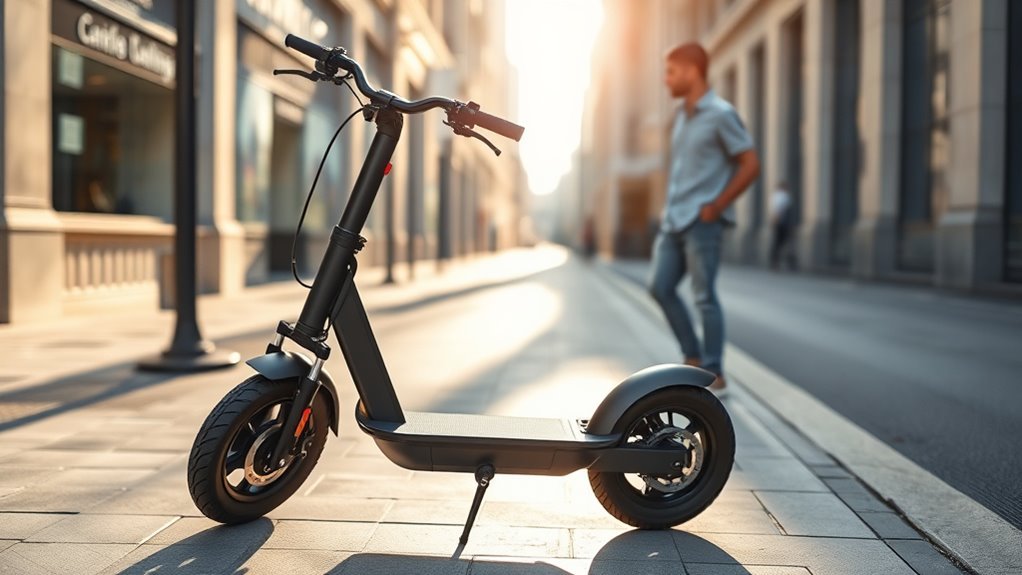
An electric scooter is a compact, battery-powered vehicle with two wheels, a standing deck, handlebars, an electric motor, and a rechargeable battery. It can make short commutes and local errands easier, but its usefulness depends on realistic range, safe charging, reliable brakes, local laws, and the conditions where you ride. This guide explains how electric scooters work, what their specifications mean, how to ride and maintain one safely, and what to check before buying or renting.
Quick Answer
An electric scooter is a small vehicle that uses a rechargeable battery and electric motor to move a standing rider. You control speed with a handlebar throttle and slow down with electronic, drum, disc, or foot brakes. Most are designed for short trips, but speed, range, legality, and safety vary by model and location.
Key Takeaways
- A standing e-scooter uses a battery, controller, motor, throttle, and braking system to move you.
- Advertised range is measured under controlled conditions, so real-world range is usually lower.
- Regenerative braking can recover some energy, but it does not replace a mechanical brake.
- Use the manufacturer-approved charger, stay present while charging, and never charge a wet or damaged scooter.
- Helmet, sidewalk, speed, age, licensing, and parking rules depend on your local jurisdiction.
Disclosure: As an Amazon Associate I earn from qualifying purchases. Some links on this page are affiliate links, at no extra cost to you.
What Is an Electric Scooter?
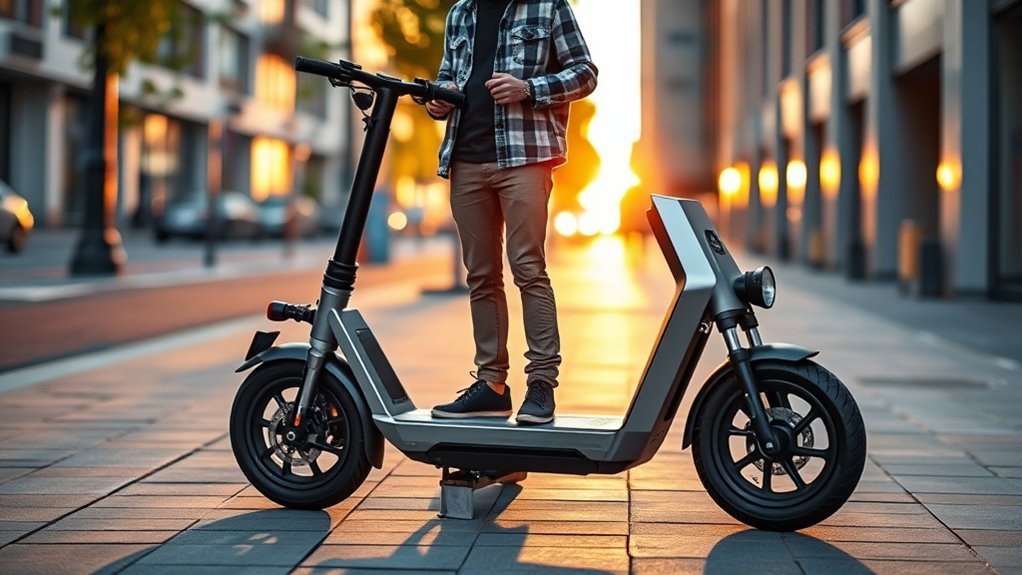
An electric scooter, often called an e-scooter or electric kick scooter, is a small form of electric micromobility. A typical model has a narrow deck for your feet, an upright stem, handlebars, two wheels, a rechargeable battery, and one or more electric motors.
You normally begin from a standing position, push off gently, and press or twist a throttle to activate the motor. Many models fold at the stem for storage or carrying, although folding is not universal. Commuter scooters commonly use tires around 8 to 11 inches in diameter, while specialty models may use larger or smaller wheels.
Note: A standing electric scooter is different from a mobility scooter, electric moped, seated scooter, or electric motorcycle. Those vehicles may follow different equipment, licensing, registration, and road-use rules.
Common Types of Electric Scooters
- Lightweight commuter scooters: Built for portability, moderate speeds, smooth pavement, and short trips.
- Long-range commuter scooters: Use larger batteries and often include suspension, larger tires, and stronger brakes.
- Shared rental scooters: Unlocked through an app and designed for short, one-way urban trips.
- Off-road scooters: Use wider tires, stronger frames, and more suspension, but may not be legal on public roads.
- High-performance scooters: Use powerful motors and large batteries. Their speed and weight can make them unsuitable or illegal for normal streets and bike lanes.
Electric Scooter Parts and Key Features
Electric scooter performance depends on the frame, battery, motor, controller, wheels, brakes, and safety equipment working together. Understanding these parts helps you compare models and identify problems before a ride.
| Part | What It Does | What to Check |
| Deck and frame | Support your weight and connect the main components. | Weight limit, deck space, cracks, loose fasteners, and corrosion. |
| Stem and handlebars | Let you steer and hold the controls. | Wobble, folding-latch security, grip condition, and comfortable height. |
| Battery | Stores the electrical energy used by the motor. | Capacity, approved charger, certification, warranty, damage, and replacement support. |
| Motor | Turns electrical power into wheel movement. | Rated power, peak power, hill performance, noise, and overheating. |
| Controller | Regulates power between the battery, throttle, motor, and electronic brake. | Smooth acceleration, error codes, riding modes, and heat protection. |
| Tires and wheels | Provide grip, absorb small impacts, and affect stability. | Correct pressure, tread, punctures, wheel damage, and tire type. |
| Suspension | Reduces vibration and helps the wheels stay in contact with rough ground. | Travel, noise, leakage, loose parts, and suitability for your roads. |
| Brakes | Slow and stop the scooter. | Lever feel, pad wear, rotor condition, cable adjustment, and stopping response. |
| Lights and reflectors | Help you see and make you more visible. | Front light, rear light, brake light, side visibility, and local requirements. |
How an Electric Scooter Works
An electric scooter converts stored electrical energy into wheel movement. The battery supplies power, the controller regulates it, and the motor turns one or both wheels. The throttle tells the controller how much acceleration you are requesting.
Motor and Battery Power
Most modern electric scooters use a rechargeable lithium-ion battery. The battery sends direct-current electricity to the controller, which delivers the appropriate amount of power to the motor. The motor is usually built into the hub of the front or rear wheel, although some powerful scooters use motors in both wheels.
Motor specifications may include:
- Rated power: The output the motor is designed to maintain during normal use.
- Peak power: A higher output the system may provide briefly during acceleration or hill climbing.
- Single or dual motors: Dual-motor scooters can offer stronger acceleration and climbing ability but use more energy and add weight.
- Front- or rear-wheel drive: This affects traction, steering feel, and how the scooter responds during acceleration.
A larger motor does not automatically make a scooter better. It can increase weight, cost, energy use, and legal restrictions. Your total load, road grade, battery charge, tire pressure, wind, and temperature also affect performance.
Throttle and Controller
The throttle is commonly a thumb lever, finger trigger, or twist control on the handlebar. When you press it, a sensor sends a signal to the electronic controller. The controller then decides how much current to send from the battery to the motor.
Many scooters require you to push off before the throttle activates. This “kick-start” design helps prevent sudden movement when the scooter is standing still. Riding modes may also limit acceleration or speed for beginners, crowded areas, or energy-saving travel.
Regenerative Braking System
Some scooters use regenerative braking, also called electronic or energy-recovery braking. When you release the throttle or activate the brake, the motor resists wheel movement and converts part of the scooter’s kinetic energy back into electrical energy.
- The controller reduces or reverses power through the motor.
- The motor creates resistance that helps slow the wheel.
- A portion of the recovered energy returns to the battery.
- A mechanical brake supplies additional stopping force.
Regeneration can slightly improve efficiency and reduce some mechanical-brake use, especially on routes with frequent slowing. However, the recovered energy is limited, and the effect varies by model, battery charge, terrain, speed, and controller programming.
Warning: Do not rely on regenerative braking as your only brake. A safe scooter should have a dependable mechanical braking system, and you should test its stopping response before entering traffic.
Electric Scooter Batteries, Range, and Speed
Battery capacity, motor output, controller limits, rider weight, terrain, weather, and riding style all affect how far and how fast a scooter can travel. Manufacturer numbers are useful for comparison, but they are not guarantees of your everyday result.
Battery Types and Capacity
Most consumer electric scooters use lithium-ion cells managed by a battery-management system. The management system helps monitor voltage, temperature, charging, and discharging, although its protections do not make a battery immune to damage or misuse.
Battery labels may show three important measurements:
- Voltage (V): Relates to the electrical pressure supplied to the motor and controller.
- Amp-hours (Ah): Describes electrical charge capacity.
- Watt-hours (Wh): A practical measure of stored energy. You can estimate it by multiplying volts by amp-hours.
For example, a 36-volt, 10-amp-hour battery contains about 360 watt-hours. A higher watt-hour rating usually supports more range, but it also tends to add weight, charging time, and cost.
Range Factors Explained
Manufacturers often test range with a fully charged new battery, a specified rider weight, mild temperature, flat pavement, correct tire pressure, limited wind, and a steady speed. Real trips normally include stops, hills, changing speeds, rough surfaces, and colder or hotter weather.
Your real-world range can decrease because of:
- High speed and hard acceleration
- Steep or repeated hills
- A heavier rider or carried load
- Low pneumatic-tire pressure
- Cold temperatures or strong headwinds
- Rough pavement, grass, gravel, or mud
- An aging or damaged battery
- Frequent starts and stops
- Using bright lights, heated equipment, or other electrical accessories
Official specifications show why you should read the test conditions. Xiaomi, for example, explains that its advertised range tests use a specific rider load, temperature, road, and speed. Segway also publishes different range figures for the same scooter at different speeds. Review the manufacturer’s complete test notes rather than comparing only the largest number.
Pro Tip: Choose an advertised range comfortably above your daily round trip. A useful reserve helps cover hills, cold weather, battery aging, detours, and differences between laboratory testing and normal riding.
Speed and Performance Limits
There is no single normal top speed for every electric scooter. Lightweight and rental scooters are usually designed for moderate urban speeds. Some commuter models are configured near 15 to 22 mph, while regulations in other markets commonly lead manufacturers to limit models to about 25 km/h. High-performance scooters can be much faster, but they are heavier, harder to stop, and may not be legal on public roads.
Higher speed usually means:
- Shorter range at the same battery capacity
- Longer stopping distance
- More severe consequences if you fall
- Greater need for strong brakes, tires, suspension, and protective gear
- A higher chance of exceeding local legal limits
Select a scooter based on your legal riding environment and safe stopping needs, not only its maximum speed.
Electric Scooter Safety Tips
E-scooters have small wheels, a short wheelbase, and a high standing position compared with many bicycles. Potholes, curbs, wet paint, loose gravel, debris, and sudden steering can therefore cause a rapid loss of control.
The U.S. Consumer Product Safety Commission estimated 380,000 emergency-department visits associated with e-scooters from 2017 through 2024. Its April 2026 report identifies motor-vehicle crashes and control problems as leading hazards in reported e-scooter fatalities.
Before Each Ride
- Wear a correctly fitted helmet. Add wrist, elbow, or knee protection when your route or experience level makes it appropriate.
- Check the folding latch and stem. Do not ride if either part moves unexpectedly or fails to lock.
- Test both brakes. Roll slowly in a clear area and confirm that the scooter stops smoothly.
- Inspect the tires. Check pressure on pneumatic tires and look for cuts, embedded objects, cracks, or flat spots.
- Test the lights, horn, and brake light. Do not assume drivers or pedestrians can see or hear you.
- Check the battery and display. Investigate warnings, unusual heat, error codes, or a sudden loss of charge.
During the Ride
- Ride with one person only unless the manufacturer specifically designed the vehicle for more.
- Keep both hands on the handlebars.
- Do not hang bags from the handlebars because they can affect steering.
- Slow down before turns, intersections, driveways, bumps, and surface changes.
- Avoid phones, loud headphones, alcohol, drugs, and other distractions.
- Leave enough space to stop without depending on a car, cyclist, or pedestrian moving out of your way.
- Approach potholes, rails, grates, leaves, sand, and wet surfaces slowly and as straight as possible.
- Use predictable movements and signal turns when you can do so safely.
- Never hold onto another moving vehicle.
The CPSC Micromobility Information Center advises riders to wear a helmet, inspect the scooter, remain visible, keep both hands on the handlebars, avoid intoxicated riding, and follow local traffic rules.
Learning to Ride
Practice in a flat, open area away from traffic. Place one foot near the front of the deck, push off with the other foot, and apply the throttle gently. Once the scooter moves steadily, place both feet on the deck in a staggered stance with your knees slightly bent.
Practice the following before riding near other road users:
- Starting without sudden acceleration
- Looking behind you without swerving
- Using both brakes smoothly
- Stopping quickly without locking a wheel
- Turning at low speed
- Stepping off safely after a complete stop
Charging and Battery Fire Safety
Lithium-ion batteries store a large amount of energy. A compatible, undamaged system is normally reliable, but incorrect chargers, physical damage, water, faulty repairs, or poor-quality cells can create overheating and fire risks.
Follow these charging rules:
- Use only the charger supplied or specifically approved by the scooter manufacturer.
- Do not use a charger merely because its plug fits.
- Charge while you are awake, present, and able to respond to a problem.
- Do not charge while sleeping or while nobody is home.
- Place the scooter and charger on a stable, dry surface away from flammable materials.
- Keep the scooter, charger, and battery away from exits and escape routes.
- Allow a hot scooter to cool before charging if the manual requires it.
- Do not charge a wet scooter or battery.
- Unplug the charger when charging is complete, following the manufacturer’s instructions.
- Use only manufacturer-approved replacement batteries and parts.
CPSC has warned that chargers marketed as “universal” may fit a battery while still supplying an incompatible voltage or charging profile. An incompatible charger can cause overheating or ignition.
Warning: Stop using or charging the scooter if the battery swells, leaks, hisses, smokes, smells unusual, becomes excessively hot, shows impact damage, or loses capacity suddenly. Move away from a smoking or burning battery, warn others, call emergency services, and do not attempt to handle it unless trained responders say it is safe.
Electrical Safety Certification
When shopping, look for genuine third-party certification from an accredited testing organization. UL Solutions identifies:
- UL 2272: Electrical systems for personal e-mobility devices, including e-scooters
- UL 2271: Batteries for light electric vehicle applications
- UL 4900: Micromobility charging equipment
Certification addresses electrical-system hazards, not your ability to control the scooter. You still need suitable brakes, tires, visibility equipment, protective gear, and safe riding habits.
Battery Disposal
Do not place an electric scooter battery in household garbage or curbside recycling. The U.S. Environmental Protection Agency advises taking lithium-ion batteries and battery-powered devices to a suitable battery recycler, electronics recycler, or household hazardous-waste collection point.
Follow the manufacturer’s instructions for a damaged or recalled battery. Do not remove, open, crush, puncture, or repair a sealed battery pack unless you are qualified and the manufacturer authorizes the work.
Electric Scooter Maintenance
Regular maintenance helps prevent loose parts, tire failures, poor braking, water damage, and unexpected electrical problems. Your owner’s manual takes priority because service intervals and adjustment methods differ by model.
| When | Checks |
| Before every ride | Brakes, tires, lights, throttle, folding latch, stem, visible fasteners, battery level, and error messages. |
| Weekly or after rough rides | Tire pressure, wheel damage, loose bolts, unusual noises, brake feel, and dirt around moving parts. |
| Monthly | Brake pads or shoes, rotors, cables, wheel alignment, charging port, wiring, suspension, and tire wear. |
| After a crash or deep impact | Stop riding and inspect the frame, stem, folding joint, wheels, brakes, battery enclosure, and cables. Seek qualified service if damage may be hidden. |
| Before long storage | Clean and dry the scooter, follow the manual’s battery-charge recommendation, switch it off, and store it in a cool, dry place. |
Do not spray lubricant on brake rotors, pads, drums, tire tread, or other friction surfaces. Avoid pressure washers and strong water jets because they may force water through seals.
Water, Weather, and Storage
An IP water-resistance rating does not make a scooter waterproof. A rating may cover controlled splashes but not deep puddles, flooding, pressure washing, prolonged rain, or submersion. It may also apply to the scooter body but not the charger.
Before riding in damp conditions:
- Check the manufacturer’s water-resistance rating and warranty terms.
- Reduce speed because wet paint, metal covers, leaves, and smooth pavement can become slippery.
- Increase stopping distance.
- Avoid standing water that can hide potholes or damage electrical parts.
- Dry the scooter before folding, storing, or charging it.
Temperature also affects batteries. Cold weather can temporarily reduce power and range, while excessive heat can accelerate battery wear. Store the scooter within the temperature range stated in its manual and away from direct heat, freezing conditions, and constant sunlight.
Electric Scooter vs. Kick Scooter
Both vehicles have a standing deck and handlebars, but they differ in propulsion, weight, maintenance, speed, and legal treatment.
| Feature | Electric Scooter | Kick Scooter |
| Power | Battery and motor | Rider pushes against the ground |
| Physical effort | Low during powered travel | Higher and continuous |
| Weight | Usually heavier because of the motor and battery | Usually lighter |
| Range limit | Limited by battery charge and conditions | Limited mainly by rider effort |
| Maintenance | Tires, brakes, battery, charger, controller, and electrical system | Mainly wheels, bearings, folding parts, and brake |
| Legal rules | May face motor-vehicle, speed, helmet, age, lane, or parking rules | Often treated more like non-powered recreation equipment, but local rules still apply |
Choose an electric scooter when you need powered short-distance travel and can charge, store, and maintain it safely. Choose a kick scooter when low weight, simple maintenance, and freedom from battery charging matter more than effortless travel.
Why E-Scooters Work Well in Cities
E-scooters can work well for short urban trips because they take up little space, can connect riders to public transit, and may be easier to park than a car. They can also provide an alternative for trips that are too far to walk comfortably but too short to justify driving.
Potential urban benefits include:
- Quick first- and last-mile connections to bus or rail services
- Less parking space than a private car
- Quiet electric operation
- Zero tailpipe emissions while riding
- Lower direct energy use than moving one person in a large vehicle
- Flexible rental access in participating cities
These benefits are not automatic. Electricity generation, battery manufacturing, repairs, collection vehicles, short equipment life, and improper parking affect a scooter’s total environmental and community impact. The U.S. Department of Energy explains that electric operation has zero tailpipe emissions but still has upstream and lifecycle emissions.
Cities and riders must also prevent scooters from blocking sidewalks, ramps, doors, transit stops, and tactile paving. Parking should leave a clear route for pedestrians, wheelchair users, people with visual impairments, and emergency access.
Electric Scooter Sharing Explained
A shared e-scooter service allows you to find, unlock, ride, and pay for a scooter through a mobile app. Depending on the city, you may have to park in a marked zone, use a dock, photograph the parked scooter, or complete a short safety lesson.
A typical rental trip works like this:
- Open the operator’s app and locate an available scooter.
- Review the price, service area, parking rules, and battery level.
- Inspect the tires, brakes, stem, throttle, lights, and visible frame.
- Scan the code and follow the app’s unlocking instructions.
- Ride within the permitted area and local speed rules.
- Park upright in an approved location without blocking access.
- End the trip in the app and confirm that billing has stopped.
Shared micromobility remains widely used. The National Association of City Transportation Officials reported 150 million shared bike and scooter trips in its member cities during 2025. Shared e-scooters accounted for 58 million of those trips, up from 45 million in 2024.
Rental convenience comes with tradeoffs. Per-minute charges can make longer rides expensive, availability is not guaranteed, and a shared scooter may have wear or damage from previous users. Inspect it before every trip even when the app reports that it is ready.
Electric Scooter Laws and Rules
Electric scooter laws vary by country, state, province, city, and sometimes by scooter type. Rental operators may also impose rules that are stricter than the law. Do not assume that a scooter sold online is legal to ride on your local roads.
Check the following before riding:
- Minimum rider age
- Driver’s license, permit, registration, or insurance requirements
- Helmet requirements
- Maximum legal speed
- Motor-power or vehicle-weight limits
- Whether sidewalks are prohibited
- Whether you must use a bike lane, cycle track, shoulder, or road
- Rules for parks, trails, campuses, and pedestrian areas
- Required lights, reflectors, bell, or brake equipment
- Passenger and cargo restrictions
- Parking rules for private and shared scooters
- Rules for public transportation and indoor storage
Note: This article provides general information, not legal advice. Check the current website of your local transportation authority, road agency, police department, or rental operator before riding.
How to Choose an Electric Scooter
Choose a scooter for the route you will actually ride rather than the largest advertised speed or range. A practical model should fit your body, local laws, storage space, carrying ability, road surface, weather, and service options.
- Confirm local legality. Check speed, motor, helmet, age, roadway, and registration rules first.
- Calculate your required range. Include the return trip and a comfortable reserve.
- Check the rider-weight limit. Include clothing, bags, locks, and anything else you carry.
- Compare mechanical brakes. Look for predictable stopping and available replacement pads or parts.
- Match tires to your roads. Pneumatic tires usually absorb bumps better, while solid tires avoid punctures but may ride more harshly.
- Consider suspension. It can improve comfort and control on rough streets but adds weight and maintenance.
- Check folded size and weight. Make sure you can lift it up stairs or onto permitted transit without injury.
- Review electrical certification. Look for genuine certification from an accredited laboratory.
- Check water-resistance limits. Read what the rating covers and whether water damage is excluded from the warranty.
- Verify parts and service support. Confirm that tires, tubes, pads, chargers, batteries, and repairs are available.
- Read the complete range test. Compare speed, rider weight, temperature, and terrain used for the claim.
- Inspect warranty and recall support. A low purchase price has less value if the manufacturer cannot supply safe replacement parts.
Pros and Cons of Electric Scooters
Advantages
- Convenient for short trips
- Less physical effort than a kick scooter
- Compact compared with a car or motorcycle
- Quiet operation
- Zero tailpipe emissions while moving
- Can connect homes, workplaces, schools, and transit stops
- Some models fold for storage
Disadvantages
- Small wheels are sensitive to potholes and debris
- Real-world range can be much lower than the advertised figure
- Batteries lose capacity with age and use
- Charging and damaged batteries require fire-safety precautions
- Rain, cold, and heat can limit use
- Quality models can be heavy to carry
- Brakes, tires, folding joints, and electrical parts need maintenance
- Local laws may restrict where or how you ride
- Safe parking and storage may be difficult in apartments or workplaces
Frequently Asked Questions
What is the difference between a motorized scooter and an electric scooter?
“Motorized scooter” is a broad term that can include electric or fuel-powered vehicles. An electric scooter uses a battery and electric motor. Local laws may also use these terms differently, so check the legal definition where you live.
What are the main disadvantages of electric scooters?
Common disadvantages include limited battery range, small wheels, weather restrictions, charging time, battery aging, maintenance costs, theft risk, and local riding restrictions. High-performance models can also be heavy and difficult to stop safely.
Is it difficult to ride an electric scooter?
Basic operation is usually easy to learn, but safe control takes practice. Start in a flat area away from traffic and practice gradual acceleration, turning, looking behind you, emergency braking, and stepping off after a complete stop.
What happens if you are caught riding an electric scooter illegally?
Consequences depend on local law and may include a warning, fine, penalty points, confiscation, rental-account suspension, or liability after a collision. Check current local rules before using a scooter on a road, sidewalk, trail, or public-transport system.
How fast does an electric scooter go?
Many commuter scooters are designed for roughly 15 to 22 mph, while some markets limit models to about 25 km/h. Lightweight models can be slower, and high-performance models can be much faster. Your legal limit may be lower than the scooter’s technical top speed.
How far can an electric scooter travel on one charge?
Range varies widely by battery size and model. Real-world distance also depends on speed, hills, rider weight, tire pressure, wind, temperature, stops, and battery condition. Treat the advertised range as a controlled-test result and choose a model with extra capacity beyond your planned trip.
Can you ride an electric scooter in the rain?
Only when the manufacturer allows it and conditions are safe. Water-resistance ratings do not mean waterproof. Wet surfaces reduce grip and increase stopping distance. Avoid deep water, flooding, heavy rain, and charging until the scooter is completely dry.
Do you need a license to ride an electric scooter?
It depends on your jurisdiction and the scooter’s classification. Some areas allow qualifying scooters without a license, while others restrict private scooters, require registration, or treat powerful models more like mopeds. Check official local rules before riding.
Is regenerative braking enough to stop an electric scooter?
No. Regenerative braking can assist with slowing and return a small amount of energy to the battery, but its strength can change with speed, battery charge, and controller settings. A reliable mechanical brake is still essential.
Conclusion
An electric scooter uses a rechargeable battery, controller, motor, throttle, and braking system to carry a standing rider over short distances. It can be a practical commuting tool when its range matches your route, its brakes and tires suit your roads, and you can charge and store it safely.
Before buying or renting, check local laws, electrical certification, rider capacity, real-world range, mechanical brakes, tire condition, water limits, replacement-part support, and total weight. Wear a helmet, inspect the scooter before every ride, use only an approved charger, and treat unusually hot, damaged, swollen, or smoking batteries as an emergency.
Sources
- U.S. Department of Transportation: Electric Micromobility Basics — definition and charging-time context
- U.S. Consumer Product Safety Commission: Micromobility Deaths, Injuries, and Hazard Patterns 2017–2024 — current injury, fatality, and hazard data
- CPSC Micromobility Information Center — riding, visibility, inspection, and charging guidance
- UL Solutions: Micromobility Testing and Certification — UL 2272, UL 2271, and electrical safety standards
- NACTO: Shared Micromobility in Member Agencies, 2025 Trends — current shared-bike and shared-scooter usage data
- U.S. Department of Energy: Emissions from Electric Vehicles — tailpipe versus lifecycle emissions
