
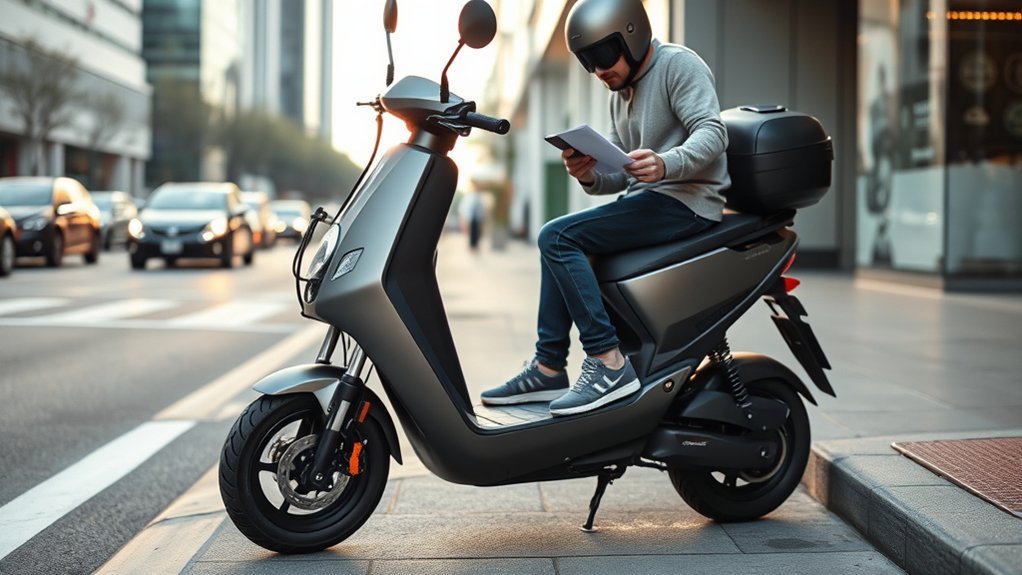
Last Updated on September 10, 2026 by Daniel Globe
Electric scooter insurance provides liability, collision, medical, and theft protection for riders navigating urban streets, suburban trails, and bike lanes. While most US states do not legally mandate insurance for standard standing electric scooters, riding without specialized coverage leaves you exposed to personal injury claims, property damage lawsuits, and out-of-pocket replacement costs after an accident or theft.
Quick Answer
Most states do not legally require insurance for privately owned stand-up electric scooters under 15–20 mph. However, standard homeowners, renters, and auto insurance policies almost universally exclude liability and damage for motorized vehicles. Dedicated e-scooter policies cost roughly $100 to $250 annually and cover third-party liability, theft, collision damage, and medical payments.
Key Takeaways
- Standard Policies Exclude Scooters: Auto insurance does not cover non-DMV micromobility, and standard homeowners/renters policies exclude liability for motorized vehicles ridden off-property.
- State Laws Focus on Classification: Low-speed electric kick-scooters are rarely subject to mandatory state auto insurance, but high-powered models exceeding 20–30 mph can be classified as mopeds, triggering registration and insurance rules.
- Comprehensive Covers Theft: To qualify for theft reimbursement under a standalone policy, insurers generally require proof of purchase and the use of a certified lock (such as a Sold Secure Silver or Gold rating).
- Rental App Coverage is Limited: Commercial rental fleets (Lime, Bird) carry commercial liability, but user agreements place primary responsibility on the rider for negligent operation.
Disclosure: As an Amazon Associate I earn from qualifying purchases. Some links on this page are affiliate links, at no extra cost to you.
Do You Need Electric Scooter Insurance?
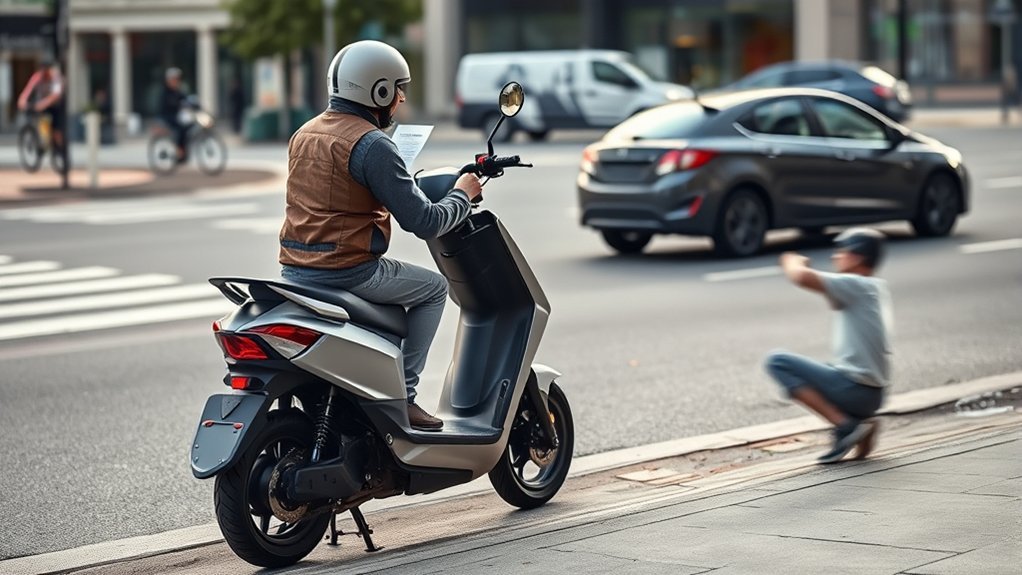
Whether you legally need electric scooter insurance depends primarily on how your state or municipality classifies your vehicle and where you operate it. In the majority of jurisdictions, privately owned, low-speed standing electric scooters (typically defined as having a motor under 750 watts and a maximum assisted speed of 15 to 20 mph) do not require mandatory state vehicle insurance, registration, or license plates.
However, legal necessity and financial necessity are distinct considerations. When operating an electric scooter on public roads, you share traffic lanes with motor vehicles, pedestrians, and cyclists. If you cause a collision resulting in serious bodily injury to a pedestrian or structural damage to an automobile, you are personally liable for the damages. Without a dedicated liability policy, injured parties can pursue your personal assets, savings, and future wages.
Warning: Never assume your personal auto or umbrella policy will automatically back you up. Umbrella policies require underlying liability coverage to be in place, and if your primary homeowners or auto insurer excludes motorized e-scooters, your umbrella insurer will likely deny the secondary claim as well.
What Electric Scooter Insurance Covers
Standalone electric scooter insurance is structured similarly to motorcycle or specialty bicycle insurance. Dedicated policies bridge the gap left by standard property and casualty insurance, providing four core pillars of coverage:
- Third-Party Bodily Injury Liability: Pays for medical bills, rehabilitation costs, emergency transport, and legal defense fees if you hit and injure a pedestrian, cyclist, or vehicle passenger.
- Third-Party Property Damage Liability: Covers repair or replacement expenses if you crash into a parked car, storefront, residential fence, or other private property.
- Collision Coverage: Covers the repair or replacement cost of your electric scooter if it is damaged in a crash with another vehicle, curb, or road hazard, regardless of fault.
- Comprehensive (Theft, Fire, and Vandalism): Reimburses the fair market value or agreed value of your scooter if it is stolen, vandalized, or damaged by non-collision events like weather or fire.
- Personal Injury Protection (PIP) / Medical Payments (MedPay): Pays for your own immediate medical treatments, hospital visits, or dental work following a riding accident, irrespective of who caused the incident.
- Uninsured/Underinsured Motorist Coverage: Covers your medical and repair costs if you are struck by a hit-and-run driver or a motorist who carries insufficient liability coverage.
“According to the Consumer Product Safety Commission (CPSC), micromobility injuries surged over 20% in recent years, with standing e-scooters accounting for the highest proportion of emergency department visits among all electric personal conveyances.”
Which States Require Scooter Insurance?
State laws across the United States distinguish between low-speed standing micromobility devices and seated mopeds or motorized scooters. The overwhelming majority of states treat standard standing e-scooters under electric bicycle style frameworks rather than motor vehicle frameworks.
- Standard Standing E-Scooters (Under 15–20 mph): States such as California (California Vehicle Code § 21235), New York (NY DMV VTL § 114-e), Texas, Florida, and Illinois do not require private owners to carry liability insurance, register with the DMV, or hold a specialized motorcycle license. However, operational rules—such as helmet mandates for minors, speed limits of 15–20 mph, and sidewalk riding bans—remain strictly enforced.
- High-Powered E-Scooters (>750W / >20–30 mph): If your electric scooter has a seat, pedals, or a high-output powertrain exceeding 750W–1,000W capable of speeds above 20–30 mph, state laws often reclassify the vehicle as a moped, motorized bicycle, or motorcycle. Reclassification triggers mandatory DMV registration, vehicle identification numbers (VIN), operator licensing, and compulsory state-minimum auto liability insurance.
- Commercial Fleet Requirements (Washington D.C., Austin, Chicago): While individual riders are not mandated by state statute to hold individual policies, major municipalities require commercial shared operators (e.g., Lime, Bird) to maintain commercial general liability insurance of $1,000,000 to $5,000,000 per occurrence to operate on municipal rights-of-way.
Pro Tip: Always check your scooter’s manufacturer spec plate. If your motor exceeds 750 watts or the software allows unrestrained speeds over 28 mph, local law enforcement can treat your scooter as a motor vehicle subject to vehicle impoundment and unregistered/uninsured vehicle citations.
Does Home or Auto Insurance Cover Your Scooter?
A common misconception among scooter owners is that their existing personal insurance portfolios provide a safety net. In reality, standard personal insurance lines contain strict exclusions for motorized micromobility conveyances.
Standard homeowners (HO-3) and renters (HO-4) policies incorporate an explicit Motor Vehicle Liability Exclusion. This clause excludes bodily injury and property damage arising from the ownership, maintenance, or use of motorized land vehicles designed for travel on public roads or capable of motorized propulsion off your immediate residential premises. While your homeowners policy might cover off-premises theft of personal property under specific circumstances, claims for motorized vehicles are routinely denied unless you have an explicit endorsed rider.
| Policy Type | Coverage Possibility | Standard Exclusions & Gaps |
|---|---|---|
| Homeowners (HO-3) | Rarely covers liability; limited personal property coverage for non-motorized accessories. | Strict motor vehicle exclusion eliminates liability for public road crashes. High deductibles often exceed the scooter’s value. |
| Renters (HO-4) | Occasional theft coverage if stolen from inside an apartment or secured storage. | Excludes third-party liability and on-road collision damage. Stolen scooters locked in public streets are frequently denied. |
| Personal Auto | None. | Only covers scheduled four-wheel motor vehicles registered through the state DMV. E-scooters do not meet policy definitions. |
| Dedicated E-Scooter Policy | Full comprehensive, collision, MedPay, and liability coverage. | Requires adherence to anti-theft locking rules and operating within legal manufacturer speed parameters. |
Are Rented E-Scooters Covered?
When you unlock a shared dockless scooter from companies such as Lime, Bird, or Spin, the legal and insurance dynamics shift to the provider’s commercial policy and rental agreement.
Commercial operators are mandated by city operating agreements to maintain third-party liability insurance. In select metropolitan areas, this coverage extends secondary liability protection to the rider during an active rental session. However, you should not rely on rental companies for complete protection:
- User Agreement Indemnification: In the user terms you accept before unlocking, you agree to hold the company harmless for operator negligence. If you violate traffic laws, ride on a banned sidewalk, or operate under the influence, the rental company’s insurer can deny coverage or seek reimbursement from you.
- Zero Physical Damage Coverage for You: Rental insurance does not cover your personal injury expenses or emergency room care unless caused directly by a proven mechanical failure of the scooter.
- Credit Card Benefits Do Not Apply: While many premium credit cards offer secondary collision damage waivers (CDW) for rental cars, these protections strictly exclude two-wheeled micromobility rentals.
Note: If you regularly rely on shared e-scooter fleets for commuting, a personal standalone umbrella policy with an explicit micromobility endorsement or personal non-owned vehicle liability coverage provides the strongest protection against third-party lawsuits.
What Happens After an E-Scooter Accident?
Navigating the aftermath of an electric scooter crash requires methodical documentation to protect both your health and legal rights. Whether you collide with an automobile, another cyclist, or a pedestrian, follow these operational steps:
- Ensure Immediate Safety and Call Emergency Services: Move out of active traffic if possible. Call 911 immediately if anyone is injured or if property damage has occurred. Always request a formal police accident report.
- Document the Scene Thoroughly: Use your smartphone to take high-resolution photos and videos of vehicle positions, scooter damage, skid marks, road hazards, traffic lights, and street signage.
- Exchange Information: Collect names, phone numbers, addresses, driver’s license numbers, and insurance policy details from all involved drivers, riders, and eyewitnesses.
- Seek Medical Evaluation Immediately: Adrenaline can mask concussions, internal bleeding, and soft tissue trauma. A documented medical visit within 24 hours creates an official record directly linking injuries to the incident.
- Notify Relevant Insurers: Contact your standalone e-scooter insurer or specialty carrier to initiate a claim. If another driver was at fault, file a third-party claim with the driver’s automobile insurance carrier.
How to Choose the Right Scooter Policy
When shopping for standalone electric scooter coverage from specialty insurers such as Markel, Velosurance, Spoke, or Oyster, evaluate the following structural policy terms:
- Liability Limit Selection: Choose liability limits of at least $100,000 to $300,000 for bodily injury and property damage to shield your personal savings against serious injury lawsuits.
- Agreed Value vs. Actual Cash Value (ACV): Opt for an “Agreed Value” policy for custom or high-end performance e-scooters. ACV policies deduct depreciation, which drastically reduces payouts on high-tech batteries and electronics after a year of riding.
- Theft Lock Compliance: Review the insurer’s anti-theft requirements. Most specialty policies require you to secure the scooter through the frame to an immovable structure using an approved lock (such as a lock rated Sold Secure Gold or Diamond).
- Deductible Structure: Compare comprehensive and collision deductibles. Selecting a $100 to $250 deductible offers balanced protection without out-of-pocket strain.
- Average Annual Costs: Basic liability-only coverage typically ranges from $75 to $120 per year, while comprehensive full-coverage packages for high-end commuter scooters range between $150 and $250 annually.
Frequently Asked Questions
Do you legally have to have insurance on an electric scooter?
In most US states, privately owned, standard low-speed electric standing scooters (under 15–20 mph) do not legally require mandatory state liability insurance. However, if your scooter exceeds 20–30 mph or features a motor over 750W, state vehicle codes may classify it as a moped, requiring DMV registration and liability insurance.
What happens if you cause an accident on an electric scooter without insurance?
If you are at fault for an accident without insurance, you are personally liable for all third-party damages. This includes emergency room bills, surgery costs, property repairs, and pain and suffering claims, which can result in civil lawsuits and wage garnishment.
What happens if your electric scooter gets stolen?
If you hold a standalone e-scooter policy with comprehensive coverage, you can file a theft claim for replacement reimbursement. You must file a police report and show proof that you followed the insurer’s locking mandates (such as using an approved U-lock or folding lock).
How much does electric scooter insurance cost?
A standalone electric scooter insurance policy generally costs between $100 and $250 annually (or $10 to $25 per month), depending on your scooter’s retail value, your location, policy liability limits, and selected deductibles.
Does health insurance cover injuries from an electric scooter accident?
Yes, standard personal health insurance covers emergency treatment, doctor visits, and rehabilitation following an accident. However, your health insurance does not cover property damage, damage to your scooter, or liability for injuries you cause to others, and you remain responsible for your health plan’s copays and deductibles.
Conclusion
While state traffic laws rarely mandate electric scooter insurance for standard low-speed commuter models, riding without dedicated coverage creates a substantial financial exposure. Standard homeowners, renters, and automobile policies contain strict motor vehicle liability exclusions that leave you unprotected during off-premises accidents. A dedicated electric scooter insurance policy—costing only a few dollars per month—provides the liability, medical, and comprehensive theft protection necessary to commute with total peace of mind.
Sources
- U.S. Consumer Product Safety Commission (CPSC) — Micromobility Injury Statistics and Safety Guidelines.
- National Association of Insurance Commissioners (NAIC) — Homeowners and Specialty Property Policy Motor Vehicle Exclusions.
- California Legislative Information — California Vehicle Code § 21235 (Motorized Scooter Operation and Regulations).
- New York State Department of Motor Vehicles — Electric Scooters, Bicycles, and Micromobility Registration Rules.
