
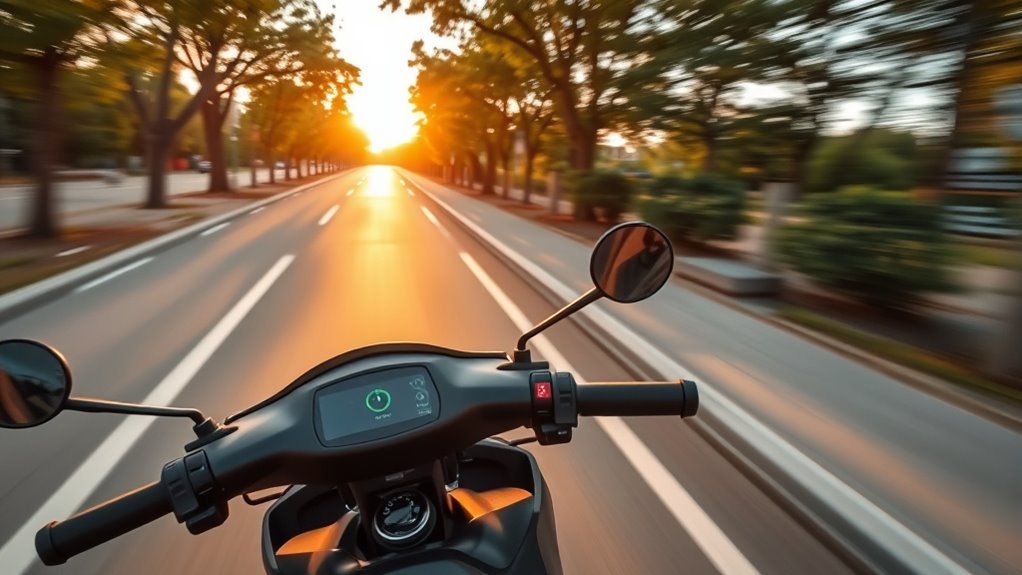
Last Updated on August 25, 2026 by Caleb Warren
Eco mode on an electric scooter is a software-managed riding setting that limits motor output and top speed to minimize battery consumption and maximize travel distance per charge. By capping power draw—usually restricting top speed to 10–15 mph (16–24 km/h) and softening throttle acceleration curves—Eco mode reduces electrical and thermal stress on the battery pack. This power-saving profile makes it an essential tool for daily commuters aiming to extend range, preserve lithium-ion cell health, and lower charging frequency.
Quick Answer
Eco mode limits an electric scooter’s motor power to roughly 50%–70% of its maximum output and caps top speeds at 10–15 mph (16–24 km/h). By smoothing acceleration and lowering continuous amperage draw, it extends riding range by 15% to 40% while protecting the battery from premature degradation.
Key Takeaways
- Range Boost: Extends battery mileage by 15%–40% by reducing current draw from roughly 16 Wh/km down to 10–12 Wh/km.
- Speed & Power Cap: Limits top speed to 10–15 mph (16–24 km/h) and reduces torque output by 30%–50%.
- Battery Longevity: Lowers continuous discharge rates (C-rate) and reduces heat buildup, preserving lithium-ion cell lifespan over hundreds of charge cycles.
- Best Terrain: Ideal for flat commutes, crowded bike lanes, pedestrian zones, and low-battery emergencies.
- Key Limitation: Noticeably impairs hill-climbing torque and rapid intersection acceleration.
Disclosure: As an Amazon Associate I earn from qualifying purchases. Some links on this page are affiliate links, at no extra cost to you.
What Is Eco Mode on an Electric Scooter?
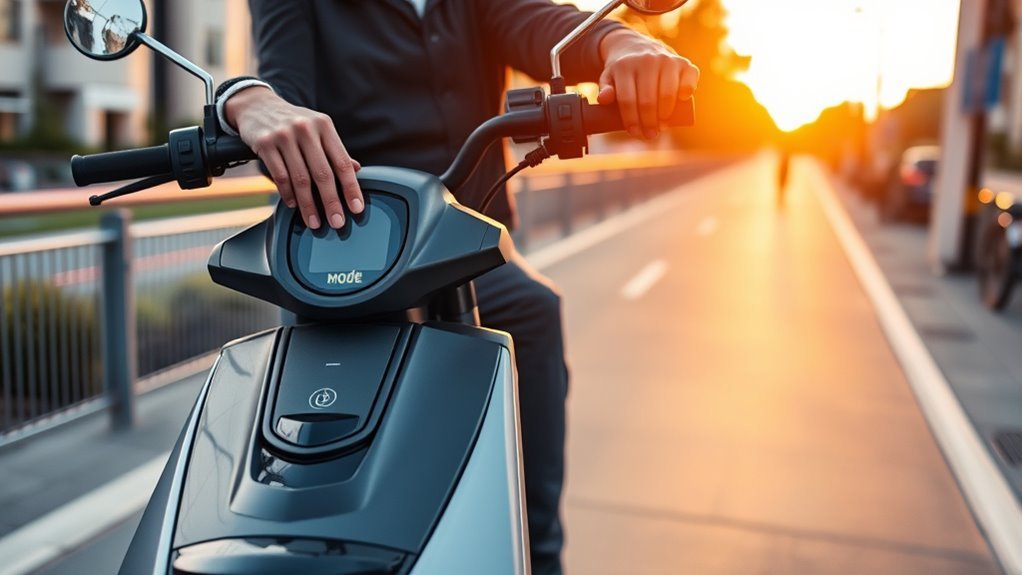
Eco Mode (short for “Economy Mode”) is a factory-programmed operating profile integrated into an electric scooter’s motor controller and Battery Management System (BMS). When engaged, the controller restrains the electrical current (amperage) flowing from the battery to the brushless DC (BLDC) hub motor.
Standard commuter electric scooters—such as those produced by Segway-Ninebot and NIU—typically configure Eco Mode to provide between 50% and 70% of nominal power. For example, a scooter equipped with a 350W motor may cap continuous output at 175W–250W while in Eco Mode. This prevents aggressive power spikes during start-up, curbs top-end cruising speed, and ensures energy is dispensed steadily over time.
How Eco Mode Works: Controller and Battery Mechanics
Eco Mode operates through coordinated electronic adjustments across several core hardware components:
- Amperage and Pulse-Width Modulation (PWM) Limiting: The motor controller regulates energy using high-frequency switching. In Eco Mode, the controller restricts the maximum duty cycle and caps peak phase current, preventing sudden high-amp draws when pinning the throttle.
- Softened Throttle Mapping: The input curve of the thumb or finger throttle is re-mapped to deliver progressive, linear acceleration. Rapid thumb presses produce a gradual ramp in speed rather than immediate torque delivery.
- Optimized Regenerative Braking (KERS): Kinetic Energy Recovery Systems are frequently adjusted in Eco Mode to capture kinetic energy during deceleration and coasting, funneling small amounts of current back into the battery cells.
- Low-Voltage Automatic Engagement (Limp Mode): Most intelligent battery management systems monitor cell pack voltage. When total capacity drops below 20%–30%, the BMS automatically overrides user settings and forces the scooter into Eco Mode to prevent severe voltage sag and avoid dropping individual cells below their critical low-voltage cutoff threshold.
Note: Voltage sag occurs when a high current demand temporarily drops battery voltage under load. Eco Mode suppresses high-amperage draws, keeping the voltage stable and preventing your scooter from abruptly shutting down when the battery is low.
Eco Mode Benefits for Range, Battery Life, and Cost
Riding in Eco Mode yields tangible improvements in travel distance, pack durability, and operating economics.
Extended Battery Range
Air resistance (aerodynamic drag) scales exponentially with speed. Because aerodynamic drag increases with the square of velocity ($F_d \propto v^2$), cruising at 12 mph requires substantially less continuous wattage than riding at 20 mph or faster. By capping speed and smoothing out acceleration surges, Eco Mode reduces average energy consumption from around 15–18 Wh/km in Sport Mode down to roughly 10–12 Wh/km.
| Operating Metric | Standard / Drive Mode | Eco Mode Impact |
|---|---|---|
| Power Output | 80%–100% Capacity | 50%–70% Capacity (Reduced current draw) |
| Energy Efficiency | ~15–17 Wh/km | ~10–12 Wh/km (25%–35% less energy consumed) |
| Typical Top Speed | 15–20 mph (25–32 km/h) | 10–15 mph (16–24 km/h) |
| Real-World Range | Baseline Manufacturer Range | +15% to +40% Distance |
Reduced Battery Stress and Longer Lifespan
Lithium-ion battery packs degrade more quickly under high discharge rates (C-rates) and excessive heat. Internal resistance generates thermal waste according to Joule’s Law ($P_{loss} = I^2R$). When you ride continuously at maximum power in Sport Mode, high current ($I$) produces significant heat inside individual battery cells.
Eco Mode limits peak current draw, keeping operating temperatures cooler and preventing rapid anode degradation. Over 300 to 500 charge cycles, a battery operated predominantly in balanced or Eco profiles retains higher state-of-health (SoH) capacity than a pack subjected to continuous high-drain discharges.
Lower Charging Costs and Fewer Full Cycles
Because Eco Mode consumes fewer watt-hours per mile, riders require fewer recharge cycles to cover identical cumulative distances. Over a year of daily urban commuting (e.g., 2,500 miles or ~4,000 km), operating at 11 Wh/km uses approximately 44 kWh of electricity, compared to 68 kWh at 17 Wh/km. While electric scooter charging is inherently economical, fewer complete charging cycles delay the need for expensive battery pack replacements.
Eco Mode Limits on Speed, Hills, and Acceleration
While energy conservation is substantial, Eco Mode introduces clear performance compromises that riders must account for:
- Restricted Top Speed: Speed is generally software-capped at 10–15 mph (16–24 km/h). On open roads or long straightaways, this adds 3–6 minutes to an average 5-mile trip.
- Muted Acceleration: Throttle responsiveness is intentionally delayed. Reaching cruising speed takes 30% to 50% longer, which can hinder quick maneuvers when navigating tight spaces.
- Diminished Hill Climbing: Ascending grades requires raw torque and wattage. In Eco Mode, a 250W–350W motor will often slow down significantly on inclines steeper than 5%–8% (3°–5°), sometimes stalling completely under heavier rider payloads.
Warning: Avoid using Eco Mode when crossing busy multi-lane intersections or merging into active vehicle traffic. The muted throttle response limits your ability to accelerate out of hazardous road situations quickly.
Eco Mode vs. Standard, Sport, and Turbo Modes
Most modern electric scooters feature three to four distinct drive modes configured for varying rider priorities:
| Riding Mode | Power Cap | Top Speed Range | Battery Drain Rate | Primary Use Case |
|---|---|---|---|---|
| Eco Mode | 50%–70% | 10–15 mph (16–24 km/h) | Lowest (~10–12 Wh/km) | Range extension, crowded paths, beginners |
| Standard / Drive (D) | 75%–85% | 15–18 mph (24–29 km/h) | Moderate (~14–16 Wh/km) | Everyday commuting, balanced performance |
| Sport Mode (S) | 100% | 19–25 mph (30–40 km/h) | High (~18–24 Wh/km) | Hill climbing, brisk commuting, open roads |
| Turbo / Ludicrous | 100%+ Peak Draw | 28–50+ mph (45–80+ km/h) | Extremely High (30+ Wh/km) | Performance dual-motor models, off-road track |
Eco vs. Standard Mode
Standard Mode (often labeled “D” for Drive) delivers full motor wattage while capping maximum speed slightly below the absolute motor limit. It provides an optimal compromise for general urban riding. Compared to Eco, Standard Mode consumes roughly 20%–30% more energy but provides sufficient torque to maintain pace on minor bridge ramps and modest roadway grades.
Sport Mode Trade-offs
Sport Mode removes software restrictions on controller amperage and allows the motor to draw peak burst wattage. Acceleration is immediate, and hill climbing ability reaches maximum factory specifications. The primary drawback is rapid battery consumption, increased operating heat, and a reduction in real-world range by up to 40% compared to Eco Mode.
Turbo and Dual-Motor Modes
Found on high-performance dual-motor electric scooters (such as models from Apollo, Kaabo, and Dualtron), Turbo or Dual-Motor modes engage both front and rear powertrains simultaneously. Energy consumption can exceed 30–40 Wh/km, cutting total single-charge mileage dramatically in exchange for rapid acceleration and speeds exceeding 30 mph (48 km/h).
When to Use Eco Mode on Your Electric Scooter
Switching riding modes dynamically based on route topography and battery status maximizes riding efficiency:
- Low Battery Return Trips: When your battery indicator falls below 30%, switching to Eco Mode limits voltage drop, preventing the BMS from shutting off the scooter before you reach a charger.
- High-Density Pedestrian Zones: When riding through crowded urban greenways, shared trails, or school zones, Eco Mode’s smooth throttle prevents unexpected surges and maintains safe, compliant speeds.
- Wet or Slippery Surfaces: Rainy conditions reduce tire traction. Eco Mode’s muted torque ramp prevents the drive wheel from spinning out or losing grip upon initial acceleration.
- New and Inexperienced Riders: The gentle throttle progression allows beginner riders to build balance and throttle control without risk of sudden jerkiness.
Pro Tip: Use hybrid riding habits: engage Standard or Sport Mode when accelerating from a dead stop or ascending hills, then switch to Eco Mode once you reach a flat, steady cruising section to conserve battery.
How to Activate Eco Mode Across Popular Brands
Activating Eco Mode depends on your scooter’s display interface and controller firmware:
- Segway-Ninebot (F-Series, Max G30/G2): Double-click the main power button on the handlebar stem until the green “ECO” icon illuminates on the LED screen.
- Xiaomi (Mi / Electric Scooter 4 Pro): Double-press the single control button on the dash to cycle through ECO, D, and S modes.
- NIU (KQi2 / KQi3 Series): Tap the power button once, or toggle the “E-Save” mode switch directly via the NIU Bluetooth companion app.
- Throttle-Trigger Displays (QS-S4, EY3): Use the “MODE” button on the trigger throttle assembly to select Gear 1 (Eco), which caps current output percentage in the internal P-settings (P8/P9).
Frequently Asked Questions
Does Eco Mode actually save battery on an electric scooter?
Yes. Eco Mode saves battery by reducing motor controller amperage draw and capping top speed. Lower speeds significantly reduce aerodynamic drag, extending overall riding range by 15% to 40% compared to Sport Mode.
Why does my electric scooter switch to Eco Mode automatically?
Scooters automatically switch to Eco Mode when battery levels drop below 20%–30%. The Battery Management System (BMS) enforces this “limp home” feature to protect battery cells from severe voltage sag and low-voltage damage.
Should my Eco Mode be on or off for everyday commuting?
Keep Eco Mode on if your priority is maximum battery range, riding on flat paths, or traveling through crowded urban areas. Switch Eco Mode off to Standard or Sport if your commute involves steep hills, heavy traffic merges, or if you need to travel faster than 15 mph (24 km/h).
Does riding in Eco Mode all the time harm the motor or battery?
No. Riding in Eco Mode is beneficial for the scooter’s electrical components. It reduces heat generation in the controller and motor windings and lowers discharge stress on battery cells, prolonging the overall hardware lifespan.
Is 30 mph too fast for an electric scooter?
Yes, 30 mph (48 km/h) is considered high performance for a stand-up scooter. At 30 mph, stopping distances increase more than threefold compared to 15 mph, requiring advanced hydraulic disc brakes, pneumatic suspension, and a full-face DOT-certified helmet for safety.
Conclusion
Eco Mode on an electric scooter is an efficient power-management tool that delivers significant real-world range gains by capping motor output and curbing high-drain acceleration. While it reduces top speed and hill-climbing torque, it protects battery health and ensures safe, predictable handling in dense urban environments. By toggling into Eco Mode on flat routes, during low-battery conditions, or in heavy pedestrian traffic, riders can optimize their daily commute while extending the service life of their scooter’s battery pack.
Sources
- Segway-Ninebot Technical Support & User Manuals — Firmware ride modes, speed caps, and BMS battery safety parameters.
- NIU E-Scooter Technical Documentation — Dynamic energy recovery (KERS) and E-Save power consumption benchmarks.
- SAE International (Standard J3194) — Taxonomy and operational classifications for powered micromobility vehicles.
- Battery University (Cadex Electronics) — Discharge C-rate impact on lithium-ion internal resistance and thermal aging.
