
Last Updated on July 24, 2026 by Caleb Warren
A good travel pillow is essential for long-haul flights, boosting your comfort and preventing severe neck pain during hours in transit. Selecting the right support system requires understanding key features like portability, high-density materials, and machine-washable covers. Different designs—such as memory foam, wrap-around internal braces, and inflatable options—cater to distinct sleeping positions. Ensuring your pillow maintains proper cervical alignment can transform an exhausting flight into a restful journey.
Quick Answer
The best travel pillow for long-haul flights depends on your sleeping posture: high-density memory foam (like the Cabeau Evolution S3) provides 360-degree stability, internal brace systems (like the Trtl Pillow) prevent forward chin drop, and inflatable pillows offer ultra-compact packing for light travelers.
Key Takeaways
- Prioritize Cervical Alignment: Select a pillow design that keeps your head and neck neutral to eliminate strain and forward head bobbing.
- Match Pillow Material to Needs: Visco-elastic memory foam offers top cushioning, internal rib structures provide targeted lateral support, and inflatables maximize bag space.
- Protect Foam Cores: Always wash removable fabric covers, but never submerge memory foam cores directly in water.
- Bypass Bag Limits: Wear your neck pillow through security or snap it to bag handles so it does not count against airline carry-on allowances.
At a Glance: Travel Pillow Types Comparison
| Pillow Type | Primary Benefit | Best For |
| Memory Foam | Molds to head/neck shape, dampens engine vibration | Long flights, maximum comfort |
| Internal Support (Trtl) | Rigid internal brace holds head upright | Upright sleepers, preventing head bobbing |
| Inflatable | Packs down to pocket size, adjustable firmness | Backpackers, ultra-light travelers |
| Wrap-Around (BCozzy) | Flexible overlapping ends support the chin | Side sleepers, chin-droppers |
Disclosure: As an Amazon Associate I earn from qualifying purchases. Some links on this page are affiliate links, at no extra cost to you.
Why a Good Travel Pillow Is Essential for Long-Haul Flights
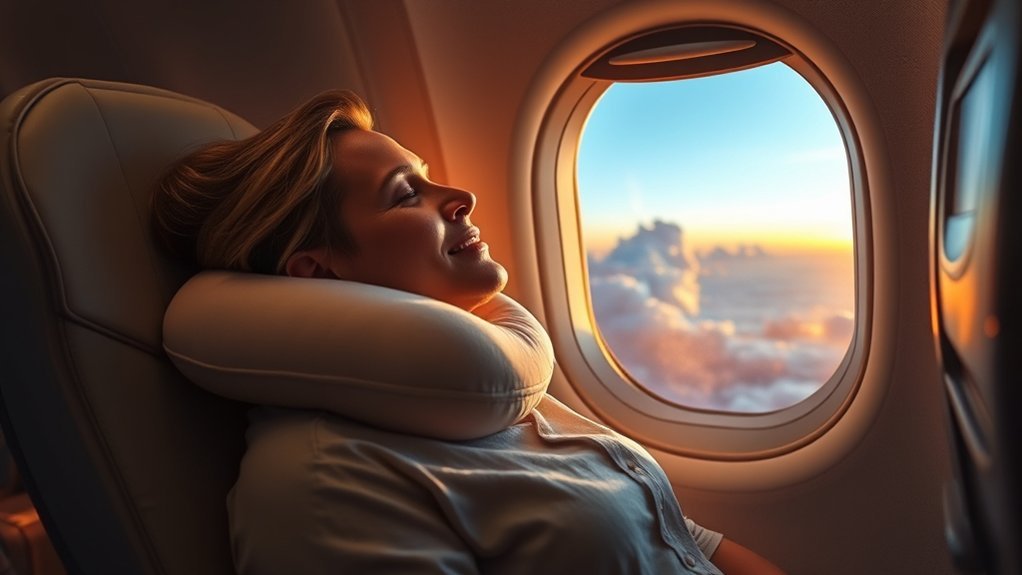
When embarking on a long-haul flight, a high-quality travel pillow is one of the most effective tools for maintaining physical comfort. A well-designed travel pillow cradles your head and supports the cervical spine, preserving natural anatomical alignment and preventing muscle strain caused by awkward seat angles. According to ergonomic sleep research cited by the Sleep Foundation, proper neck support during upright rest reduces pressure on neck vertebrae, leading to longer periods of uninterrupted sleep. Arriving at your destination well-rested helps mitigate jet lag and promotes overall physical well-being throughout your trip.
What Features to Look For in a Travel Pillow
Choosing the right travel pillow requires balancing portability with adequate structural support. Key features determine whether a pillow fits seamlessly into your travel routine or adds unnecessary bulk to your carry-on luggage.
Portability And Compactness
Prioritizing portability is essential when traveling light. Look for travel pillow designs that feature dedicated carrying cases or integrated attachment straps, allowing you to secure the pillow directly to your backpack or luggage handle. High-compression materials are vital; models like the Travelrest roll up or deflate to a quarter of their expanded size. Aim for lightweight options weighing under 12 ounces to keep your pack manageable. Inflatable designs and high-density memory foam offer excellent strength-to-weight ratios, while removable, machine-washable covers ensure long-term hygiene across multiple trips.
Neck Support And Comfort
Superior neck support relies on materials that stabilize the head without pushing it uncomfortably forward. High-density visco-elastic memory foam contours to the head and neck, distributing weight evenly to alleviate pressure points. Innovative designs like the Trtl Travel Pillow utilize an internal plastic rib structure to support the jaw and keep the spine straight. Features like flat back profiles prevent the pillow from pushing your neck forward against firm airplane headrests, drastically reducing stiffness during transoceanic flights.
A Comparison of Travel Pillow Types: Finding Your Ideal Match
Understanding how different pillow construction types perform helps you select the best model for your preferred sleeping posture and luggage capacity.
Neck Support Options
Different pillow designs solve specific sleep challenges during transit:
- Memory Foam Pillows: Models like the Ostrichpillow Go conform dynamically to your neck, absorbing micro-vibrations from aircraft engines while providing plush 360-degree lateral support.
- U-Shaped Pillows: Classic models like the Cabeau Evolution S3 feature elevated side cushions and seat-attachment straps that prevent sideways head drops.
- Wrap-Around Pillows: Options like the BCozzy overlap under the chin, providing continuous forward support for sleepers whose heads fall forward.
- Internal Brace Pillows: The Trtl Pillow uses a scientific internal rib matrix wrapped in soft fleece to hold the neck upright in an ergonomic position.
- Inflatable Pillows: Compact choices like the Flowzoom offer adjustable firmness by varying air pressure, making them ultra-portable despite offering slightly less vibration damping than solid foam.
Portability and Size
Packing efficiency varies significantly between pillow styles:
- Inflatable options: Deflate completely flat, making them the ultimate choice for ultra-minimalist packing.
- Cabeau Evolution S3: Compresses into a compact zip-up transport case, reducing its overall volume by roughly 50%.
- Travelrest: Rolls into a small cylindrical pouch that easily attaches to exterior bag straps.
- Trtl Travel Pillow: Folds flat like a thin book, sliding neatly into laptop sleeves or outer backpack pockets.
How to Test a Travel Pillow Before Your Trip
Testing your travel pillow before heading to the airport guarantees it performs as expected during transit. Set up the pillow in a high-backed chair at home or use it on a short commuter trip. Pay attention to how well it cradles your jaw and cervical spine. Check that adjustment toggles or Velcro straps fasten securely without chafing skin. Ensure the pillow compresses quickly into its storage sack and confirm the cover removes easily for washing.
How to Pack Your Travel Pillow for Easy Travel
Optimizing how you pack your travel pillow protects it from cabin dirt while saving internal bag space:
- Select Compressible Designs: Choose memory foam or inflatable models that compress down into dedicated travel sacks.
- Attach to Exterior Luggage: Use built-in snap straps or carabiners to hook your pillow to carry-on handles.
- Deflate Completely: Roll inflatable models tightly from the base up toward the valve to purge all air before sealing.
- Use Protective Bags: Store clean fabric covers inside designated pouches to shield them from airport floor grime.
Pro Tip: According to official TSA Guidelines, travel pillows worn around your neck or clipped to bag exteriors are treated as wearable apparel on most airlines and do not count toward your strict carry-on bag allowance.
Adjusting Your Travel Pillow for Comfort and Cleanliness
Proper adjustment ensures maximum neck stability while maintaining hygiene across long journeys.
| Technique | Description | Purpose |
|---|---|---|
| Neck Alignment | Position the thickest support block directly beneath your chin or jawline | Prevents forward head drops |
| Secure Fasteners | Tighten front toggles or Velcro straps until snug | Stabilizes pillow against seat movement |
| Pre-Flight Fitting | Adjust straps at home while sitting fully upright | Eliminates mid-flight trial and error |
| Sanitary Storage | Enclose pillow in its travel pouch when not in use | Blocks airport germs and dust |
Tips for Keeping Your Travel Pillow Clean During Flights
Airplane cabins harbor bacteria on tray tables, seats, and overhead bins. Maintaining pillow cleanliness protects your skin and prolongs product life:
- Disinfect Outer Fabric: Wipe down outer covers with skin-safe disinfectant wipes after disembarking.
- Store in Sealed Pouches: Keep your pillow enclosed inside its storage case until after takeoff.
- Wash Cover Frequently: Remove washable fabric covers and launder in warm water after every major trip.
- Deodorize Naturally: Lightly sprinkle baking soda on fabric covers between trips, let sit for two hours, then vacuum thoroughly.
Warning: Never submerge solid memory foam cores in water or place them inside washing machines. Water degrades the open-cell structure of visco-elastic foam, permanently ruining its supportive qualities. Clean memory foam cores by spot-wiping with a damp cloth only.
Creating a Cozy Sleep Environment With Your Pillow
Combining proper pillow placement with complementary sleep accessories establishes optimal conditions for rest in noisy cabin environments.
Optimal Pillow Positioning
Proper placement ensures continuous neck support throughout your flight:
- Align Contours: Place ergonomic contours directly under the neck cavity to maintain natural spinal curvature.
- Leverage Attachment Straps: Fasten seat straps (on models like Cabeau) directly to airplane headrest wings to prevent sagging.
- Support Side Postures: For side sleepers, shift wrap-around support structures toward your dominant leaning side.
- Adjust Elevation: Ensure pillow height supports your head without tilting your neck upward or backward.
Layering Comfort Accessories
Enhance your personal sleep environment by integrating key travel accessories:
- Travel Blanket: Retains body heat during cold high-altitude cruising.
- Contoured Eye Mask: Blocks ambient cabin lighting to stimulate natural melatonin production.
- Noise-Canceling Headphones: Reduces low-frequency jet engine hum, facilitating deeper sleep cycles.
- Travel Scarf: Adds soft cushioning around the base of the neck for extra warmth.
Best Travel Pillows for Every Sleeping Position
Selecting a pillow engineered for your preferred posture is key to sound sleep in transit:
- Back Sleepers (Trtl Travel Pillow): Features a firm internal plastic structure that supports chin and neck alignment when leaning straight back.
- Side Sleepers (BCozzy Neck Pillow): Flexible overlapping arms cradle the chin and side jawline to prevent sideways head tilt.
- Upright Sleepers (Cabeau Evolution S3): High memory foam sidewalls hold the head upright without allowing lateral drift.
- Variable Sleepers (Flowzoom Inflatable): Adjustable air chambers allow on-the-fly firmness tweaks for shifting sleep positions.
Essential Accessories to Pair With Your Travel Pillow
Pairing your neck support pillow with targeted comfort gear builds a complete restful system for long-distance transit.
| Accessory | Primary Travel Benefit |
|---|---|
| Travel Blanket | Maintains warmth against chilly aircraft air conditioning |
| 3D Contoured Eye Mask | Blocks cabin light pollution without putting pressure on eyelids |
| Graduated Compression Socks | Promotes lower-leg circulation and reduces swelling on flights over 4 hours |
| Active Noise-Canceling Headphones | Eliminates background engine rumble to encourage uninterrupted sleep |
Frequently Asked Questions
Can I use my travel pillow on other types of transportation?
Yes. Travel pillows work exceptionally well on long-distance trains, buses, passenger cars, and ferry boats. Any transit scenario where you must sleep upright benefits from ergonomic cervical neck support.
How do I choose a travel pillow for a child?
Select pillows designed specifically for smaller proportions. Child-sized neck pillows ensure proper chin support without pushing the child’s head forward. Look for soft, hypo-allergenic, and machine-washable fabrics.
Are there travel pillows specifically designed for side sleepers?
Yes. Wrap-around models like the BCozzy and firm high-walled memory foam models like the Cabeau Evolution S3 provide lateral cushioning that fills the gap between your shoulder and ear when leaning sideways.
What is the average lifespan of a travel pillow?
The average lifespan ranges between 1 and 3 years depending on material quality and usage frequency. High-density memory foam retains structural integrity longer than inflatable air bladders or microbead fills.
Can I take a travel pillow as a carry-on item?
Yes. Travel pillows are accepted as carry-on apparel by TSA and major airlines. Wearing your pillow around your neck or snapping it onto exterior bag handles allows you to bring it onboard without counting against your personal item allowance.
Conclusion
Investing in the right travel pillow transforms long-haul flight comfort by preventing stiffness and supporting healthy spinal posture. Whether you prefer contoured visco-elastic memory foam, rigid internal brace designs, or ultra-compact inflatable models, matching your pillow to your sleeping position guarantees better rest. Pair your pillow with light-blocking eye masks, compression socks, and proper hygiene habits to ensure you arrive at your destination refreshed and ready to explore.
Sources
- Sleep Foundation — Ergonomic evaluation of cervical neck support during upright travel sleep.
- Transportation Security Administration (TSA) — Official carry-on baggage and personal item guidelines.
- Cabeau Ergonomics — Memory foam compression specifications and seat-attachment strap mechanics.
- Trtl Travel — Internal neck support rib matrix design and alignment research.
