
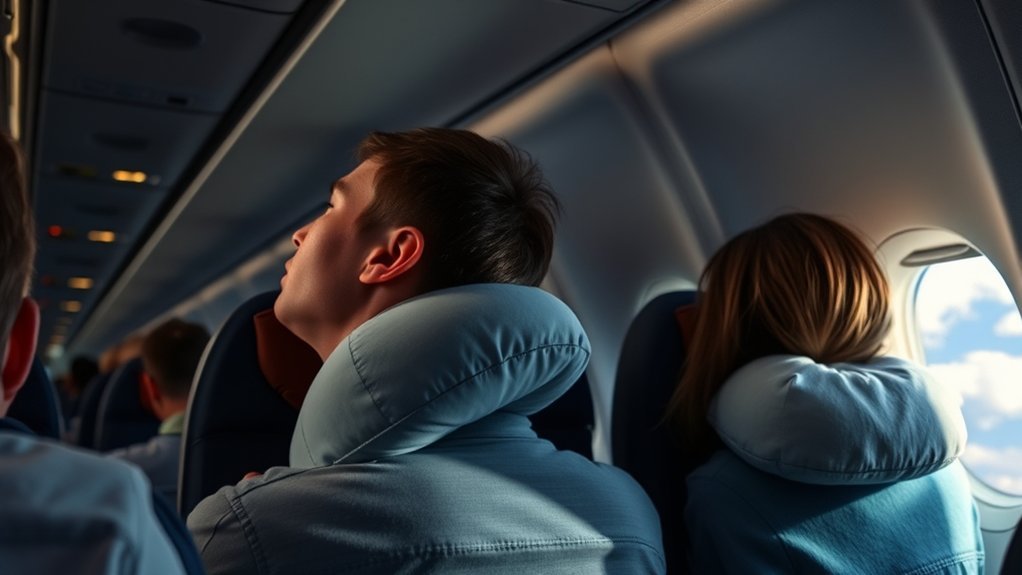
Last Updated on July 28, 2026 by Caleb Warren
Picking the wrong travel pillow can turn a long flight into hours of neck pressure, constant readjusting, and poor sleep. The trick is not finding one universally “best” material or wearing every pillow the same way. A good travel pillow should support the way your head actually moves when you doze without forcing your neck into an awkward position.
Quick Answer
The best travel pillow is one that supports your head without pushing it forward, pinching your neck, or collapsing when you doze. Choose by fit, seat and headrest compatibility, the direction your head tends to drop, packability, and washability—not by one “best” material or a universal front-or-back wearing rule.
Key Takeaways
- Fit matters more than the label. The pillow should limit unwanted head drop without forcing your chin forward.
- There is no universal rule that every U-shaped pillow must face the same direction. Follow the design instructions and test it in your actual seated position.
- Memory foam, inflatable, wrap-style, and other designs all have tradeoffs; no single fill is best for every traveler.
- Check how the pillow works with the airplane headrest. Too much bulk behind your neck can push your head forward.
- Choose a removable, washable cover when possible and follow the care label for the pillow core.
- Replace the pillow when it no longer rebounds, holds air, fastens securely, or gives the support it provided when new—not simply because a certain number of years has passed.
Disclosure: As an Amazon Associate I earn from qualifying purchases. Some links on this page are affiliate links, at no extra cost to you.
How the Wrong Travel Pillow Can Ruin Your Flight Experience
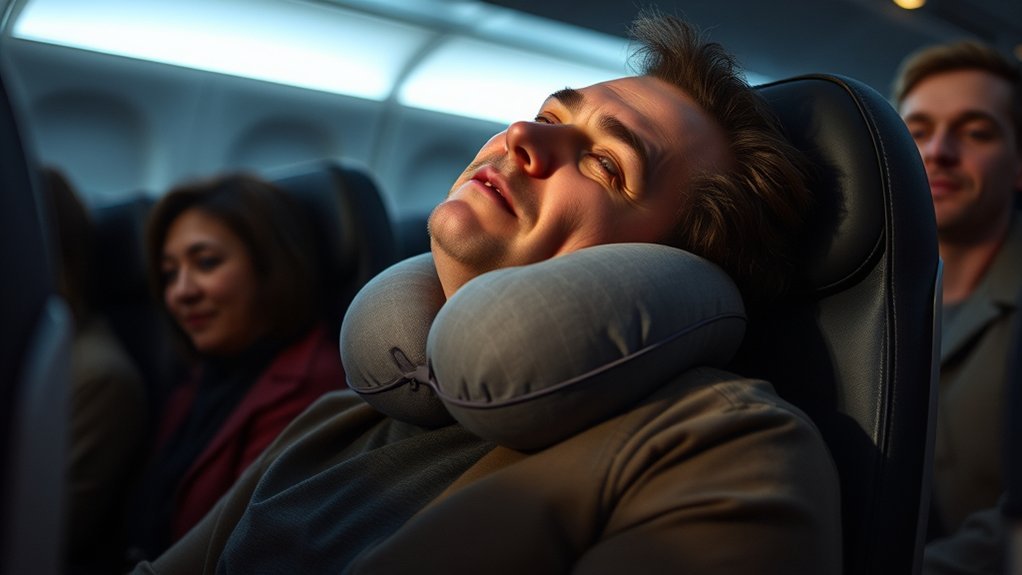
When you settle into your seat for a long flight, the last thing you want is a pillow that fights the seat, the headrest, or the way your head naturally drops when you fall asleep. A pillow can feel soft in your hands yet become uncomfortable once it is squeezed between your neck and an airplane seat.
The main goal is to keep your head and neck reasonably aligned rather than letting your head hang sharply forward or to one side. Mayo Clinic recommends keeping the head and neck aligned with the body when resting and taking regular movement breaks during long-distance travel.
Do not rely only on your normal bed-sleeping label, such as “side sleeper” or “back sleeper.” On a plane, you are usually sleeping upright. Pay more attention to whether your head tends to fall forward, lean sideways, or get pushed forward by the seat’s headrest.
Pillow research suggests that shape and height can affect cervical alignment, which is why fit matters more than choosing one supposedly perfect material for everyone.
Common Mistakes When Choosing a Travel Pillow
Choosing a travel pillow by softness or appearance alone is an easy mistake. A better approach is to test how it supports you while you are sitting in a position similar to the one you will use in transit.
| Mistake | Better Approach |
|---|---|
| Choosing for aesthetics | Prioritize fit, support, and seat compatibility. |
| Using your home sleep position as the only guide | Notice whether your head drops forward, sideways, or both when you doze upright. |
| Selecting extreme firmness | Choose enough resistance to support you without painful pressure. |
| Assuming every U-shaped pillow is worn the same way | Follow the instructions for that design and use the orientation that keeps your head most neutral. |
| Ignoring the seat headrest | Make sure the combined headrest and pillow do not push your head forward. |
| Choosing only for packability | Balance carry-on size with the amount of support you actually need. |
| Neglecting maintenance | Look for a washable cover and check the core’s care instructions. |
Travel Pillow Types and Their Main Tradeoffs
Travel pillows solve the same basic problem in different ways. The best type depends on how much structure you need, how much room you have in your bag, and what your airplane seat already provides.
| Type | Main Advantage | Main Tradeoff |
|---|---|---|
| Structured U-shaped foam | Good side support and predictable shape. | Can be bulky and may push the head forward if the rear section is too thick. |
| Wrap or scarf-style | Can provide targeted side or jaw support with less material behind the head. | Fit is very personal and some designs can feel warm or restrictive. |
| Inflatable | Packs small and lets you adjust firmness. | May feel less cushioned, and a valve or bladder problem can reduce support. |
| Microbead or soft-fill | Soft, flexible, and easy to reposition. | May compress too easily for travelers who need strong lateral support. |
| Hybrid or adjustable design | Can combine adjustable support with padding. | Usually has more parts, weight, or bulk than a simple inflatable. |
How to Test a Travel Pillow Before You Keep It
A quick seated test tells you more than squeezing the pillow in a store. Sit against a firm chair or high-backed seat and check these five things:
- Sit fully back. Let the chair support your upper back instead of leaning forward.
- Put the pillow on according to its design. Do not assume the opening automatically belongs at the front or back.
- Relax your neck. Let your head drift naturally and see whether the pillow catches it before you reach an uncomfortable angle.
- Check your chin and ears. The pillow should not force your chin toward your chest, push your jaw upward, or create painful pressure around your ears.
- Recline slightly and test again. A pillow that works bolt upright may fit differently once the seat reclines.
If you immediately want to pull the pillow away from the back of your neck, loosen it, or keep repositioning it, the shape may simply be wrong for you.
How to Properly Position Your Travel Pillow for Comfort
Positioning matters as much as the material. Start with your back against the seat and adjust the built-in headrest first if it moves. Then place the travel pillow according to its own design.
Some pillows are built with an open front and raised sides. Others are designed to support the chin or one side of the jaw. A traditional horseshoe can sometimes feel better in a different orientation if the rear cushion otherwise pushes your head forward. There is no single front-or-back rule that works for every design.
The useful test is simple: when you relax, your head should feel supported without being forced sharply forward, sideways, or backward. Harvard Health similarly notes that a horseshoe pillow may support the neck during travel but warns that excessive bulk behind the neck can push the head forward.
Note: Do not tighten a wrap or fastening system so much that it feels restrictive around your throat or jaw. Secure support should still feel comfortable and allow normal breathing.
Signs You Need a Different Travel Pillow
If you wake up sore, repeatedly reposition the pillow, or cannot keep your head supported, the pillow may not be a good match. The seat itself and your sleeping posture can also contribute, so look at the whole setup rather than blaming the pillow automatically.
Persistent Neck Pain
Occasional stiffness after sleeping upright can happen for several reasons. If a particular pillow repeatedly makes your neck feel worse, however, reassess its height, rear thickness, side support, and pressure points.
| Pillow Type or Fill | What It Can Offer |
|---|---|
| Memory foam | Contouring and shape retention, but usually more bulk than an inflatable. |
| Contoured or cervical-style design | Targeted support, although the contour must match your body and seated posture. |
| Inflatable | Adjustable firmness and excellent packability. |
| Microbead | Soft, moldable cushioning with less rigid structural support. |
| Traditional foam or fiberfill | Simple cushioning; support depends heavily on density and construction. |
If you constantly readjust the same pillow, changing the shape or design may help more than simply buying a firmer version of the same style.
Poor Sleep Quality
Restless sleep on a long flight is not automatically a pillow problem. Upright posture, seat design, noise, light, temperature, and interruptions all affect sleep. Still, a pillow deserves another look if it repeatedly lets your head drop, creates pressure, or makes you feel more uncomfortable as the flight goes on.
Lack Of Support
If your head still falls sharply forward or sideways after you relax, the pillow may be too low, too compressible, or the wrong shape for that seat. On the other hand, if the pillow pushes your head noticeably forward while you are awake, there may be too much material between the back of your neck and the headrest.
Warning: Do not assume arm numbness, tingling, or weakness is simply a firmness problem. Stop using a pillow that triggers neurological symptoms. Mayo Clinic advises contacting a healthcare professional when neck pain is accompanied by numbness, tingling, or weakness, especially if symptoms are severe or persistent.
Note: Replace a travel pillow based on condition rather than a fixed age. Permanent foam compression, a slow air leak, broken fasteners, damaged seams, or a pillow that no longer holds your head as it once did are better replacement signals than the calendar.
Travel Conditions and Pillow Comfort
Long trips make small fit problems more noticeable because you stay in the same confined position for longer. That does not mean every long flight requires firm foam. An adjustable inflatable can work well for one traveler, while another may prefer a structured foam or wrap design.
Also consider the seat itself. A thick pillow placed in front of a projecting headrest can push your head farther forward. If the aircraft has adjustable side wings on the headrest, try those before adding more padding; they may already provide some lateral support.
Aircraft cabins are normally dry rather than humid. The CDC Yellow Book notes that cabin humidity is typically about 10% to 20%. A dense foam pillow or neck wrap can still feel hot because it traps body heat, so breathable fabric and ventilation may matter even in a dry cabin.
How to Keep Your Travel Pillow Fresh and Clean
Travel pillows pick up skin oils, sweat, dust, and dirt from seats and luggage, so a removable cover is useful. Always read the care label before washing either the cover or the core because materials that look similar can have very different cleaning requirements.
Many removable fabric covers can be machine washed, but foam inserts often require gentler care. For example, Tempur-Pedic tells owners not to wash or submerge its pillow inserts unless the specific product instructions say they are washable. When spot cleaning is allowed, use as little moisture as practical and let the pillow dry completely before storing it.
Pro Tip: Pack a spare washable cover or pillowcase on a longer trip. You can swap the fabric that touches your face and neck without trying to wash and dry the entire pillow while traveling.
Complementary Practices to Enhance Neck Support While Traveling
A good pillow helps, but it cannot fix every problem created by hours in one seat. Take movement breaks on long flights when conditions allow. Mayo Clinic recommends getting up and moving regularly during long-distance travel, and gentle shoulder and neck movement can help break up long periods in one posture.
A small lumbar roll or rolled jacket behind your lower back may also make it easier to sit against the seat instead of slumping. Keep your feet supported when possible so you are not constantly sliding forward in the seat.
For ordinary muscle soreness, some people find gentle heat or cold comfortable, but those measures should not be used to mask severe pain, weakness, or persistent numbness. If symptoms radiate into an arm or continue after the trip, medical evaluation is more appropriate than simply switching pillows.
Frequently Asked Questions
Can I use my travel pillow for car trips too?
Yes, an adult passenger can use a travel pillow if it remains comfortable and does not interfere with the seat belt or normal breathing. A driver should not use anything that restricts head movement or visibility. For a child in a car seat or booster, do not add an aftermarket pillow unless the child-restraint manufacturer specifically makes or permits it. NHTSA does not recommend aftermarket car-seat products unless they are made or allowed by the original car-seat manufacturer.
How do I choose the right travel pillow material?
Start with fit rather than material. Memory foam contours and holds its shape, inflatable pillows pack very small and let you adjust firmness, and soft-fill designs are easy to mold but may provide less structure. Choose the material that gives you enough support without uncomfortable pressure or excess heat.
Are inflatable travel pillows comfortable for long flights?
They can be. There is no reliable 4- or 5-hour cutoff after which foam automatically becomes better. Inflatable pillows are compact and adjustable, while structured foam often feels more cushioned. The better choice is the one that continues supporting your head without painful pressure, leaking, or forcing your neck forward.
What size travel pillow is best for my height?
There is no universal travel-pillow loft that fits every height. Neck length, shoulder shape, body size, seat height, and headrest position all affect the fit. Choose enough height to catch your head when you relax without lifting your jaw or pushing your head noticeably forward.
Do travel pillows work for side sleepers?
They can, but your normal bed-sleeping position is not the only factor when you are sitting upright. If your head tends to fall sideways on a plane, look for raised side support, an adjustable wrap, or another design that catches the side of your head before your neck reaches an uncomfortable angle.
Should the opening of a travel pillow face forward or backward?
It depends on the pillow. Some products are specifically designed with an open front, while a conventional horseshoe may feel better in another orientation if the rear cushion pushes your head forward. Follow the manufacturer’s directions, then test whether your head stays supported without uncomfortable flexion or pressure.
When should neck pain after traveling be checked by a doctor?
Get medical advice when neck pain is severe, keeps getting worse, persists despite self-care, spreads into an arm or leg, or occurs with numbness, tingling, or weakness. Sudden neurological symptoms or severe pain after an injury need more urgent assessment.
Conclusion
Your travel pillow should make upright rest easier, not give you another piece of equipment to fight with. Match the pillow to your body, the way your head drops when you doze, and the seat you will actually use. Test for forward pressure, side support, heat, and uncomfortable tightness instead of relying on a universal material, loft, or wearing position. Keep it clean, replace it when its support deteriorates, and change designs if you spend every trip readjusting the same one.
Sources
- Mayo Clinic — Neck Pain: Symptoms and Causes — supports head-and-neck alignment, movement-break, and symptom guidance.
- CDC Yellow Book — Air Travel — supports aircraft cabin humidity information.
- PubMed — The Effects of Pillow Designs on Neck Pain, Sleep Quality and Spinal Alignment — systematic review supporting the importance of pillow design, shape, and height while showing that outcomes vary.
- PubMed — Personalized Optimal Pillow Shape and Cervical Curvature — 2026 research supporting individualized pillow dimensions rather than one universal height.
- Tempur-Pedic — Pillow Care Instructions — supports the recommendation to wash removable covers while following product-specific instructions for foam inserts.
- National Highway Traffic Safety Administration — Car Seat Glossary — supports the warning against unapproved aftermarket accessories in child restraints.
