
Last Updated on September 10, 2026 by Daniel Globe
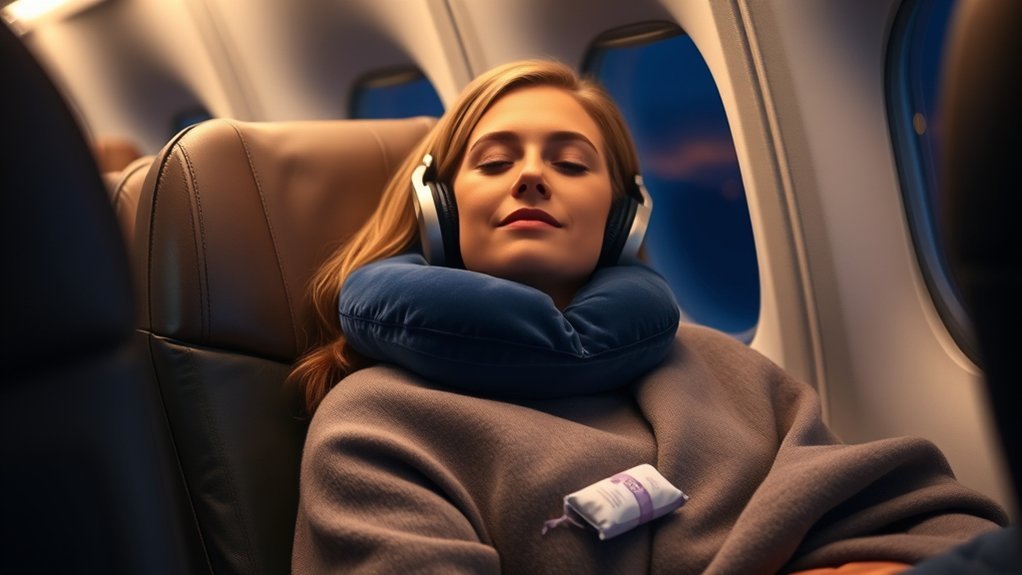
A well-fitted travel pillow can make a red-eye flight more comfortable by limiting forward or sideways head movement while you rest. The best pillow is not determined by one material or one position. It should fit your neck, work with your seat, support your chin or sides as needed, and remain comfortable after more than a few minutes.
Quick Answer
Choose a travel pillow that supports the direction your head normally drops, test it while sitting upright, and adjust it until your head stays neutral without being pushed forward. Keep your seat belt fastened, reduce light and noise, time sleep for your destination, and move your legs regularly on long flights.
Key Takeaways
- Fit matters more than labels such as memory foam, inflatable, or 360-degree support.
- The opening of a U-shaped pillow can face forward or backward, depending on the pillow design and the direction your head moves.
- A good pillow supports your head without pushing it forward, restricting breathing, or pressing painfully against your jaw.
- Keep your seat belt buckled while resting and follow all crew instructions.
- Use medication only after discussing its timing, interactions, and side effects with a qualified healthcare professional.
At a Glance
| Time Required | About 10 to 15 minutes to test and adjust your setup |
| Difficulty | Easy |
| Tools Needed | Travel pillow, seat belt, and optional sleep mask, earplugs, headphones, light layer, and packing pouch |
| Cost | $0 if you already own the accessories; product prices vary |
Disclosure: As an Amazon Associate I earn from qualifying purchases. Some links on this page are affiliate links, at no extra cost to you.
Why Choosing the Right Travel Pillow Matters
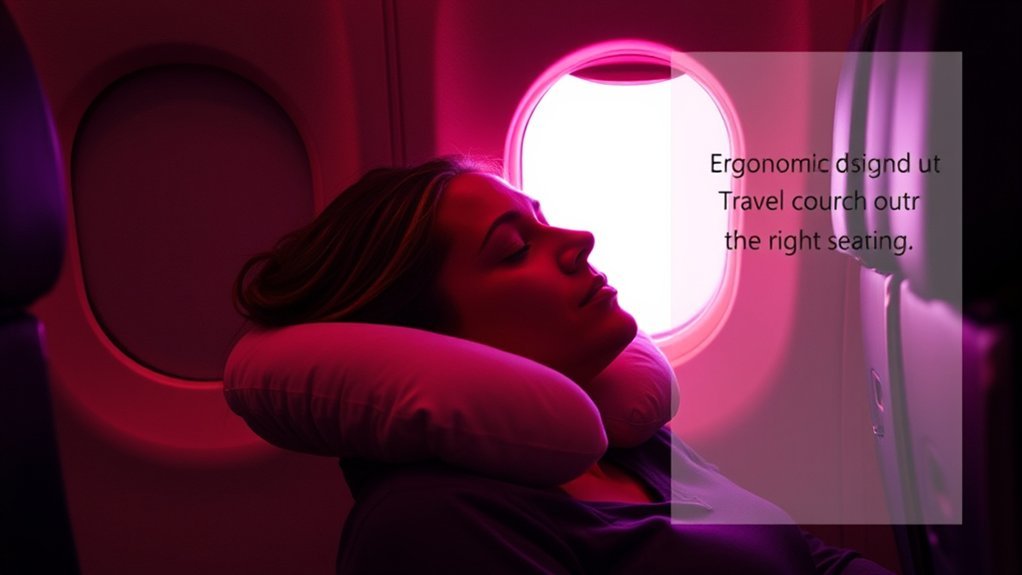
A travel pillow cannot guarantee perfect spinal alignment or prevent every stiff neck. Its practical job is to reduce uncomfortable head movement while you sit upright. A useful pillow should support your head without forcing it forward, creating pressure under your jaw, blocking your airway, or making you feel trapped.
Your normal sleeping style offers only a rough starting point because an airplane seat is different from a bed. Instead, notice what happens when you relax in a seated position:
- Your chin falls toward your chest: Look for firm front or chin support, such as a wraparound, scarf-style, or front-closing design.
- Your head falls to one side: Choose taller side panels, a J-shaped pillow, or a design that can be secured against a window-side wall.
- Your head moves in several directions: A wraparound or adjustable pillow may provide more stable support.
- The seat already pushes your head forward: Avoid a bulky cushion behind the neck. A thinner rear section or front-support design may feel better.
A travel pillow should support your head without pushing it forward or making it harder to breathe, swallow, or move safely.
Essential Features to Look for in Travel Pillows
Look beyond marketing phrases such as “360-degree support.” The pillow still needs to fit your body and work with the airplane seat. Test these features before your trip:
- Adjustable firmness: Inflatable pillows let you release air until the pressure feels right. Some foam pillows include adjustable straps or removable filling.
- Chin and side support: The pillow should support the direction your head tends to fall.
- Low rear profile: A thick cushion behind the neck can push your head forward when the seatback is upright.
- Secure closure: Snaps, hook-and-loop closures, drawcords, or straps can stop the pillow from spreading apart.
- Breathable cover: Look for a soft, washable cover and ventilation that feels comfortable against your skin. Do not assume that every foam or gel product will sleep cool.
- Packability: Check whether the pillow compresses, rolls, deflates, or attaches securely to your bag.
- Easy cleaning: A removable, machine-washable cover is useful after a long trip.
| Pillow Type | Main Advantage | Possible Drawback |
|---|---|---|
| Memory foam | Stable shape and cushioned support | Can be bulky or warm, depending on the design |
| Inflatable | Very compact and easy to adjust | May feel unstable or develop pressure points when overinflated |
| Microbead | Lightweight and flexible | May compress too easily for some users |
| Wraparound or scarf-style | Can limit forward and side movement | May feel warm or restrictive |
| J-shaped | Supports one side of the head and part of the chin | Less compact and may favor one sleeping direction |
Pro Tip: Test the pillow at home for at least 15 minutes while sitting against a firm chair or sofa. Relax your neck instead of deliberately holding your head upright. This reveals whether the pillow supports you or only feels comfortable while you are alert.
How to Position Your Neck Pillow for Maximum Comfort
There is no single correct position for every airplane neck pillow. Start with the orientation recommended by the manufacturer, then adjust it according to where your head drops. The goal is a neutral, relaxed position with no sharp pressure under your jaw or behind your ears.
- Place the pillow around your neck without tightening it fully.
- Sit back in the seat and place your head against the headrest.
- Relax your neck and notice whether your chin falls forward or your head falls sideways.
- Rotate or tighten the pillow so it supports that movement.
- Confirm that you can breathe, swallow, turn slightly, and communicate comfortably.
- Fasten your seat belt and make small adjustments after the seatback position changes.
Reverse Pillow Positioning Technique
Social-media videos have popularized wearing a traditional U-shaped pillow with the opening behind the neck and the rounded section under the chin. This setup may help if your chin drops toward your chest. It is an option, not a universal rule.
Reverse positioning may be less useful when the front cushion presses against your throat, interferes with eating, makes you feel warm, or leaves too little side support. Some pillows are specifically shaped to be worn in one direction, so follow the product instructions when they conflict with general advice.
Note: If reversing the pillow pushes your chin upward, presses on your throat, or makes breathing uncomfortable, return it to its intended position or use a different design.
Optimal Neck Alignment Tips
Your ears should remain reasonably centered over your shoulders instead of being forced far forward. Keep the pillow snug enough to reduce head movement but loose enough to avoid pressure or restricted movement.
- Window seat: Use the wall only as gentle side support. Place a soft layer between your head and the cabin wall, and avoid leaning directly against a hard edge.
- Middle seat: Choose a pillow with balanced support on both sides because you may not have a wall or aisle-side lean point.
- Aisle seat: Use stronger side or chin support and keep your body clear of the aisle.
- Reclined seat: Readjust the pillow after reclining because the change in seat angle may alter where your head rests.
Make small adjustments during the flight. A position that feels good during boarding may feel different after you recline, add a hood, or place a blanket behind your back.
How to Pack Your Travel Pillow for Easy Access
Pack your travel pillow where you can reach it without opening the overhead compartment after the cabin lights dim. Keep it with your sleep mask, earplugs, headphones, and a light layer so you can prepare your seat in one step.
Choose Compact Pillow Design
A compact design is easier to manage during boarding and meal service. Inflatable pillows take up the least space when deflated, while foam pillows may use compression straps or storage pouches.
- Choose a lightweight pillow that does not make your bag uncomfortable to carry.
- Use a clean storage pouch to keep the pillow away from shoes and used clothing.
- Secure external straps so the pillow does not swing into other passengers or catch on seats.
- Practice folding, rolling, or deflating it before leaving home.
Utilize Packing Cubes Efficiently
A mesh packing cube can keep your travel pillow and sleep accessories visible and organized. Place the cube near the top of your personal item instead of under electronics, toiletries, or heavy clothing.
Do not compress a foam pillow more tightly than its care instructions allow. Long or repeated compression may slow its return to shape. Allow it to expand before you try to sleep.
Create a Cozy Sleep Environment
A travel pillow works best as part of a complete seat setup. Reduce light, noise, drafts, and interruptions before you try to sleep.
Turn your seat into a practical rest area by preparing your pillow, light layer, eye mask, ear protection, water, and seat belt before the cabin becomes dark.
- Choose a window seat when leaning support and fewer interruptions matter most.
- Choose an aisle seat when easier movement is more important, especially if you have risk factors for blood clots.
- Wear soft layers that let you adjust to changing cabin temperatures.
- Use a sleep mask that blocks light without pressing painfully on your eyes.
- Place items you will need in the seat pocket or under-seat bag before reclining.
- Ask seatmates to let you know when they expect to get up if you are seated beside the aisle.
Keep Your Seat Belt Fastened While You Sleep
Unexpected turbulence can occur even when the sky looks clear. The Federal Aviation Administration recommends keeping your seat belt buckled whenever you are seated.
Fasten the belt low across your hips. If you use a blanket, place the seat belt over it so cabin crew can see that you are secured without waking you. Follow the illuminated seat-belt sign and all crew instructions.
Noise Reduction Strategies for Better Sleep on the Plane
Earplugs, a sleep mask, or noise-canceling headphones may reduce environmental stimulation, although none can guarantee sleep. The CDC Yellow Book includes eye masks and earplugs among the tools that may help during flight.
| Strategy | How It Helps | Use It Safely |
|---|---|---|
| Noise-canceling headphones | Reduce steady engine and cabin noise | Keep volume moderate and remain able to notice crew instructions |
| Foam or reusable earplugs | Reduce surrounding sound without batteries | Insert cleanly and stop using them if they cause pain |
| Sleep mask | Blocks cabin and screen light | Choose an adjustable strap that does not feel tight |
| Calming audio or white noise | Masks irregular voices and service sounds | Download it before boarding and use a sleep timer |
| Seat away from galley or lavatory | May reduce foot traffic and conversation | Balance quietness against access to the aisle |
Prepare Your Sleep Schedule Before a Red-Eye Flight
Decide when you should sleep based on the destination time zone, not only the departure time. The CDC recommends timing sleep, meals, and light exposure around the destination schedule when practical.
- Set your phone or watch to the destination time after boarding.
- For an overnight flight that arrives in the morning, try to sleep during the destination’s nighttime hours.
- Reduce bright screen exposure before your planned sleep period.
- Limit caffeine during the hours before intended sleep. Save it for the destination’s daytime when alertness is useful.
- Avoid excess alcohol. It may make you feel sleepy at first but can fragment sleep and worsen how you feel after landing.
- Drink water regularly, but do not force excessive amounts that repeatedly interrupt sleep.
Relaxation Techniques for Better Sleep on Red-Eye Flights
Even with a supportive pillow and less noise, sleep may not come immediately. Use simple techniques that do not require medication:
- Slow breathing: Breathe in gently, then make the exhale slightly longer. Avoid forcing very deep breaths if that makes you lightheaded.
- Progressive muscle relaxation: Briefly tense and release your feet, calves, thighs, hands, shoulders, and jaw.
- Peaceful visualization: Focus on one calm scene instead of checking the time repeatedly.
- Gentle movement: Roll your shoulders, relax your jaw, and move your ankles before settling in.
- Low-stimulation audio: Choose familiar music, a quiet audiobook, or white noise instead of exciting content.
Relaxation methods may help some travelers, but their effectiveness for jet lag itself is not firmly established. Treat them as comfort tools rather than guaranteed sleep treatments.
Move Safely During Long Flights
A long red-eye flight should not mean remaining completely still for the entire night. The CDC advises long-distance travelers to move their legs frequently and take periodic walking breaks when it is safe.
- Raise and lower your heels while keeping your toes on the floor.
- Raise and lower your toes while keeping your heels down.
- Tighten and release your calf and thigh muscles.
- Flex and circle your ankles without extending your legs into another passenger’s space.
- When the seat-belt sign is off, consider a brief walk every one to two hours.
Speak with a healthcare professional before travel if you have had a previous blood clot, recent surgery, cancer treatment, limited mobility, pregnancy, or another condition that may increase your risk. Do not take aspirin solely to prevent a travel-related blood clot unless a clinician has instructed you to do so.
What to Do If You Can’t Sleep on a Red-Eye Flight?
If sleep does not come, stop checking the time and make one adjustment at a time. Loosen or rotate the pillow, change the seat recline when permitted, cool down by removing a layer, or switch from music to steady background noise.
A high-quality neck pillow may help, but no brand or shape is essential for everyone. A J-shaped pillow, including designs sold under names such as J-Pillow, may support the chin and one side of the head. A wraparound or inflatable pillow may work better for another traveler.
When you remain awake:
- Rest with your eyes closed even if you do not fall asleep.
- Choose quiet, familiar content instead of bright or exciting entertainment.
- Keep alcohol and late caffeine limited.
- Continue gentle leg movement.
- Plan a short nap after arrival only when it will not interfere with the next local bedtime.
Warning: Do not take a new sleep medication for the first time during a flight. Sedating antihistamines and other sleep products can cause confusion, impaired balance, interactions, or lingering drowsiness. Never combine a sedating product with alcohol. Ask a qualified healthcare professional about melatonin, prescription medicine, pregnancy, health conditions, and medication interactions before travel.
The FDA recommends reading the complete Drug Facts label, including the active ingredient, warnings, directions, and interaction information. The CDC also advises avoiding long-acting sedatives and antihistamines for jet-lag management.
Moisturizer or a sheet mask may make dry skin feel more comfortable after the flight, but skin care does not treat sleeplessness or jet lag. Keep cosmetic products within applicable carry-on liquid limits.
How to Clean and Maintain Your Travel Pillow
Cleaning instructions depend on the filling and cover. Always check the product care label before washing or drying it.
- Remove the outer cover when the design allows it.
- Close zippers, snaps, and hook-and-loop tabs before washing.
- Machine wash the cover only when the label permits it.
- Spot clean foam or inflatable inserts with a small amount of mild soap and water unless the manufacturer approves full washing.
- Allow every part to dry completely before storage.
- Inspect inflatable valves, seams, closures, and straps before the next trip.
Avoid soaking memory foam unless its instructions specifically permit it. Do not store a damp pillow in a sealed pouch because trapped moisture can create odors or damage the material.
Frequently Asked Questions
Can I use my travel pillow for other types of travel?
Yes. A travel pillow can also support you during train, bus, or car travel when you are a passenger. Never use one in a way that interferes with a vehicle’s seat belt, head restraint, child restraint, or the driver’s movement and visibility.
How do I clean my travel pillow effectively?
Follow the care label. Removable fabric covers are often easier to wash, while foam and inflatable inserts may require spot cleaning. Use mild soap, avoid soaking materials that are not washable, and let every part dry fully before storage.
Are inflatable travel pillows as comfortable as memory foam?
They can be. Inflatable pillows are lighter, smaller when packed, and easy to adjust by releasing air. Memory-foam pillows usually feel more stable but may be bulkier or warmer. The better option is the one that supports your normal head movement without creating pressure.
What size travel pillow is best for my height?
Height alone does not determine the correct size. Consider your neck circumference, shoulder width, jaw position, and the pillow’s height at the sides and rear. Test it while seated and return it if it pushes your head forward or fails to support your chin and sides.
Can I bring multiple travel pillows on the flight?
TSA lists pillows as permitted in carry-on and checked baggage. However, your airline decides the number, size, and weight of cabin items. A pillow carried separately may count as a personal item or additional piece, so check the operating airline’s baggage policy before departure.
Should the opening of a U-shaped travel pillow face forward or backward?
Either position may work. Keep the opening forward when the pillow is designed to support the sides and rear. Try the opening behind you when you need more support under the chin. Use the position that limits head drop without pressing on your throat or pushing your head forward.
Should I take melatonin or a sleep aid on a red-eye flight?
Ask a qualified healthcare professional before using melatonin, an antihistamine, or another sleep product. Timing matters, products can interact with medication, and some cause lingering impairment. Do not try a new sedating product during a flight or combine one with alcohol.
When should I stop using a travel pillow?
Remove or readjust it if you develop pain, numbness, tingling, dizziness, breathing difficulty, jaw pressure, or a worsening headache. Persistent or severe neck symptoms should be assessed by a qualified healthcare professional rather than managed only with a pillow.
Conclusion
A travel pillow can improve comfort on a red-eye flight when it fits your neck, supports the direction your head moves, and works with the airplane seat. Test it before travel, adjust it after reclining, keep your seat belt visible and fastened, and combine it with sensible light, noise, sleep-timing, and movement habits.
Do not expect one material or orientation to work for everyone. The right setup is the one that reduces head drop without pushing your head forward, pressing on your throat, or causing pain. With a few careful adjustments, you are more likely to arrive rested and ready for the day without sacrificing flight safety.
Sources
- CDC Yellow Book: Jet Lag Disorder — sleep timing, hydration, caffeine, alcohol, melatonin, and sedative guidance.
- Federal Aviation Administration: Turbulence Safety — seat-belt and passenger-safety recommendations.
- CDC: Understanding Your Risk for Blood Clots With Travel — movement, leg exercises, and risk-factor guidance.
- Transportation Security Administration: What Can I Bring? — security-screening status for pillows.
- U.S. Department of Transportation: Carry-On Baggage Advice — airline-specific limits on the number, size, and weight of cabin items.
- U.S. Food and Drug Administration: Understanding OTC Medicines — labels, warnings, directions, and medication interactions.
