

Last Updated on August 2, 2026 by Caleb Warren
Choosing the right toddler travel pillow supports proper head alignment, prevents neck strain, and helps your child sleep safely on long flights or road trips. Unlike adult pillows, travel neck supports for toddlers must prioritize airway safety, non-toxic materials, and age-appropriate ergonomic dimensions. Evaluating safety certifications, foam density, and airline restrictions can turn a challenging flight into a restful journey for the whole family.
Quick Answer
The safest toddler travel pillows are CPC-certified (Children’s Product Certificate), non-toxic, and designed for children aged 2 and older. Look for chin-supporting ergonomic memory foam that keeps the head upright to prevent airway obstruction (chin-to-chest slumping). Avoid using travel pillows on children under 24 months.
Key Takeaways
- Age Threshold: Use neck support pillows only for children 2 years (24 months) and older. Never use soft pillows with infants.
- Airway Protection: Select chin-supporting designs to prevent head bobbing and airway constriction during transit sleep.
- Safety Certification: Verify that the pillow has a CPC (Children’s Product Certificate) for lead, phthalate, and flammability compliance.
- Airline Policies: Inflatable footrest pillows face a growing list of airline bans and restrictions — always confirm with your carrier before your trip.
Disclosure: As an Amazon Associate I earn from qualifying purchases. Some links on this page are affiliate links, at no extra cost to you.
Why Choosing the Right Travel Pillow Is Essential for Toddlers
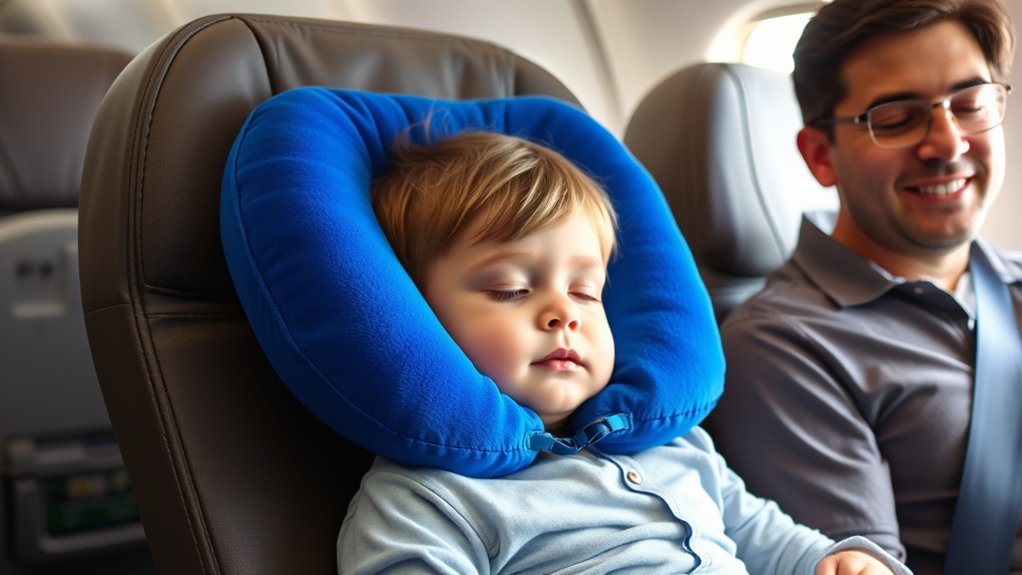
Selecting an appropriate travel pillow for your toddler directly impacts their comfort, spinal alignment, and breathing safety during transit. Standard airplane seats are designed for adults, often forcing young children into awkward, slouched sleeping positions. A purpose-built toddler travel pillow provides targeted neck support, stabilizing their disproportionately heavy head against sudden movements or turbulence.
Crucially, maintaining proper spinal and head alignment helps prevent positional asphyxia — a condition where a toddler’s chin slumps forward onto their chest, restricting their airway. High-density memory foam or cushioned chin supports cradle the lower jaw, holding the head in a neutral upright posture. Checking for official safety certifications also ensures the foam and fabric covers are free from toxic flame retardants, heavy metals, and harmful volatile organic compounds (VOCs).
Warning: According to guidance from the American Academy of Pediatrics (AAP), soft pillows, unattached cushions, and neck supports should never be used with infants and children under 24 months in any sleep setting due to suffocation and airway obstruction risks. Always supervise toddlers while sleeping in transit, whether in a car seat, harness, or airplane seat.
Key Safety Features in Toddler Travel Pillows
When evaluating travel pillows for your toddler, prioritize structural integrity, material non-toxicity, and adjustability rather than aesthetic appeal alone. Key safety and performance specifications include:
- CPC Certification: Ensure the manufacturer provides a Children’s Product Certificate confirming compliance with third-party laboratory testing for CPSIA lead, phthalates, and physical safety standards.
- Ergonomic Chin & Neck Support: Opt for high-density, slow-rebound memory foam that cradles the neck without applying excessive forward pressure behind the occiput (back of the head).
- Adjustable Buckles or Snaps: Integrated enclosure straps prevent the pillow from sliding out of position or slipping down during movement.
- Hypoallergenic, Washable Covers: Removable zippered plush covers allow for easy machine washing to eliminate airport germs, drool, and spilled beverages.
- Breathable Airflow Fabrics: Breathable mesh panels help regulate temperature, preventing overheating while sleeping on long-haul flights.
Note: Overly thick posterior cushioning can push your toddler’s head forward against the seat rest. Look for pillows featuring a thin back panel paired with thicker lateral (side) and anterior (chin) supports.
How to Use a Travel Pillow for Your Toddler
Proper pillow positioning is vital for both comfort and safety. A pillow that is installed loosely or incorrectly can exacerbate neck strain rather than relieve it.
Follow these operational best practices when fitting a travel pillow on your toddler:
- Check the Sizing Chart: Toddler neck sizes vary by age and build, so measure your child’s neck against the manufacturer’s size chart rather than assuming a one-size-fits-all fit — too tight can constrict, too loose won’t support.
- Position Thin Side Behind the Head: Place the thinnest section of the pillow directly behind the toddler’s neck so their head rests flat against the seatback.
- Secure Chin Support Underneath: Bring the side arms together under the jawline, securing the front closure to support the chin and prevent forward slumping.
- Verify Seatbelt or Harness Fit: Ensure the pillow does not interfere with the latching mechanism of the airplane seatbelt or FAA-approved child harness (CARES Restraint System).
- Store Hygienically: When not in use, compress the pillow into a dust-proof carry pouch to keep it clean during airport transit.
Essential Comfort and Safety Tips for Toddler Air Travel
Air travel with toddlers requires comprehensive planning beyond selecting the right neck cushion. Applying these air travel guidelines helps create a smooth, secure flight experience:
“Proper airway alignment and restraint compatibility are the two critical non-negotiables for young children sleeping during commercial flights.”
To maximize safety during air travel:
- Check Airline Rules on Inflatable Leg Rests: Inflatable footrest pillows can create a flat bed between seat rows, but airline policy has tightened. As of 2026, Delta has an outright ban on inflatable wedges, foot hammocks, and seat-extension devices, and United treats footrests as a prohibited “seat alteration.” Emirates and Turkish Airlines disallow them entirely, while some carriers such as British Airways permit specific certified brands for children. Rules are never permitted in exit rows or aisle seats, and devices must be stowed during taxi, takeoff, and landing regardless of carrier — always confirm current policy directly with your airline before you fly.
- Dress in Breathable Layers: Airplane cabins fluctuate in temperature. Pair a cooling travel pillow with soft, layerable cotton clothing to prevent sweating.
- Hydrate Regularly: Low cabin humidity causes dry nasal passages and throat irritation, making restful sleep difficult. Keep a spill-proof straw cup accessible.
- Pack It Where You Can Reach It: Keep the pillow in your child’s carry-on or a seat-back pocket rather than checked luggage, so it’s accessible for boarding and any layovers.
Pro Tip: Test the travel pillow at home 3–4 days before your trip. Let your toddler wear it during a movie or short car ride so they become accustomed to the feel before boarding the aircraft.
Top Toddler Travel Pillows: Our Recommendations
Selecting the best travel pillow depends on your child’s age, sleeping habits, and travel mode. Below are top-rated design categories evaluated for toddler safety and support:
- BCozzy Kids Chin Supporting Travel Pillow: Features an overlapping arm design that provides 360-degree support, preventing forward head bobbing for toddlers aged 2 to 8.
- Trunki Yondi Neck Pillow: Integrates hidden magnetic closures under the chin to create a supportive ring, making it well-suited for airplane seats and car travel.
- SSAWcasa Seatbelt Pillow Cushion: Attaches directly to a standard vehicle seatbelt strap, providing lateral head padding for road trips (not recommended for airplane seats lacking shoulder belts).
- Inflatable Leg Rest / Footrest Pillows: Fills the floor gap in front of the aircraft seat to create a flat sleeping surface. Note: Airline rules vary widely and are increasingly restrictive — verify with your carrier before purchasing for a flight.
At a Glance
| Recommended Age | 2 years and older |
| Typical Price Range | $15–$40 for neck pillows; $20–$50 for inflatable footrests |
| Materials to Look For | CPC-certified memory foam, breathable mesh, machine-washable cover |
| Best For | Long-haul flights, road trips, car seat naps (age 2+) |
Frequently Asked Questions
Can travel pillows be washed safely after use?
Yes, most modern toddler travel pillows feature removable machine-washable plush covers. Remove the internal memory foam core before washing, use a mild detergent on a gentle cycle, and air dry the cover to prevent shrinkage. Memory foam cores should only be spot cleaned with a damp cloth.
What age is appropriate for using a travel pillow?
Travel neck pillows are appropriate for children starting around age two (24 months), provided they have strong neck muscle control and can sit unassisted. Children under age two should never use neck pillows due to suffocation hazards and restricted airway risks.
Are inflatable travel pillows safe for toddlers?
Inflatable neck pillows are generally safe for older toddlers if properly sized, though memory foam offers superior support. Inflatable leg-rest cushion beds are only usable where the airline permits them (an increasing number now restrict or ban them), and any device must be deflated and stowed during taxi, takeoff, and landing.
How long can toddlers comfortably use a travel pillow?
Toddlers can comfortably use an ergonomic travel pillow for continuous nap durations of 1 to 3 hours during flight. Parents should monitor their child periodically to ensure the pillow remains properly aligned under the chin and does not press the head forward.
Do travel pillows come with a warranty or guarantee?
Reputable toddler travel pillow brands typically offer a 1-year limited warranty covering manufacturing defects, zipper failures, or seam tears. Always check the packaging or official manufacturer website for warranty registration details.
Conclusion
Equipping your toddler with a certified ergonomic travel pillow transforms long, exhausting transit hours into a comfortable, restful journey. By prioritizing CPC certification, non-toxic memory foam, thin back panels, and chin support, you safeguard your child’s airway and posture while flying. Keep current airline inflatable-device policies in mind, practice using the pillow at home beforehand, and look forward to smooth, stress-free travel on your next family adventure.
Sources
- U.S. Consumer Product Safety Commission (CPSC) — Children’s Product Certificate (CPC) guidance and safety testing standards.
- Federal Aviation Administration (FAA) — Official guidelines for flying with children, child restraint systems, and cabin safety.
- American Academy of Pediatrics (AAP) — HealthyChildren child travel safety recommendations and posture guidelines.
