
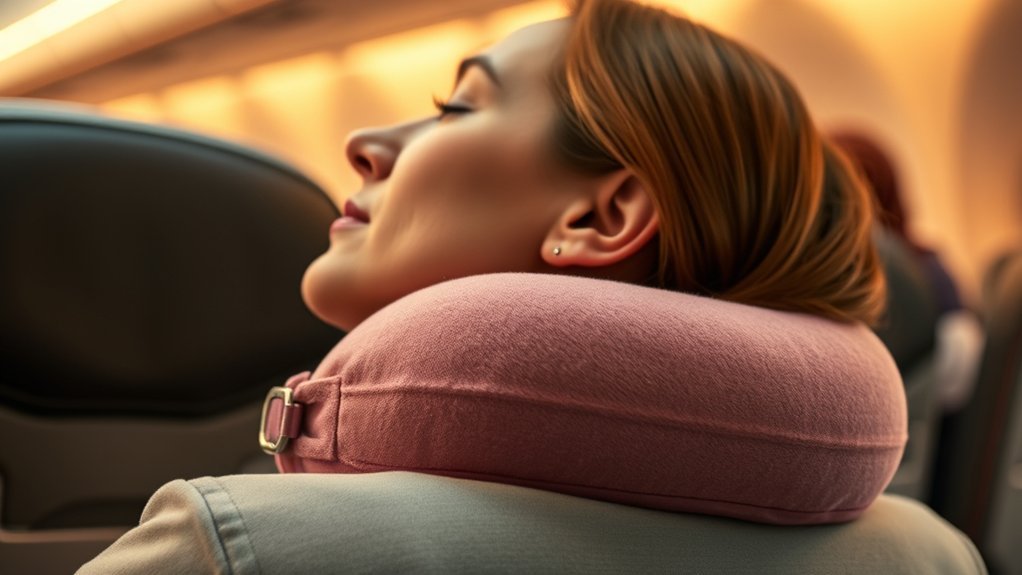
Last Updated on July 25, 2026 by Caleb Warren
Travel pillow chin straps are game-changing accessories for airplane sleep comfort, solving the frustrating issue of sudden head-dropping during flights. By stabilizing your lower jaw and providing 360-degree neck support, these integrated straps keep your mouth gently closed to encourage natural nasal breathing, eliminate dry mouth, and reduce posture-induced snoring. Whether you are a frequent flyer or preparing for an international long-haul flight, pairing an adjustable chin strap with a contoured travel pillow maintains neutral cervical spine alignment so you wake up rested and free from neck stiffness.
Quick Answer
A travel pillow chin strap wraps beneath your jaw to hold your head securely against a neck cushion. This prevents forward head drop (head bobbing) when your neck muscles relax during deep REM sleep upright, while keeping your mouth closed to encourage comfortable nasal breathing and prevent sore throat during flight.
Key Takeaways
- Stops Head Bobbing: Secures the lower jaw to eliminate sudden awakenings caused by forward cervical flexion during REM sleep.
- Promotes Nasal Airflow: Prevents open-mouth breathing, reducing flight-induced dry mouth and airway turbulence that causes heavy snoring.
- Protect Spinal Posture: Supports neutral head alignment to relieve tension on the trapezius and levator scapulae muscles.
- Customizable Tension: Modern micro-adjustable velcro and magnetic buckles allow tailored support for varying jawlines and seat angles.
Disclosure: As an Amazon Associate I earn from qualifying purchases. Some links on this page are affiliate links, at no extra cost to you.
Understanding Travel Pillow Chin Straps and Their Purpose
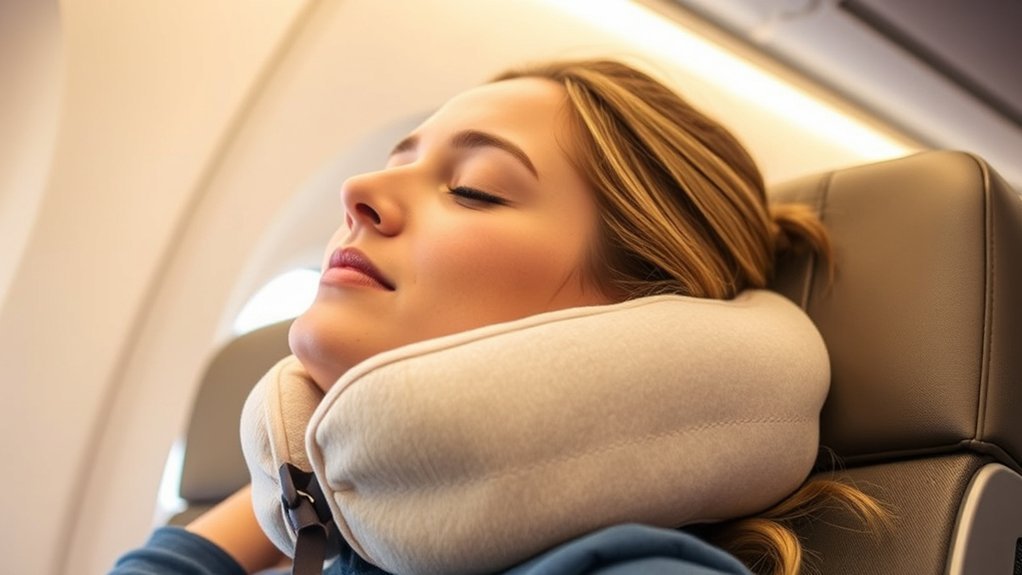
When sleeping in an upright economy airplane seat, your body naturally loses muscle tone as you transition into deeper stages of sleep. Without external support, your head involuntarily tilts forward or sags sideways—a phenomenon commonly called “head bobbing.” Travel pillow chin straps work by bridging the gap between your lower jaw (mandible) and the upper chest or pillow base, creating a supportive hammock that cradles your chin in place.
Unlike traditional U-shaped foam pillows that only surround the back and sides of the neck, chin strap systems provide anterior (front) support. According to sleep ergonomics research from the Sleep Foundation, maintaining an upright posture while sleeping requires continuous support across all head axes to prevent muscle strain and airway restriction.
At a Glance: Travel Pillow Chin Strap Features
| Primary Mechanism | Anterior jaw stabilization & chin cradle support |
| Best Used For | Long-haul flights, train journeys, upright passenger seating |
| Key Material Types | Breathable neoprene, high-density memory foam, plush fleece fleece |
| Comfort Impact | Prevents forward head drop, keeps mouth closed, relieves neck strain |
Top Comfort Benefits of Chin Straps for Travel
Adding anterior chin support delivers several key ergonomic improvements over standard travel cushions:
The ergonomic design of chin straps provides full 360-degree support, keeping your head anchored against your seat headrest. By customizing strap tension, you eliminate the micro-awakenings that happen every time your head falls forward. This stability minimizes strain on your cervical spine, allowing for deeper, uninterrupted sleep cycles even when sitting completely upright.
| Benefit | Biomechanical Impact |
|---|---|
| Customizable Tension | Adjusts to accommodate various jawlines, neck lengths, and facial shapes. |
| Head Stabilizing | Restricts forward and lateral cervical movement during air turbulence or seat changes. |
| Neck Strain Reduction | Offloads weight from the cervical vertebrae and surrounding neck musculature. |
| Sleep Continuity | Helps preserve slow-wave and REM sleep cycles by ending sudden head drops. |
The Impact of Chin Straps on Head and Neck Alignment
When you sleep upright without jaw support, your head slumps forward into severe cervical flexion. For every inch your head moves forward from neutral posture, its effective weight on your cervical spine increases by approximately 10 pounds. Over several hours of air travel, this biomechanical strain leads to severe neck stiffness and tension headaches.
“Maintaining neutral alignment of the cervical spine during upright rest reduces static muscle load on the trapezius muscles and prevents nerve compression caused by extreme forward head position.”
By holding the chin elevated and parallel to the floor, a travel strap helps preserve the natural curve (lordosis) of your neck. Medical insights published in the National Institutes of Health (NCBI) Digital Library indicate that stabilizing the mandible during upright sleep helps keep upper airways open, reducing postural airway narrowing.
Pro Tip: Recline your seat slightly (if permitted) and place a small lumbar support cushion behind your lower back before securing your chin strap. This combination maintains natural spinal curves from your lower back to your neck.
How Chin Straps Promote Nasal Breathing and Reduce Snoring
Airplane cabin air typically has a relative humidity level below 20%, which is significantly drier than indoor home environments. When your mouth drops open during sleep, fast-flowing dry air dehydrates your oral tissues, causing dry mouth, sore throat, and unpleasant breath upon waking.
- Nasal Airway Activation: Gentle pressure under the jaw keeps the lips sealed, encouraging your body to rely on nasal breathing. Nasal passages filter, warm, and humidify dry cabin air before it reaches your lungs.
- Vibration & Snoring Reduction: Open-mouth sleeping allows the tongue and soft palate to relax backward into the throat, narrowing the airway. A study from the Journal of Clinical Sleep Medicine notes that maintaining mouth closure stabilizes soft tissue structure, minimizing soft palate vibrations that trigger heavy snoring.
- Reduced Airway Turbulence: Stable mouth closure maintains uniform airway diameter, resulting in smoother airflow and quieter rest for both you and neighboring passengers.
Warning: Travel pillow chin straps are comfort devices designed for postural support. They are not medical treatments for obstructive sleep apnea (OSA). If you experience severe nighttime gasping or diagnosed sleep apnea, consult your physician or continue using prescribed CPAP therapy while traveling.
Adjustability Features for Personalized Comfort
Not all chin straps are constructed equally. Modern ergonomic designs feature advanced closure systems tailored to different facial structures and sleeping habits:
Quality travel pillows offer multi-point adjustment systems, letting you independently tune chin height, head support, and eye mask tension for custom comfort.
- Micro-Adjustable Velcro & Magnetic Latches: High-end travel pillows use low-profile velcro or quick-release magnetic buckles that allow fine tension tweaks without catching on hair or clothing.
- Contoured Jaw Cups: Ergonomically molded chin cups distribute pressure evenly along the underside of the mandible, preventing pinpoint pressure on sensitive facial nerves or jaw joints.
- Integrated Sleep Accessories: Many chin-strap systems feature attachable 3D contoured sleep masks that block out ambient light without putting pressure on your eyelids or eyelashes.
How to Pick the Perfect Chin Strap for Your Travel Pillow
To ensure a comfortable fit during long flights, evaluate these essential factors before purchasing:
- Material Breathability: Choose chin straps made from moisture-wicking neoprene, bamboo-derived fabrics, or breathable mesh lining to prevent heat build-up against your chin and neck.
- Pillow Compatibility: Check whether the strap is integrated directly into the travel pillow or designed as an add-on accessory. Integrated systems offer superior stability compared to universal add-ons.
- Washability & Hygiene: Flight environments expose travel gear to microbes. Select products with removable, machine-washable fabric covers for easy cleaning after your trips.
- Packability: Look for lightweight memory foam options that compress into small travel pouches without losing structural resilience.
What Other Options Exist for Travel Comfort?
While chin-strap travel pillows excel at head stabilization, building an effective travel sleep kit often involves complementary accessories:
- Inflatable Lumbar Cushions: Support the lower back curve to maintain neutral pelvic alignment and prevent mid-flight slouching.
- Ergonomic Neck Wraps & Scarf Pillows: Internal flex-rib supports that wrap around the neck as a lightweight alternative to memory foam cushions.
- Compression Socks: Encourage healthy blood circulation in the lower legs during extended sitting, reducing swelling and deep vein thrombosis risks.
Frequently Asked Questions
Can chin straps be used with any travel pillow?
Most chin straps perform best when built directly into a travel pillow system. However, standalone universal chin straps can be worn underneath standard U-shaped memory foam or inflatable neck pillows if fitted securely.
Are travel pillow chin straps machine washable?
Outer fabric covers and plush wraps are usually machine washable on a gentle cycle. Always remove internal memory foam cores or plastic stays before washing, and air-dry covers to prevent fabric shrinkage.
How do I find the correct chin strap size?
Measure around your jawline from beneath your chin to the back of your neck. Most adjustable travel pillow straps use elasticized bands and velcro closures that accommodate neck circumferences ranging from 11 to 19 inches.
Do chin straps cause jaw discomfort during flight sleep?
When adjusted correctly, a chin strap should apply light upward support rather than tight compression. If you experience jaw joint (TMJ) tightness or pressure, loosen the velcro tension slightly to allow gentle movement.
Can children use travel pillow chin straps safely?
Yes, older children can use child-sized travel pillows with chin straps. Always ensure the fit is snug yet comfortable, and supervise young travelers to verify that the strap does not restrict normal breathing or swallowing.
Conclusion
Incorporating a chin strap into your travel sleep setup solves the classic head-bobbing problem that hampers sleep in upright transit. By gently cradle-supporting your jaw, keeping your mouth sealed for healthy nasal breathing, and preserving neutral cervical alignment, these ergonomic straps make long-haul journeys significantly more restful. Selecting an adjustable, breathable travel pillow equipped with chin support ensures you arrive at your destination refreshed, relaxed, and ready to explore.
Sources
- Sleep Foundation — Ergonomic standards for upright sitting postures and travel sleep hygiene.
- National Institutes of Health (NCBI) — Biomechanical studies on cervical spine alignment and upper airway positioning.
- Journal of Clinical Sleep Medicine — Clinical evaluations of oral airway resistance, nasal breathing, and positional snoring.

