
Last Updated on September 10, 2026 by Daniel Globe
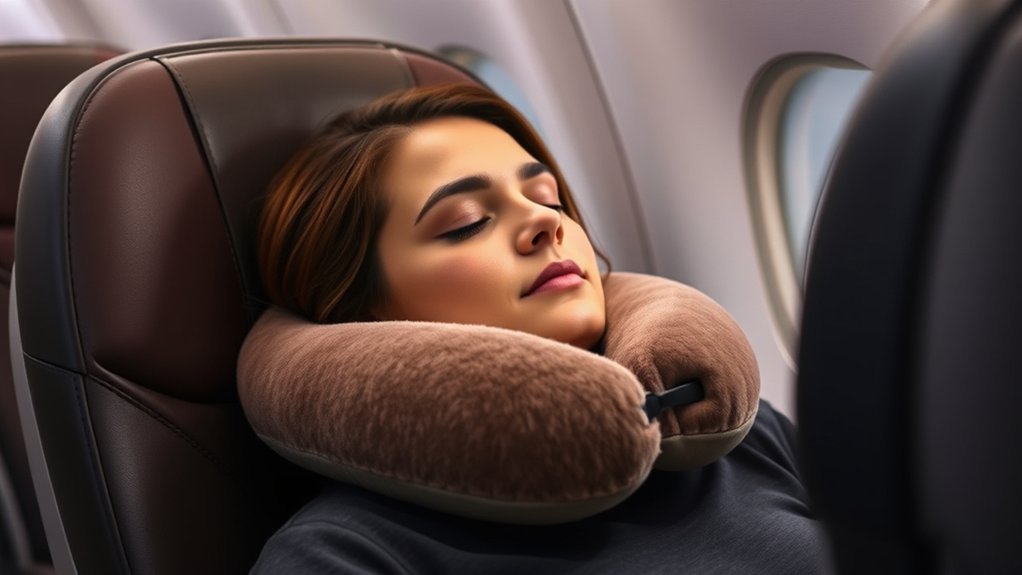
A travel pillow can reduce chin drop when it supports the front and sides of your head without pressing on your throat. The best setup depends on the pillow’s shape, your neck length, the seat headrest, and the direction your head usually falls. A proper fit should feel supportive while still letting you breathe, swallow, and move comfortably.
Quick Answer
To stop chin drop with a travel pillow, choose a design with firm front support, sit fully against the seat, and adjust the pillow until it limits forward head movement. It should fit snugly without pressing on your throat. Test your breathing, swallowing, and comfort before you fall asleep.
Key Takeaways
- The pillow should resist forward head movement, not force your chin tightly against your chest.
- Use the pillow in the orientation recommended for its design. Some U-shaped pillows work better with the opening behind your neck, while wrap-style pillows have a fixed direction.
- You should be able to breathe, swallow, speak, and turn your head without pressure across your throat.
- A travel pillow may improve comfort, but it is not a treatment for sleep apnea, chronic snoring, or persistent neck pain.
- Use sleep-positioning accessories only as a passenger, never while driving.
At a Glance
| Time Required | About 2 to 5 minutes for setup and fit testing |
| Difficulty | Easy, although you may need several adjustments |
| Tools Needed | Travel pillow, seat headrest, and an optional soft scarf or folded cloth |
| Cost | $0 if you already own a suitable pillow; otherwise, cost varies by design and material |
Disclosure: As an Amazon Associate I earn from qualifying purchases. Some links on this page are affiliate links, at no extra cost to you.
Understanding Chin Drop and Its Impact
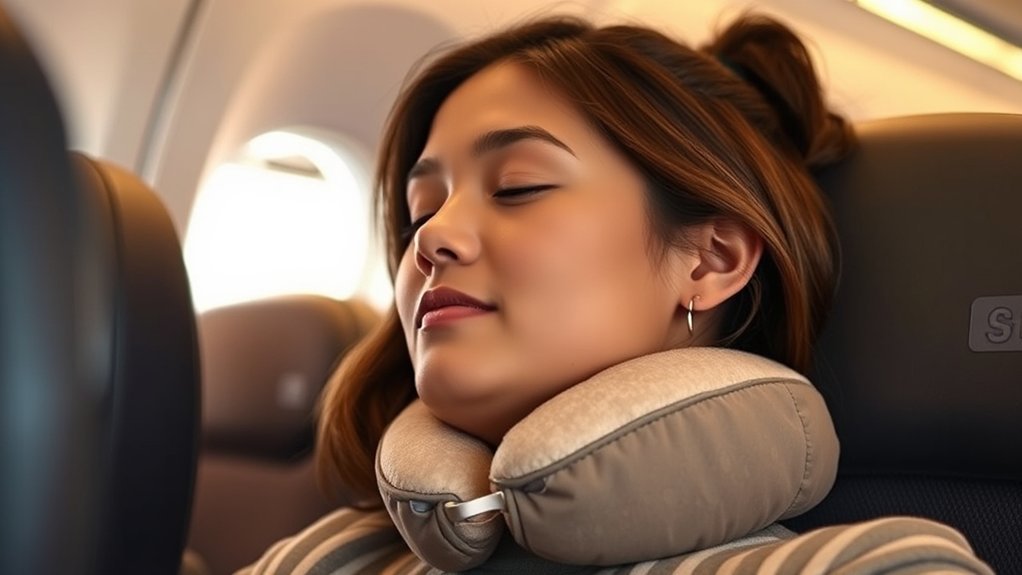
Chin drop happens when your head falls forward as your neck muscles relax during upright sleep. It is common in planes, trains, buses, and cars because the seat may not support your head in a neutral position.
Repeated forward bending can strain the muscles and joints around your neck. The Mayo Clinic recommends keeping your head centered over your spine and taking regular movement breaks during long periods of sitting or travel.
Head position can also affect the upper airway. Research involving people with suspected obstructive sleep apnea found that head flexion was associated with more severe breathing events during sleep. However, this does not prove that an ordinary travel pillow can prevent airway obstruction or treat sleep apnea.
The goal is to keep your head close to a neutral position, not to lock your neck in place or push your chin tightly toward your chest.
Warning: A travel pillow is not a treatment for sleep apnea. Talk with a healthcare professional if you have frequent loud snoring, gasping, witnessed breathing pauses, morning headaches, or unusual daytime sleepiness.
Essential Features to Look for in a Travel Pillow
A useful pillow should match the way your head moves. Some people need strong support under the chin, while others mainly need support along one side of the head. Comfort matters, but shape and fit are more important than softness alone.
Supportive Design Features
Look for a pillow that fills the gap between your upper chest, shoulders, neck, and jaw without pressing directly into your throat. The material should recover its shape after your head leans against it.
| Feature | How It Helps | What to Check |
|---|---|---|
| Firm front section | Limits forward head movement | It should support the jaw area without pressing on the throat |
| Raised side panels | Reduces side-to-side movement | Panels should not push into your ears or jaw joints |
| Adjustable strap or closure | Helps prevent the pillow from separating or slipping | The closure should not tighten as you move |
| Stable foam or inflatable chambers | Supports your head without collapsing completely | Avoid a height that forces your head forward |
Portability and Convenience
A travel pillow is more useful when you can carry and clean it easily. Consider these practical features:
- Compact storage: Choose a compressible, foldable, or inflatable design if bag space is limited.
- Secure attachment: A snap, loop, or storage bag can keep the pillow attached to your carry-on instead of taking up space inside it.
- Simple adjustment: You should be able to loosen or tighten the pillow while seated.
- Removable cover: A separate cover is usually easier to wash than the entire pillow.
Soft and Comfortable Materials
There is no ideal fabric percentage for every traveler. Choose a cover that feels comfortable against your skin and does not become excessively hot or damp.
| Material or Feature | Potential Benefit | Possible Limitation |
|---|---|---|
| Memory foam | Contours around the head and neck | Can feel warm, heavy, or bulky |
| Inflatable support | Easy to pack and adjustable | May feel firm or shift as air moves |
| Polyester cover | Durable and often easy to clean | Breathability varies by weave |
| Cotton-blend cover | Soft and comfortable against the skin | May absorb moisture and dry slowly |
| Mesh ventilation panels | May reduce heat buildup | May feel rough against sensitive skin |
How to Position Your Travel Pillow for Maximum Support
Correct positioning matters more than simply placing a pillow around your neck. Use the following steps before trying to sleep.
- Sit fully back in the seat. Move your hips and upper back against the seat instead of slouching forward.
- Center your head over your shoulders. Keep your face pointing forward and avoid starting with your chin already lowered.
- Adjust the seat headrest. If it has movable wings, bring them inward enough to reduce side movement without squeezing your head.
- Place the pillow in its intended direction. Follow the product instructions. With some traditional U-shaped pillows, placing the opening behind your neck gives the chin more support. Other designs should not be reversed.
- Close or tighten the pillow gently. Remove large gaps, but stop before the front section presses against your windpipe or makes swallowing difficult.
- Lean your head slowly. Test forward and side movement while you are still awake. The pillow should catch your head before your chin reaches your chest.
- Make small adjustments. Change the pillow height, closure, seat recline, or headrest position until your neck feels neutral.
Pro Tip: Set up the pillow before you become sleepy. It is much easier to notice pressure, gaps, and poor alignment while you are fully awake.
The 60-Second Travel Pillow Fit Test
Before resting, keep the pillow in place for at least one minute and check the following:
- You can take a full breath without pressure across the front of your neck.
- You can swallow normally.
- You can speak clearly.
- Your jaw and ears do not feel pinched.
- Your head does not get pushed forward by excess material behind your neck.
- Your chin does not fall onto your chest when you relax.
- You can turn your head enough to respond to instructions or an emergency.
If any check fails, loosen or reposition the pillow. Do not fall asleep with numbness, tingling, throat pressure, dizziness, or increasing pain.
Creating a Cozy Sleep Space on Planes
Your pillow works better when the rest of your body is supported. A poor seat position can cause your upper back to slide forward, which pulls your head down even when the pillow fits correctly.
Ideal Seat Selection
- Window seat: A window can provide side support, but use it only when you can lean without sharply bending your neck. Place a soft layer between your head and the wall if needed.
- Aisle or middle seat: Choose a pillow with higher side panels or a wrap design because there is no wall to lean against.
- Adjustable headrest: Move the headrest wings inward to reduce side movement before tightening your travel pillow.
- Seat recline: A small recline may reduce forward head movement, but follow crew instructions and avoid reclining suddenly into another passenger’s space.
Use Sleep Accessories for Light and Noise
An eye mask and earplugs or noise-reducing headphones may make it easier to rest by reducing light and sound. However, they do not support your chin or prevent your head from falling forward. Your pillow and seat position must provide the physical support.
Make sure large headphones do not push against raised pillow sides. That pressure can move the pillow, strain your jaw, or make the headphones uncomfortable.
Personal Comfort Adjustments
- Keep your shoulders relaxed instead of lifting them toward the pillow.
- Place a thin folded scarf in a small gap between the pillow and upper chest if needed, but never wrap it tightly across your throat.
- Avoid placing a thick cushion behind your neck if it pushes your entire head forward.
- Keep the airplane seat belt fastened while resting. The Federal Aviation Administration advises passengers to remain buckled because unexpected turbulence can occur.
- Change position and gently move your shoulders and neck during long journeys when it is safe to do so.
Essential Accessories for Your Travel Pillow
A few accessories can improve comfort, although only some provide physical support:
- Seat-headrest wings: These reduce side movement and work directly with the pillow.
- Soft scarf or folded cloth: This can fill a small gap, but it should never be tied tightly around the neck.
- Eye mask: This blocks light but does not stop chin drop.
- Earplugs or noise-reducing headphones: These reduce sound but do not support the head.
- Removable pillow cover: This makes regular cleaning easier.
- Storage pouch: This keeps the pillow clean when it is attached to luggage.
Note: More accessories do not always mean better support. Thick scarves, large headphones, hood strings, and bulky clothing can change the pillow’s fit or create pressure points.
Avoid These Common Travel Pillow Mistakes
- Wearing the pillow too loosely: A large front gap lets your head build momentum before the pillow catches it.
- Tightening it across the throat: The pillow should support the jaw and sides of the head without restricting breathing or swallowing.
- Using too much padding behind the neck: This pushes your head forward and can make chin drop worse.
- Ignoring the seat position: A pillow cannot fully correct slumping when your hips and upper back have slid away from the seat.
- Choosing softness over structure: A very soft pillow may feel pleasant but collapse when your head becomes heavy during sleep.
- Assuming one orientation works for every pillow: Follow the design instructions and test both comfort and stability.
- Using it while driving: A driver must remain alert and able to see and move freely. The National Highway Traffic Safety Administration advises that driving requires full attention.
How to Choose the Right Travel Pillow for Your Sleeping Style
Choose a pillow based on the direction your head moves, not simply whether you consider yourself a back or side sleeper at home. Sleeping upright is different from sleeping in a bed.
| Pillow Design | Best Suited For | Main Limitation |
|---|---|---|
| U-shaped pillow with strong front support | People whose head falls mainly forward | Thick rear sections may push the head forward |
| High-sided or contoured pillow | People whose head moves forward and sideways | May press against ears or large headphones |
| Structured wrap or side brace | People who prefer to lean to one side | May require switching sides during a long trip |
| Inflatable pillow | Travelers who need compact storage and adjustable firmness | Overinflation can feel hard and force poor alignment |
| Memory-foam pillow | Travelers who prefer cushioning and slow contouring | Often warmer and bulkier than inflatable options |
Check the return policy when buying a pillow because neck length, shoulder width, jaw shape, and seat design affect the fit. A well-reviewed pillow can still be unsuitable for your body.
Troubleshooting Travel Pillow Chin Drop
Your Chin Still Falls Forward
- Tighten the front closure slightly.
- Check whether a thick section behind your neck is pushing your head forward.
- Raise or adjust the seat headrest.
- Sit back fully and use a small recline when permitted.
- Try a design with firmer front support if the pillow collapses under your head.
The Pillow Hurts Your Jaw or Ears
- Loosen the pillow or lower its position.
- Move seams, toggles, and straps away from pressure points.
- Remove bulky headphones that are being pushed inward.
- Choose lower side panels if your neck is short.
The Pillow Pushes Your Head Forward
This usually means there is too much material between the back of your neck and the seat. Rotate the pillow if its design permits, reduce inflation, or choose a model with a thinner rear section.
You Feel Hot or Sweaty
- Use a thin, breathable cover.
- Loosen scarves and hoods around your neck.
- Choose ventilated foam or an inflatable design.
- Wash the removable cover according to its label to remove oils and residue.
You Wake With Neck Pain
Stop using the setup if the pain is sharp, increasing, or accompanied by numbness, weakness, tingling, headache, or pain that spreads into an arm. Persistent or severe symptoms should be evaluated by a healthcare professional.
When a Travel Pillow Is Not Enough
A pillow may reduce ordinary forward nodding, but it cannot address every cause of poor sleep, breathing difficulty, or neck pain.
Contact a healthcare professional if you or another person notices frequent loud snoring, gasping, choking sounds, or pauses in breathing. The National Heart, Lung, and Blood Institute identifies these as possible symptoms of sleep apnea.
You should also seek medical advice before relying on a travel pillow if you have:
- A diagnosed neck or spine condition
- A recent collision, fall, or neck injury
- Persistent neck pain
- Weakness, numbness, or tingling
- Difficulty swallowing
- A diagnosed breathing disorder
Warning: Do not use a travel pillow as an infant sleep pillow or positioning device. The U.S. Consumer Product Safety Commission advises keeping pillows and other soft objects out of an infant’s sleep area because they can create a suffocation risk.
Frequently Asked Questions
Can I use any travel pillow to prevent chin drop?
No. A soft pillow with little front support may collapse when your head relaxes. Look for a design that matches the direction your head falls and test it while seated before traveling.
How tight should the travel pillow fit around my neck?
It should be snug enough to remove large gaps but loose enough for normal breathing, swallowing, speaking, and head movement. Loosen or remove it if you feel throat pressure, dizziness, numbness, or pain.
Should the pillow touch the front of my throat?
The pillow may rest lightly near the front of your neck, but it should not press against your windpipe or make swallowing difficult. Support should come mainly from the jaw area, upper chest, and sides of the head.
Is it safe to use a travel pillow while driving?
Do not use a travel pillow to prepare for sleep while driving. It may restrict movement or encourage drowsiness. These positioning steps are for passengers who can rest without controlling the vehicle.
Will a travel pillow help with neck pain?
A properly fitted pillow may reduce strain caused by unsupported head movement, but it cannot treat every cause of neck pain. Stop using it if discomfort increases, and seek medical advice for severe, persistent, or spreading pain.
Can a travel pillow treat snoring or sleep apnea?
No. It may reduce forward head flexion, but an ordinary travel pillow is not a diagnosed treatment for snoring or obstructive sleep apnea. Speak with a healthcare professional if you have breathing pauses, gasping, loud snoring, or daytime sleepiness.
Can I wash my travel pillow without damaging it?
Check the care label first. A removable fabric cover may be machine washable even when the foam core is not. Memory foam commonly requires gentle spot cleaning and complete air drying, while inflatable pillows may need hand cleaning.
Sources
- PubMed: Influence of Head Flexion and Rotation on Obstructive Sleep Apnea Severity – supports the discussion of head flexion and airway-related breathing events.
- National Heart, Lung, and Blood Institute: Sleep Apnea Symptoms – supports the warning signs that require medical evaluation.
- Mayo Clinic: Neck Pain Symptoms and Causes – supports neutral head alignment, good posture, and movement during long periods of sitting.
- Federal Aviation Administration: Turbulence Safety – supports keeping the seat belt fastened during flight.
- National Highway Traffic Safety Administration: Distracted Driving – supports the passenger-only warning for sleep-positioning accessories.
- U.S. Consumer Product Safety Commission: Safe Sleep – supports the warning against using pillows in an infant’s sleep area.
Conclusion
To reduce chin drop, start with a pillow that provides enough front and side support for your body and seat. Sit back fully, position the pillow according to its design, and adjust it until your head stays close to neutral. Before sleeping, confirm that you can breathe, swallow, speak, and move comfortably.
A travel pillow can improve support, but it cannot guarantee an open airway, cure snoring, or treat persistent neck pain. Stop using any setup that causes throat pressure, numbness, dizziness, or increasing discomfort, and seek medical advice when breathing or pain symptoms continue.
