
Last Updated on September 10, 2026 by Daniel Globe
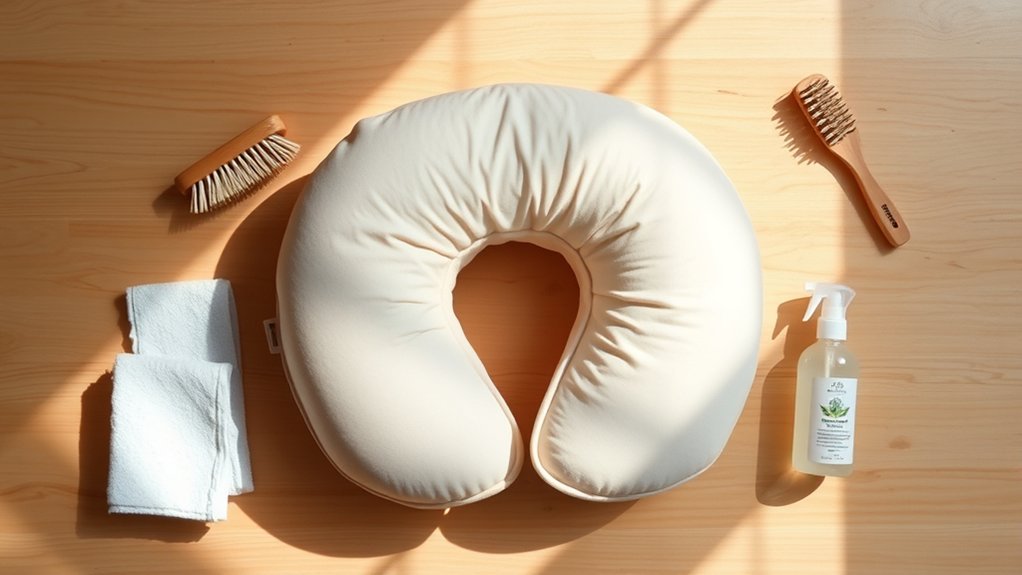
To guarantee your travel pillow stays fresh and comfortable, clean it every 2–3 months or after each trip. Check the care label for washing instructions—remove covers first, then machine wash fabric covers on a gentle cycle. If your pillow core is made from memory foam, spot clean with mild soap instead. Always air dry completely, fluffing periodically to maintain shape and comfort.
Quick Answer
To clean a travel pillow, first unzip and machine wash the outer cover in cold water on a gentle cycle. For polyester fill or inflatable pillows, machine or hand wash according to label directions. For solid memory foam cores, spot clean with a damp cloth and mild detergent—never submerge memory foam in water or place it in a dryer.
Key Takeaways
- Wash removable travel pillow covers after every major trip to eliminate facial oils, sweat, and allergens.
- Never machine wash or fully submerge solid memory foam cores; waterlogging breaks down the foam cell structure.
- Allow all travel pillows to air dry for up to 24 hours before packing to prevent mold and mildew growth.
- Use a protective travel cover and disinfect between washings using fabric-safe sprays or antibacterial wipes.
At a Glance
| Time Required | 20–30 minutes active cleaning; 24 hours air drying |
| Difficulty | Beginner |
| Tools Needed | Mild detergent, microfiber cloth, baking soda, laundry mesh bag |
| Cost | Under $5 (household supplies) |
Disclosure: As an Amazon Associate I earn from qualifying purchases. Some links on this page are affiliate links, at no extra cost to you.
The Importance of Cleaning Your Travel Pillow
Cleaning your travel pillow isn’t just a good idea; it’s essential for a healthy and comfortable journey. Over time, your pillow collects sweat, body oils, dead skin cells, and cabin bacteria that can lead to skin breakouts and odors. By washing it regularly, you gain clear hygiene benefits, like reducing allergens and odors, ensuring your travel experience remains pleasant.
Proper maintenance also prevents material degradation and extends your pillow’s lifespan. Adding a simple cleaning routine to your travel packing checklist ensures your gear stays sanitary for every trip.
How Often Should You Clean Your Travel Pillow for Optimal Hygiene?
Maintaining the cleanliness of your travel pillow is key to ensuring proper hygiene. Follow these guidelines based on usage frequency:
- Removable Covers: Wash after every trip or every 2–4 weeks if used daily.
- Whole Pillow Core (Polyester/Inflatable): Wash every 2–3 months depending on travel frequency.
- Disinfection Sweeps: Wipe down or spray with a fabric-safe sanitizer between transit legs.
- Routine Inspection: Inspect your pillow monthly for structural wear, seam damage, or persistent odors. Plan to replace travel pillows every 2–3 years for optimal support.
Types of Travel Pillow Materials and Their Care Needs
Different materials require specific cleaning methods. Applying the wrong technique can ruin memory foam or damage inflatable seams.
Memory Foam Maintenance Tips
Warning: Never submerge solid memory foam in water or place it inside a washing machine or dryer. Agitation tears the foam matrix, and excess water leads to deep mold growth.
To clean a memory foam travel pillow core:
- Unzip and remove the outer fabric cover. Machine wash the cover according to its label.
- Spot clean the foam core using a damp microfiber cloth dipped in lukewarm water and mild liquid detergent.
- To eliminate odor, sprinkle baking soda over the surface, let sit for 20–30 minutes, then vacuum thoroughly using a clean brush attachment.
- Allow the foam core to air dry completely in a well-ventilated area away from direct sunlight.
Polyester Fill Care Guidelines
Polyester fill pillows are durable and lightweight. Most polyester fill travel pillows can be safely machine washed:
- Use a gentle cycle with cool or lukewarm water and a mild detergent. Avoid hot water, which can melt synthetic fibers.
- Wash alongside a towel to balance the washing machine drum.
- Tumble dry on low heat with wool dryer balls to restore loft, or air dry completely.
Inflatable Pillow Cleaning Steps
Inflatable pillows feature vinyl, TPU, or laminated fabric exteriors that clean quickly by hand:
| Cleaning Step | Description |
|---|---|
| Wipe Down | Wipe exterior surfaces with a damp cloth and mild soapy water. |
| Inflate Prior to Cleaning | Keep the pillow fully inflated while cleaning to clear all fabric folds. |
| Hand-Rinse | Rinse thoroughly with a damp rag to remove soap residue. Avoid valve exposure to excess liquid. |
| Air Dry | Hang or lay flat to air dry completely before deflating and storing. |
Microbead Pillow Care
Microbead travel pillows filled with polystyrene beads require gentle hand handling. Place the pillow in a sealed mesh laundry bag if machine washing on a delicate cycle, or hand wash in a sink with cool water. Always air dry microbead pillows; dryer heat melts polystyrene beads.
How to Machine Wash Your Travel Pillow: A Step-by-Step Guide
If your pillow label explicitly permits machine washing (common for polyester fill and removable fabric covers), follow these steps:
- Inspect and Prep: Remove external covers, plastic clips, or interior foam inserts. Close all zippers and velcro closures.
- Use a Laundry Bag: Place the pillow or cover inside a mesh laundry bag to prevent snagging.
- Set Washing Machine Cycles: Select the delicate or gentle cycle with cold or lukewarm water. Add a small amount of mild liquid detergent. Do not use bleach or fabric softeners.
- Rinse Cycle: Run an extra rinse cycle to eliminate remaining detergent residues.
- Drying: Air dry flat or tumble dry on air-only low heat if permitted by the care label.
Effective Hand-Washing Techniques for Travel Pillows
Hand-washing provides a gentle alternative for delicate fabrics and fiberfill pillows.
Soaking In Soapy Water
Fill a clean basin or sink with lukewarm water and add 1 teaspoon of mild liquid detergent. Submerge washable fiberfill pillows or removable covers and soak for 15–20 minutes. Gently compress the material to work soapy water through the fibers without wringing or twisting harsh fabrics.
Rinsing Thoroughly With Water
Drain the soapy water and refill the basin with clean, cold water. Press down on the pillow repeatedly until no soap suds remain. Residual detergent residue can cause skin irritation or attract fresh dirt during travel.
Air Drying Completely Before Use
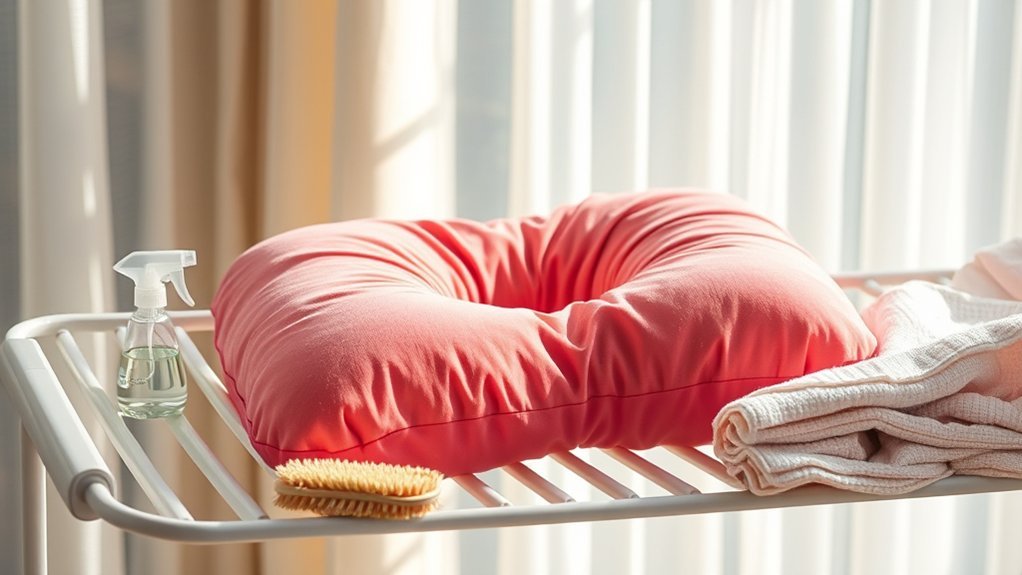
Press excess water out of the pillow using two clean, dry towels. Lay the pillow flat on a drying rack in a well-ventilated room. Allow up to 24 hours to dry completely prior to packing.
Pro Tip: Place a running desk fan near your drying rack to accelerate airflow around the pillow core and cut drying time in half.
Quick Tips for Disinfecting Your Travel Pillow Between Washings
Maintain hygiene on long transit itineraries using quick spot-cleaning techniques:
- Fabric Sanitizing Sprays: Mist fabric surfaces with an alcohol-free sanitizing spray designed for textiles. Allow it to air dry fully.
- Antibacterial Wipes: Wipe down outer cover surfaces and inflatable valves after airport security checks or flights.
- Spot Treat Stains: Apply a mild detergent solution to spots immediately. Dab gently with a damp cloth—avoid harsh scrubbing.
Tips for Air-Drying and Maintaining Pillow Shape
Proper drying prevents fiber clumping and structural distortion.
Fluff During Drying
Every few hours during the drying cycle, massage and fluff fiberfill and down-alternative travel pillows. Redistribution of filling prevents lumping and ensures uniform air circulation throughout the core.
Avoid Direct Sunlight
Avoid leaving memory foam cores or synthetic fabrics under intense direct sunlight. High ultraviolet exposure degrades memory foam structures and causes fabric discoloration.
When to Replace Your Travel Pillow for Hygiene and Comfort
Replace your travel pillow when you observe any of the following signs:
- Persistent Odors or Stains: Discoloration or smells that remain after washing indicate deep-seated bacterial accumulation.
- Loss of Support: If memory foam fails to rebound or fiberfill remains flat and lumpy, neck support is compromised.
- Physical Wear: Fraying seams, cracking vinyl valves, or compromised zippers warrant immediate replacement.
Best Practices for Storing Your Travel Pillow
Store your travel pillow properly to preserve its shape and hygiene between trips:
- Verify the pillow is 100% dry before placing it into storage.
- Store in a breathable cotton storage bag rather than airtight plastic bags to prevent moisture trapping.
- Avoid keeping memory foam continuously compressed inside travel stuff sacks for extended periods. Unroll foam cores during off-season storage.
- Keep in a cool, dry closet away from direct heat sources and sunlight.
Enhance Pillow Hygiene With Protective Covers
Using a removable, washable protective cover provides an effective defense against travel grime:
- Simplified Cleaning: Removable zippered covers wash easily in standard laundry loads.
- Barrier Protection: Protective covers block sweat, hair oils, and makeup from soaking into internal memory foam or fiber cores.
- Water-Resistant Options: Water-resistant fabrics protect against beverage spills during transit.
Frequently Asked Questions
Can I use fabric softener on my travel pillow?
It is best to avoid fabric softeners. Softeners leave a chemical coating on synthetic fibers and memory foam fabrics, reducing breathability and moisture-wicking properties.
How do I remove stubborn stains from my travel pillow?
Dab a mixture of mild detergent and cold water directly onto the stain using a clean cloth. For oil or sweat stains, apply a paste of baking soda and water, let sit for 15 minutes, then wipe clean with a damp rag.
Is it safe to dry my travel pillow in a dryer?
Polyester fill pillows can generally be tumble dried on low heat. However, memory foam, latex, and inflatable pillows should never go into a dryer due to heat damage risks.
Can I use bleach to clean my travel pillow?
No, do not use chlorine bleach on travel pillows. Bleach damages synthetic fabric fibers and degrades memory foam materials. Use mild laundry detergents or diluted oxygen-based cleaners instead.
What should I do if my travel pillow smells bad?
Sprinkle baking soda over the dry pillow surface, let it absorb odors for 30 minutes, and vacuum it off. Wash removable covers in warm water with mild detergent and allow the core to air dry in a well-ventilated area.
Conclusion
In conclusion, staying savvy about your travel pillow’s care can greatly boost its hygiene and longevity. By regularly washing, wisely storing, and utilizing protective covers, you’ll guarantee your pillow remains pristine and plush. Remember, a clean travel companion not only enhances comfort but also protects your health. Care for your travel pillow properly, and it will reward you with restful journeys and rejuvenating sleep wherever you roam!
Sources
- American Cleaning Institute — Guidelines for safe textile cleaning and laundry practices.
- Centers for Disease Control and Prevention (CDC) — Hygiene and sanitation recommendations for personal travel items.
- Sleep Foundation — Maintenance standards and care techniques for memory foam and synthetic pillows.

