
Last Updated on September 11, 2026 by Daniel Globe
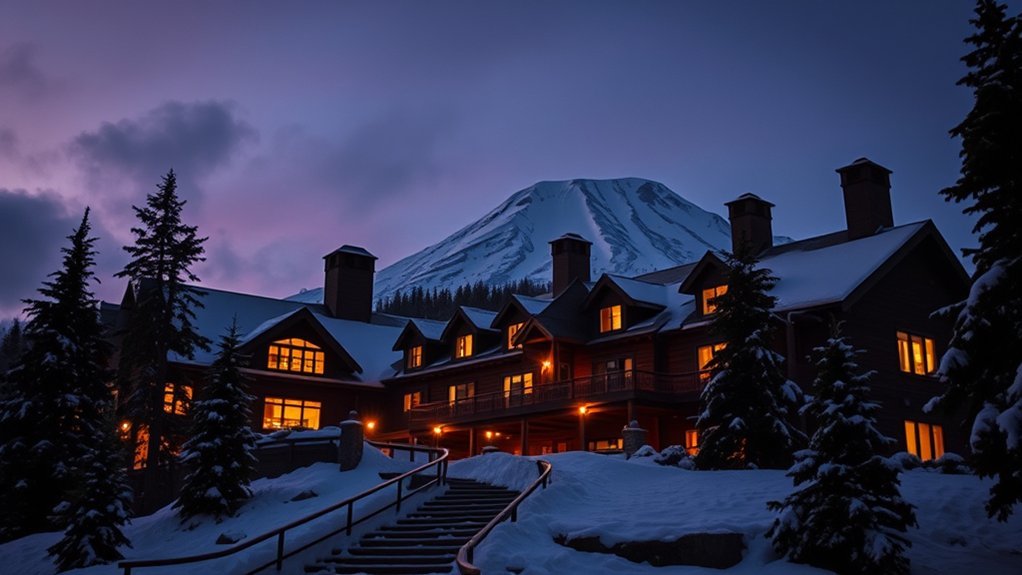
Timberline Lodge is a historic mountain lodge on the south slope of Mount Hood in Oregon. Its stone-and-timber exterior supplied the most recognizable views of the fictional Overlook Hotel in Stanley Kubrick’s The Shining. The real lodge, however, is a welcoming year-round destination where you can explore WPA craftsmanship, stay overnight, dine, ski, hike, and enjoy seasonal mountain activities.
Quick Answer
Timberline Lodge supplied exterior establishing shots of the Overlook Hotel in The Shining. The movie was not filmed inside the real lodge. Most interior scenes were created on sets at Elstree Studios in England, while several interior designs drew inspiration from Yosemite’s Ahwahnee hotel.
Key Takeaways
- Timberline Lodge sits at about 6,000 feet on Mount Hood, roughly an hour or more from Portland depending on traffic and weather.
- Kubrick used the lodge’s exterior for the Overlook Hotel, but the main interior scenes were filmed on studio sets in England.
- The lodge was built during the Great Depression by WPA workers and was designated a National Historic Landmark in 1977.
- Room 237 does not exist at Timberline. The real Room 217 is the lodge room associated with the movie’s room-number story.
- Visitors can explore public areas and a self-guided art tour, but weather, tours, lifts, restaurants, and mountain activities change by season.
Disclosure: As an Amazon Associate I earn from qualifying purchases. Some links on this page are affiliate links, at no extra cost to you.
Where Is Timberline Lodge?
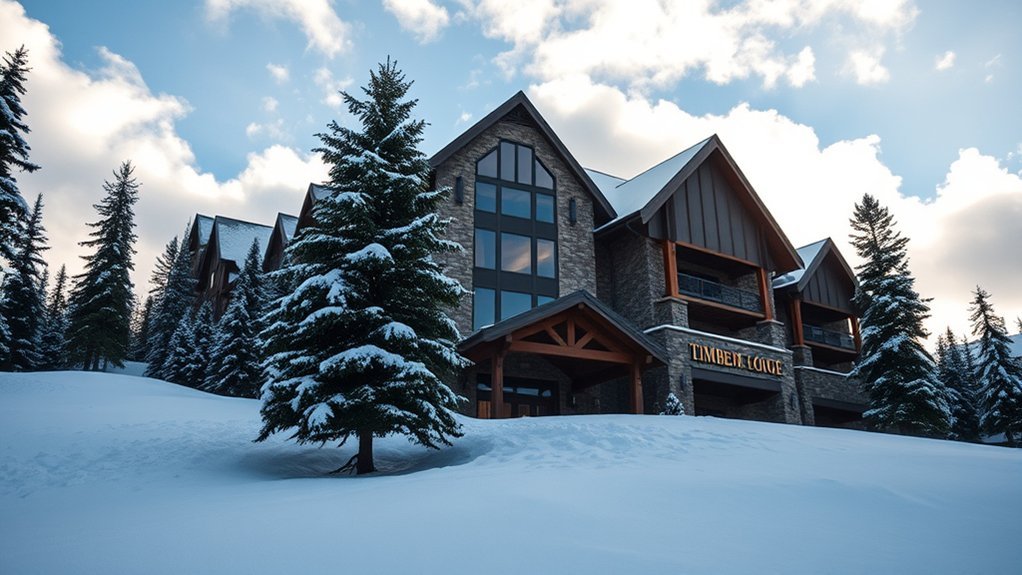
Timberline Lodge stands at an elevation of about 6,000 feet on the south slope of Mount Hood in Clackamas County, Oregon. It is inside Mount Hood National Forest, about six miles uphill from Government Camp and just over an hour from Portland under favorable road conditions.
The lodge is still used for its original purpose as a mountain retreat and recreation base. You do not normally need to book a hotel room to enter its public areas during public visiting hours, although private guest hallways, events, and employee spaces are restricted.
| Location | South slope of Mount Hood, Oregon |
| Elevation | About 6,000 feet |
| Construction | Built mainly in 1936–1937; dedicated in 1937 and opened to the public in 1938 |
| Historic status | National Register of Historic Places, 1973; National Historic Landmark, 1977 |
| Role in The Shining | Exterior establishing shots of the Overlook Hotel |
Timberline Lodge was added to the National Register of Historic Places in 1973. It became a National Historic Landmark in 1977 because of its architectural, artistic, and recreational importance.
Why Timberline Lodge Stood In for the Overlook
Timberline Lodge gave Kubrick’s fictional hotel an exterior that looked grand, remote, and exposed to severe mountain weather. Its broad stone base, heavy timber construction, steep rooflines, central headhouse, and Mount Hood setting made it convincing as an isolated resort.
Mountain Exterior Appeal
The lodge appears to grow out of the mountain because its builders used large stones, heavy wood, steep roofs, and earth-toned materials. Snow can cover the surrounding landscape and reduce visible signs of nearby development, strengthening the sense of isolation seen in the movie.
| Feature | Visual Effect in the Film |
|---|---|
| Stone and heavy timber | Makes the building look permanent and tied to the mountain |
| Six-sided headhouse | Creates a recognizable and unusual central shape |
| Approximately 92-foot chimney | Strengthens the building’s tall, imposing silhouette |
| High-alpine snow | Makes the setting appear cold, exposed, and difficult to leave |
The central andesite chimney is one of the lodge’s defining features. Timberline’s official art-tour material describes it as approximately 92 feet tall and about 800,000 pounds.
Kubrick’s Perfect Match
The exterior worked because it communicated the Overlook’s scale before the audience entered the fictional hotel. Kubrick did not need Timberline’s real interior to match the story. He needed a memorable outside view that could establish a remote mountain resort within seconds.
A second-unit crew filmed Timberline’s exterior. The opening drive through the mountains was filmed in Montana, while most principal photography took place at Elstree Studios in England. That mixture of real landscapes and large studio sets created the Overlook seen on screen.
How Timberline Lodge Was Built
Timberline Lodge was a major Works Progress Administration project created during the Great Depression. Construction began in 1936, President Franklin D. Roosevelt dedicated the lodge on September 28, 1937, and it opened to the public in 1938.
Hundreds of builders, craftspeople, artists, and laborers contributed to the project. Historical WPA accounts commonly place its construction cost at about $695,730, with most of the spending directed toward labor. Period accounts report hourly wages ranging from about $0.55 for unskilled labor to $0.90 for skilled trades.
The project used stone gathered near the site and several types of regional wood. Workers also reused available materials. Old utility poles became carved stair posts, discarded railroad rails were reshaped into ironwork, and other reclaimed materials became furnishings and decorations.
The central six-sided headhouse is about 60 feet across. Its massive chimney rises through the center, while two unequal wings contain guest rooms, dining areas, and other facilities. You can explore detailed historical photographs and building records in the Library of Congress Historic American Buildings Survey.
Timberline Lodge is not simply a movie location. It is one of the largest and most complete surviving examples of Depression-era public architecture and craftsmanship in Oregon.
What Makes Timberline Lodge’s Design Stand Out
Timberline’s design combines the rustic architecture associated with early national-park lodges and a regional style its designers called Cascadian. The building uses local stone, large timbers, handcrafted ironwork, steep rooflines, and shapes inspired by Mount Hood’s environment.
Rustic Cascadian Style
The lodge was designed to appear connected to its setting rather than placed on top of it. Boulders form much of the lower exterior, while timber walls and cedar-shake roofs rise above them. The steep roofs help manage heavy mountain snow.
Inside, the six-sided main lobby repeats the building’s central geometry. Large beams radiate above the room, and the stone chimney contains multiple fireplaces. Original and recreated furnishings use similar hexagonal shapes, heavy wood, iron, and woven textiles.
Historic Artful Details
Artists working through federal art programs produced paintings, murals, carvings, metalwork, textiles, furniture, and mosaics for the lodge. These pieces were designed as part of the building rather than added later as ordinary decoration.
Some carvings and decorative patterns were described in the 1930s as Indigenous or “Indian” motifs. Modern historical accounts note that Native communities were not documented as participants in choosing those motifs. They are best understood as examples of the period’s design assumptions, not as authoritative representations of local tribal cultures. The Oregon Encyclopedia’s history of Timberline Lodge provides more context.
One of the easiest ways to study the craftsmanship is through Timberline’s self-guided art tour. It identifies notable wood, stone, iron, textile, painting, mosaic, and furniture details throughout public areas.
Inside Timberline Lodge: Rooms and Dining
Timberline’s real interior is warmer, smaller, and more intimate than the enormous fictional spaces seen in The Shining. The historic lodge has 70 guest rooms, including standard lodge rooms and several chalet-style bunk-room categories.
Rooms differ in size and layout because they fit within a historic building. Depending on the category, a room may include a queen or king bed, twin beds, a fireplace, mountain views, or space for several guests. Chalet rooms use bunk-style arrangements for groups. Current configurations and accessibility details are listed on the official rooms and chalets page.
Note: Room 217 is a real guest room and is frequently requested because of the movie’s room-number story. Room 237, the number used in Kubrick’s film, does not exist at Timberline.
Dining options include the Cascade Dining Room, Ram’s Head Bar, Blue Ox Bar, Y’Bar, and seasonal mountain outlets. Mt. Hood Brewing Co. craft ales are also served at several locations. Menus and operating hours change, so check Timberline’s current dining page before planning a specific meal.
Products Worth Considering

Woodland Bear Wall Art: our woodland bear wall art is a unique piece of cabin wall decor that would stand out in your home; Featuring cute bear set against iron forest, this art piece instantly adds a touch of wilderness to any interior with its natural black, wood color tones

Majestic Wilderness Design:Features a breathtaking mountain landscape with a tranquil forest and three graceful deer. This detailed scene captures the serene beauty of nature, creating a stunning focal point that brings the peacefulness of the wilderness into your home.
Skiing and Year-Round Activities
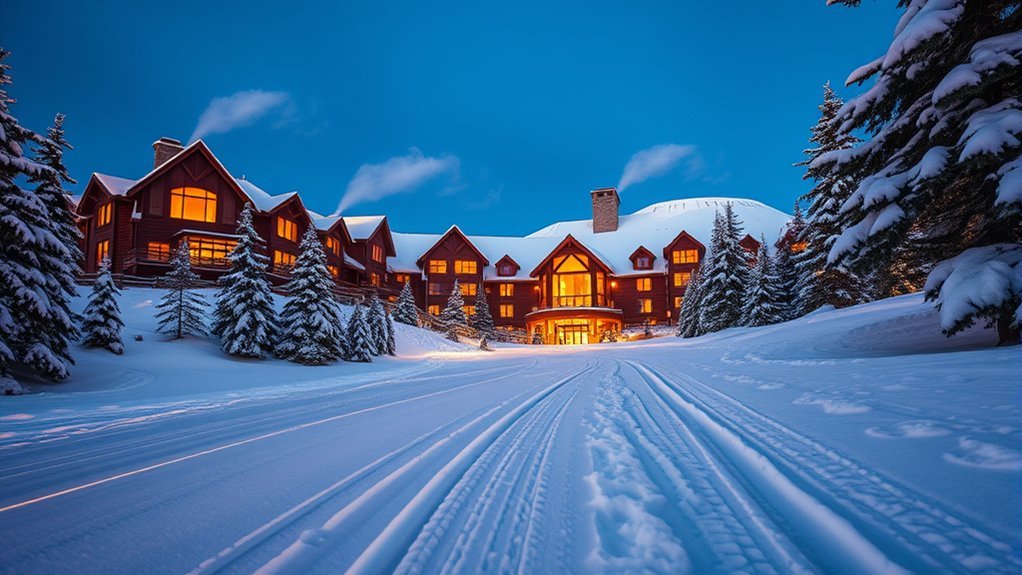
Timberline is known for its long ski and snowboard season. Its high elevation and access to the Palmer Snowfield often allow operations to continue later than at most North American ski areas. Exact opening and closing dates depend on snow, wind, visibility, maintenance, and other mountain conditions.
The Palmer Express serves upper-mountain terrain during suitable spring and summer conditions. It does not normally operate through the harshest winter periods because ice, wind, and heavy snow make the exposed lift difficult to maintain.
Timberline’s operator acquired Summit Ski Area in Government Camp in 2018 and renamed it Summit Pass. In 2021, the permit area was expanded to connect Summit Pass and Timberline. This created a possible operating vertical of about 4,540 feet from the upper mountain to Government Camp.
The full vertical is not served by one continuous chairlift. Depending on the season and operating plan, access may involve lifts, snowcats, downhill trails, and a resort shuttle. Check the official skiing and snowboarding information before expecting a top-to-bottom run.
Warm-season activities can include hiking, mountain biking, scenic lift rides, and summer skiing or snowboarding. Timberline’s lift-accessed bike park opened in 2019. Availability changes with snowmelt, trail conditions, construction, fire restrictions, and weather.
Where Was The Shining Filmed at Timberline Lodge?
Timberline Lodge appears in exterior establishing shots of the Overlook Hotel. The camera shows the building against Mount Hood, helping the audience believe that the fictional hotel is isolated in a vast mountain landscape.
| Movie Element | Actual Location or Source |
|---|---|
| Overlook exterior establishing shots | Timberline Lodge, Mount Hood, Oregon |
| Opening mountain drive | Going-to-the-Sun Road area in Glacier National Park, Montana |
| Lobby, corridors, ballroom, kitchen, and Room 237 | Sets constructed at Elstree Studios in England |
| Several interior design references | The Ahwahnee in Yosemite National Park and other architectural references |
| Hedge maze | Studio construction; there is no matching hedge maze at Timberline Lodge |
The American Film Institute’s production history confirms that the Timberline establishing shots were filmed by a second unit and that the main sets were built at Elstree Studios.
Why Did Room 217 Become Room 237?
Stephen King’s novel uses Room 217. Timberline also has a real Room 217. According to the lodge’s official history, the filmmakers were asked not to use that number because managers worried future guests might avoid the room.
Kubrick changed the number to Room 237, which did not exist at Timberline. The change had the opposite long-term effect on Room 217: it became one of the lodge’s most requested rooms.
Was Timberline the Inspiration for The Shining?
No. Timberline was selected as a filming location for Kubrick’s adaptation. Stephen King developed the novel after a stay at the Stanley Hotel in Colorado. Timberline’s role came later, when the film needed a convincing exterior for the fictional Overlook.
Tours, Events, and Visitor Tips
You can explore many of Timberline’s public spaces without staying overnight. A self-guided art tour identifies important carvings, murals, furniture, ironwork, mosaics, and architectural features. Seasonal U.S. Forest Service tours may also appear on Timberline’s event calendar, but schedules can change.
The lodge is generally open for public visitation during posted daytime and evening hours. Hotel guests can access the building after public doors close by following the lodge’s guest-entry procedures. Check current hours before traveling because private events, maintenance, severe weather, or emergency conditions may affect access.
Warning: Timberline is in a high-alpine environment. Check road and weather conditions before leaving. Carry approved chains or traction devices when required, follow Oregon chain-control signs, and never stop in a traffic lane to install chains.
Products Worth Considering

Worry-Free Self-Tightening Ratchets Provide Automatic Tightening And Centering

LIKE SNOW CHAINS, BUT SMARTER: Slip on a set of tire snow socks for maximum grip and safer travel on snow and ice. K&K Pro Snow Socks install in under 5 minutes and won’t damage your tires or rims.

1:It fits securely over your tire and provides the perfect amount of traction and grip on slippery surfaces. Fast installation with no need to move the vehicle or take down the tires, easy for men and women to use
Parking and Winter Permits
Timberline does not normally charge a separate parking fee, and spaces are available on a first-come, first-served basis. The upper area is reserved for hotel guests, while lower lots serve day visitors and employees. Lots may fill early on busy winter weekends and holidays.
An Oregon Sno-Park permit is required in state-maintained winter recreation parking areas from November 1 through April 30. Day, three-day, and seasonal permits are available. Review Timberline’s parking and Sno-Park information before driving.
Winter Driving
Timberline Road climbs quickly from Government Camp. Conditions near the highway can appear manageable while the upper road is snowy or icy. Check Oregon TripCheck cameras and restrictions, practice installing your chains before the trip, and carry warm clothing, water, food, gloves, and basic emergency supplies.
Pro Tip: Arrive early on winter weekends, carpool when possible, and check Timberline’s conditions page immediately before departure. Parking, lift access, restaurant hours, and road restrictions can change during the same day.
Accessibility
An accessible entrance with powered doors and elevator access is located on the east side of the lodge near accessible parking. Accessible guest rooms are available by request. Some historic areas, including the Blue Ox Bar and sauna, may not be fully accessible because of the building’s original layout.
Frequently Asked Questions
What is special about Timberline Lodge?
Timberline Lodge combines WPA history, handcrafted art, rustic Cascadian architecture, Mount Hood recreation, and film history. It remains an operating hotel and ski lodge rather than a preserved movie set.
Was The Shining filmed inside Timberline Lodge?
No. Timberline supplied exterior establishing shots of the Overlook Hotel. The lobby, corridors, ballroom, kitchen, guest rooms, maze, and most other movie spaces were studio sets built in England.
Is there a Room 237 at Timberline Lodge?
No. Room 237 was created for the film. Timberline has a Room 217, the number used in Stephen King’s novel, and it is frequently requested by fans.
Can you stay in Room 217?
Yes, Room 217 is a real guest room, but availability is limited and it may be booked far in advance. Contact Timberline Lodge directly or check its reservation system for current availability.
Why did Stephen King dislike Stanley Kubrick’s adaptation?
King has objected to major changes in characterization, emotional tone, and the ending. Kubrick’s Jack appears unstable much earlier, Wendy is portrayed differently, the hotel’s boiler is removed from the climax, and the hedge maze replaces the novel’s moving topiary animals.
What makes the Overlook Hotel frightening?
The Overlook combines isolation, supernatural events, confusing architecture, long empty corridors, and a family under growing psychological pressure. Kubrick’s oversized sets and slow camera movement make the fictional hotel feel impossible to understand or escape.
Do you need a hotel reservation to visit Timberline Lodge?
You can normally enter the public areas during posted visiting hours without staying overnight. Guest-room hallways, private events, and employee areas remain restricted, and access may change because of weather or operations.
Conclusion
Timberline Lodge gave The Shining one of the most recognizable hotel exteriors in film history, but its real identity is broader and more welcoming. It is a working National Historic Landmark shaped by WPA builders and artists, a Mount Hood hotel, and a base for seasonal recreation.
Visit for the architecture, film connection, dining, mountain views, or skiing, but plan for a real alpine environment. Check current road conditions, public hours, events, parking requirements, and activity schedules before making the drive.
Sources
- Timberline Lodge: Our History — construction, dedication, landmark history, skiing, and Summit Pass development
- Timberline Lodge Art Tour — architecture, chimney dimensions, furnishings, artwork, and reused materials
- Library of Congress Historic American Buildings Survey — architectural and historical documentation
- American Film Institute: The Shining — filming locations and Elstree Studios production
- Oregon Encyclopedia: Timberline Lodge — WPA history, design, funding, artwork, and cultural context
- Timberline Parking and EV Charging — parking areas, Sno-Park permits, and current visitor guidance
