

Last Updated on July 27, 2026 by Daniel Globe
The rut is a critical period in the life cycle of deer, driven by annual photoperiod shifts and hormonal surges in male deer (bucks). Occurring predominantly during the autumn months, this breeding season causes bucks to undergo dramatic behavioral changes, increasing their movement, vocalizations, and aggressive interactions as they actively search for receptive females (does).
Quick Answer
During the peak seeking and chasing phases of the rut, bucks expand their normal home range by 200% to 400%, typically traveling between 3 to 7 miles per day. Modern GPS telemetry studies show that up to 50% of mature bucks also conduct short “excursions”—temporary straight-line trips ranging from 1 to 5+ miles outside their established range—before returning within 12 to 48 hours.
Key Takeaways
- Hormone-Driven Distance: Testosterone surges cause bucks to increase daily movement up to fourfold compared to summer baselines.
- GPS Excursions: Mature bucks frequently make 1- to 5-mile excursions beyond their core range in search of estrous does.
- Weather Sensitivity: Cold fronts and moderate overcast conditions stimulate daylight travel, whereas unseasonably warm temperatures depress daytime movement.
- Phase-Dependent Travel: Travel peaks during the “seeking and chasing” phases but plummets during the 24- to 48-hour “lock-down” mating period.
- Habitat Protection: Conservation of uninterrupted wildlife corridors is vital to prevent road mortality during high-travel periods.
Disclosure: As an Amazon Associate I earn from qualifying purchases. Some links on this page are affiliate links, at no extra cost to you.
Factors Affecting Travel Distance During Buck’s Rut
A buck’s movement patterns during the breeding season are neither random nor static. Modern wildlife biology and GPS collar tracking reveal that a male deer’s travel distance is regulated by local population dynamics, competition, and female density across the landscape.
Availability of Does
The local density and distribution of female deer significantly dictate how far a buck must roam. In balanced herds with healthy male-to-female ratios, a buck can often locate receptive estrous does within or near his established home range. Conversely, in areas with low doe densities or heavily skewed sex ratios, bucks are forced to travel significantly farther, expanding their search perimeter across miles of unfamiliar territory to locate breeding opportunities.
Competition from Other Bucks
Intra-species competition creates intense spatial pressure among bucks. Dominant, mature bucks establish dominance hierarchies through sparring, vocalizations, and scent marking. Subordinate or younger bucks frequently travel greater distances to avoid aggressive confrontations with dominant males, seeking out peripheral areas or under-contested pockets of cover where receptive females may be available.
Note: Research indicates that yearling bucks often undergo permanent dispersal—traveling anywhere from 2 to 20 miles away from their natal birth range—to establish a new adult home range, reducing potential inbreeding within the local herd.
Consequences of Travel and Home Range Expansion
As bucks traverse diverse landscapes during the rut, their expanded movements cross ecological boundaries, agricultural fields, and roadway networks. While home range expansion increases reproductive success, it dramatically increases vulnerability to physical exhaustion, vehicle collisions, and predator encounters. During peak travel weeks, bucks lose up to 20% of their body mass due to relentless activity and reduced foraging time.
Movement Profiles Across the 4 Phases of the Rut
Understanding rut travel requires breaking the breeding season down into its distinct behavioral stages:
- 1. Pre-Rut (Scouting & Rubbing): Travel remains largely confined to established home ranges (1–2 miles daily) as bucks establish scrape lines and rub trees to signal dominance.
- 2. Seeking & Chasing Phase (Peak Movement): Movement increases dramatically to 4–7 miles daily. Bucks actively cruise downwind of bedding areas and make long-distance excursions.
- 3. Lock-down Phase (Reduced Travel): Travel drops sharply. Once a buck locates an estrous doe, he stays within a small area (often under 20–50 acres) for 24 to 48 hours until breeding is complete.
- 4. Post-Rut (Recovery): Bucks abandon long-distance searches and restrict movement to core sanctuary areas near winter food sources to recover lost body mass.
The Role of Hormones in Buck’s Rut

Hormonal changes are the physiological driver of all rutting behaviors. As autumn approaches, shortening daylight hours trigger photoperiodic signals in the pineal gland, initiating a massive surge in luteinizing hormone and circulating testosterone levels.
Elevated testosterone levels alter muscle physiology, strengthen neck muscles, catalyze the hardening of velvet-covered antlers, and induce territorial aggression. This endocrine cascade suppresses normal sleep and feeding routines, replacing them with a persistent drive to locate mates across vast spatial boundaries.
Simultaneously, elevated levels of cortisol—the body’s primary stress hormone—circulate throughout the buck’s system due to physiological strain and elevated physical conflicts. While cortisol helps mobilize energy reserves during periods of intense exertion, sustained stress levels can alter decision-making, forcing bucks into daylight travel through riskier open habitats.
How Weather Conditions Impact Buck’s Travel Distance
Meteorological conditions directly influence deer thermoregulation, scent-tracking capabilities, and movement timing. Because deer carry dense winter coats during the rut, ambient temperature plays a primary role in modulating daily travel distances.
| Weather Condition | Impact on Buck’s Travel Distance | Primary Biological Trigger |
|---|---|---|
| Cold Front / Temp Drop | Substantially Increases Daylight Travel | Reduces heat stress; stimulates energy expenditure and activity. |
| Unseasonably Warm / Sunny | Decreases Daytime Travel | Causes thermal stress; shifts movement to cooler night hours. |
| Light Rain / Mist | Slightly Increases Travel | Enhances scent molecule moisture trap; quiets dry forest floor leaves. |
| Heavy Rain / Storms | Decreases Travel Distance | Impairs sight and hearing, forcing bucks into dense bedding cover. |
| High Winds (>20 mph) | Decreases Travel Distance | Disperses scent corridors and creates visual movement clutter. |
Favorable wind conditions (a steady 5–10 mph breeze) allow bucks to efficiently scent-check windward edges and thickets without expending unnecessary energy walking through empty cover.
The Influence of Food Availability on Buck’s Rut Travel
Nutritional demands create a continuous tug-of-war with reproductive instincts. Although breeding is the primary behavioral driver, bucks require continuous calorie intake to sustain intense daily travel.
When high-value forage—such as fresh acorn drops, agricultural crop fields, or rich soft mast—is concentrated nearby, bucks structure their travel loops to intersect these feeding hubs. In areas where food resources are depleted due to seasonal changes or high population densities, bucks travel broader circuits, balancing the metabolic need for caloric recovery with the search for receptive does.
Pro Tip: Focus monitoring efforts on transition zones located between dense security cover and high-protein food sources. Receptive does visit these food sources consistently, making nearby funnel trails high-traffic travel corridors for roaming bucks.
Strategies for Tracking Buck’s Travel During Rut
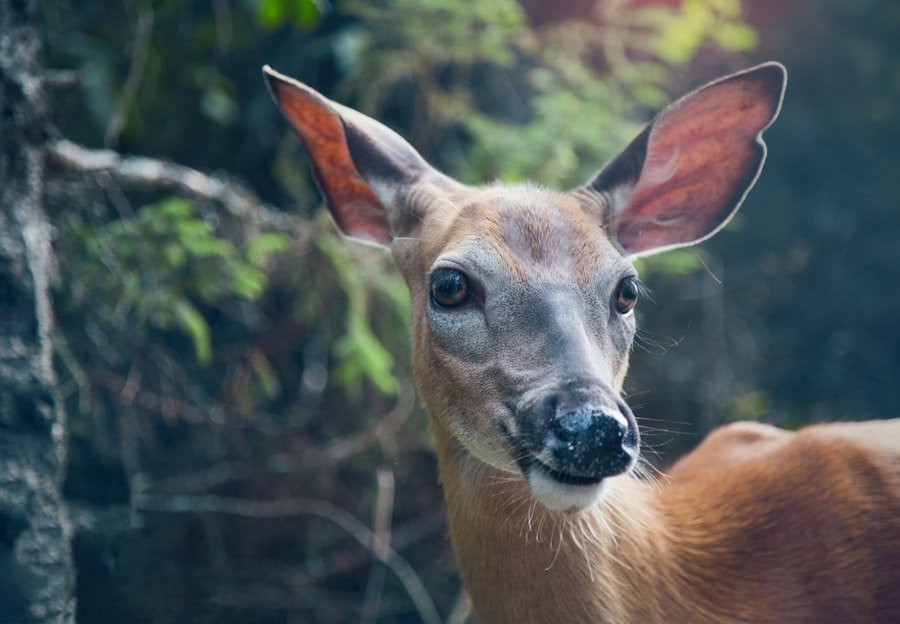
Uncovering local rut travel routes requires integrating field sign observation with modern monitoring technologies:
- Monitoring Scrapes and Rub Lines: Primary scrape communities—especially those located along habitat transition lines—serve as chemical communication hubs where multiple bucks check for estrous activity.
- Strategic Trail Camera Placement: Position cellular cameras on pinch points, terrain funnels, and natural saddles that link distinct bedding basins. Modern trail camera arrays capture real-time excursion data across miles of terrain.
- Topographic & Wind Corridor Analysis: Analyze topographic maps to locate low-resistance travel paths. Bucks routinely utilize contour benches, river bottoms, and ridge saddles to travel efficiently while keeping the prevailing wind in their favor.
Conservation Efforts to Protect Buck’s Rut Travel Routes
Landscape fragmentation caused by highway construction, suburban expansion, and industrial development poses severe risks to seasonal deer movements. Disrupting historical travel corridors limits herd genetic flow and drastically increases vehicle collision rates during peak rut months.
Conservation organizations and state agencies actively work to mitigate these impacts through landscape connectivity initiatives:
- Wildlife Corridors and Overpasses: Constructing vegetated overpasses and underpasses across major highways allows deer to navigate long-distance excursions safely.
- Habitat Conservation Easements: Protecting continuous tracts of native timber and riparian bottomlands ensures uninterrupted passage between core seasonal habitats.
- Targeted Forage Restoration: Reestablishing native browse vegetation within wintering yards strengthens herd health prior to the physiological drain of the rut.
“Preserving contiguous habitat corridors directly preserves herd health. By ensuring bucks can safely execute rut excursions, wildlife managers support genetic diversity and sustain resilient deer populations across fragmented landscapes.”
The Importance of Studying Buck’s Rut for Wildlife Management
Tracking and modeling rut travel parameters is fundamental to modern ungulate management. Synthesizing telemetry data, age-structure metrics, and movement rates allows state agencies to establish scientifically backed harvest quotas, hunting season dates, and habitat conservation priorities.
Furthermore, studying movement patterns aids disease surveillance—such as tracking Chronic Wasting Disease (CWD). Because roaming bucks during the rut interact with multiple family groups across several square miles, understanding their excursion range is essential for predicting and containing disease transmission vector paths.
Through systematic research, habitat protection, and responsible management, conservationists ensure balanced deer populations that remain healthy and integrated within their native ecosystems.
Frequently Asked Questions
What is the rut in deer?
The rut is the annual breeding season for deer. Triggered by shortening daylight, bucks experience a surge in testosterone, causing increased physical activity, territorial marking, antler rubbing, and active searching for receptive does.
How far will bucks travel in a single day during the rut?
On average, bucks cover between 3 and 7 miles per day during the seeking and chasing phases. During temporary “excursions,” mature bucks may travel 1 to 5+ miles outside their normal home range in a straight line before returning.
What triggers the onset of the rut?
The rut is primarily triggered by photoperiodism—the decreasing hours of daylight in autumn. This environmental cue triggers hormone production (testosterone in bucks and estrogen in does), governing the timing of the breeding season.
Do bucks travel the same distance every year during the rut?
No. Annual travel distances vary depending on localized doe population density, buck age, food availability, weather shifts, and habitat competition. In years with low doe numbers or scattered food sources, travel distances typically increase.
How do bucks locate receptive does across long distances?
Bucks use an exceptional sense of smell to detect pheromones in doe urine and glandular secretions left at scrape sites. They also use visual cues, vocalizations (grunts and snort-wheezes), and frequent scent-checking downwind of doe bedding areas.
Sources
- Nature Journal — Endocrine dynamics and testosterone surges in wild ungulates.
- Penn State Deer Forest Study — Long-term GPS collar tracking and buck excursion research data.
- National Deer Association (NDA) — White-tailed deer home range, dispersal, and rut movement biology.

