

Last Updated on July 24, 2026 by Daniel Globe
This wordplay riddle asks what can go over hills, bend around corners, pass through towns, and sometimes run through tunnels without moving. The answer is a road. The clue sounds as if something is traveling, but it actually describes the route and shape of a fixed object.
Quick Answer
The answer is a road. A road can climb hills, curve around corners, pass through towns, and enter tunnels, but the road itself stays fixed. The verb “goes” describes where the route leads, not physical movement. A path or railway may fit some versions, but road is the usual answer.
Key Takeaways
- Answer: A road.
- The riddle uses “goes” to mean “extends” or “leads,” not “moves.”
- A path or railway can be reasonable in some versions, but a road matches the broadest wording.
- Related riddles about a stamp, map, river, or piano have different answers.
What’s the Answer to the Riddle?
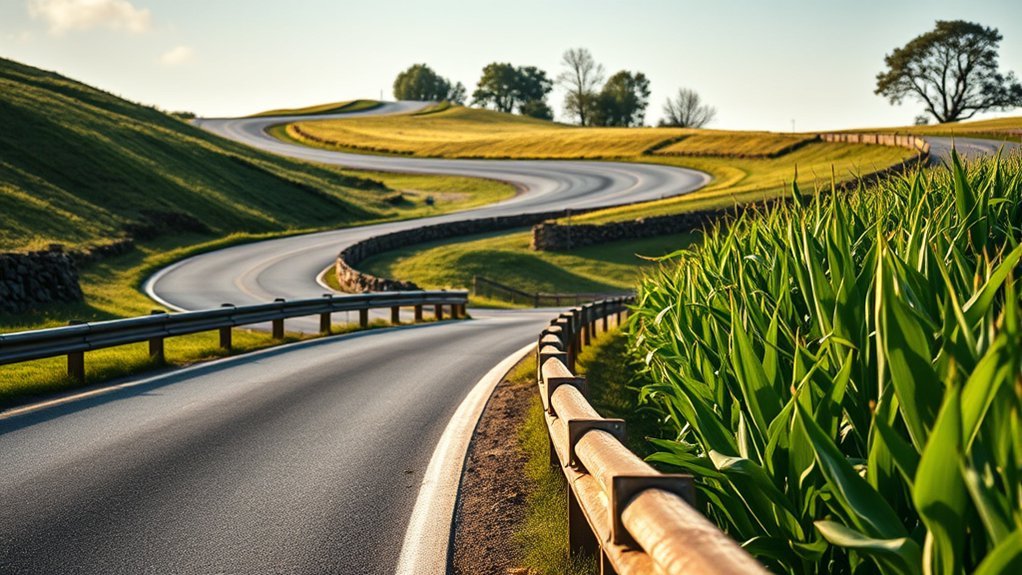
The answer is a road. A road may go over a hill, around a corner, through a town, or into a tunnel, yet it does not travel anywhere. People and vehicles move along it.
This works because “goes” has more than one meaning. It can describe movement, but it can also describe where something extends. For example, you might say, “The road goes through the village,” even though the road stays in place. Cambridge Dictionary uses the same kind of construction in examples such as a road that “runs” or “goes” through an area.
Note: The wording changes from one version to another. You may see “over hills and around corners,” “through towns and over hills,” or “through tunnels,” but the intended logic stays the same.
Why a Road Fits the Clue
A road is an open way used by vehicles, people, or animals. It can be built across slopes, curved around obstacles, and routed between places. Those features explain every part of the clue without requiring the road itself to move.
- “Over hills” describes elevation changes along the route.
- “Around corners” describes bends in the road.
- “Through towns or tunnels” describes where the road extends.
- “Never moves” separates the road from the travelers using it.
The answer also passes a simple test: every clue points to a normal property of a road, and no extra metaphor is needed. That makes it stronger than answers that fit only one part of the wording.
The travelers move, but the route stays still. That contrast is the entire trick.
Other Answers People Might Guess
Several fixed objects can match part of the clue. Whether an alternative answer works depends on the exact wording.
- A path: This is a good alternative because a path can cross hills and curve around corners without moving.
- A railway or train track: This also fits many versions, especially when the clue mentions towns, hills, or tunnels.
- A power line: It may cross hills and turn at poles, but “around corners” is less natural than it is for a road.
- Sunlight: This is a creative interpretation, but sunlight changes position and does not fit “never moves” as cleanly.
- The letter S: Letter-based answers work only when the riddle names words that contain the letter. The usual hills-and-corners wording does not support this answer.
A humorous answer can make a group laugh, but it is not automatically the intended solution. For a fair riddle, the best answer should explain all the clues with the fewest assumptions.
Why This Riddle Feels Tricky
A riddle is a puzzling question meant to be solved or guessed. This one misdirects you with a verb that usually suggests movement. Your first instinct is to search for something that travels. The clue then blocks that idea with “never moves.”
The solution appears when you switch from the movement meaning of “goes” to the route meaning. A road “goes” somewhere because it leads or extends there. This small change in interpretation turns a contradiction into a clear answer.
Pro Tip: When a riddle seems impossible, identify the word carrying the most assumptions. Test a second meaning of that word before searching for a more complicated answer.
Similar Road Riddles to Try
Road-style riddles often describe a fixed route as if it were alive or moving. The following examples use the same kind of misdirection while keeping each answer clear.
Classic Road Brain Teasers
- What runs through cities and fields but never walks? A road can fit, although “a river” may fit if the full clue mentions water.
- What can cross a valley without taking a step? A bridge.
- What has two rails, crosses land, and never takes a journey? A railway track.
- What guides your feet but never goes anywhere? A path.
These work best when the clue gives enough detail to separate one answer from another. If several answers fit equally well, the riddle is ambiguous rather than difficult.
Short Trick Questions
Short trick questions hide a second meaning inside familiar words. Try these:
- What has keys but cannot open locks? A piano.
- What has a face and hands but no arms or legs? A clock.
- What gets wetter as it dries? A towel.
The answer often feels obvious after you see it because the clue directs your attention toward the wrong meaning first.
More Static Riddles
- What has cities but no houses, forests but no trees, and water but no fish? A map.
- What travels around the world while staying in one corner? A postage stamp.
- What has many pages but cannot read? A book.
These riddles describe what an object represents, contains, or helps people do. The object itself remains still while your interpretation moves.
What the Riddle Teaches About Wordplay
The riddle shows how one ordinary word can support two readings. “Goes” first sounds like physical travel. In the answer, it means “extends,” “runs,” or “leads.” That shift is a form of wordplay.
It also teaches you to separate the subject from the action around it. A road supports movement without moving. A map shows places without containing them. A stamp travels with an envelope while staying attached to one corner. In each case, the clue borrows the action of the people or objects connected to the answer.
You do not need a symbolic story about freedom or destiny to solve the puzzle. The literal route meaning is enough. Symbolic interpretations can be enjoyable after the answer is clear, but they should not replace the basic explanation.
How to Solve Riddles Like This
- List the literal clues. Here, the object crosses hills, turns corners, and stays fixed.
- Find the apparent contradiction. The word “goes” suggests movement, while “never moves” denies it.
- Test another meaning. Ask whether “goes” can mean “extends” or “leads.”
- Compare possible answers. Choose the object that fits every clue naturally.
- Prefer the simplest complete answer. A road works without extra conditions, so it is the strongest choice.
If you remain stuck, setting the puzzle aside briefly may help in some situations. A meta-analysis of incubation and problem-solving studies found an overall benefit, but the effect varied by task and by what people did during the break. A pause can help, but it does not guarantee a solution.
Frequently Asked Questions
What can go over hills and around corners but never moves?
A road. It can rise, fall, and curve across the landscape, but only the people and vehicles using it move.
What goes over hills and through tunnels but never moves?
A road is the usual answer. A railway track can also fit if the wording focuses on rails or trains.
Can a path or railway be a correct answer?
Yes, in some versions. A path and a railway can cross hills and bend without moving. Road remains the broadest answer because it naturally fits hills, corners, towns, and tunnels.
What travels around the world but never leaves its corner?
A postage stamp. It travels with the envelope while remaining attached near a corner. The USPS explains that stamps are placed in the upper-right corner to support efficient mail processing.
Is this the Harvard riddle?
No reliable Harvard source identifies this road riddle as “the Harvard riddle.” That label is used online for a different viral puzzle about polar bears and other clues. It is not the same as the hills-and-corners riddle.
Why does the answer not count as moving?
The road has a fixed position. Saying that it “goes” somewhere describes its direction and route, not a change in its location.
Conclusion
What can go over hills and around corners but never moves? A road. The clue works because “goes” describes where the road leads, while “never moves” describes its fixed position. A path or railway may fit some versions, but road is the clearest general answer. When a riddle feels contradictory, test another meaning of its key verb and look for the simplest answer that explains every clue.
Sources
- Merriam-Webster: Road: definition and usage of “road.”
- Cambridge Dictionary: Road: examples showing that a road can “go” or “run” through a place.
- Merriam-Webster: Riddle: definition of a riddle as a puzzling question to solve or guess.
- United States Postal Service: Right Spot: why stamps are placed in the upper-right corner.
- PubMed: Does Incubation Enhance Problem Solving?: evidence and limits of taking a break during problem solving.
