

Last Updated on July 23, 2026 by Ethan Caldwell
Driving an RV from Maryland to coastal Maine is easier when you choose the route around your starting point, rig size, propane setup, and final destination. For many travelers, I-81 and I-84 avoid New York City, while I-90 and I-495 bypass central Boston before I-95 carries you into New Hampshire and Maine. Travelers starting in eastern Maryland may have a shorter trip through New Jersey and I-287.
Quick Answer
For most RVs leaving western or central Maryland, use I-81 north to I-84 east, then I-90 east, I-495 north, and I-95 north into Maine. From eastern Maryland, I-95 to I-287 and I-84 may be shorter. Avoid New York parkways, verify Baltimore propane restrictions, and route by your exact coastal destination.
Key Takeaways
- There is no single best route for every Maryland starting point or Maine destination.
- The I-81 and I-84 corridor avoids New York City but still has truck traffic, grades, construction, and urban congestion.
- Many propane-equipped RVs cannot use Baltimore’s Fort McHenry or Harbor tunnels.
- Use an RV-specific navigator for dimensions and restrictions, then confirm every route against official signs and state travel alerts.
- Plan tolls by axle count, schedule safe breaks, and check Acadia’s RV restrictions before entering the park.
At a Glance
| Time Required | Two driving days are more comfortable for most RV travelers; Bar Harbor is several hours beyond southern Maine. |
| Difficulty | Moderate because of distance, tolls, mountain grades, traffic, and RV-specific restrictions. |
| Tools Needed | RV-specific navigation, current state 511 reports, E-ZPass, tire gauge, paper or offline map, and your rig dimensions. |
| Cost | Varies by fuel economy, axle count, toll route, overnight campground, and final Maine destination. |
Disclosure: As an Amazon Associate I earn from qualifying purchases. Some links on this page are affiliate links, at no extra cost to you.
Plan Your Maryland to Coastal Maine RV Route
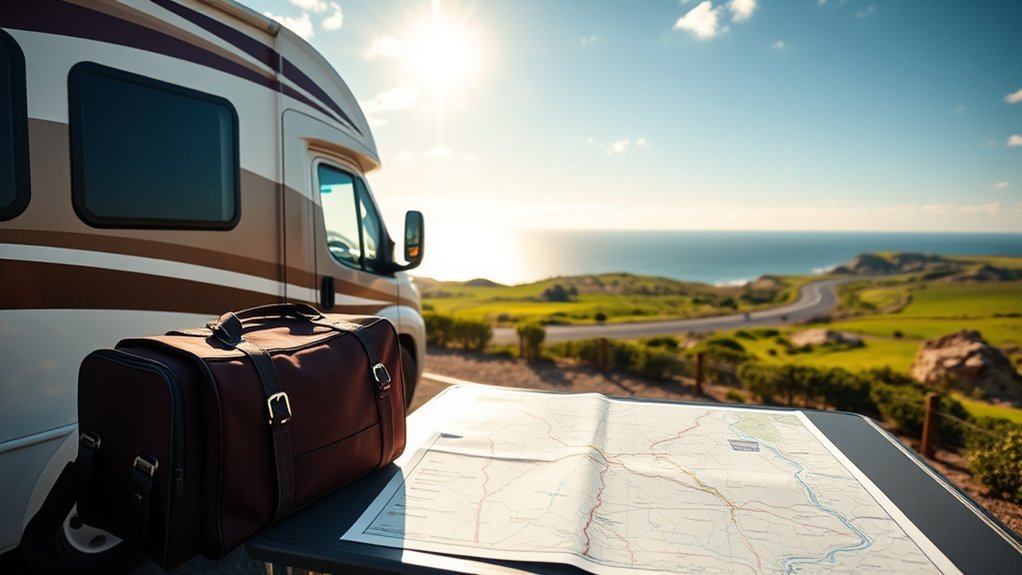
Your best route depends first on where you begin in Maryland. Enter your exact starting address and final campground into an RV-specific navigation system, add your vehicle’s measurements, and compare the following interstate corridors.
From Western or Central Maryland
A practical route for many travelers is I-81 north through Pennsylvania to I-84 east near Scranton. Continue across New York and Connecticut, join I-90 east in Massachusetts, take I-495 north around Boston, and then use I-95 north through New Hampshire and into Maine.
From the Baltimore area, you may reach I-81 by taking I-83 north toward Harrisburg or by traveling west toward I-81, depending on your location, traffic, and propane restrictions. Check the full route rather than assuming the navigation application’s first suggestion is suitable for your rig.
From Eastern or Northeastern Maryland
If you start near northeastern Maryland, the Delaware line, or the Eastern Shore, driving north on I-95 and the New Jersey Turnpike may be more direct. Use I-287 north to avoid central New York City, connect with I-84 east, and then continue through I-90, I-495, and I-95.
This route may cost more in tolls and can have heavier traffic, but it prevents an unnecessary westward trip to I-81. Compare both corridors using your actual departure time.
Choose the Right Maine Approach
- Kittery, York, Ogunquit, Kennebunkport, or Portland: Stay on I-95 into southern Maine. I-295 provides direct access through Portland.
- Bath, Boothbay, Rockland, or Camden: Continue through the Portland area and select the approach recommended for your campground and rig. Parts of coastal US-1 are slower and busier than the interstate.
- Bar Harbor or Acadia: A common approach follows I-95 toward Bangor, then I-395, US-1A toward Ellsworth, and ME-3 toward Mount Desert Island. Confirm the final roads against your RV’s height and length.
Warning: Maryland prohibits vehicles carrying bottled propane exceeding 10 pounds per container from using the Fort McHenry Tunnel on I-95 or the Baltimore Harbor Tunnel on I-895. Many RV cylinders exceed this limit. As of July 24, 2026, southeast I-695 also remains closed at the former Key Bridge crossing. Check the latest MDTA tunnel rules and Baltimore traffic alerts before departure.
Why I-81, I-84, I-90, I-495, and I-95 Work Well
The interstate combination works because each road handles a different part of the trip. I-81 and I-84 provide an inland alternative to the New York City corridor, I-90 and I-495 carry you around central Boston, and I-95 gives you direct access to New Hampshire and Maine.
I-81 to I-84
I-81 and I-84 can help you avoid New York City, the lower Hudson crossings, and much of the New Jersey urban corridor. The route also keeps you on major interstate highways, where fuel stations, rest areas, and services are generally easier to find than on small local roads.
However, this is not a traffic-free scenic road. Expect commercial trucks on I-81, grades in Pennsylvania, and possible slowdowns near Scranton, Danbury, Waterbury, and Hartford. Construction, crashes, and winter weather can quickly change the advantage.
I-90 and I-495 Around Boston
After crossing Connecticut on I-84, I-90 east and I-495 north form a useful connection to I-95. This keeps a large RV away from central Boston and its more complicated urban roads.
I-90 is tolled in Massachusetts, and the state uses all-electronic tolling. I-495 can also become congested during weekday commuting periods, so check live traffic before committing to the interchange.
I-95 for the Final Stretch
I-95 is the main northbound route through coastal New Hampshire and southern Maine. It offers service areas, major fuel exits, and straightforward access to Kittery, York, Portland, and connections farther north.
Toll charges may change with your axle count and towing setup. A motorhome towing a car or a pickup towing a travel trailer can be classified differently from a two-axle passenger vehicle.
An RV route is safe only when it matches the rig’s actual height, width, length, loaded weight, axle count, and propane configuration.
Best Scenic Stops on the Way to Maine
Choose stops that match your selected corridor and confirm oversized-vehicle parking before entering a downtown area or park.
- Chesapeake & Ohio Canal National Historical Park: A useful early stop for travelers leaving western Maryland near Hagerstown or Williamsport. Check the specific visitor area before arriving with a long rig.
- Delaware Water Gap National Recreation Area: Best treated as an optional detour when your route uses I-80 or nearby roads. It is not directly on the standard I-81-to-I-84 corridor, and overnight parking is limited to specific authorized activities.
- Woodstock, New York: A substantial side trip rather than a quick interstate stop. Visit only when your schedule allows extra time and you have confirmed parking.
- Portsmouth, New Hampshire: Close to I-95 and well placed for a meal or waterfront walk. A campground or outlying lot is usually easier for a large RV than downtown streets.
- Acadia National Park: A destination extension for travelers continuing to Bar Harbor, not a stop on the way to southern Maine. Review RV road and parking restrictions before entering.
Pro Tip: Search for the exact entrance, parking lot, campground, or fuel island rather than navigating only to a park or town name. A general destination pin can place a large RV on a narrow downtown road.
RV Safety Checks Before You Leave
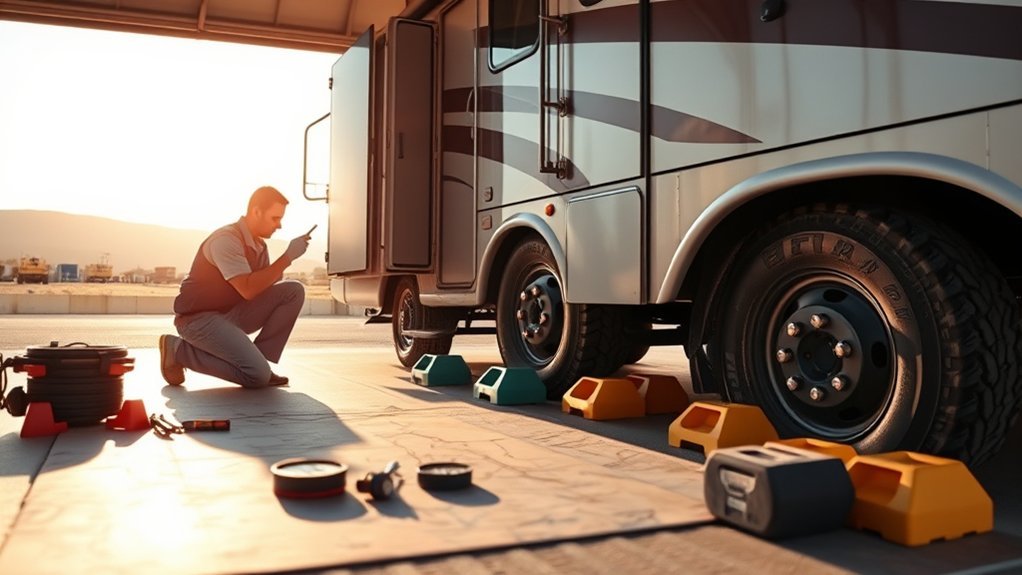
Complete the inspection while the tires are cold and before loading everyone for departure. The National Highway Traffic Safety Administration recommends using the pressure specified by the vehicle manufacturer, not the maximum pressure molded into the tire sidewall.
- Tires: Check cold pressure on the motorhome, tow vehicle, trailer, and spare. Inspect tread, sidewalls, valve stems, cuts, cracking, bulges, and unusual wear.
- Wheels: Confirm lug-nut torque using the manufacturer’s specification and look for loose, missing, or damaged hardware.
- Fluids: Check engine oil, coolant, brake fluid, transmission fluid where applicable, windshield washer fluid, and generator fluids.
- Lights: Test headlights, brake lights, turn signals, clearance lights, hazard lights, and trailer lights.
- Towing equipment: Inspect the hitch, coupler, locking pin, safety chains, breakaway cable, wiring connector, tow bar, and supplemental braking system.
- Propane: Secure cylinders or tanks, inspect the system for damage, and follow manufacturer and roadway requirements. Never test for a leak with a flame.
- Exterior equipment: Retract awnings, steps, slide rooms, leveling jacks, antennas, and stabilizers. Lock storage compartments.
- Emergency equipment: Carry reflective triangles, a charged fire extinguisher, first-aid supplies, flashlight, tire gauge, basic tools, water, and a charged phone.
Secure every loose object inside the RV. A sudden stop can turn cookware, electronics, or unsecured storage contents into dangerous projectiles.
Pro Tip: Measure the RV’s true travel height with rooftop air conditioners, vents, antennas, and cargo included. Write the height, width, length, loaded weight, and axle count on a card near the dashboard.
How to Stay Comfortable on Long RV Drives
Comfort helps you remain alert, but it should never be used to justify driving while tired. Set a realistic daily limit and stop earlier when traffic, wind, rain, or fatigue makes the drive harder.
Set Up the Driver’s Seat
- Move close enough to reach the pedals without stretching your legs.
- Keep your shoulders against the seat and your elbows slightly bent.
- Adjust mirrors before moving and recheck them after connecting a trailer or towed vehicle.
- Use lumbar support that does not interfere with the seat belt.
- Keep water within reach but store loose bottles where they cannot roll under the pedals.
Take Breaks Before You Feel Exhausted
Plan a safe stop about every two hours and stop sooner if you become stiff, distracted, or sleepy. Walk briefly, stretch your legs and shoulders, use the restroom, and inspect the tires, hitch, and exterior compartments.
Adequate sleep is the best defense against drowsy driving. According to NHTSA’s drowsy-driving guidance, opening a window or turning up music is not a reliable substitute for rest.
Warning: If you have trouble keeping your eyes open, drift across lane markings, miss exits, or cannot remember the previous few miles, leave the roadway at the next safe location. Do not try to push through fatigue.
Pack Useful Comfort Essentials
- Water and easy-to-handle snacks
- Prescription medicines and basic personal supplies
- Supportive cushions that do not alter seat-belt fit
- Light layers or blankets for changing temperatures
- Charging cables and a power bank
- Downloaded music, podcasts, and offline maps
Passengers may use headphones, but the driver should remain able to hear emergency vehicles, horns, warning sounds, and changes in the RV’s mechanical noise.
Budget for Tolls, Fuel, and RV Fees
Calculate fuel using your RV’s realistic loaded fuel economy rather than a manufacturer’s best-case number. A simple estimate is:
Estimated fuel needed = total trip miles ÷ expected loaded MPG
Add a reserve for detours, campground access roads, idling, generator use, and local sightseeing. Plan fuel stops before entering long rural stretches and confirm that the station has wide entrances, sufficient canopy clearance, and enough turning space.
Toll costs depend on your route and vehicle classification. A trailer, tag axle, dual rear wheels, or towed vehicle can increase the rate. Use each toll authority’s official calculator shortly before departure rather than relying on an old flat estimate.
Note: An out-of-state E-ZPass is widely accepted, but the lowest local discount is not guaranteed. Some agencies give their best rates only to customers with an account issued by that agency.
Handle Tolls and Road Rules

Know How Each Toll System Works
E-ZPass is accepted across the main states on this trip, but payment rules are not identical.
- New York: The Thruway uses all-electronic tolling. Drivers without E-ZPass generally receive a Tolls by Mail bill.
- Massachusetts: Toll roads do not accept cash. The state uses E-ZPass and Pay By Plate invoicing.
- New Hampshire: Follow the posted lane signs and use the correct lane for your payment method and vehicle class.
- Maine: The Maine Turnpike accepts cash or a valid E-ZPass. It is not a normal Pay-by-Plate road, so do not assume a routine invoice will arrive automatically.
Mount the transponder as directed, add the correct license plate to the account, and verify that your account recognizes the motorhome, trailer, or towed vehicle configuration.
Watch for Route-Specific Rules
- Maryland tunnels: Verify propane and oversized-vehicle restrictions before using I-95 or I-895 through Baltimore.
- New York parkways: Do not take an RV onto a parkway unless official signs and rules clearly allow your vehicle. NYSDOT warns that some parkway bridge clearances are extremely low.
- Posted bridge limits: Weight and clearance restrictions can affect local detours even when the main interstate is suitable.
- Speed: Follow the posted limit and reduce speed for wind, rain, grades, work zones, and trailer handling.
- Phones: Set the route before moving and let a passenger handle route changes whenever possible.
Review the official New York parkway restrictions before crossing the state. Never follow a navigation instruction that conflicts with a height, weight, propane, vehicle-type, or closure sign.
Check the Final Destination for RV Limits
Campground roads, historic districts, coastal villages, park roads, tunnels, bridges, and parking lots may have tighter restrictions than the interstate. Call the campground when its directions conflict with your navigation application.
At Acadia National Park, RVs and trailers are prohibited from several roads and parking areas. Historic bridges create low clearances, and Cadillac Summit Road prohibits RVs, trailers, and vehicles longer than 21 feet. Review the current Acadia oversized-vehicle rules before arrival.
Great Food Stops Along the Route
Choose meals near major exits or your overnight campground rather than attempting to park a large RV in a crowded downtown area.
- Northeastern Pennsylvania: Look for diners, bakeries, pizza, and regional comfort food around major I-81 and I-84 exits.
- Hudson Valley: Seasonal farm markets can provide fruit, baked goods, sandwiches, and local products, but check the entrance and parking area before turning in.
- Central Massachusetts: The I-84 and I-90 area offers numerous highway-accessible restaurants and travel centers.
- Portsmouth and coastal New Hampshire: Seafood, chowder, and waterfront dining make a good final stop before Maine. Park the RV outside the tightest downtown streets.
- Coastal Maine: Lobster rolls, fried clams, chowder, blueberries, and whoopie pies are easy regional choices once you arrive.
Save brewery visits or alcoholic drinks for after the RV is parked for the night and no one will be driving again.
What to Do When Weather or Closures Hit
Check the forecast and official road reports the evening before departure, again before starting the engine, and during each planned stop. Useful official resources include:
- 511PA for Pennsylvania traffic, low bridges, weather restrictions, rest facilities, and road conditions
- 511NY for New York incidents, construction, and closures
- CTroads for Connecticut cameras, roadwork, incidents, and weather alerts
- New England 511 for Maine and New Hampshire traffic and driving conditions
- National Weather Service forecasts and warnings
Pennsylvania may restrict RVs, campers, and tow-behind trailers during serious winter-weather events. Do not begin the trip when your vehicle class is restricted.
If a route closes, stop in a safe location before reviewing the detour. Check the detour for low bridges, parkways, propane restrictions, posted weights, and narrow local roads instead of accepting it automatically.
Save Time With GPS and Route Rechecks
Use an RV-specific navigation system as the primary tool for height, length, weight, and propane-related routing. Google Maps remains useful for traffic, businesses, and arrival estimates, but Google states that its driving routes are designed for cars and that oversized vehicles are not the intended navigation users.
Follow this routine:
- Enter the exact campground or RV park address.
- Add your vehicle height, length, width, weight, and axle information to the RV navigator.
- Compare the route with an official highway map.
- Check state road reports and weather alerts.
- Download offline maps before leaving reliable service.
- Recheck the route only while parked at a safe stop.
- Follow posted restrictions instead of the navigation instruction when they disagree.
Google Maps identifies its preferred route in blue based partly on traffic and estimated travel time, but “best” does not mean verified for an RV. Review Google’s navigation limitations before relying on it.
Frequently Asked Questions
What is the best RV route from Maryland to coastal Maine?
For many travelers from western or central Maryland, the practical inland route is I-81 north, I-84 east, I-90 east, I-495 north, and I-95 north. Travelers from eastern Maryland may save distance by taking I-95 through New Jersey, I-287 north, and then I-84 east.
Is I-81 and I-84 better than staying on I-95?
It is often less stressful because it avoids New York City and much of the busiest urban corridor. However, it can add distance for eastern Maryland travelers and still includes truck traffic, grades, construction, and congestion around several cities.
Can an RV carrying propane use the Baltimore tunnels?
Maryland prohibits vehicles carrying bottled propane exceeding 10 pounds per container from using the Fort McHenry and Baltimore Harbor tunnels. Many RV cylinders exceed that limit. Verify your exact system and use a legal bypass when necessary.
Can I drive an RV on New York parkways?
Do not assume that you can. New York parkways were designed for passenger automobiles, and some have extremely low bridges or vehicle restrictions. Keep the RV on approved interstates and roads unless official signs clearly permit it.
Does E-ZPass work from Maryland to Maine?
E-ZPass is accepted at the major participating toll facilities along this corridor. Rates and discounts vary by agency and vehicle class, so verify your plate, transponder mounting, axle count, and account information before traveling.
How many days should I allow for the trip?
A two-day plan is more comfortable for many RV travelers. Your total time depends on the Maryland starting point, traffic, weather, rest breaks, towing speed, and whether you are stopping in southern Maine or continuing several hours farther to Bar Harbor.
Can I drive my RV through Acadia National Park?
RVs are permitted in parts of Acadia, but several roads and parking areas prohibit RVs or trailers. Some roads have low historic bridges, and Cadillac Summit Road prohibits RVs, trailers, and vehicles longer than 21 feet.
What is the difference between the fastest and shortest route?
The shortest route covers fewer miles, while the fastest route is calculated to take less time. For an RV, neither is automatically best. The safest practical route must also account for clearances, weight limits, propane rules, grades, tolls, weather, and suitable stopping areas.
Sources
- Maryland Transportation Authority tunnel restrictions — Baltimore propane and hazardous-material rules.
- New York State Department of Transportation parkway restrictions — low-clearance and vehicle-restriction guidance.
- Google Maps navigation help — car-routing and oversized-vehicle limitations.
- NHTSA TireWise and NHTSA drowsy-driving guidance — tire inspection, pressure, and fatigue safety.
- E-ZPass Group, EZDriveMA, and Maine Turnpike Authority — toll interoperability and state payment rules.
- Acadia National Park oversized-vehicle guidance — RV, trailer, parking, and road-clearance restrictions.
Conclusion
For many RV travelers from western or central Maryland, the most practical inland route follows I-81, I-84, I-90, I-495, and I-95. From eastern Maryland, I-95 through New Jersey to I-287 and I-84 may be more direct. The right choice depends on your exact endpoints, vehicle dimensions, propane system, toll class, traffic, and weather.
Inspect the RV before leaving, plan a comfortable overnight stop, avoid New York parkways, verify Baltimore tunnel restrictions, and review Acadia’s rules before entering with a large vehicle. With those checks completed, the drive to coastal Maine becomes safer, more predictable, and far easier to enjoy.
