
Last Updated on September 11, 2026 by Daniel Globe
Banking equipment financing lets a financial institution acquire or lease ATMs, cash-handling machines, servers, security hardware, branch technology, and related systems without paying the full cost in cash on day one. The right structure depends on the asset’s useful life, expected upgrade cycle, accounting treatment, tax treatment, and the institution’s capital and liquidity goals. Because banking technology can touch sensitive data and critical operations, the financing decision should be reviewed together with cybersecurity, vendor-risk, maintenance, and regulatory requirements.
Quick Answer
Banking equipment financing spreads the cost of ATMs, cash systems, servers, security hardware, and other operational technology over time. Common structures include equipment loans, finance leases, operating leases, vendor financing, and sale-leasebacks. Compare total cost, accounting impact, upgrade flexibility, service obligations, security controls, and end-of-term terms before choosing.
Key Takeaways
- Physical banking assets such as ATMs, cash recyclers, servers, vault equipment, surveillance systems, and branch hardware are common financing candidates.
- Software, cloud services, implementation fees, and maintenance may be financeable only when a lender or vendor specifically includes them; they are not automatically treated as equipment.
- Under U.S. GAAP, most leases longer than 12 months create a right-of-use asset and lease liability, so an operating lease should not be described as automatically “off balance sheet.”
- For banking technology, vendor selection should include cybersecurity, business continuity, maintenance, data access, subcontractor, and regulatory-risk review—not just price.
- Tax and regulatory-capital effects vary by transaction and institution, so accounting, tax, legal, and regulatory specialists should review material transactions before execution.
Note: This article provides general information, not accounting, tax, legal, investment, or regulatory advice. Banks and other financial institutions should confirm the treatment of a proposed financing structure with qualified advisers and the institution’s primary regulator where appropriate.
What Is Banking Equipment Financing?

Banking equipment financing is a funding arrangement used to purchase or lease equipment and technology that supports branch, operations, security, cash handling, and information technology functions. Instead of using a large amount of cash upfront, the institution pays according to a defined schedule and keeps more liquidity available for other priorities.
The financing structure matters as much as the equipment itself. A bank may use a loan when it wants ownership, a lease when it values predictable use and end-of-term flexibility, or vendor financing when the equipment supplier offers an integrated payment plan. A sale-leaseback can release cash from equipment already owned while allowing continued use, although the accounting and economics should be reviewed carefully.
Leasing does not automatically remove the asset from the balance sheet. Under FASB Topic 842, a lessee generally recognizes a right-of-use asset and a lease liability for leases longer than 12 months, subject to applicable elections and exceptions.
For most leases longer than 12 months, U.S. GAAP requires the lessee to recognize both a right-of-use asset and a lease liability.
Which Bank Equipment Can Be Financed?
You can finance many types of bank equipment, but eligibility depends on the lender, vendor, asset value, expected useful life, installation requirements, and whether the item can serve as acceptable collateral. Common categories include:
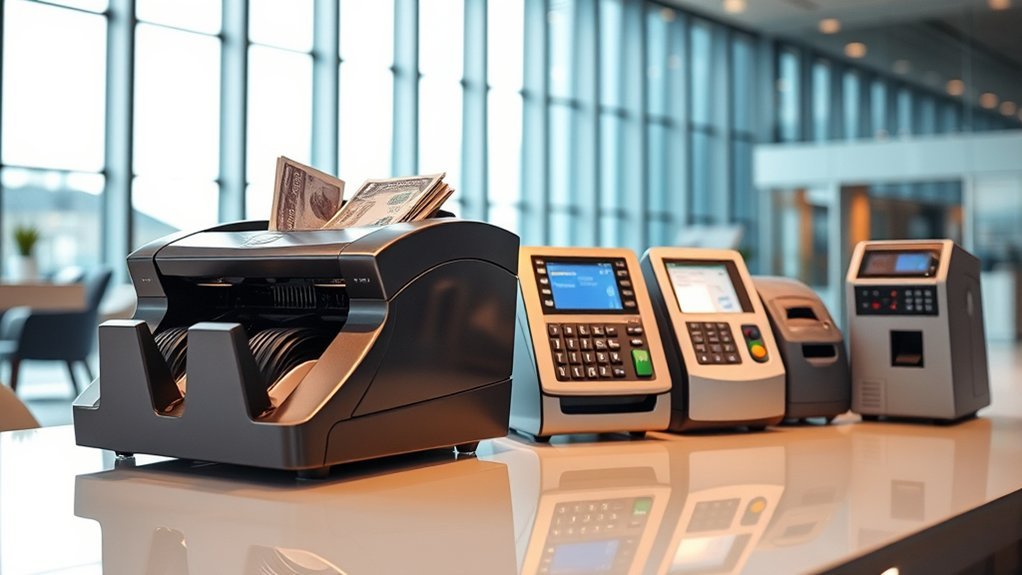
- Cash-access equipment: ATMs, interactive teller machines, cash recyclers, cash dispensers, coin and currency counters, and cash-processing systems.
- Security equipment: vault components, safes, surveillance cameras, access-control devices, alarm hardware, biometric readers, and related branch-security systems.
- IT infrastructure: servers, storage appliances, networking equipment, firewalls, backup hardware, workstations, and branch communication equipment.
- Customer-service hardware: kiosks, queue systems, signature pads, card-issuance hardware, document scanners, and some point-of-sale or teller devices.
- Facilities-related equipment: generators, uninterruptible power supplies, HVAC systems dedicated to technology rooms, and other operational equipment where the lender permits it.
Software requires a separate check. Online banking platforms, mobile banking applications, cloud subscriptions, cybersecurity services, and implementation work are often licensed or service-based rather than physical equipment. Some lenders or vendors will finance these costs when they are bundled with hardware or a broader technology project, but the terms, collateral treatment, cancellation rights, and accounting can differ from ordinary equipment financing.
Pro Tip: Match the financing term to the asset’s realistic service life. A long repayment term on rapidly changing technology can leave the institution paying for equipment that is already obsolete or unsupported.
What Financing Options Do Banks Use?
Banks can use several structures to acquire specialized equipment. The best choice depends on ownership goals, cash-flow timing, expected upgrades, residual-value risk, accounting treatment, and contract flexibility.
- Equipment loan or term loan: The institution borrows to purchase the asset and typically owns it from the start, subject to the lender’s security interest.
- Finance lease: The arrangement is economically closer to financed ownership and may fit assets the institution expects to keep for most of their useful life.
- Operating lease: The institution obtains the right to use the asset for a defined period and may have return, renewal, or purchase options at the end. Under Topic 842, operating leases still generally create a right-of-use asset and lease liability for the lessee.
- Vendor financing: The equipment manufacturer, distributor, or an affiliated finance company arranges payments as part of the purchase. Convenience can be useful, but the institution should still compare rates, fees, service terms, and end-of-term obligations.
- Sale-leaseback: The institution sells qualifying equipment it owns and leases it back. This can release cash, but it changes future payment obligations and requires careful accounting and contract review.
The original article also referenced asset-backed securities and warehouse loans. Those structures can be important in the broader equipment-finance market, especially for lenders or lessors that fund or securitize portfolios of equipment loans and leases. They are not usually the direct, day-to-day product a bank uses simply to buy an ATM or server for its own operations.
For bank-specific lease accounting, the OCC’s Bank Accounting Advisory Series explains lessee accounting under ASC 842, including the treatment of right-of-use assets and lease liabilities.
Products Worth Considering

How to Compare Buying vs. Leasing
Do not compare only the monthly payment. Model the full life of the asset and the contract. At minimum, compare:
- Upfront cash: down payment, advance rent, deposits, taxes, shipping, installation, and implementation costs.
- Total financing cost: interest or implied financing cost, origination fees, documentation fees, service charges, and late-payment terms.
- Maintenance: who pays for preventive maintenance, replacement parts, software support, field service, and emergency repairs.
- Upgrade flexibility: whether equipment can be refreshed before the end of the term and what early-termination charges apply.
- Residual and end-of-term terms: purchase option, fair-market-value option, automatic renewal, return requirements, deinstallation, freight, and data sanitization.
- Accounting and tax treatment: book classification, right-of-use accounting, depreciation or deductions where applicable, and any institution-specific regulatory reporting effects.
A lower monthly payment can be more expensive if it comes with mandatory maintenance, automatic renewal, expensive return conditions, or a high purchase option. Calculate the expected total cost of ownership and the cost of exiting or upgrading the arrangement.
How to Evaluate Security and Compliance?
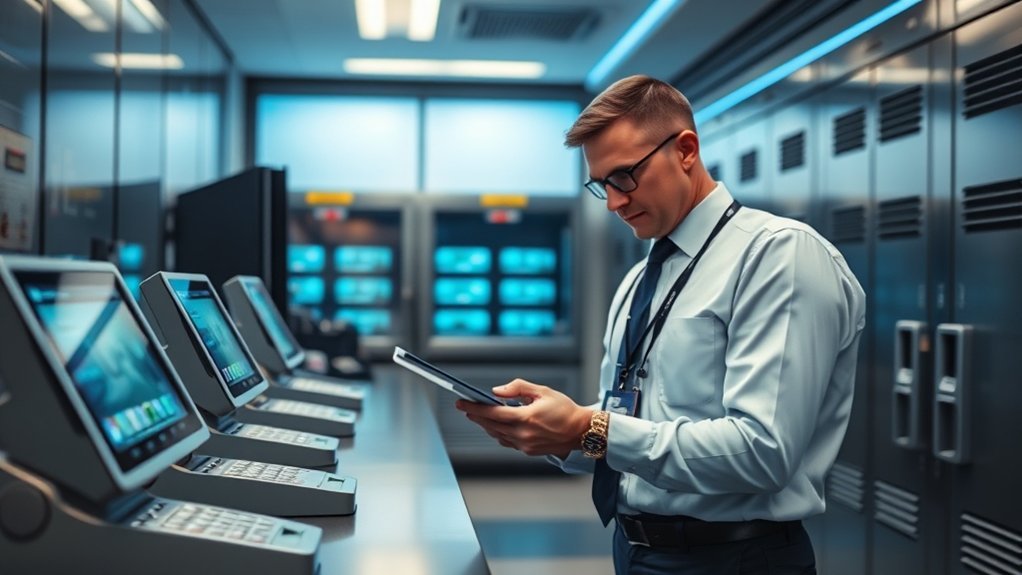
Before deploying specialized banking equipment, perform a risk-based security and compliance review that covers the device, its software or firmware, network connections, vendor access, data flows, maintenance process, and end-of-life handling. The FFIEC Development, Acquisition, and Maintenance guidance emphasizes governance, risk management, acquisition practices, maintenance, change management, and the interconnectedness of financial institutions with third-party service providers.
For access controls, FFIEC guidance supports risk assessments and layered security, including multi-factor authentication or controls of equivalent strength when single-factor authentication is inadequate. A practical review should address:
- Encrypt sensitive data in transit and at rest where the architecture and data classification require it.
- Use strong authentication and least-privilege access for administrators, service accounts, vendors, and remote support.
- Track firmware, software, patches, unsupported components, and configuration changes.
- Log security-relevant events and integrate critical devices with monitoring and incident-response processes.
- Document network segmentation, remote-management paths, data retention, backup, recovery, and business-continuity requirements.
- Define secure disposal, drive wiping, key removal, certificate revocation, and customer-data handling at return or end of life.
The FFIEC Authentication and Access guidance is especially relevant when equipment or supporting systems can be reached by employees, customers, vendors, or other systems.
Cybersecurity assessment practices also changed recently. The FFIEC sunset its Cybersecurity Assessment Tool on August 31, 2025 and pointed supervised institutions toward current government and industry resources. One widely applicable reference is NIST Cybersecurity Framework 2.0, which organizes cybersecurity risk-management outcomes without prescribing one specific implementation method.
Warning: Financing the equipment does not transfer the bank’s responsibility for safe, sound, and compliant operations. Contract language should clearly cover security obligations, incident notification, access, subcontractors, maintenance, audit rights where appropriate, business continuity, and termination.
How to Choose the Right Financing Vendor?
Start by separating the financing provider from the equipment or technology provider. Sometimes they are the same company or affiliated; sometimes they are not. Either way, evaluate the relationship according to the risks it creates.
The federal banking agencies’ Interagency Guidance on Third-Party Relationships: Risk Management describes due diligence, contract negotiation, ongoing monitoring, and termination as parts of the third-party risk-management life cycle. Due diligence should be proportionate to the relationship’s risk and complexity.
For a material equipment or technology arrangement, review:
- Experience and financial strength: history with financial institutions, references, ownership, financial condition, and ability to support the full contract term.
- Pricing transparency: interest or lease economics, fees, taxes, service charges, renewal provisions, return costs, and purchase options.
- Implementation and support: installation, testing, field service, spare parts, response times, escalation paths, and service-level commitments.
- Cybersecurity and data controls: remote access, privileged access, data handling, incident reporting, patching, logging, subcontractors, and secure decommissioning.
- Business continuity: replacement equipment, disaster recovery, support during outages, concentration risk, and contingency arrangements if the vendor fails.
- Contract exit: early termination, automatic renewal, equipment return, data export, data destruction, transition assistance, and ownership of software, configurations, and documentation.
Finally, calculate the total cost of ownership under realistic scenarios: keep the equipment to term, upgrade early, suffer a major repair, change vendors, or return the equipment. A low headline rate is not automatically the lowest-cost or lowest-risk option.
Products Worth Considering


What Documents Are Usually Needed for Approval?
Requirements vary by lender and transaction size, but equipment-financing providers commonly request information that shows the institution’s identity, authority to borrow or lease, financial capacity, and details of the asset being financed. The package may include:
- recent financial statements and regulatory or management reports appropriate to the institution;
- tax or organizational information where relevant to underwriting;
- board, committee, or officer approvals required by internal policy;
- equipment quote, purchase order, invoice, serial-number schedule, or project scope;
- insurance information and loss-payee requirements;
- vendor details, installation schedule, maintenance agreement, and support terms; and
- legal, accounting, compliance, cybersecurity, or third-party-risk review for material technology arrangements.
For regulated institutions, the internal approval process may be more important than the lender’s checklist. A transaction should fit the bank’s delegated authorities, budgeting process, fixed-asset policy, vendor-risk program, information-security program, and applicable regulatory requirements.
Frequently Asked Questions
Can banking equipment financing affect capital adequacy?
Yes, potentially, but there is no single effect for every transaction. Loans, purchased assets, and leases can change the balance sheet, expenses, and regulatory reporting in different ways. Under ASC 842, most leases longer than 12 months create a right-of-use asset and lease liability. Regulatory-capital treatment depends on the institution, asset, transaction, and applicable rules, so material transactions should be reviewed by accounting and regulatory-capital specialists.
How is depreciation handled for financed banking equipment?
Tax depreciation depends on who is treated as the tax owner, the type of property, when it is placed in service, and the tax rules that apply to the institution. The IRS explains MACRS, Section 179, special depreciation rules, and software treatment in Publication 946. Book accounting and tax accounting may differ, so do not assume every financed asset produces the same deduction.
Who owns the equipment when a lease ends?
The contract controls. Depending on the lease, the equipment may be returned to the lessor, purchased at a stated or fair-market-value amount, renewed, or transferred under a purchase option. Review ownership, residual value, automatic renewal, return condition, deinstallation, shipping, and data-destruction requirements before signing.
What financial documents are usually required for equipment-financing approval?
The lender may request recent financial statements, organizational and tax information, borrowing authority, equipment quotes or invoices, and other underwriting documents. The exact list depends on the institution, lender, transaction size, asset type, and credit structure. Any claim that a fixed percentage of approvals always depends on one document set should be treated cautiously unless supported by a specific lender’s data.
Who is responsible for repairs when financed equipment fails?
Responsibility depends on the financing contract, manufacturer warranty, maintenance agreement, service-level agreement, and cause of failure. The bank may pay for routine maintenance while the manufacturer or service provider covers specified defects. Critical equipment contracts should state response times, replacement obligations, parts coverage, escalation, and who pays for emergency service.
Can software and cybersecurity tools be included in equipment financing?
Sometimes. A lender or vendor may finance software licenses, implementation, or cybersecurity components when they are bundled with eligible hardware or a broader project. Subscription services and cloud contracts may be treated differently because they are services or licenses rather than owned equipment. Confirm eligibility and accounting treatment before assuming those costs can be financed.
Is leasing always cheaper than buying?
No. Leasing may reduce upfront cash use or make upgrades easier, but the full cost can exceed a direct purchase. Compare financing cost, service charges, maintenance, taxes, renewal terms, return costs, purchase options, and the value of flexibility over the expected life of the equipment.
What happens if financed banking equipment becomes obsolete before the contract ends?
The bank may still owe the scheduled payments unless the agreement includes an upgrade, replacement, or early-termination option. Before signing, review technology-refresh rights, support end dates, security-update commitments, early payoff formulas, and whether unsupported equipment can be removed without triggering excessive charges.
Conclusion
Choosing the right banking equipment financing means balancing cost, liquidity, useful life, upgrade needs, accounting treatment, cybersecurity, vendor risk, and contract flexibility. Loans, leases, vendor financing, and sale-leasebacks can all work in the right setting, but none is automatically best. Compare the full life-cycle cost, confirm who carries maintenance and end-of-term responsibilities, and subject material technology providers to appropriate due diligence. That approach helps the institution modernize without turning a convenient financing decision into a long-term operational or compliance problem.
Sources
- Financial Accounting Standards Board — Leases (Topic 842) — supports balance-sheet treatment of lessee leases.
- Office of the Comptroller of the Currency — Bank Accounting Advisory Series — bank-specific accounting guidance, including lease accounting.
- Federal banking agencies — Interagency Guidance on Third-Party Relationships: Risk Management — supports vendor due diligence, contracting, monitoring, and termination practices.
- FFIEC — Development, Acquisition, and Maintenance guidance — supports risk management for technology acquisition, maintenance, change management, and resilience.
- FFIEC — Authentication and Access to Financial Institution Services and Systems — supports risk-based authentication and layered access controls.
- Internal Revenue Service — Publication 946, How To Depreciate Property — supports general federal tax depreciation concepts and Section 179/MACRS references.
