
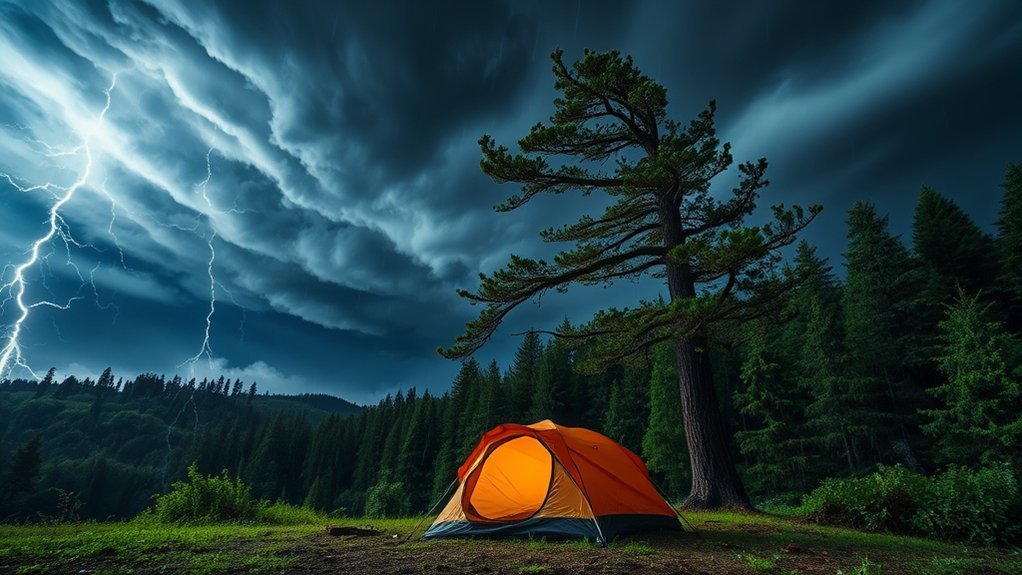
To stay safe during a thunderstorm while camping in a tent, choose a low campsite away from trees, water, and high ground. Avoid pitching your tent in the open or under isolated trees. Inside the tent, keep to the center and away from the walls, using insulating materials to minimize risk. Stay informed with a battery-powered weather radio and have an emergency plan ready. For more tips on storm preparedness, explore additional essential strategies.
Choosing the Right Campsite During Thunderstorms

When you’re choosing a campsite during thunderstorms, it’s essential to prioritize safety over convenience. Start by avoiding high ground and open areas like hilltops, where lightning is more likely to strike. Instead, select a spot with lower campsite elevation to reduce your risk. Densely wooded areas can offer better protection, but steer clear of isolated trees, as they can attract lightning.
Consider tree proximity carefully; while trees can provide shelter, being too close to any single tree increases danger. Store all metal equipment away from your tent to minimize attraction to lightning, and choose a site away from water bodies to prevent flooding. Finally, assess the surrounding landscape for hazards like cliffs or steep slopes, which can lead to landslides during heavy rain. Your awareness and careful selection can enhance your safety and guarantee a more enjoyable camping experience.
Understanding Lightning Risks While Camping
Understanding the risks of lightning while camping is essential for your safety during thunderstorms. When you’re out in the wild, remember that all trees, including oaks and beeches, attract lightning. So, seeking shelter under them isn’t an option. Instead, aim for large, structurally sound buildings if a storm strikes. If you’re in a tent, you’re not adequately protected from lightning strikes.
For lightning safety, avoid pitching your tent in high or exposed locations and steer clear of isolated trees and bodies of water. These spots increase your risk. If you find yourself caught outside, crouch down low and minimize contact with the ground, but don’t lie flat. Additionally, store metal equipment away from your tent to reduce attraction. Following these camping precautions can greatly enhance your safety and help you enjoy the freedom of the great outdoors without the fear of thunderstorms.
Behavior Inside a Tent During a Thunderstorm
If you find yourself inside a tent during a thunderstorm, your behavior can greatly impact your safety. First, position yourself in the tent’s center, avoiding contact with the frame or cover to reduce the risk of lightning strikes. Squat down and use insulating materials like air mattresses or backpacks to enhance tent insulation and minimize contact with the ground. Keep your hiking boots on to provide an extra layer of protection against electric shock. It’s crucial to remove any wiring or electronic devices from the tent to prevent potential hazards. Remember, avoid pitching your tent in low-lying areas to steer clear of flooding, and stay away from dried creek beds that can rapidly turn dangerous. By following these guidelines and practicing safe positioning, you can greatly enhance your safety during a thunderstorm, allowing you to ride out the storm with greater peace of mind.
Products Worth Considering
✔ FIBER-TECH BEAM CONSTRUCTION – Comprised of thousands of high-strength polyester fibers that provide enhanced comfort, stability and support; Fiber-Tech Beam Construction can withstand more weight and pressure without losing its comfort or stability
【Extra Wide & 3" Thick Sleep Support】 The self inflating pad for camping is up to 78*27*8 inches, after inflating keeps you away from the uneven ground and hard rocks. The innovative egg-shaped air cells and built-in pillow are designed to relieve back and neck pressure, allowing you to freely adjust your body balance and comfort, whether on your back or your side, ensuring maximum comfort and warm for your sleep all night!
【Lightweight & Portable, Perfect for Camping】NHOWIN sleeping pad folds into a compact 11" x 3.9" (approx. 28 cm x 10 cm) size and weighs only 1.98 pounds (approx. 0.9 kg), about the size of a water bottle. It fits easily into a backpack without adding any burden to your journey. Ideal for backpacking camping trips or as a sleeping mat for guests at home, it's perfect for hiking, camping, travel, backpacking, beach vacations, road trips, RV adventures, and outdoor excursions.
Essential Safety Equipment for Thunderstorm Preparedness
Being prepared for a thunderstorm while camping means having the right safety equipment on hand. Start with a battery-powered NOAA weather radio to stay updated on real-time weather alerts. It’s vital for knowing when a storm is approaching, allowing you to take necessary precautions. Pack an emergency kit that includes a portable lightning detector, first aid supplies, and waterproof gear to safeguard against unpredictable weather conditions.
Ensure you’ve got insulating materials like air mattresses or camping mats to lessen grounding risks while in your tent. Secure your tent with storm stakes and guylines to withstand strong winds and prevent damage. Don’t forget to include a flashlight or headlamp with extra batteries for visibility during power outages. By equipping yourself with these essentials, you’ll enhance your safety and comfort while enjoying the great outdoors, even in the face of a thunderstorm.
Products Worth Considering
Emergency Mylar Thermal Blankets - Emergency Blanket,Space Blanket,Thermal Blanket,Mylar Blanket,Survival Blanket.Our durable advanced aluminized Mylar blankets are perfect for civilian bug out bags, go-bags, and home/auto emergency kits.
[250 in 1 Survival Kit]: Having an emergency kit is an important step to prepare and protect your and household for some unforeseen events. This emergency survival kit is specifically designed and curated by 3 survival experts, includes total 250pcs multipurpose survival tools. It contains the most popular survival gear and tools, also a first aid kit that enough to treat a family or a group of friends under emergency circumstances.
【MULTI-PURPOSE】 : Perfect for the home, workplace, cars, it also includes preparedness survival tools for outdoor activities like camping, hiking, hunting. Manufactured in a modern facility that provides products for lifeguard agencies, hospitals, and schools
Emergency Procedures for Thunderstorm Situations
When a thunderstorm hits while you’re camping, quickly finding safe shelter is your top priority. If you receive a storm warning, don’t hesitate—head to a vehicle or sturdy building. Tents offer little protection from lightning strikes, so avoid touching the tent’s frame or cover. Instead, stay in the center and squat to reduce contact with the ground.
If you’re caught in a storm, steer clear of low-lying areas prone to flooding and avoid pitching your tent under tall trees to minimize risks of lightning and falling branches. Keep metal equipment stored away, as it can attract lightning.
Have an evacuation plan ready before your trip, so you know where to go when danger strikes. After the last clap of thunder, wait at least 30 minutes before resuming outdoor activities to verify the storm has fully passed. Safety first!
Products Worth Considering
[7400mWh (2000mAh) POWER BANK WILL KEEP DEVICES POWERED] The FosPower FOSPWB-2376 emergency radio incorporates a 7400mWh (2000mAh) power bank capable of providing emergency power to any small tablet or phone.
【HOME & OUTDOOR NECESSARY】As reported, we used to experience several times natural disasters per year like hurricanes"Harvey", Wildfire, and so on. The emergency weather Radio will keep your family safe through it all. This Weather Radio can timely report emergency weather alerts in your areas to be well prepared; A 2000mAh Built-in Li-ion battery to charge most of the device until power back; A LED flashlight with rugged cover design could light up your darkness.
AUTOMATIC NOAA WEATHER ALERT RADIO - This weather alert radio may save your life! Especially important at night while you are sleeping! It auto-scans for emergency and weather alerts when you turn the device on or in standby mode,and alert you if any emergency warning is issued. No need to listen to the weather broadcast all day and night. Getting an NOAA alert about impending weather threats gives you a heads-up that bad weather is on the way, so you can prepare or even evacuate if necessary.
Frequently Asked Questions
Can I Use My Phone During a Thunderstorm in a Tent?
You shouldn’t use your phone during a thunderstorm in a tent. While it’s essential for tent communication, phone safety is paramount. Lightning can travel through wires, increasing your risk of electrical shock. Stay cautious!
What Should I Do With My Camping Gear During a Storm?
When storms approach, protect your gear like a knight shields their armor. Stow items in waterproof bags, secure them inside your tent, and guarantee your setup stands firm. Storm preparedness keeps your adventure alive, despite nature’s fury.
Is It Safe to Cook Inside the Tent During a Thunderstorm?
No, it’s not safe to cook inside the tent during a thunderstorm. Poor ventilation can lead to carbon monoxide buildup, and sparks could ignite materials. Prioritize cooking safety outside, away from your tent.
How Do I Identify a Good Low-Lying Area for My Tent?
To identify a good low-lying area for your tent, look for spots away from water sources and slopes. Avoid areas prone to flooding risks, ensuring your tent placement keeps you safe and dry during storms.
What Are the Signs of an Approaching Thunderstorm?
You’ll notice thunderstorm indicators like darkening skies, increasing winds, or distant thunder. Prepare for storms by monitoring weather alerts and being aware of sudden temperature drops. Staying informed keeps you safe during unpredictable weather changes.
Conclusion
As you prepare for your next camping adventure, remember: choose your site wisely, respect the lightning’s power, stay calm inside your tent, equip yourself with essential gear, and know your emergency procedures. By prioritizing safety, you not only protect yourself but also enhance your overall camping experience. In storms or sunshine, being prepared fosters confidence; in challenges or calm, knowledge brings peace. Stay alert, stay safe, and enjoy the beauty of nature, no matter the weather.