
Last Updated on July 23, 2026 by Daniel Globe
The Overlook Hotel feels real because Stephen King and Stanley Kubrick built it from several real places. King found the idea at Colorado’s Stanley Hotel, while Kubrick used Oregon’s Timberline Lodge for exterior views, hotel-inspired sets in England for most interiors, and Montana mountain roads for the opening drive.
Quick Answer
The Overlook Hotel is fictional. Stephen King’s 1974 stay in Room 217 at the Stanley Hotel inspired the novel. Kubrick’s 1980 film used Timberline Lodge for exterior views, Glacier National Park for the opening drive, and sets at Elstree Studios in England for the interiors and hedge maze.
Key Takeaways
- The Overlook Hotel does not exist as one real building.
- Stephen King developed the idea after staying at the Stanley Hotel in Estes Park, Colorado, in 1974.
- Timberline Lodge on Mount Hood supplied the best-known exterior views in Kubrick’s film.
- The opening mountain drive includes Going-to-the-Sun Road and Saint Mary Lake in Glacier National Park.
- Most interiors and the hedge maze were constructed at Elstree Studios in England.
- The novel and film differ on Room 217, Room 237, the maze, the Grady daughters, and the ending.
What’s in This Article
- What Hotel Inspired The Shining?
- Is the Overlook Hotel Real?
- The Overlook Hotel’s Haunting History
- Why the Overlook Hotel’s Isolation Matters
- Who Haunts the Overlook Hotel?
- How the Overlook Hotel Affects Jack and Wendy
- How Kubrick Built the Overlook Hotel’s Atmosphere
- What Makes the Overlook Hotel’s Design So Unsettling
- The Shining Book vs. Film
- How the Overlook Hotel Shaped Pop Culture
- The Most Haunted Spots in the Fictional Overlook
- Where Was The Shining Actually Filmed?
- Can You Visit The Shining Hotels?
- The Lasting Legacy of the Overlook Hotel
- Frequently Asked Questions
Disclosure: As an Amazon Associate I earn from qualifying purchases. Some links on this page are affiliate links, at no extra cost to you.
What Hotel Inspired The Shining?
Stephen King got the idea for the fictional Overlook Hotel from the Stanley Hotel in Estes Park, Colorado. King and his wife, Tabitha, stayed there in late September 1974, just before the hotel closed for the winter season.
According to King’s own account, they discovered that they were the hotel’s only guests. While walking through its empty corridors, he began to see it as the perfect setting for a ghost story.
That night, King dreamed that his three-year-old son was running through the hotel’s halls while being chased by a fire hose. He woke up, smoked a cigarette while looking at the Rocky Mountains, and later said that he had formed the basic idea for the novel before the cigarette was finished.
King stayed in Room 217, which became the haunted room number in his novel. The Stanley now markets it as the 217 Spirited Grand King.
Freelan Oscar Stanley, the co-founder of the company behind the Stanley Steamer automobile, built the hotel. It opened in 1909 and became an important part of Estes Park’s early tourism history.
Pro Tip: Room 217 is one of the hotel’s most requested rooms. Book well ahead if you hope to stay there. The Stanley also offers an official one-hour Shining Tour, but a tour ticket does not guarantee entry to an occupied guest room.
Is the Overlook Hotel Real?
No. The Overlook Hotel is a fictional Colorado resort created by Stephen King. No single real hotel contains everything described in the novel or shown in Kubrick’s film.
The Stanley supplied King’s original inspiration. Timberline Lodge supplied the movie’s main exterior. The opening drive was filmed in Glacier National Park, and most interior rooms were constructed at Elstree Studios. Kubrick’s production team also studied the Ahwahnee in Yosemite when designing many of the interiors.
The Overlook is best understood as a fictional hotel assembled from a real nightmare, several real buildings, mountain footage, and large studio sets.
The Overlook Hotel’s Haunting History
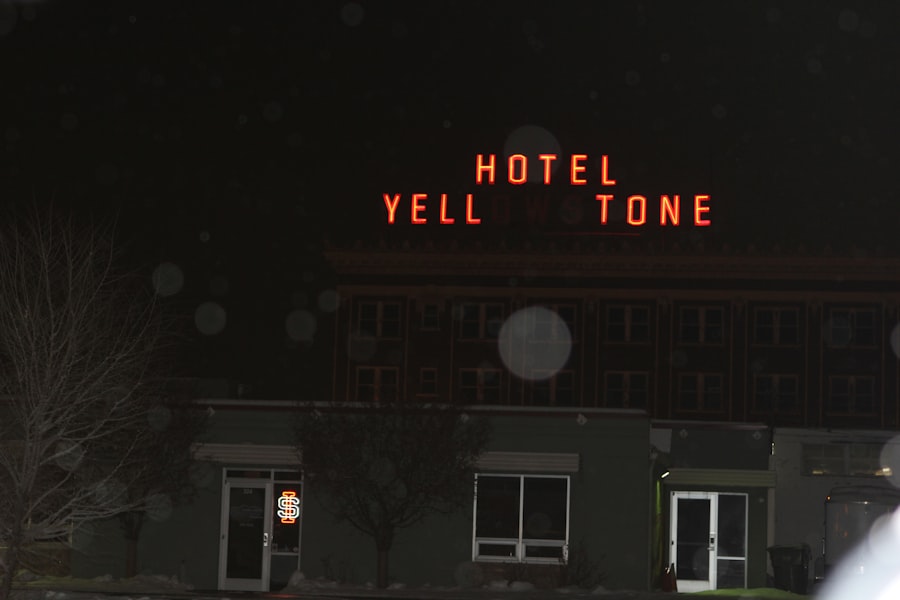
In King’s story of the Overlook Hotel, the building is more than a setting. Its long history of violence, corruption, death, and cruelty has left a supernatural force inside it.
The hotel wants Danny because his psychic ability, called “the shining,” is unusually powerful. It cannot easily control him, so it works through Jack’s alcoholism, anger, pride, and fear of failure.
Delbert Grady, a former winter caretaker who murdered his family, becomes one of the clearest examples of the hotel repeating old violence through new victims. The ghosts do not simply frighten Jack. They flatter him, encourage his resentment, and gradually push him toward attacking Wendy and Danny.
Note: The Stanley Hotel promotes ghost stories and reported paranormal experiences as part of its visitor program. Those real-world legends are separate from the fictional murders and spirits inside King’s Overlook Hotel.
Why the Overlook Hotel’s Isolation Matters
Isolation makes the Overlook dangerous. Once heavy snow closes the mountain roads, the Torrance family has no quick escape and little contact with the outside world.
The isolation also removes Jack’s normal support systems. He has no employer watching him, no nearby friends, and no easy way to step away from growing tension inside the family. His unfinished writing and resentment have room to grow.
Wendy and Danny are trapped both physically and emotionally. They depend on Jack while watching him become more hostile. By the time Wendy fully accepts that he is dangerous, leaving the hotel has become extremely difficult.
Kubrick strengthens this effect visually. Wide rooms make the family look small, while long hallways make help feel impossibly far away. The hotel can appear spacious and claustrophobic at the same time.
Who Haunts the Overlook Hotel?
The Overlook contains many spirits connected to its violent past. The details change between King’s novel and Kubrick’s adaptation, so it helps to keep the two versions separate.
Delbert Grady
In the novel, Delbert Grady was a winter caretaker who murdered his wife and two daughters before killing himself. His spirit encourages Jack to “correct” Wendy and Danny.
The film creates a deliberate naming puzzle. Hotel manager Stuart Ullman refers to a former caretaker named Charles Grady, but the ghost who speaks with Jack introduces himself as Delbert Grady. Kubrick never fully explains the difference.
Room 217 and Room 237
In King’s novel, the dangerous room is Room 217. It is associated with a former guest named Mrs. Massey, who died in its bathtub.
Kubrick changed the room number to 237. Timberline Lodge says it asked the filmmakers not to use 217 because the lodge had a real Room 217 and feared guests would avoid it. Timberline did not have a Room 237.
Are the Grady Twins Really Twins?
Not in King’s novel. Stephen King’s official character information describes Grady’s daughters as sisters aged eight and six.
Kubrick cast Lisa and Louise Burns and dressed them in matching blue outfits. Their nearly identical appearance made “the Grady twins” the lasting popular nickname, even though the film presents them simply as Grady’s murdered daughters.
How the Overlook Hotel Affects Jack and Wendy
For Jack, the winter caretaker job first looks like a chance to repair his life. He expects quiet time to write, earn money, and prove that he can support his family after problems caused by his drinking and temper.
The Overlook turns that hope against him. Its ghosts make him feel important and respected while feeding his belief that Wendy and Danny are interfering with his work. Instead of facing his past, Jack begins to repeat it.
Wendy initially hopes the move will give the family a fresh start. As Jack changes, she becomes more alert to danger and more willing to challenge him.
Wendy’s strength appears through action. She overcomes fear, protects Danny, and keeps looking for a way out even after Jack becomes openly violent.
King’s novel gives Jack more visible internal conflict, while Kubrick’s film makes him appear threatening earlier. In both versions, Wendy becomes the family member who recognizes the danger and fights to stop it.
How Kubrick Built the Overlook Hotel’s Atmosphere
In Kubrick’s 1980 film, the Overlook begins creating fear before its ghosts fully appear. The camera follows Danny’s tricycle through long passages, around blind corners, and across floors that alternate between hard wood and carpet.
The changing wheel sound makes an ordinary ride feel tense. The film’s music, distant echoes, sudden silence, and low mechanical sounds create the sense that the building is listening.
Kubrick also uses centered framing and strong symmetry. Danny, Jack, and the Grady daughters often appear in the middle of carefully balanced images. The order looks controlled, but the events inside the frame are not.
The Steadicam movements make viewers feel as though they are gliding through the hotel behind the characters. The British Film Institute’s discussion of the production notes how these movements map the hotel’s vast, eerie spaces while keeping the audience close to Danny.
What Makes the Overlook Hotel’s Design So Unsettling?
Kubrick did not copy one hotel interior. His team researched different buildings and combined their details into sets that look believable at first glance.
Material in the Stanley Kubrick Archive shows that Timberline Lodge guided the exterior design, while the Ahwahnee in Yosemite provided a model for many of the Overlook’s interiors.
The Colorado Lounge, with its tall windows, heavy beams, stone walls, and large fireplace, closely reflects the Ahwahnee’s grand public spaces. Other rooms use different architectural ideas, so the hotel never forms one fully consistent floor plan.
Windows appear where the surrounding layout should make them impossible. Corridors seem to change direction, rooms appear larger than the exterior could contain, and doors lead into spaces that do not logically fit together.
These contradictions are easy to miss during a first viewing. Even when viewers do not consciously notice them, the impossible geography helps create a feeling that the Overlook cannot be understood or escaped.
The Shining Book vs. Film
| Detail | Stephen King’s Novel | Stanley Kubrick’s Film |
| Haunted room | Room 217 | Room 237 |
| Grounds | Animal-shaped topiary that appears to move | A large hedge maze |
| Jack’s weapon | Roque mallet | Axe |
| Jack’s character | Shows more struggle against the hotel’s control | Appears unstable and threatening earlier |
| Final crisis | The neglected boiler threatens the hotel | Jack pursues Danny into the hedge maze and freezes |
| Dick Hallorann | Returns to help Wendy and Danny and survives | Returns to the hotel but is killed by Jack |
Spoiler Warning: The sections above and below discuss major events from both the novel and the 1980 film, including their different endings.
How the Overlook Hotel Shaped Pop Culture
The Overlook influenced how later films, television shows, games, and animated comedies present haunted hotels. Its patterned carpets, matching blue dresses, blood-filled elevator, axe-damaged door, typewriter pages, and snowy maze have become visual shorthand for psychological horror.
Parodies often work even for viewers who have not watched the full film because the main images are so widely recognized.
Kubrick’s film was added to the United States National Film Registry in 2018. The selection reflects its lasting cultural and cinematic importance.
The Stanley and Timberline have also become travel destinations for fans. Visitors often arrive expecting one complete “Shining hotel,” then discover that the Overlook was assembled from several places.
The Most Haunted Spots in the Fictional Overlook Hotel
The Overlook’s best-known haunted spaces differ depending on whether you are reading the book or watching Kubrick’s film.
Room 217 or Room 237
Room 217 is the novel’s central haunted guest room. Room 237 fills that role in the film. In each version, Danny enters despite being warned to stay away and encounters a supernatural presence connected to a dead woman.
The Gold Room and Red Bathroom
The Gold Room gives Jack the attention and status he wants. The bartender Lloyd and the formal party guests make him feel accepted by the hotel’s past.
In the red bathroom, Grady calmly pushes Jack toward violence. The clean, brightly colored room makes the conversation more disturbing because it lacks the dark, ruined appearance expected from a haunted space.
The Hallways
Danny repeatedly sees the Grady daughters in the corridors. The same passages later appear empty, making it difficult to know whether the hotel is showing him memories, ghosts, or warnings.
The Hedge Maze
The maze belongs to Kubrick’s film. It becomes the setting for the final pursuit and reflects the confusing layout of the hotel itself.
Timberline Lodge does not have this maze. The production built the maze and a matching hotel façade near Elstree Studios.
The Topiary and Boiler
In the novel, animal-shaped topiary replaces the film’s maze. The figures appear to move whenever they are not being watched.
The hotel’s old boiler is also essential to the book. Jack is supposed to release its pressure regularly, and his failure to do so shapes the novel’s ending.
Where Was The Shining Actually Filmed?
Kubrick’s Overlook was created from several filming locations and design references rather than one complete hotel.
Glacier National Park, Montana
The opening drive includes aerial footage of Saint Mary Lake and the yellow Volkswagen traveling along Going-to-the-Sun Road in Glacier National Park.
These images establish the scale and isolation of the mountains before the car reaches the fictional hotel.
Timberline Lodge, Oregon
Timberline Lodge on Mount Hood supplied the Overlook’s recognizable exterior in several establishing shots.
The lodge was built in 1937 and is a National Historic Landmark. Its real interior does not match the hotel rooms shown in the film.
Elstree Studios, England
Most interiors were constructed at Elstree Studios in Borehamwood, Hertfordshire. These included the lobby, Colorado Lounge, Gold Room, guest corridors, apartment spaces, kitchen areas, and Room 237.
The production also built a large exterior façade and the hedge maze on the studio backlot. This allowed Kubrick to film scenes in which the maze and hotel appeared together even though no maze existed at Timberline.
The Ahwahnee, California
The production studied the Ahwahnee in Yosemite National Park while developing many of the Overlook’s interiors. Its large stone fireplaces, timber beams, high ceilings, and grand public rooms influenced the Colorado Lounge and related sets.
The Stanley Hotel and the 1997 Miniseries
Kubrick did not film his 1980 movie at the Stanley Hotel. However, the Stanley later appeared in Stephen King’s 1997 television miniseries adaptation.
The hotel’s official tour now explains the differences among King’s novel, Kubrick’s movie, and the miniseries filmed at the property.
| Place | Location | Connection to The Shining |
| Stanley Hotel | Estes Park, Colorado | Inspired King’s novel and appeared in the 1997 miniseries |
| Going-to-the-Sun Road and Saint Mary Lake | Glacier National Park, Montana | Opening aerial drive footage |
| Timberline Lodge | Mount Hood, Oregon | Main Overlook exterior in Kubrick’s film |
| Elstree Studios | Borehamwood, England | Interior sets, exterior façade, service areas, and hedge maze |
| The Ahwahnee | Yosemite National Park, California | Major visual reference for several interior sets |
Can You Visit The Shining Hotels?
Yes, both the Stanley Hotel and Timberline Lodge accept guests, but each offers a different connection to The Shining.
Visiting the Stanley Hotel
The Stanley is the best choice for readers interested in King’s inspiration. You can book a guest room, try to reserve Room 217, or join the hotel’s official tour.
The building does not look exactly like Kubrick’s Overlook because it was not used as the exterior or interior of the 1980 film.
Visiting Timberline Lodge
Timberline is the best choice for seeing the movie’s familiar exterior. It operates as a mountain lodge and recreation destination on Mount Hood.
Do not expect the inside to resemble Kubrick’s hotel. The movie interiors were studio sets. Timberline also has no Room 237 and no hedge maze.
Visiting Glacier National Park
You can drive parts of the opening route when Going-to-the-Sun Road is open. Snow keeps the full road closed for much of the year, and access rules can change during busy seasons.
Check the National Park Service road page before planning the drive.
The Lasting Legacy of the Overlook Hotel
The Overlook’s power comes from two different creative visions. King began with a personal night of fear in an almost empty hotel. Kubrick then transformed the idea into a visual maze built from real mountain landscapes, historic buildings, and enormous studio sets.
The result feels larger than any one location. The hotel is grand but impossible, beautiful but hostile, and empty while still seeming watched.
Decades later, the Overlook continues to shape horror stories about isolation, troubled families, unreliable spaces, and buildings that preserve the violence of their past.
Frequently Asked Questions
What hotel inspired The Shining?
Stephen King based the idea for the Overlook Hotel on the Stanley Hotel in Estes Park, Colorado. He stayed in Room 217 with his wife in September 1974, when they were the hotel’s only guests before its seasonal closing.
Was The Shining filmed at the Stanley Hotel?
Stanley Kubrick’s 1980 film was not filmed at the Stanley. The hotel later appeared in Stephen King’s 1997 television miniseries adaptation.
Where was the Overlook Hotel exterior filmed?
Timberline Lodge on Mount Hood in Oregon supplied the most recognizable exterior views of the Overlook Hotel in Kubrick’s film.
Where was the opening drive filmed?
The opening aerial drive includes Going-to-the-Sun Road and Saint Mary Lake in Glacier National Park, Montana.
Where were The Shining’s interior scenes filmed?
Most interiors were built and filmed at Elstree Studios in Borehamwood, England. The production also constructed an exterior façade and the hedge maze on the studio backlot.
Why did the film change Room 217 to Room 237?
Timberline Lodge says it asked Kubrick not to use Room 217 because that room number existed at the lodge and managers worried guests might avoid it. The fictional number 237 was used instead.
Does Timberline Lodge have Room 237 or the hedge maze?
No. Timberline has no Room 237 and no hedge maze. Room 237 was a studio set, while the maze was built near Elstree Studios in England.
Can you stay in Room 217 at the Stanley Hotel?
Yes. The hotel lists it as the 217 Spirited Grand King. It is highly requested, so availability may be limited and advance booking is recommended.
The Overlook Hotel never existed as one building, but the places behind it are real. The Stanley supplied King’s nightmare, Glacier supplied the lonely approach, Timberline supplied the exterior, the Ahwahnee influenced the interiors, and Elstree Studios turned those pieces into a hotel that still feels impossible to escape.
Sources
- Stephen King: The Shining — King’s account of his 1974 stay, nightmare, and inspiration for the novel.
- The Stanley Hotel: The Shining Tour — official details about the novel, Kubrick film, and 1997 miniseries connections.
- Timberline Lodge History — exterior filming, Room 217’s change to Room 237, and the Elstree mock-up.
- British Film Institute: Exploring The Shining at the Kubrick Archive — production research, Ahwahnee interior references, and set construction.
- Elstree Studios History — official studio history confirming production of The Shining.
- Library of Congress: The Stanley Hotel — the hotel’s opening, architecture, and connection to Stephen King.
