

Last Updated on September 11, 2026 by Daniel Globe
You can usually tell whether a room has been smoked in by combining several clues rather than relying on one smell or stain. Check fabrics, vents, walls, furniture, windows, trash and hidden surfaces for tobacco odor, ash, discoloration or residue. If the answer matters for a rental, hotel dispute, property purchase or remediation decision, laboratory surface-nicotine testing can provide stronger evidence of tobacco-smoke contamination.
Quick Answer
The strongest signs that a room has been smoked in are a persistent tobacco odor, ash or cigarette butts, smoke-related staining, residue on sheltered surfaces, and odor trapped in upholstery or vents. No single clue proves indoor smoking. When documentation matters, laboratory analysis of surface-wipe nicotine can provide stronger evidence of tobacco-smoke contamination.
Key Takeaways
- Start with odor, ash, cigarette butts, staining and residue, but look for several signs together.
- Yellow or brown discoloration can support your suspicion, but it is not specific to cigarette smoke.
- A PM or VOC monitor cannot prove that cigarette smoking caused a reading because many indoor activities create particles and gases.
- Surface-wipe nicotine testing is a validated way to measure tobacco-smoke contamination, but a positive result does not identify who smoked or exactly when it happened.
- Ventilation and filtration may reduce airborne pollutants but do not necessarily remove thirdhand residue embedded in walls, carpets, furniture and other materials.
At a Glance
| Time Required | About 10–20 minutes for a basic room inspection |
| Difficulty | Easy for visual and odor checks; laboratory testing requires professional analysis |
| Tools Needed | Flashlight, camera or phone, notes, disposable gloves; optional laboratory surface-wipe sampling |
| Cost | Free for a basic inspection; professional or laboratory testing costs vary by provider and sampling method |
Warning: There is no known safe level of secondhand tobacco-smoke exposure. The CDC says even brief exposure can cause immediate harm. If active smoking is occurring, especially around children, pregnant people, or anyone with heart or lung disease, leave the exposure area when practical rather than staying to investigate it.
Disclosure: As an Amazon Associate I earn from qualifying purchases. Some links on this page are affiliate links, at no extra cost to you.
What Are the First Signs of Smoke?
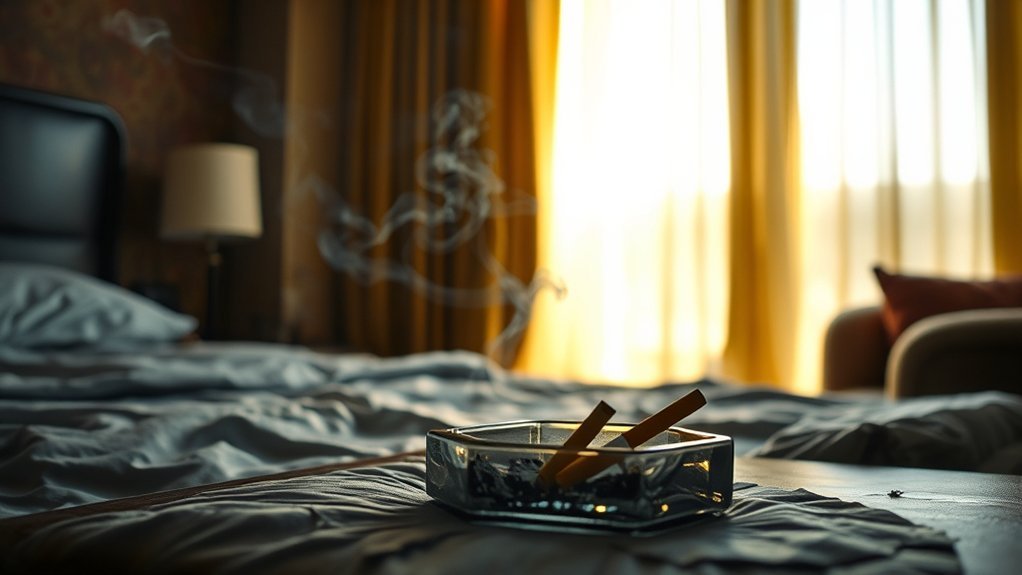
The first signs of cigarette smoking are usually odor, ash, staining, residue, or smoking-related items. A persistent tobacco smell may remain in curtains, carpet, bedding, upholstered furniture and other porous materials. Cigarette smoke can also stain surfaces over time, so yellowish or brownish discoloration on walls, ceilings, blinds or furnishings can support your suspicion.
However, treat these as clues rather than automatic proof. Cooking grease, fireplace smoke, candles, incense, aging paint, moisture and outdoor pollution can create odors, particles or discoloration that resemble smoke damage.
A practical way to judge the evidence is:
- Suggestive clue: stale odor, discoloration, a dusty film or an unusual air-quality reading.
- Strong supporting evidence: several smoke-related clues together, such as tobacco odor plus ash, cigarette butts or characteristic burns near a seating area.
- Objective contamination evidence: properly collected surface samples analyzed for nicotine or other tobacco-smoke markers by a laboratory.
Air-quality monitors can add context, but they are not cigarette detectors. The U.S. Environmental Protection Agency notes that low-cost monitors only measure pollutants their sensors are designed to detect. Particulate matter can come from smoking, but also from cooking, candles, fireplaces, outdoor air and other sources.
Check for Odors in Fabrics and Vents
Start with materials that readily hold odors. Smell curtains, upholstery, carpet, cushions, bedding and fabric-covered furniture. Tobacco odor often remains stronger in sheltered or less-cleaned areas, such as the back of curtains, underneath cushions, behind a headboard or along carpet edges.
Next, check supply registers, return grilles and nearby surfaces. Smoke and tobacco-related chemicals can move through buildings and accumulate around ventilation pathways. A tobacco smell at a vent is useful evidence of exposure, but it does not necessarily prove that someone smoked inside that exact room. In apartments, hotels and other multi-room buildings, smoke can migrate from neighboring spaces.
The EPA also warns that not seeing or smelling smoke does not mean all smoking-related chemicals are gone. Some compounds can remain on hard surfaces and become embedded in upholstery, drapes, bedding, carpets and clothing.
Pro Tip: Compare exposed areas with sheltered ones. The back of a curtain, underside of a table, inside a closet, upholstery seam or area behind furniture may preserve odor or residue that was missed during routine cleaning.
Look for Yellow Stains and Residue
Cigarette smoke can cause visible staining on wallpaper, fabric and other indoor materials after repeated exposure. Check walls, ceilings, door frames, blinds, light fixtures, switches and trim for uneven yellowish or brownish discoloration.
Pay special attention to protected surfaces that are less likely to have been washed. You may notice a difference between an exposed wall and the area behind a picture frame, cabinet or piece of furniture.
Still, color alone cannot identify nicotine or cigarette smoke. Similar staining can come from cooking oils, soot, water damage, age or other contaminants. A stain becomes more meaningful when it appears with other signs such as tobacco odor, ash, butts or laboratory-detected nicotine.
Fresh paint can also hide visible evidence without proving that the underlying room was fully remediated. If a heavily contaminated surface was simply painted over, tobacco compounds may remain in underlying material even when the room looks clean.
Spot Smoke Clues in Furniture and Walls
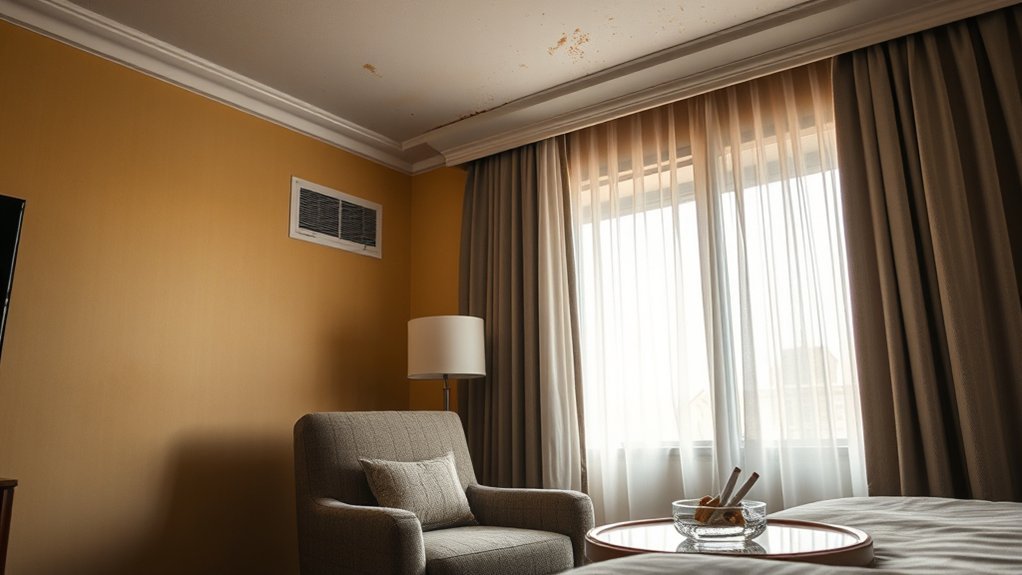
Furniture can preserve evidence that is easier to miss on freshly cleaned walls. Inspect upholstered chairs, sofas, mattresses, tables and carpets for discoloration, embedded tobacco odor, ash or small burns.
Burn marks can support the possibility that smoking occurred, especially when they appear near ash or cigarette debris, but a burn mark by itself does not identify what caused it. Candles, incense and other hot objects can leave similar damage.
On walls and trim, look for uneven film, dullness or staining around areas that are difficult to clean. Window sills, blind slats, curtain hardware, door tops and the backs of furniture can collect deposited material over time.
Use a flashlight from the side rather than shining it directly at the wall. Side lighting often makes uneven film, dust and surface changes easier to see.
Find Ashtrays, Lighters, and Cigarette Butts
Physical smoking-related items are among the strongest practical clues. Check visible surfaces, trash containers, drawers, balcony areas, window sills and spaces behind furniture for ashtrays, cigarette butts, loose ash, matches or lighters.
| Item or Sign | What It Tells You |
|---|---|
| Cigarette butts or fresh ash | Strong evidence that cigarettes were used or discarded nearby |
| Ashtray with tobacco residue | Strong supporting evidence of smoking activity |
| Lighters or matches | Supporting clue, but not proof by themselves |
| Burn marks | Possible combustion clue; source must be confirmed from context |
A cup, plate, bottle or other container containing cigarette ash or butts can function as a makeshift ashtray and may be more revealing than a conventional ashtray.
How Can You Tell If a Room Was Smoked In?
Use a consistent inspection sequence instead of relying on your first impression:
- Pause before masking odors. Do not spray air freshener or cleaners before the inspection.
- Check porous materials. Smell curtains, carpet, bedding, cushions and upholstered furniture.
- Inspect walls and ceilings. Look for uneven staining, especially behind furnishings and near trim.
- Check windows and vents. Look for residue and compare sheltered surfaces with exposed ones.
- Inspect trash and furniture gaps. Look for ash, butts, packaging or makeshift ashtrays.
- Photograph what you find. If the condition may lead to a hotel complaint, rental dispute or remediation decision, take clear dated photos before cleaning.
- Consider professional testing when necessary. Laboratory surface-nicotine testing can provide stronger contamination evidence when visual clues are not enough.
Rule Out Other Possible Sources
Before concluding that cigarettes were smoked in the room, consider other explanations. Cooking, candles, fireplaces, incense, wildfire smoke and some industrial or outdoor pollutants can produce odors, soot or particulate matter. Nicotine-containing e-cigarette aerosol can also deposit nicotine on indoor surfaces, so nicotine alone does not always identify combustible-cigarette use.
In multiunit buildings, tobacco smoke can also move between units through hallways, gaps and shared air pathways. That means a room may be contaminated even when the current occupant did not smoke in it.
Note: A consumer PM or VOC monitor can show that particles or gases increased, but it normally cannot tell you which source produced them. Use sensor data as supporting information, not as proof of cigarette smoking.
Use Nicotine Tests to Confirm Smoke

When you need stronger evidence than odor or staining, surface-wipe nicotine testing is one of the best-studied methods for measuring thirdhand tobacco-smoke contamination.
In published research, a defined area of a surface is wiped using a controlled sampling method. The sample is then analyzed in a laboratory for nicotine. Research involving homes, cars and hotels has found that surface-wipe nicotine can distinguish environments with different smoking histories and correlates with other tobacco-contamination measures.
Do not confuse this with an undefined consumer “smoke strip.” Reliable interpretation depends on the sampling area, collection procedure, laboratory method and comparison values.
A 2026 systematic review of 3,167 surface-nicotine measurements found a clear rise in typical contamination from long-term nonsmoking homes to formerly smoked-in homes, currently smoked-in homes and heavily smoked environments.
The 2026 systematic review and meta-analysis reported a weighted median surface nicotine level of about 0.97 µg/m² in nonsmoking homes with long-term bans, 4.57 µg/m² in previously smoked-in homes and 51.09 µg/m² in currently smoked-in homes. These values are useful contamination benchmarks, but they are not a clinical diagnosis and do not prove who smoked, exactly when smoking occurred, or that every detectable amount represents a new violation.
A positive test is best described as evidence that nicotine contamination is present. Interpretation should consider the building’s history, neighboring smoke, prior occupants, vaping and the sampling method.
Tell Old Smoke From Fresh Smoke
Recent smoking and old tobacco residue can look different, but there is no reliable stain-color test that tells you the age of contamination. Focus instead on whether there is evidence of active or very recent combustion versus residue that remains after the airborne smoke has cleared.
Fresh Smoke Clues
Fresh cigarette smoke usually has a sharper, stronger odor and may be accompanied by direct evidence such as a lit cigarette, warm ash, a recently used ashtray or visible smoke or haze. In an enclosed room, occupants may also notice immediate eye, nose or throat irritation.
A particle monitor may rise during active smoking, but the reading is not specific to tobacco. Cooking, candles and other combustion sources can produce similar particle increases.
Old Smoke Signs
Older contamination is more likely to appear as persistent odor in porous materials, accumulated staining, residue on sheltered surfaces or nicotine embedded in dust and furnishings after visible smoke is gone.
Thirdhand-smoke chemicals can remain long after smoking stops. Experimental studies have found significant tobacco-related chemicals in smoke-exposed fabrics many months later, and more recent reviews report detectable surface nicotine months or years after indoor smoking has ceased.
Do not try to date smoke exposure from how dark a stain looks. Stain intensity depends on the amount of smoking, material type, ventilation, cleaning, moisture and other conditions.
Odor And Residue Differences
Fresh smoke usually produces the strongest airborne odor while smoking is occurring or shortly afterward. Older contamination may smell stale or faint because compounds have settled into carpets, upholstery, walls and dust.
Odor strength is not a reliable measure of contamination. A room can smell cleaner after airing out or deodorizing while deposited tobacco-related chemicals remain on surfaces.
Check for Thirdhand Smoke Residue
Thirdhand smoke refers to tobacco-related chemicals that remain in an indoor environment after smoking has stopped. According to the EPA, smoking-related chemicals can accumulate on hard surfaces such as walls, floors and tables and become embedded in soft materials including clothing, upholstery, drapes, bedding and carpets. Some chemicals can later return to the air.
This is different from secondhand smoke, which is exposure to smoke released while tobacco is actively being burned and exhaled. The health evidence demonstrating disease from secondhand smoke is extensive. Thirdhand-smoke research has established persistent chemical contamination and several exposure pathways, while research continues to define the full level of human health risk from different thirdhand exposures.
Detect Residue Signs
Visible and sensory clues can tell you where to look, but none of the following is chemically diagnostic on its own:
| Sign | Possible Interpretation |
|---|---|
| Yellow or brown staining | Possible long-term smoke deposition, but other causes are possible |
| Stale tobacco odor | Strong supporting clue when it persists in several materials |
| Fabric discoloration | Possible accumulated smoke exposure or another contaminant |
| Sticky or dull surface film | Possible deposited residue that needs further confirmation |
| Laboratory-detected surface nicotine | Objective evidence of nicotine contamination, interpreted with building history and other sources |
Test Hidden Surfaces
Inspect areas that routine housekeeping may miss: behind furniture, under tables, along baseboards, inside closets, behind curtains, around vent covers and at carpet edges. These locations can preserve deposits that are less obvious on frequently cleaned surfaces.
If objective documentation is necessary, a professional environmental consultant or qualified laboratory can advise on surface-wipe sampling. Air testing may help answer some indoor-air questions, but surface nicotine is generally more appropriate when the concern is persistent thirdhand contamination rather than an active smoking event.
The absence of smell is not proof that a space is free from residue. EPA guidance specifically notes that chemicals from smoking can remain after the visible smoke and odor are gone.
What to Do After You Confirm Smoking
If several signs or laboratory results indicate tobacco-smoke contamination, document the condition before cleaning. Take clear photographs, record where odors or residue were found and save any relevant test report.
If You Are a Hotel Guest
Contact the front desk promptly and explain the specific signs you found, such as tobacco odor, ash or visible residue. If you booked a nonsmoking room, ask for another room in a genuinely smoke-free area or another reasonable remedy under the property’s policy. Avoid spraying fragrances before staff have had a chance to inspect the room.
If You Are a Renter or Homebuyer
Document the condition and ask the landlord, seller, property manager or inspector about the property’s smoking history. If exposure is a health concern, especially for a child or someone with asthma, heart disease or another condition affected by smoke, consider professional assessment before occupying a heavily contaminated space.
If You Are a Landlord or Property Manager
Record the evidence objectively and compare it with the lease or property’s smoking policy. Avoid treating odor or one stain as definitive proof of a particular person’s conduct. If fees, deposit deductions or enforcement are being considered, follow the lease terms and applicable state or local law.
Clean the Contaminated Space
Stop any new indoor smoking first. Then remove loose dust, wash cleanable surfaces and launder washable fabrics according to their care instructions. Carpets, upholstery, mattresses, curtains, drywall and other porous materials can act as long-term reservoirs.
Ventilation and filtration may reduce airborne pollutants, but the EPA states that they do not eliminate secondhand exposure and they do not necessarily remove contaminants already embedded in surfaces.
A multiunit-housing remediation study found that combined dry/damp and wet cleaning reduced average surface nicotine by roughly half, yet did not completely eliminate thirdhand-smoke contamination. Dust nicotine also rebounded as pollutants were replenished from remaining reservoirs. Heavy contamination can therefore require repeated cleaning and, in some cases, removal or replacement of materials that cannot be adequately cleaned.
Note: Cleaning methods that are safe for one material may damage another. Follow manufacturer care instructions, avoid mixing cleaning chemicals, and consider professional remediation when contamination is extensive or the building materials are valuable or sensitive.
Frequently Asked Questions
How to Tell if Someone Has Smoked in a Room?
Look for several signs together: a persistent tobacco odor in fabrics, ash or cigarette butts, staining, residue on hidden surfaces, smoking-related items and odor around furnishings or vents. One clue alone is not proof. When documentation matters, laboratory surface-nicotine testing can provide stronger evidence of tobacco-smoke contamination.
How Long Do You Have to Be Near Secondhand Smoke to Get Affected?
There is no known safe level of secondhand tobacco-smoke exposure. The CDC states that even brief exposure can cause immediate harm, and harmful inflammatory and respiratory effects can occur within 60 minutes. Risk depends on the amount and duration of exposure as well as individual health factors.
How to Smoke in a Room Without Anyone Finding Out?
I can’t help with hiding indoor smoking or evading a property’s smoking rules. Smoke and nicotine can spread beyond the room and leave residue on surfaces. Use an outdoor or specifically designated smoking area and follow the property’s rules.
How to Detect Cigarette Smoke in a Room?
Start with odor, ash, butts, stains, residue and smoking-related items. Check sheltered surfaces, carpets, curtains, upholstery and vents. PM or VOC monitors can provide supporting air-quality information but cannot normally identify cigarette smoke by themselves. For stronger confirmation of contamination, use properly collected surface wipes analyzed for nicotine by a laboratory.
Can an Air Purifier Remove Cigarette Smoke From a Room?
Filtration and ventilation can reduce some airborne smoke particles and pollutants, but they do not eliminate all secondhand-smoke exposure or remove tobacco chemicals already deposited in carpets, walls, upholstery and dust. Preventing indoor smoking is the most effective way to stop new contamination.
Can Fresh Paint Hide Evidence of Cigarette Smoking?
Fresh paint can hide visible staining and temporarily change a room’s odor, but it does not prove that underlying contamination was removed. Tobacco-related compounds can remain in porous building materials and furnishings, so heavily contaminated rooms may require cleaning or remediation before repainting.
Conclusion
The best way to tell if a room has been smoked in is to combine odor, physical evidence, staining, residue and hidden-surface inspection rather than relying on one clue. Cigarette butts or ash provide stronger practical evidence than discoloration alone, while laboratory surface-nicotine testing can document tobacco-related contamination when the answer really matters.
If contamination is present, stop new indoor smoking, document the condition and clean affected surfaces and fabrics appropriately. Remember that ventilation can improve the air without necessarily removing thirdhand residue embedded in porous materials.
Sources
- Centers for Disease Control and Prevention — Health Problems Caused by Secondhand Smoke — supports the health guidance and the statement that even brief secondhand-smoke exposure can cause harm.
- U.S. Environmental Protection Agency — Secondhand Smoke and Electronic-Cigarette Aerosols — supports persistence of smoking-related chemicals on hard and soft surfaces and the limits of ventilation and filtration.
- U.S. Environmental Protection Agency — Low-Cost Air Pollution Monitors and Indoor Air Quality — supports the limitations of consumer PM, VOC and other indoor-air monitors.
- Quintana et al. — Wipe Sampling for Nicotine as a Marker of Thirdhand Tobacco Smoke Contamination — supports laboratory surface-nicotine wipe sampling as a validated contamination measure.
- Quantitative Reference Levels for Thirdhand Smoke Residue From Tobacco Products in Indoor Environments — 2026 systematic review and meta-analysis supporting current surface-nicotine contamination benchmarks.
- Remediating Thirdhand Smoke Pollution in Multiunit Housing — supports the limitations of routine cleaning and persistence of nicotine reservoirs.
