

Last Updated on August 26, 2026 by Daniel Globe
Hotel star ratings give travelers a quick way to judge a property’s general level of facilities, comfort, and service. The familiar one-to-five-star scale is widely recognized, but there is an important catch: there is no single worldwide set of hotel-star requirements. A three-star hotel in one country or rating system may therefore offer something different from a three-star hotel elsewhere.
Quick Answer
Hotel stars generally indicate the level of facilities, comfort, and service a property provides. One star usually represents basic accommodation, while five stars signals a high-end luxury experience. However, exact requirements vary by country and rating organization, so compare stars with recent reviews, amenities, location, and price.
Key Takeaways
- Hotel star ratings usually describe a property’s facilities, comfort, and service level rather than simply whether previous guests liked it.
- There is no single worldwide hotel-star authority, so the requirements behind a three-, four-, or five-star label can differ.
- Higher star categories generally require more services, facilities, and comfort, but individual amenities are not universal.
- Official national systems, professional inspection programs, booking-site classifications, and guest review scores are different things.
- For the best booking decision, check who awarded the stars and compare the rating with recent reviews, location, room features, accessibility needs, and total price.
What Each Star Rating Represents
The one-to-five-star scale is generally a hierarchy: more stars usually mean a broader range of facilities, higher service levels, and more attention to comfort. However, the following descriptions are practical expectations rather than a universal checklist. Exact requirements depend on the organization that awarded the rating.
| Star Level | Typical Expectation | Often Best For |
|---|---|---|
| 1 star | Basic, functional accommodation with essential services and relatively few extras. | Budget stays and travelers who mainly need a place to sleep. |
| 2 stars | Simple accommodation with somewhat more comfort, convenience, or service than the most basic category. | Value-conscious leisure and road-trip stays. |
| 3 stars | Mid-range comfort with a broader mix of guest services and on-site facilities. | Typical leisure trips and many business stays. |
| 4 stars | Upscale accommodation with higher service standards, better-appointed rooms, and a wider range of facilities. | Travelers wanting extra comfort, service, and convenience. |
| 5 stars | Top-tier accommodation with extensive services, premium facilities, and a strong emphasis on personalized hospitality. | Luxury trips, special occasions, and full-service stays. |
A lower star rating does not automatically mean a hotel is dirty or unpleasant, and a five-star rating does not guarantee that every guest will enjoy the stay. Stars primarily help describe the property’s category and expected service or facility level within the particular rating system being used.
Factors Considered in Hotel Star Ratings

The criteria used to award hotel stars vary by country and organization. In structured systems, ratings may consider room features, bathrooms, reception services, food and beverage options, guest services, leisure facilities, event facilities, housekeeping, quality-management practices, and other measurable requirements.
The Hotelstars Union’s 2025–2030 criteria, for example, cover areas including general hotel information, reception and services, rooms, food and beverages, event facilities, leisure facilities, and quality and online activities. Hotels must satisfy mandatory requirements and reach applicable point thresholds for their category.
The Hotelstars Union’s 2025–2030 system evaluates hotels against 239 criteria and uses on-site audits as part of its classification process.
Service can also matter substantially. Higher categories may require more extensive reception coverage, guest assistance, luggage services, concierge-style support, food and beverage availability, or other service elements. Room features, bedding, bathrooms, storage, technology, maintenance, and comfort may also contribute.
Safety, hygiene, and compliance requirements can form part of a classification framework, although the precise rules depend on the jurisdiction. Travelers should not assume that star level alone answers every safety or accessibility question.
Note: A hotel’s location can make it much more useful to you, but a prime address is not a universal hotel-star requirement. Evaluate proximity to attractions, transit, airports, offices, beaches, or hospitals separately from the star category.
How Hotel Star Ratings Differ Across Countries
Hotel stars do not have exactly the same meaning everywhere. Some countries use national classification programs, some participate in multinational systems, and some markets rely heavily on private inspection organizations or booking-platform classifications.
| Country | Rating Framework | What Travelers Should Know |
|---|---|---|
| United States | Multiple private systems and booking-platform classifications are used. Forbes Travel Guide awards Stars, while AAA uses Diamonds. | Check which organization supplied the displayed rating instead of assuming every set of stars follows the same rules. |
| France | Atout France administers the tourist-hotel classification framework. | Classification is based on defined criteria and controls. Current classifications are checked on a five-year cycle, with mystery visits forming part of the process for 4- and 5-star applications. |
| Germany | Germany participates in the Hotelstars Union’s harmonized 1-to-5-star classification. | The current 2025–2030 framework uses common criteria and an on-site classification process. A “Superior” supplement can distinguish hotels that substantially exceed the points required for their star category. |
| China | Tourist hotels can be classified from one to five stars under the current national standard GB/T 14308-2023. | The standard was published in 2023, took effect on March 1, 2024, and replaced GB/T 14308-2010. |
This is why two hotels displaying the same number of stars can provide noticeably different experiences. The categories may be similar in broad intent, but the mandatory criteria, inspection methods, service expectations, and renewal processes can differ.
Official Stars vs. Private Hotel Ratings
An official or nationally recognized classification normally follows published criteria established for that jurisdiction. Private organizations can also operate rigorous professional rating systems. Forbes Travel Guide, for example, uses anonymous professional inspectors and places substantial emphasis on service. AAA operates a separate inspected Diamond rating program rather than a star system.
Booking websites may display their own property classifications as well. Because different systems can use different data and criteria, the same hotel may not always display the same classification everywhere.
Hotel Stars vs. Guest Review Scores
A hotel classification and a guest review score answer different questions. A star classification generally tells you about the hotel’s category, facilities, and expected service level. A guest score tells you how previous travelers rated their actual stays.
That means a well-run three-star hotel can earn outstanding guest reviews, while a five-star property can receive disappointing reviews if current service, cleanliness, maintenance, or value falls below guests’ expectations.
Understanding the Implications of Hotel Star Ratings
Star ratings influence expectations. A traveler booking a four- or five-star property may expect more extensive service, upgraded rooms, and greater convenience than someone booking basic accommodation. Hotels in higher categories also often charge more because they operate additional facilities and provide more labor-intensive services.
However, more stars do not automatically mean better value. A traveler who spends most of the day exploring a destination may get more value from a clean, well-reviewed three-star hotel beside a train station than from a five-star hotel far from the places they intend to visit.
Ratings can also affect a hotel’s marketing and reputation. A recognized classification helps a property communicate the service level it is designed to provide. Maintaining that classification may require periodic reassessment, depending on the rating system.
Guest expectations still matter. If rooms have become worn, management has changed, or service has declined since an inspection, a property’s official category may not tell you everything about its present condition. That is one reason recent guest feedback remains useful.
Products Worth Considering



How to Use Hotel Star Ratings to Choose the Right Accommodation

Start by treating the star rating as a filter rather than a final verdict. Decide which services you genuinely need, then check whether the specific property provides them.
- Identify the rating source. Look for the tourism authority, inspection organization, or booking platform responsible for the classification.
- Check the exact amenities. Do not assume a star category guarantees a pool, spa, airport shuttle, breakfast, parking, room service, or fitness center.
- Read recent reviews. Focus on comments from the last several months about cleanliness, noise, maintenance, staff, Wi-Fi, breakfast, and room condition.
- Check the room category. Hotel-level amenities may be excellent while the cheapest room is small, faces a noisy street, or lacks features shown in premium-room photos.
- Evaluate location separately. Check walking distance, public transportation, neighborhood conditions, parking, and actual travel time to the places you plan to visit.
- Confirm accessibility needs directly. A high star rating does not guarantee that a particular room, entrance, bathroom, pool, or shuttle meets your individual accessibility requirements.
- Compare the total price. Include taxes, resort or destination fees, parking, breakfast, Wi-Fi charges, and other mandatory costs before deciding which hotel offers better value.
Families may prioritize connecting rooms, cribs, pools, laundry facilities, breakfast, or proximity to attractions. Business travelers may care more about reliable Wi-Fi, workspace, meeting facilities, late check-in, and access to commercial districts or transportation.
Pro Tip: When two hotels have the same star rating, compare recent review trends and the exact amenities you will use. A slightly lower-rated property can be the better choice if it has a stronger location, newer rooms, better recent feedback, or fewer extra fees.
What Hotel Stars Do Not Guarantee
- The best location for your itinerary.
- The lowest price or best overall value.
- A recently renovated room.
- Perfect service during every stay.
- Silence or freedom from construction and street noise.
- Specific accessibility features you require.
- That every amenity pictured online is included with your room rate.
- That current guests are satisfied with the property.
The Importance of Customer Reviews in Conjunction with Star Ratings
Customer reviews add information that a formal classification may not capture. An inspection system measures a hotel against defined standards, while reviews describe individual stays and can reveal how consistently the property performs from day to day.
Look for patterns rather than reacting to a single glowing or angry review. Repeated comments about clean rooms, responsive staff, comfortable beds, noise, poor air conditioning, slow elevators, or maintenance problems are generally more useful than one isolated complaint.
Recency matters as well. Hotels change over time. Renovations can improve rooms, while staffing or maintenance problems can temporarily weaken an otherwise highly rated property. Reading recent feedback helps you understand whether the hotel’s current guest experience appears to match its classification.
Aggregate review scores can be useful for quick comparison, but read the underlying comments before making an expensive booking. Different travelers also value different things: a lively hotel praised by couples may be too noisy for a family with a baby, while a quiet business hotel may feel dull to someone looking for nightlife.
Products Worth Considering

✔️ 3-in-1 Portable Air Cooler: Functions as a fan, humidifier, and evaporative air cooler in one compact unit. Delivers refreshing, moisture-rich airflow for year-round indoor comfort.

Powerful 14000 BTU Air Conditioner Portable for Large Rooms: Stay comfortable even during hot summer days with this 14000 BTU (ASHRAE) portable air conditioner, equipped with a high-quality compressor and durable condenser for more reliable and efficient cooling. Designed to cool spaces up to 700 sq. ft (optimal for around 400 sq. ft), it’s perfect for living rooms, bedrooms, apartments, and home offices that demand consistent performance.
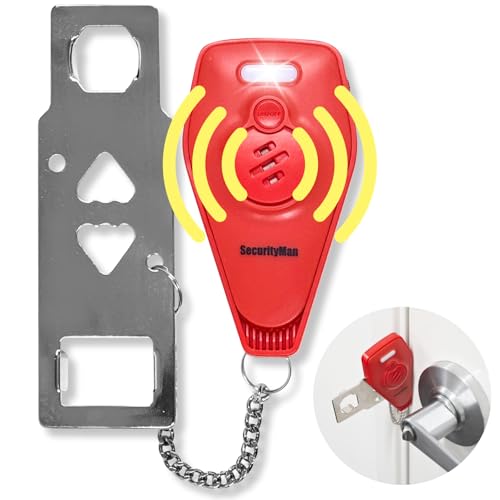
(2-in-1 Lock & Alarm System): Gain double the security with a strong lock and 130dB vibration alarm that triggers upon tampering. The hotel door lock is ideal for travelers, tenants, and homeowners wanting enhanced peace of mind.
Making Informed Decisions Based on Hotel Star Ratings
Hotel stars are most useful when you know what they represent. Use them to estimate the property’s general category and level of facilities, but avoid assuming that the same star count means precisely the same thing in every country or on every website.
Before booking, identify who awarded the rating, confirm the amenities that matter to you, read recent guest feedback, examine the hotel’s location, and compare the complete cost. This approach gives you a more realistic picture than relying on the star symbol alone.
Once you have chosen your accommodation, you may also want to prepare for the journey itself. If cabin noise is a concern, see these wired noise-cancelling earbuds for travel. Travelers carrying photography equipment can compare options in this travel camera backpack guide, while families can review the best double strollers for travel.
Frequently Asked Questions
What are hotel star ratings?
Hotel star ratings classify accommodation according to a defined level of facilities, comfort, and service. Most familiar systems use one to five stars, but the precise requirements depend on the country or organization that awards the rating.
How are hotel star ratings determined?
The method varies. Formal systems can assess rooms, bathrooms, reception, guest services, food and beverage facilities, leisure facilities, maintenance, quality management, and other requirements. Some use professional inspections and minimum point thresholds, while booking platforms may apply their own classification methodology.
What do the different hotel star ratings mean?
In broad terms, one-star accommodation is basic and functional, two stars adds some conveniences, three stars represents a mid-range level, four stars is generally upscale, and five stars represents top-tier luxury and extensive service. These descriptions are general expectations rather than worldwide rules.
Are hotel star ratings consistent worldwide?
No. There is no single global authority that sets identical hotel-star requirements everywhere. Countries, regional programs, private inspection organizations, and booking platforms can use different criteria, so a four-star classification in one system may not exactly match a four-star classification in another.
Should I rely solely on star ratings when choosing a hotel?
No. Use the stars as a starting point, then check recent guest reviews, the exact room and amenities, location, accessibility, cancellation rules, and total price. A lower-star hotel can be a better choice if it matches your needs more closely.
Who awards hotel star ratings?
It depends on the destination. Ratings may come from tourism authorities, national or regional classification organizations, industry associations, independent professional inspection companies, or booking platforms. Always check which organization supplied the rating you are viewing.
What is the difference between a hotel star rating and a guest review score?
A hotel star rating usually classifies the property’s facilities and expected service level. A guest review score summarizes travelers’ opinions about their actual stays. A three-star hotel can therefore have excellent guest reviews, while a five-star hotel can have disappointing recent reviews.
Are 6-star or 7-star hotels official?
In the major classification systems discussed here, the standard scale tops out at five stars. “Six-star” or “seven-star” descriptions are generally promotional language rather than an additional official category, so travelers should check the actual recognized classification behind the claim.
Sources
- Hotelstars Union — Classification Scheme — explains the harmonized European classification process, on-site audits, star categories, and current assessment framework.
- Hotelstars Union — 2025–2030 Criteria — supports the current criteria areas and requirements used in participating countries.
- Atout France — Hôtel de tourisme — supports France’s current hotel-classification and inspection framework.
- China National Standards — GB/T 14308-2023 — supports China’s current national standard for classifying star-rated tourist hotels.
- Forbes Travel Guide — Rating Methodology — supports the explanation of independent professional Star Ratings and anonymous inspections.
- AAA — Diamond Ratings — supports the distinction between AAA’s professionally inspected Diamond system and hotel-star classifications.
