
Last Updated on July 23, 2026 by Ethan Caldwell
Many hotels label the level above 12 as 14, but the physical level usually still exists. The choice is mainly a response to superstition and guest comfort, not a structural requirement. Practices vary by property and culture: some hotels display 13 normally, while others also avoid numbers such as 4 or 14.
Quick Answer
Yes. Many hotels omit the number 13 from elevator panels and room labels, so the sequence jumps from 12 to 14 or uses 12A. The physical level normally remains in the building. Hotels do this to reduce discomfort among superstitious guests, but the practice is optional and varies by property and country.
Key Takeaways
- Hotels usually skip the number 13, not the physical level itself.
- The level may be labeled 14, 12A, or with an amenity or mechanical-floor name.
- There is no reliable current percentage showing how many hotels omit 13 worldwide.
- Floor numbering is normally decided property by property rather than by one universal chain policy.
- Some hotels in parts of East and Southeast Asia also omit 4, 14, or other numbers containing 4.
Disclosure: As an Amazon Associate I earn from qualifying purchases. Some links on this page are affiliate links, at no extra cost to you.
Why Hotels Skip the 13th Floor
The main reason is triskaidekaphobia, the fear or avoidance of the number 13. In several Western cultures, 13 is associated with bad luck. A hotel may therefore leave the number off its elevator panel to reduce discomfort, complaints, or requests to move to another room.
A 2007 USA TODAY/Gallup poll of 1,006 American adults found that 13% would be bothered by receiving a hotel room on the 13th floor. Nine percent said they would be bothered enough to request another room. A later hospitality study published in 2019 cited those results while examining how hotel guests from different cultures respond to supposedly unlucky floor and room numbers.
Skipping 13 is therefore a guest-service decision rather than proof that hotel managers personally believe the number causes bad luck. Changing a label is simple, and it avoids creating an unnecessary concern for guests who are sensitive to the number.
Note: The widely repeated claim that 85% of elevators omit a 13th-floor button comes from an old Otis estimate about high-rise buildings. It was not a recent survey of hotels, so it should not be treated as a current hotel-industry percentage.
How Triskaidekaphobia Affects Hotel Floors
Triskaidekaphobia affects the names shown on elevator panels, directories, room keys, booking systems, and signs. It does not normally change the hotel’s structural design. A building still needs a physical level between the levels labeled 12 and 14, but the hotel may present that level under another name.
Hotel Floor Omissions
Hotels and other tall buildings use several methods to avoid displaying 13:
- Jumping from 12 to 14: The physical level immediately above 12 receives the guest-facing label 14.
- Using 12A: The level is inserted between 12 and 14 without displaying 13.
- Giving the level a name: A property may use a label such as pool, club, mezzanine, or mechanical level.
- Changing room numbers only: A hotel may retain a floor labeled 13 but omit rooms such as 1313 or any room ending in 13.
- Keeping normal numbering: Some properties display 13 without making any special change.
The label shown in an elevator does not always reveal the building’s exact physical level count. Ground floors, podiums, mezzanines, double-height lobbies, amenity levels, and mechanical spaces can also affect the sequence.
Superstition-Driven Design Choices
Research suggests that reactions to unlucky numbers differ by culture and by individual belief. A 2019 study surveyed 400 Western tourists and 403 mainland Chinese tourists. Chinese participants were more likely to feel uncomfortable or request a change when assigned an unlucky room or floor number. Almost one in 10 Chinese participants said they would seek a change, compared with almost 3% of Western participants.
Floor-number decisions are less about engineering than about reducing avoidable discomfort for guests with different cultural expectations.
These findings support the idea that numbering can affect guest comfort and room-change requests. They do not prove that displaying 13 automatically lowers occupancy, room rates, reviews, resale value, or a hotel’s overall financial performance.
Does the 13th Floor Actually Exist?
In most hotels that jump from 12 to 14, the physical level still exists. Only its public-facing number has changed. If the elevator goes directly from 12 to 14 with no unusual mezzanine or double-height space between them, the level labeled 14 is commonly the thirteenth above-ground level in ordinary counting.
That does not mean every hotel’s floor 14 is physically its thirteenth level. A hotel may have a lobby counted differently, several podium levels, mechanical floors, split levels, or floors served by separate elevator banks. Architectural plans and the property’s official floor directory provide a more reliable answer than counting elevator buttons alone.
Which Hotels Keep the 13th Floor?
Some hotels retain consecutive numbering and display a floor 13, but there is no dependable worldwide list. Numbering is usually decided at the property level and may change after a renovation, conversion, ownership change, or rebranding.
Public hotel websites also rarely show every elevator button or guest-floor label. For that reason, lists naming individual hotels can become outdated or may rely on photographs that no longer represent the property.
Notable Hotel Exceptions
A hotel that openly labels floor 13 is an exception to the common Western avoidance practice, but it is not necessarily making a marketing statement. The property may simply prefer consecutive numbering or operate in a location where 13 carries little cultural importance.
| Verification Method | What It Can Confirm | Reliability |
|---|---|---|
| Official property floor plan | Current labels used for guest, meeting, and amenity floors | High |
| Hotel front desk | Current elevator and room-number practices | High |
| Recent guest photograph | What one elevator panel displayed when the image was taken | Moderate |
| Undated online list | A claim that may no longer match the property | Low |
Branding Meets Superstition
A hotel can use either approach without applying it to every property in the same brand. Large hotel companies operate a mixture of owned, managed, franchised, historic, converted, and newly constructed buildings. Local owners, architects, regulators, and guest markets can therefore influence the numbering used at each location.
Keeping 13 visible may suit a property that values straightforward wayfinding or operates where the number is not widely avoided. Omitting it may suit a hotel that regularly receives guests who associate 13 with bad luck. Neither choice tells you how every hotel in the same chain is numbered.
Global Numbering Customs
Number superstitions vary between cultures. In many Western settings, 13 is the number most commonly avoided. In parts of East and Southeast Asia, some properties avoid 4 because words for “four” and “death” sound similar in languages including Mandarin, Cantonese, Japanese, and Korean.
As a result, some buildings omit floor 4, floor 14, other numbers ending in 4, or a combination of 4 and 13. This is not universal across Asia, and practices differ by country, city, building type, and target market.
The Hong Kong Buildings Department, for example, has recognized that omitting 4, 13, and numbers ending in 4 is a widely adopted local practice. Its guidance also emphasizes logical numbering because confusing sequences can inconvenience visitors, utility providers, property buyers, and emergency services.
How Hotels Handle Room Number 13
A hotel does not have to remove an entire floor label to avoid the number 13. It may instead adjust its room numbers or reservation system. Common approaches include:
- Omitting room 13 on a small floor.
- Skipping room numbers that end in 13, such as 713 or 1213.
- Renaming the floor 12A or 14.
- Using an amenity name instead of a number.
- Keeping room and floor number 13 while moving guests who request another assignment.
A room number is not always a simple statement of physical floor position. Room 1401 may be on the level immediately above floor 12 in one hotel, while it may be on a true fourteenth level in another building with a mezzanine or differently counted lobby.
Pro Tip: If you prefer to avoid floor 13, room 13, or a floor containing 4, contact the hotel before arrival. Staff can explain the property’s numbering and note a floor request, although a specific assignment will depend on availability.
Hotel Chains That Skip 13
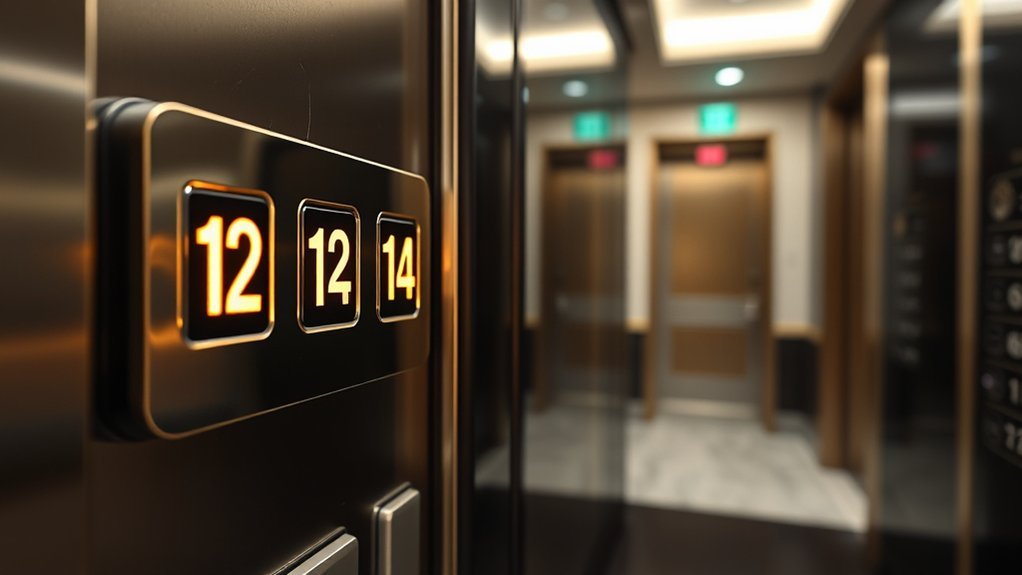
There is no reliable current list showing that every hotel in a major chain either skips or keeps 13. Two properties carrying the same brand may use different numbering because they were built in different periods, serve different markets, or follow different local conventions.
Factors that can affect a property’s decision include:
- The building’s existing architectural plans and elevator system.
- Local floor-numbering and signage requirements.
- The cultural expectations of frequent guests.
- Whether the building is owned, managed, or franchised.
- Renovations, hotel conversions, and rebranding.
- The need for clear navigation between guest, meeting, parking, and amenity floors.
For accurate information, check the individual hotel rather than assuming its practice from the chain name.
Why Some Hotels Leave the 13th Floor Visible
Some hotels display 13 because consecutive numbering is easier to understand. It can help guests, staff, delivery workers, and emergency responders match elevator labels with floor plans and room locations.
A property may also keep 13 because its guests do not commonly view the number as unlucky. Other hotels prefer not to organize their building around a superstition or believe that an unusual 13th-floor room will be memorable to interested guests.
Local rules can influence the decision as well. Some authorities tolerate traditional omissions but still require approved plans and signs to identify levels clearly. The goal is to balance cultural customs with practical navigation.
Frequently Asked Questions
Do hotels usually skip the 13th floor?
Many hotels in Western markets omit the number 13, but not all do. There is no trustworthy current global percentage for hotels. The decision varies by property, location, building design, and guest market.
What floor gets skipped in hotels?
Hotels most commonly omit the label 13 in Western settings. Some properties in parts of East and Southeast Asia omit 4, 14, or other numbers containing 4. The physical levels usually remain and receive different labels.
Why is 13 not used in some hotels?
Some guests associate 13 with bad luck. Hotels may omit it to reduce discomfort and avoid room-change requests. The choice is based on guest expectations rather than a structural problem with the number.
Do hotels ever skip floor 14?
Yes. Some hotels omit 14 because it contains the digit 4, which is considered unlucky in parts of East Asia. A property serving an international market may omit both 13 and 14.
Is the hotel’s 14th floor really the 13th floor?
Often, yes. If the elevator jumps directly from 12 to 14, the level labeled 14 is commonly the next physical level. However, mezzanines, podiums, mechanical floors, and differently counted lobbies mean this is not true in every building.
Can you request a different hotel floor?
Yes. You can ask the hotel to avoid a particular floor or room number. Staff may add the request to your reservation, but the final assignment depends on available rooms when you check in.
Is skipping the 13th floor legally required?
There is no single worldwide rule requiring hotels to omit 13. Local building, fire-safety, planning, and signage requirements control how floors must appear on approved plans and public directories. The rules can differ between cities and countries.
Conclusion
Hotels often skip the number 13 because some guests associate it with bad luck. The usual change is limited to signs, elevator buttons, room numbers, and booking systems. The physical level normally remains and may be labeled 14, 12A, or with another name.
The practice is not universal, and there is no dependable chainwide or worldwide rule. Some hotels display 13 normally, while properties in other cultures may avoid 4 or 14 instead. When the exact numbering matters to you, the individual hotel is the best source of current information.
Sources
- Merriam-Webster: Triskaidekaphobia — definition and history of the term.
- International Journal of Hospitality Management — research on guest reactions to unlucky hotel floor and room numbers.
- University of the South Pacific Research Repository — publication details and abstract for the hotel-guest study.
- PBS NOVA: Trapped in an Elevator — source for the historical Otis high-rise estimate frequently quoted online.
- Hong Kong Buildings Department — official guidance on logical floor numbering and culturally common omissions.
- WATG: Hotel Room 404 — hospitality-design discussion of cultural number avoidance in hotels.

