
Last Updated on July 30, 2026 by Daniel Globe
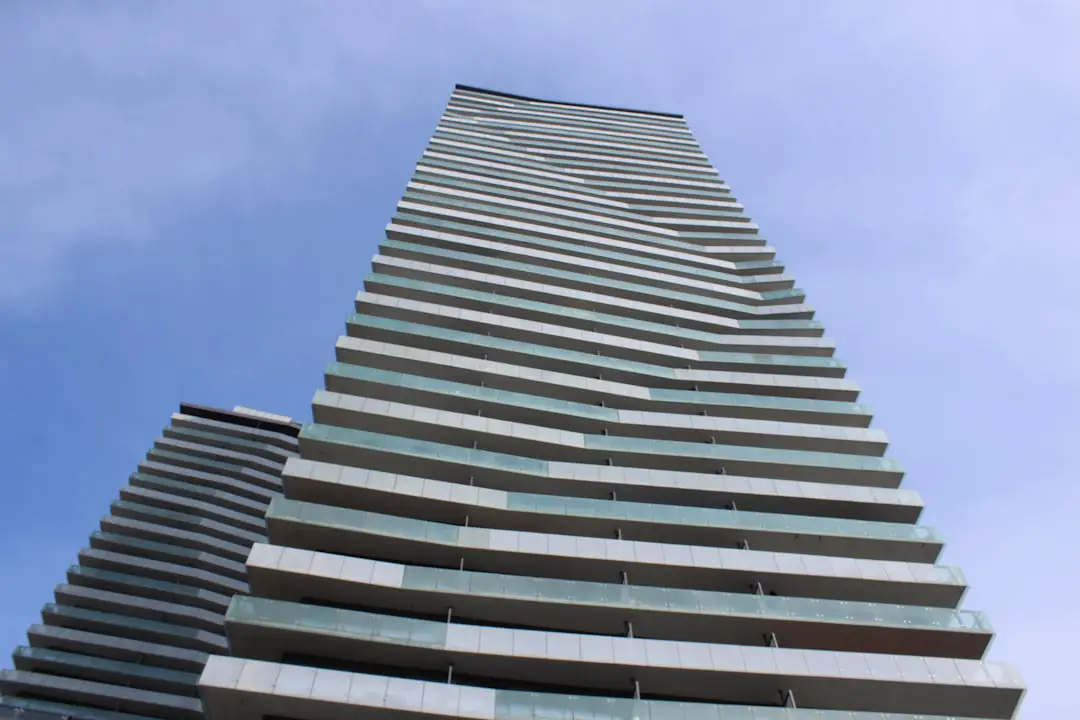
Hotels often appear to have no 13th floor because the number 13 is considered unlucky in parts of Western culture. In most cases, the level is still physically there; the hotel simply labels it 14, 12A, M, or another name. What looks like a missing floor is usually a guest-comfort and marketing decision, not a structural mystery.
Quick Answer
Many hotels skip the number 13 because some guests associate it with bad luck. The building normally still has a physical 13th level, but the elevator may call it 14, 12A, M, or an amenity floor. Hotels use this relabeling to reduce guest unease and avoid unnecessary booking objections.
Key Takeaways
- The 13th level usually exists physically even when the elevator jumps from 12 to 14.
- Fear or avoidance of 13 is called triskaidekaphobia, but the exact origin of the belief is uncertain.
- Hotels may relabel the level as 14, 12A, M, a mezzanine, or an amenity floor.
- The practice is mainly about guest comfort, demand, and branding rather than construction.
- Number beliefs vary by culture, so some hotels avoid other numbers or emphasize numbers viewed as fortunate.
Superstition developed long before modern science could explain many natural events. Storms, earthquakes, eclipses, illness, and unexpected changes were often interpreted through religion, ritual, omens, or supernatural causes. People created practices meant to gain protection, restore order, or influence uncertain outcomes. Those beliefs changed across cultures, but the desire to make uncertainty feel manageable remained.
Disclosure: As an Amazon Associate I earn from qualifying purchases. Some links on this page are affiliate links, at no extra cost to you.
Why Hotels Skip the 13th Floor
The main reason is simple: some guests do not want to sleep on a floor labeled 13. The fear or strong avoidance of that number is known as triskaidekaphobia. A hotel can remove a possible source of discomfort by changing one elevator label, so many owners see little benefit in insisting on the number.
This is both a cultural choice and a business decision. A 2007 Gallup poll found that 13% of U.S. adults would be bothered by staying on a hotel’s 13th floor, and 9% said they would ask for a room on another floor. That survey is old and should not be treated as a current prevalence estimate, but it shows why hotels may avoid a label that can create objections for even a minority of guests.
A “missing” 13th floor is usually a missing number, not a missing level.
Is the 13th Floor Physically Missing?
Usually, no. A high-rise cannot make the vertical space between the 12th and 14th levels disappear. The level that comes after 12 still exists, but its public-facing name may change. The room numbers, elevator buttons, directory, and booking system are then matched to the chosen label.
Hotels and other tall buildings commonly handle the level in one of these ways:
- Jump from 12 to 14: The floor labeled 14 is the next physical level above 12.
- Use 12A or 12B: This avoids 13 while keeping the sequence visually close.
- Use M: The level may be called “mezzanine” or “mechanical,” depending on the building.
- Name the floor by function: A hotel may call it the pool, spa, club, restaurant, or conference level.
- Skip room number 13: Even a hotel with a labeled 13th floor may omit Room 13 or room numbers ending in 13.
Note: Floor labels are names used for navigation. Architectural plans, emergency systems, and official records may count or identify levels differently from the elevator panel.
The Fear of the Number 13
The association between 13 and bad luck is widespread in parts of Europe and North America, but its origin is not settled. The word triskaidekaphobia is a modern term built from the Greek word for thirteen and -phobia; Merriam-Webster dates its first known English use to about 1909.
The Last Supper is often offered as one explanation because Christian tradition describes Jesus dining with the 12 apostles, making 13 people at the table before Judas’s betrayal. It is safer to call this a later explanation rather than a proven origin: the biblical accounts do not identify Judas as the “13th guest” by arrival order, and historians have proposed several competing origins.
Another common theory contrasts 13 with the apparent completeness of 12: 12 months, 12 zodiac signs, and many other sets of 12. In that interpretation, 13 feels like a number that breaks an orderly pattern. This is a cultural reading, not scientific evidence that the number causes misfortune.
The same avoidance appears outside hotels. Some airlines omit Row 13, and some buildings skip room, office, or apartment numbers containing 13. These choices reflect customer expectations rather than proof that the number changes risk.
The original English word superstition came through Middle English and Anglo-French from Latin superstitio. Its root is related to superstes, meaning “standing over” as a witness or survivor—not literally “standing in awe.” Over time, the word came to describe beliefs or practices based on fear, magic, chance, or mistaken ideas about cause and effect.
Historical Examples of Superstition in Architecture
Belief, ritual, and architecture have influenced one another for thousands of years. Communities have sometimes avoided land believed to be haunted, cursed, or ritually unsuitable, while other sites were selected or arranged around religious and cosmological ideas.
Ancient Egyptian objects and tomb decoration used protective symbols connected with the afterlife. The Metropolitan Museum of Art, for example, describes apotropaic wands decorated with protective deities intended to ward off harmful forces. Egyptian pyramid complexes were also built with careful orientation and formed part of a larger religious landscape; their precision should not be reduced to a single superstition or claim about “appeasing” the gods.
In ancient Rome, augury interpreted signs in the behavior or flight of birds. Religious officials could be consulted before major public actions, showing how beliefs about omens could affect civic and political life as well as the use of public space.
Medieval gargoyles are another often-cited example, but the popular explanation needs care. True gargoyles primarily served as projecting waterspouts that carried rain away from masonry. Grotesque animals and monsters could also carry symbolic or protective meanings, yet not every frightening carving was installed simply to “ward off evil.” Their practical, artistic, and religious roles often overlapped.
The Impact of Superstition on Hotel Design
| Design Belief or Practice | Possible Impact on a Hotel |
| Mirrors | Some designers consider cultural beliefs about mirror placement, although this is not a universal hotel rule. |
| Number 13 | A hotel may skip the 13th-floor label, Room 13, or room numbers ending in 13 to reduce guest unease. |
| Feng Shui | Some properties use feng shui principles when planning entrances, room layouts, views, water features, or furniture placement. |
| Colors | Color choices may reflect local associations with celebration, mourning, prosperity, or protection. |
| Folklore and Themes | A hotel may turn local legends, ghost stories, or lucky symbols into décor, tours, events, or branded rooms. |
The hospitality industry is built around reducing friction. If a floor number may make a guest hesitate, complain, or request a move, relabeling it is an inexpensive response. The choice does not prove that hotel owners believe 13 is dangerous; it often means they recognize that some customers do.
Hotels also adapt design to local expectations. Mirror placement, colors, room orientation, and feng shui may matter to particular owners or markets, but these practices vary widely. They should not be presented as rules followed by every hotel or by every member of a culture.
Other properties deliberately use superstition as part of their identity. A haunted-history hotel, for example, may highlight Room 13, run a ghost tour, or build a themed event around local folklore. In that setting, the same belief that one hotel avoids becomes another hotel’s entertainment and branding tool.
The 13th Floor: To Skip or Not to Skip?
Skipping 13 may protect a hotel from avoidable guest objections, but it can also make navigation less clear. A guest may reasonably assume the 14th-floor button means the 14th physical level, while a plan or maintenance record may use a different count.
There is evidence that number beliefs can affect real purchasing behavior. A 2015 study in Judgment and Decision Making found lower demand for otherwise comparable apartments on the 13th floor in a Saint Petersburg housing dataset. That result does not prove the same effect in every country or hotel market, but it supports the idea that developers respond to perceived customer resistance.
Clear wayfinding is the strongest argument against irregular numbering. The City of Vancouver’s addressing and suite-numbering bulletin requires new numbering sequences not to skip numbers between adjacent floors, citing emergency response and reduced confusion. Rules differ by jurisdiction, so hotels must follow local codes and approved plans rather than a single worldwide standard.
Warning: During an emergency, follow the hotel’s posted evacuation map, stair signs, alarms, and staff instructions. Do not try to convert a labeled “14th floor” into your own physical floor count.
The Influence of Culture on Superstition
Number beliefs are not universal. In many Chinese-speaking communities, 8 is associated with prosperity because its pronunciation can sound similar to words connected with wealth or flourishing. Buildings, phone numbers, prices, and important dates may therefore feature repeated eights. The cultural association is real, but its strength differs among regions, languages, generations, and individuals.
The number 4 may be avoided in some East Asian settings because its pronunciation resembles the word for death in several languages. A hotel serving an international market might therefore skip 4, 13, 14, 24, or certain room-number endings, while another hotel in the same city may use ordinary consecutive numbering.
Beliefs involving animals, colors, directions, mirrors, water, or entrances also differ across cultures. In some communities, including traditions found in parts of Africa, particular animals may be treated as ancestral, sacred, or protective symbols, creating taboos against harming them and influencing decorative motifs.
Designers who work across regions need local knowledge rather than a universal checklist. Respectful design means asking which traditions matter to the intended guests without assuming everyone from a culture shares the same beliefs.
Superstition in Modern Society
Superstition remains common even in highly technological societies. Athletes may wear a “lucky” item, travelers may avoid a date, and people may hesitate to sign a contract or book a room associated with an unlucky number. Social media can spread old beliefs quickly by turning dates, symbols, or rituals into repeatable trends.
Businesses also sell charms, talismans, decorative symbols, and experiences linked to luck or protection. Hotels sit at an interesting point between belief and commerce: they can quietly avoid a number, respect a local custom, or turn folklore into a themed experience.
Psychological Effects of Superstition
Superstitious behavior can feel useful because it gives people a routine when outcomes are uncertain. In a series of experiments published in 2010, researchers found that activating common luck-related superstitions could increase confidence, persistence, and performance on certain tasks. The result did not show that luck changed events; it suggested that belief changed the participant’s mindset and behavior. The study is indexed by the U.S. National Library of Medicine.
Other research has linked a lack of control with a greater tendency to perceive patterns in random or unrelated information. A 2008 study in Science, also indexed by PubMed, found that experimentally reduced control increased illusory pattern perception. This helps explain why rituals and omens may become more appealing during stressful or unpredictable situations.
Superstition can become harmful when it drives costly decisions, reinforces gambling errors, or causes severe anxiety. Gamblers may mistake streaks, rituals, or “lucky” objects for evidence that the odds have changed, even though independent games remain governed by probability. A personal routine is not automatically a problem, but it should not replace evidence, safety guidance, or professional help when the stakes are high.
Note: A familiar routine and a superstition are not the same thing. The key difference is whether a person believes the ritual has an unsupported causal power over an unrelated outcome.
The Future of Superstition in Architecture
Superstition is unlikely to disappear from architecture because buildings serve people, and people bring cultural expectations with them. Future hotel design will probably balance three goals: respect local beliefs, make spaces easy to navigate, and avoid claims that unsupported rituals guarantee safety, wealth, or good fortune.
Some cities may favor consecutive floor numbering for emergency response and accessibility. Elsewhere, hotels may continue to rename levels or use function-based labels. Digital check-in, mobile room keys, and app-based navigation may make the number itself less visible, but they will not erase the beliefs behind it.
Sustainable design may also overlap with traditional ideas about water, plants, daylight, orientation, and harmony with nature. Those features can have practical environmental or wellness benefits, but designers should distinguish measurable performance from symbolic meaning.
Debunking Superstitions Without Dismissing Culture
There is no scientific evidence that the number 13 causes bad events. Renaming a floor does not change the physical level, its structural design, or its objective safety. Critical thinking can separate coincidence from cause and help people make decisions based on evidence.
That does not require mocking cultural traditions. A belief can be historically important, emotionally meaningful, or commercially influential even when it is not scientifically causal. The most useful approach is to explain the history, acknowledge the human response, and remain clear about what the evidence does and does not show.
Embracing Superstition: The Rise of Themed Hotels
Themed hotels often use folklore and superstition to create an experience that feels connected to place. Rooms inspired by local legends, guided ghost walks, historic storytelling, and seasonal events can turn a simple stay into a memorable narrative.
This approach works best when the hotel is honest about what is documented history, what is local tradition, and what is entertainment. It can preserve stories without presenting every legend as fact. A hotel that proudly uses a 13th floor may even turn the number into a playful point of difference.
So, the practical reason behind the missing 13th floor is closely tied to superstition but is not mysterious: hotels often relabel the level because doing so may prevent guest discomfort at little cost. The decision reflects customer psychology, local culture, marketing, and sometimes building-numbering rules.
Conclusion
Hotels usually do not remove a physical floor; they remove or rename the number 13. The custom grew from Western beliefs about bad luck and persists because even a small amount of guest unease can influence bookings, room requests, and brand choices. Some properties avoid the number, others embrace it, and local rules may require clear consecutive numbering. Either way, the label does not make a floor more or less safe.
Frequently Asked Questions
Why do hotels not have a 13th floor?
Many hotels avoid the label because some guests consider 13 unlucky. Relabeling the level can reduce anxiety, complaints, or room-change requests without changing the building’s physical structure.
What is triskaidekaphobia?
Triskaidekaphobia means fear or strong avoidance of the number 13. The word entered English in the early 20th century, although beliefs about 13 have a longer and uncertain history.
How do hotels handle the absence of a 13th floor?
The most common method is to label the next level 14. A hotel may instead use 12A, M, mezzanine, mechanical, pool, spa, club, restaurant, or another function-based name.
Is the floor labeled 14 actually the 13th physical level?
Often, yes. When an elevator jumps directly from 12 to 14, the level called 14 is usually the next physical level above 12. Buildings with mezzanines, split levels, or mechanical floors can use more complex counting systems.
Is the omission of the 13th floor common in hotels?
It is common in parts of North America and Europe, but it is not universal. Practices vary by hotel brand, building age, owner preference, local culture, and municipal numbering rules.
Do other buildings omit the 13th floor?
Yes. Apartment towers, offices, hospitals, and other multi-story buildings may skip or rename the number. Some jurisdictions require consecutive numbering to improve wayfinding and emergency response.
Do hotels in every culture avoid the number 13?
No. Number beliefs differ by culture. Some hotels avoid 4 or numbers containing 4, while 8 may be emphasized as fortunate. Many hotels use ordinary consecutive numbering and avoid no numbers at all.
Sources
- Merriam-Webster: “Superstition” — definition and Latin word history.
- Merriam-Webster: “Triskaidekaphobia” — definition, etymology, and first known use.
- Gallup: Thirteen Percent of Americans Bothered to Stay on Hotels’ 13th Floor — survey evidence about guest discomfort.
- Judgment and Decision Making: Are Buyers of Apartments Superstitious? — evidence that floor numbers can affect demand.
- PubMed: Keep Your Fingers Crossed—How Superstition Improves Performance — experiments on confidence, persistence, and performance.
- City of Vancouver: Addressing and Suite Numbering — consecutive-numbering guidance for wayfinding and emergency response.
