

Last Updated on August 26, 2026 by Daniel Globe
If a hotel elevator jumps from Floor 12 straight to Floor 14, the building has not mysteriously lost a story. In most cases, the physical level is still there; the hotel has simply chosen not to call it Floor 13. That numbering decision is mainly tied to superstition, guest comfort, and long-standing hospitality practices.
Quick Answer
Hotels usually skip the 13th-floor label because the number 13 is considered unlucky in many Western cultures. The physical level normally still exists; it may be labeled 14, 12A, M, or given another designation. Hotels do this mainly to avoid discomfort among superstitious guests, not because of an engineering rule.
Key Takeaways
- A hotel that skips Floor 13 usually still has a physical story between the floors labeled 12 and 14.
- The practice is linked to triskaidekaphobia, the fear or avoidance of the number 13, and to concerns about guest comfort.
- Hotels may rename the level 14, 12A, M, or another designation rather than displaying 13.
- Different cultures avoid different numbers; for example, 4 can carry unlucky associations in some Chinese cultural contexts.
- There is no evidence that a floor numbered 13 is physically more dangerous or more likely to experience bad luck.
Disclosure: As an Amazon Associate I earn from qualifying purchases. Some links on this page are affiliate links, at no extra cost to you.
Why Is the Number 13 Considered Unlucky?
The idea that 13 is unlucky developed through centuries of Western folklore, religion, popular culture, and social tradition. There is no single proven historical event that explains the entire superstition.
One commonly repeated story comes from Norse mythology. In the tale, Loki appears as an uninvited thirteenth guest at a gathering of the gods, after which events lead to the death of Balder. Christian tradition has also contributed to the symbolism surrounding 13 because the Last Supper is commonly described as involving Jesus and 12 disciples, with Judas associated with betrayal.
The Smithsonian’s history of the superstition surrounding 13 describes these stories as strands in a much larger cultural history rather than proof of one definitive origin.
As cities grew and skyscrapers became common, cultural discomfort with the number could become a practical business issue. A hotel or apartment developer did not need to believe the superstition personally to recognize that some guests or tenants might prefer not to stay on a floor labeled 13.
That distinction matters: skipping the number is generally a customer-facing numbering decision, not evidence that architects are unable or unwilling to construct a thirteenth physical story.
Do Hotels Actually Remove the 13th Floor?
Usually, no. When an elevator panel shows 12 and then 14, the level labeled 14 may physically be the thirteenth story above the relevant starting point. The number on the elevator button is a label; it does not change the structure of the building.
Note: Saying a hotel “has no 13th floor” usually means it has no floor publicly labeled 13. The physical level normally still exists unless the building’s design genuinely uses that level for a different structural or mechanical purpose.
Hotels and other buildings can handle the numbering in several ways:
- Jump directly from 12 to 14.
- Use a label such as 12A.
- Use a letter or name instead of the number.
- Assign the level to amenities, offices, mechanical equipment, or another non-guest function.
- Keep the number 13 normally and make no change at all.
The Architecture of Skyscrapers and the Missing 13th-Floor Label
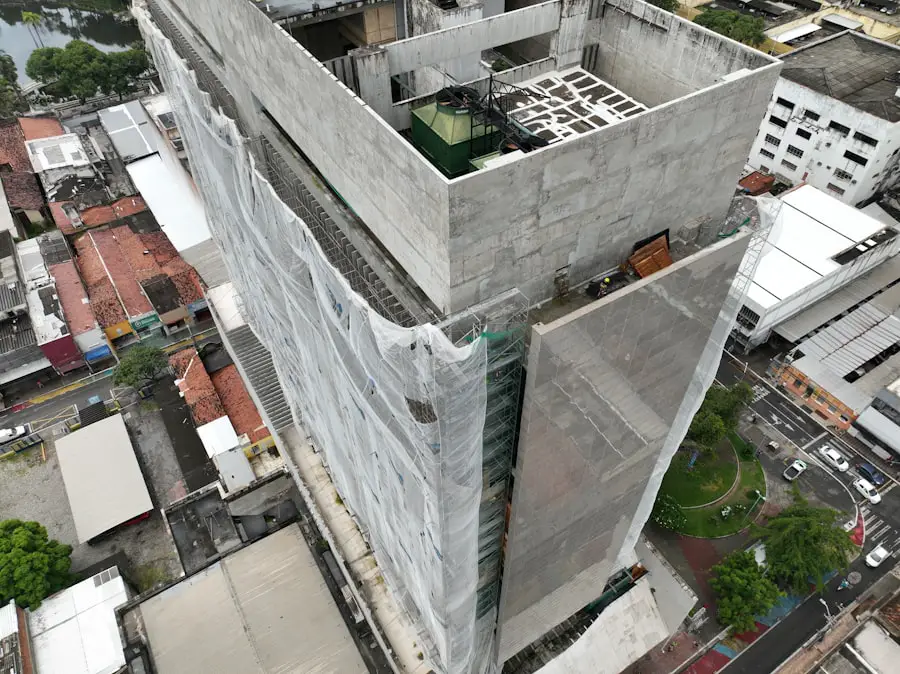
The superstition surrounding 13 can influence how a building is numbered, but the effect is usually administrative and commercial rather than structural. Architects and developers still design the building according to engineering, building-code, fire-safety, mechanical, and occupancy requirements. The public-facing labels can then be assigned according to the owner’s operating plan.
From a hotel operator’s perspective, avoiding a number that makes even a minority of guests uncomfortable can be an easy service decision. Renaming one level may reduce room-change requests or complaints without changing the usable space in the building.
Non-sequential numbering can, however, matter for building management and emergency response. New York City, for example, specifically requires certain high-rise residential buildings with non-standard or non-sequential floor numbering to document that numbering on a Building Information Card. The city’s guidance explicitly includes buildings that skip a floor number such as 13.
New York City’s guidance on non-sequential floor numbering shows why the operational records for a building still need to identify its actual layout clearly, even when the elevator buttons use unconventional numbers.
Why Hotels Keep Skipping 13
The strongest practical reason is guest psychology. Hotels sell comfort, and room assignments are part of that experience. If a guest strongly associates 13 with bad luck, assigning that person to Floor 13 can create avoidable anxiety even though the number itself has no physical effect on the room.
Hospitality research supports the idea that numerological superstition can influence guest behavior. A 2019 study of Chinese and Western hotel guests found meaningful cultural differences in how travelers reacted to room and floor numbers they considered unlucky. Most Western respondents were not troubled by the number 13, but a smaller group did report enough discomfort to prefer another assignment.
The study also found stronger numerological reactions among the Chinese guests surveyed, demonstrating that hotel-numbering decisions can depend on cultural context rather than one universal idea of an unlucky number.
A 2019 hospitality study reported that roughly nine in ten Western hotel guests surveyed were not concerned about staying on a 13th floor or in a room numbered 13.
That research does not mean every hotel needs to avoid 13. It shows why an operator may decide that renumbering a floor is easier than dealing with the smaller number of guests who object to it.
You can review the study through the University of the South Pacific research repository.
The Psychological Impact of the Missing 13th Floor
The original idea behind skipping 13 is not that the number changes the safety of a room. The effect is psychological: people can attach meaning to a number and then respond to that meaning with comfort, discomfort, avoidance, or indifference.
| Question | What the evidence supports |
|---|---|
| Can unlucky numbers affect guest behavior? | Yes. Hospitality research shows that cultural and personal superstition can influence whether some guests feel uncomfortable or request another floor or room. |
| Does everyone fear Floor 13? | No. Most Western guests in one 2019 study were not concerned about a 13th-floor or Room 13 assignment. |
| Are “unlucky” floors more dangerous? | No reliable evidence shows that the number itself increases danger. A separate hotel study found no significant difference in accidents or complaints on supposedly unlucky floors and rooms in the property studied. |
A study by Stephen Pratt and Pia Kwan examined hotel numbering in Hong Kong and reviewed accident and complaint data from one upscale hotel over five years. The researchers found that hotels did use superstitious numbering conventions, but the case-study hotel did not show a significant difference in accidents or complaints between unlucky and other rooms or floors.
The research is available through the University of the South Pacific research repository.
Pro Tip: If a hotel floor number makes you uncomfortable, ask the front desk whether another room is available. Hotels routinely handle room-assignment preferences, and there is no need to treat the floor number as a safety problem.
Different Cultures Avoid Different Numbers
The fear of 13 is most strongly associated with Western traditions, but number-based superstition varies significantly by culture.
In some Chinese cultural contexts, the number 4 can be considered unlucky because its pronunciation is associated with the word for death. As a result, some hotels and other buildings may avoid 4, 14, 24, or other numbers containing 4 rather than focusing only on 13.
Hospitality research has documented this difference directly. The same studies that examined Western reactions to 13 found stronger responses to culturally unlucky numbers among Chinese travelers.
This is why there is no worldwide rule saying which floor number a hotel must avoid. A numbering system that seems unusual to one traveler may reflect the traditions of another market.
The Occult and Paranormal Theories Related to the 13th Floor
The missing 13th floor has also become a natural subject for ghost stories, occult-themed fiction, and paranormal folklore. Once a building deliberately hides or renames a level, it is easy for storytellers to imagine that something secret or supernatural must be happening there.
Some modern esoteric and horror narratives portray 13 as a symbol of transformation, danger, or a boundary between ordinary and supernatural worlds. Those ideas belong to belief and storytelling rather than building science.
Stories about haunted 13th floors often describe strange noises, flickering lights, apparitions, unexplained elevator stops, or doors opening by themselves. These stories can be entertaining, but they are anecdotes and legends, not evidence that a floor becomes paranormal because it is numbered 13.
Warning: Do not confuse folklore about a “cursed” 13th floor with real building-safety information. Emergency exits, alarms, elevator service, and evacuation instructions should be judged from the hotel’s actual safety procedures and posted information, not the floor number.
Urban Legends and Myths About the 13th Floor
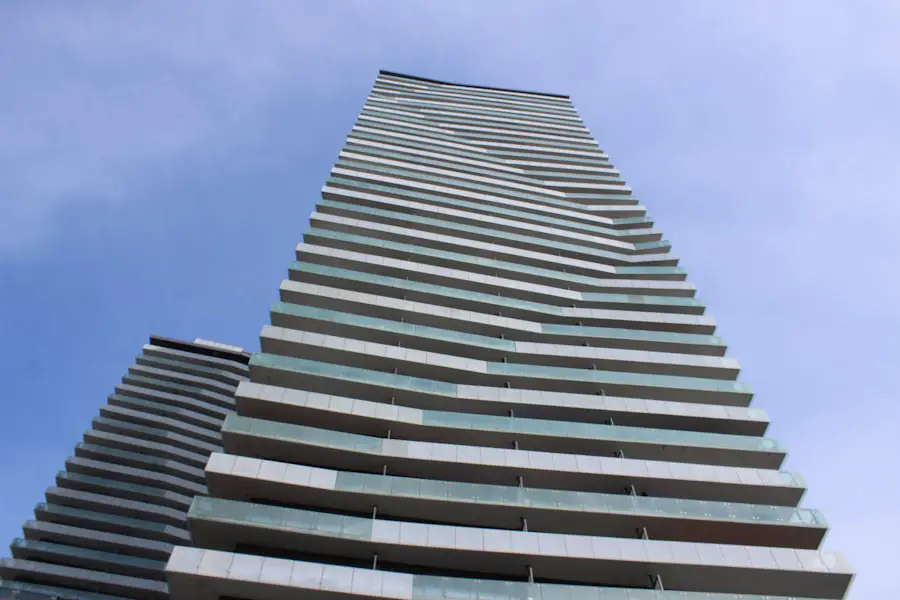
Urban legends frequently turn the missing number into a hidden-place mystery. A typical story claims that a hotel has a secret 13th floor that guests cannot access, or that an elevator sometimes stops at a level that is not shown on its control panel.
The more ordinary explanation is usually much simpler: the physical level is there, but the hotel’s public numbering system calls it something else.
Real buildings can contain mechanical floors, restricted service spaces, security-controlled areas, or private levels that are not available to ordinary guests. That reality gives urban legends something plausible to build on, but it does not prove claims about secret rituals, ghosts, or unexplained phenomena.
Stories about doors opening on their own, disembodied voices, dim corridors, and inaccessible floors continue to circulate because they combine two familiar fears: unlucky numbers and hidden spaces.
The 13th Floor in Popular Culture
The symbolism of 13 has spread far beyond hotels. Horror films, books, television shows, attractions, and video games regularly use the number as a quick signal for danger, mystery, or the supernatural.
Movies such as Thirteen Ghosts use 13 as part of their horror imagery, although the film is not evidence about real hotel floor numbering. Likewise, Stephen King’s The Shining and its famous haunted-hotel setting show how architecture can become part of a horror story, but the story is not specifically an explanation of why real hotels skip the 13th floor.
Video games and other fictional works have used similar ideas: hidden floors, abandoned hotel corridors, restricted elevator buttons, and levels that appear only under unusual circumstances. These fictional conventions help keep the missing-13th-floor myth alive even for people who are not personally superstitious.
The Future of the 13th Floor: Will It Make a Comeback?
There is no reliable evidence of a broad architectural movement either to eliminate the practice or to restore the number 13 everywhere. Some hotels and buildings use 13 normally, while others continue to skip it because renumbering is simple and may make a small group of guests more comfortable.
Younger travelers may be less concerned about some traditional superstitions, but cultural beliefs do not disappear at the same rate in every country or community. International hotels also serve guests from many backgrounds, which gives operators an incentive to remain sensitive to different number preferences.
The important point is that a missing 13th-floor label is not an architectural mystery. It is a numbering convention shaped by culture, psychology, hospitality, and marketing. The building usually still contains the physical level; the elevator panel simply tells a different story.
So when you see an elevator jump from 12 to 14, there is no need to search for a supernatural explanation. The most likely reason is that the owner decided avoiding the number 13 would be easier for guests who consider it unlucky.
Frequently Asked Questions
Why do hotels not have a 13th floor?
Many hotels skip the label 13 because the number is considered unlucky in Western superstition. Avoiding the number can reduce discomfort among guests who are superstitious. It is normally a numbering and customer-service decision rather than an architectural requirement.
Does the physical 13th floor still exist?
Usually, yes. If the elevator goes from 12 to 14, the level labeled 14 may physically be the next story above Floor 12. The hotel has changed the public-facing number, not removed a layer of the building.
What is triskaidekaphobia?
Triskaidekaphobia means fear or strong avoidance of the number 13. The term is commonly used when discussing Western superstitions surrounding Floor 13, Room 13, and Friday the 13th.
Do all hotels skip the 13th floor?
No. Many hotels and buildings use 13 normally. Whether a property skips the number depends on the owner, local culture, brand practices, building records, and expectations of the guests it serves.
What do hotels call the 13th floor instead?
A hotel may jump directly from 12 to 14 or use a designation such as 12A, a letter, an amenity name, or another internal label. Practices vary from one building to another.
Is there scientific evidence that the number 13 causes bad luck?
No reliable evidence shows that the number 13 itself causes accidents, bad luck, or paranormal events. Hospitality research has documented people’s beliefs and reactions to unlucky numbers, but one five-year hotel case study found no significant difference in accidents or complaints between supposedly unlucky and other floors or rooms.
Do buildings skip other unlucky numbers?
Yes. Number superstitions differ by culture. In some Chinese cultural contexts, 4 may be avoided because its pronunciation is associated with the word for death. A hotel may therefore change numbering for 4, 13, or other culturally sensitive numbers depending on its location and guests.
Do office and residential buildings also skip Floor 13?
Yes. The practice is not limited to hotels. Apartment towers, condominiums, and office buildings may also use non-sequential numbering. Building and fire-safety records still need to describe the actual layout clearly even when public-facing floor numbers are skipped.
Sources
- Smithsonian Magazine — Why Are We So Scared of Friday the 13th? — historical and cultural background on the superstition surrounding 13.
- Pratt & Kirillova, International Journal of Hospitality Management — research on how Chinese and Western hotel guests respond to unlucky floor and room assignments.
- Pratt & Kwan, International Journal of Culture, Tourism and Hospitality Research — research on hotel numbering practices and accident/complaint data.
- New York City — High-Rise Residential Building Non-Sequential Floor Numbering — official guidance covering buildings that use non-standard floor numbering, including skipping the 13th floor.
