

Last Updated on September 10, 2026 by Daniel Globe
Choosing what to wear hiking is mostly about staying dry, managing heat, and matching your clothing to the weather and terrain. A comfortable trail outfit should move easily, dry quickly, and give you enough protection from sun, wind, rain, insects, brush, and cold without making you overheat.
Quick Answer
For most hikes, wear a breathable synthetic or merino wool shirt, quick-drying hiking pants or shorts, wool or synthetic socks, and trail-appropriate shoes. Carry an insulating layer and rain shell when conditions may change. Avoid relying on cotton in cool or wet weather because it dries slowly after getting wet.
Key Takeaways
- Choose quick-drying, breathable clothing made from materials such as polyester, nylon, merino wool, or fleece.
- Use layers so you can add warmth or remove clothing before you become excessively sweaty.
- Select footwear according to trail surface, weather, distance, pack weight, fit, and personal comfort rather than assuming everyone needs heavy boots.
- Protect yourself from sun and insects with appropriate clothing, sunscreen, a hat, sunglasses, and an EPA-registered repellent where needed.
- Carry extra clothing and the other Ten Essentials when the trail, weather, or distance could leave you exposed if conditions change.
Disclosure: As an Amazon Associate I earn from qualifying purchases. Some links on this page are affiliate links, at no extra cost to you.
What Clothes Should You Wear Hiking?
A basic hiking outfit does not need to be complicated. For an ordinary day hike in mild conditions, start with clothing that fits comfortably, allows a full range of motion, and will not stay soaked after you sweat.
| Item | Good General Choice | Why It Helps |
|---|---|---|
| Shirt | Synthetic or merino wool T-shirt or long-sleeve shirt | Manages moisture and dries faster than ordinary cotton clothing. |
| Pants or shorts | Stretch nylon or polyester hiking pants, convertible pants, or quick-drying shorts | Allows movement while providing a useful balance of ventilation and protection. |
| Socks | Merino wool or synthetic hiking socks | Helps manage moisture and reduces the wet fabric that contributes to friction and discomfort. |
| Footwear | Trail runners, hiking shoes, or hiking boots suited to the route | Provides the traction, underfoot protection, and support appropriate for the terrain. |
| Warm layer | Fleece, synthetic insulated jacket, or other packable midlayer | Adds warmth during breaks or temperature drops. |
| Weather shell | Wind-resistant or waterproof-breathable jacket as conditions require | Protects against wind and precipitation. |
Long pants and sleeves give more protection from sun, brush, scratches, mosquitoes, and ticks. Shorts and short sleeves provide more ventilation in hot conditions. The better choice depends on the route rather than fashion.
Choosing the Right Footwear
Match Your Shoes to the Terrain
Heavy hiking boots are not automatically safer or better for every trail. Low-cut hiking shoes and trail-running shoes can be comfortable choices for maintained trails and lighter packs, while sturdier boots become more useful on rough terrain, in cold or wet conditions, or when carrying a heavier load.
Current hiking-footwear guidance recommends considering the trail’s distance, terrain, weather, and pack weight before choosing between shoes and boots. A higher boot collar can provide additional protection and support, but it does not guarantee that you will avoid an ankle injury.
Fit and Comfort
Fit is one of the most important parts of hiking footwear. Shoes that are too loose can allow excessive heel movement and friction, while shoes that are too tight can squeeze the toes as your feet swell during a long walk.
Try hiking footwear with the socks you plan to wear on the trail. Your heel should feel secure, your toes should have room to move, and your longest toe should not repeatedly strike the front of the shoe on descents.
Pro Tip: Do not save brand-new footwear for an important hike. Wear it on several shorter walks first so you can identify pressure points, sock problems, or fit issues before you are miles from the trailhead.
Waterproof or Breathable Footwear?
Waterproof footwear is useful in snow, cold rain, mud, and consistently wet terrain. The tradeoff is that waterproof shoes and boots usually retain more heat than highly ventilated footwear.
In hot, mostly dry conditions, a lighter and more breathable hiking shoe or trail runner may feel better and may dry faster after an occasional stream crossing. There is no single correct choice for every climate.
Investing in Quality Footwear
Quality matters, but price alone does not determine whether a shoe is right for you. Prioritize fit, outsole traction, comfort, durability, and suitability for your usual terrain. A well-fitted lightweight hiking shoe can be a better choice than an expensive heavy boot that does not match the trip.
Socks and Next-to-Skin Layers
Socks are easy to overlook, yet they sit directly between your feet and your shoes for every step of the hike. Merino wool and synthetic hiking socks are popular because they manage moisture better than ordinary cotton socks and are available in different levels of cushioning.
Choose sock thickness to match your footwear. A thick sock inside an already snug shoe can create pressure rather than comfort. Bringing a dry spare pair is useful on long, wet, or cold hikes.
The same principle applies to underwear and sports bras. Quick-drying fabrics and smooth seams can reduce the amount of damp fabric rubbing against the skin. On longer hikes, pay special attention to areas where waistbands, backpack straps, or clothing seams regularly cause chafing.
Layering for Comfort and Protection
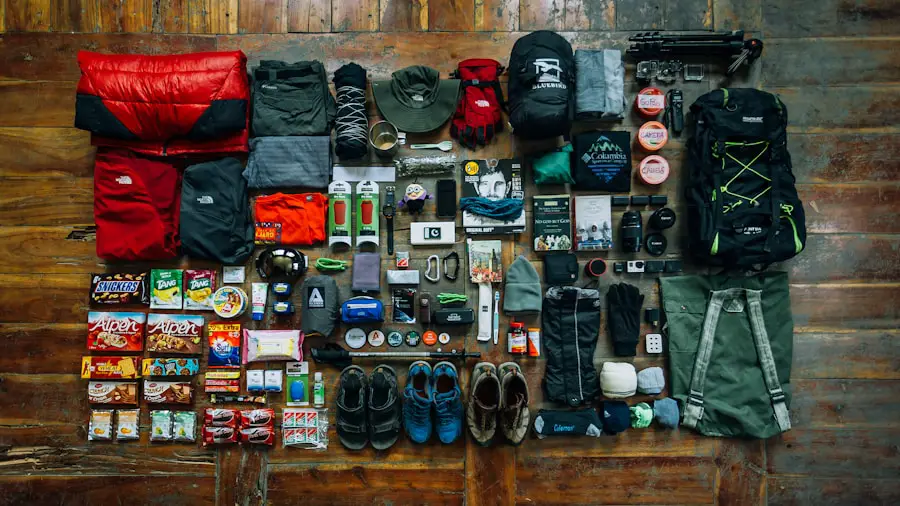
Layering lets you change your clothing as your activity level, elevation, wind, precipitation, and temperature change. The familiar system uses a base layer, insulating layer, and outer shell.
Base Layer
The base layer sits next to your skin. Its main job is moisture management. Synthetic fabrics and merino wool are common choices because they can move moisture away from the skin and perform better than ordinary cotton when damp.
Insulating Layer
The middle layer traps warmth. Depending on the temperature, that may be a lightweight fleece, heavier fleece, synthetic insulated jacket, or down jacket.
Fleece breathes well during active use. Down offers excellent warmth for its packed size but needs protection from significant moisture. Synthetic insulation is generally more tolerant of damp conditions.
Outer Shell
The shell blocks wind and precipitation. A waterproof-breathable rain jacket is useful when rain is likely, while a lighter wind shell can be enough in dry but breezy conditions.
Breathable does not mean a shell cannot become hot. During steep climbs, use ventilation openings when available, loosen the front zipper, or remove a layer before you become excessively sweaty.
The National Park Service recommends carrying layers suited to variable weather and choosing wool or quick-drying synthetic clothing for many backcountry environments. NPS hiking guidance for Denali gives a good example of this approach.
Pro Tip: Adjust layers early. If you wait until your shirt is soaked with sweat before removing insulation, staying comfortable during the next windy rest stop becomes much harder.
The Best Fabrics for Hiking
| Material or Technology | Useful Features | Best Uses / Tradeoffs |
|---|---|---|
| Merino Wool | Moisture management, temperature regulation, odor resistance | Excellent for socks and base layers; often costs more than basic synthetics. |
| Nylon | Durable, abrasion-resistant, lightweight, quick-drying | Common in hiking pants, shorts, and shell face fabrics. |
| Polyester | Quick-drying, lightweight, widely available | Common in shirts, base layers, fleece, and activewear. |
| Fleece | Warm, breathable, quick-drying | Useful midlayer; usually needs a shell in strong wind or rain. |
| Waterproof-breathable membrane or laminate, such as GORE-TEX | Designed to block liquid water while allowing water vapor to pass through | Useful in rain shells and waterproof footwear; can still feel warm during hard exercise. |
Synthetic materials such as polyester and nylon work well for many hiking clothes because they can be lightweight and quick-drying. Merino wool is especially useful for base layers and socks because it manages moisture, helps regulate temperature, and naturally resists odor. Woolmark’s fiber guidance explains these characteristics in more detail.
GORE-TEX is different from nylon, polyester, or wool. It is a branded waterproof-breathable product technology used in finished garments, laminates, footwear, and other outdoor products. The GORE-TEX manufacturer explanation describes how its membrane technology manages liquid water, wind, and water vapor.
What Not to Wear Hiking
There is no universal list of forbidden hiking clothes, but several choices commonly cause problems when conditions become demanding.
- Cotton in cold or wet conditions: Cotton absorbs moisture and dries slowly. A cotton T-shirt may be tolerable on a short, hot, dry outing, but wool or synthetics are safer choices when getting wet could leave you cold.
- Heavy jeans: Denim restricts movement for some hikers, becomes heavy when soaked, and dries slowly.
- Brand-new shoes: Unfamiliar pressure points can become painful several miles into a hike.
- Too many warm layers at the start: Overdressing can soak your insulation with sweat during the first climb.
- Unsuitable smooth-soled shoes: Road shoes may lack the traction and protection needed on loose, muddy, rocky, or steep terrain.
- Delicate clothing on brushy trails: Thin casual fabrics can snag easily on branches, thorns, and rock.
Note: Cotton is not automatically dangerous on every walk. The concern rises when temperatures are cool, weather is wet or windy, the hike is remote, or changing conditions could leave damp clothing against your skin for hours.
What to Wear Hiking in Different Weather
Hot and Sunny Weather
In hot weather, prioritize airflow and sun protection. A lightweight synthetic or merino shirt, breathable hiking pants or shorts, ventilated footwear, a brimmed hat, and sunglasses work well for many trails.
Long sleeves and pants can actually be useful in strong sun because they reduce direct UV exposure. Lightweight UPF-rated clothing is especially helpful on exposed desert, alpine, and high-elevation hikes.
Mild or Cool Weather
Wear a light base layer and keep a fleece or other warm midlayer in your pack. A light wind shell may be useful on exposed ridges even when the trailhead feels comfortable.
Starting slightly cool is often better than beginning a climb bundled in every layer you brought.
Rainy or Windy Weather
Use a waterproof or highly water-resistant shell suitable for the expected conditions. Rain pants become more useful during sustained rain, cold rain, wet vegetation, or long exposed hikes.
Keep at least one important dry layer protected inside your pack. A pack liner, dry bag, or waterproof inner bag can be more dependable than assuming the exterior of a backpack will remain completely dry.
Cold and Winter Hiking
Cold-weather hiking usually requires a moisture-managing base layer, an insulating midlayer, a wind- and water-resistant outer layer, warm socks, gloves or mittens, and a hat. Footwear should match the snow, ice, and temperature rather than simply being a heavier version of a summer hiking shoe.
Where trails are icy, traction devices may be necessary. The National Park Service advises matching traction equipment to snow and ice conditions and continuing to wear warm layers and suitable boots. NPS winter traction guidance provides more detail.
Warning: Clothing cannot make severe weather safe. Check the route-specific forecast and trail conditions before leaving, and turn around when storms, extreme heat, dangerous cold, deep snow, flooding, or lightning make continued travel unsafe.
Accessories for Safety and Convenience
A few well-chosen accessories can make hiking safer and more comfortable.
A wide-brimmed hat protects more of the face, ears, and neck from direct sunlight than a small cap. Sunglasses that protect against UVA and UVB radiation help shield the eyes, while gloves and a warm hat become important when temperatures drop.
A properly fitted backpack should hold your essentials securely without excessive bouncing or uncomfortable pressure. Adjust the shoulder straps, sternum strap, and hip belt, when present, so the load feels stable.
Trekking poles can improve stability on loose, steep, or uneven ground. Research on downhill walking has also found reductions in several measures of lower-extremity loading when poles are used appropriately, although results should not be generalized to every type of walking or every user. A published downhill-walking study provides one example.
Sun Protection and Bug Repellent
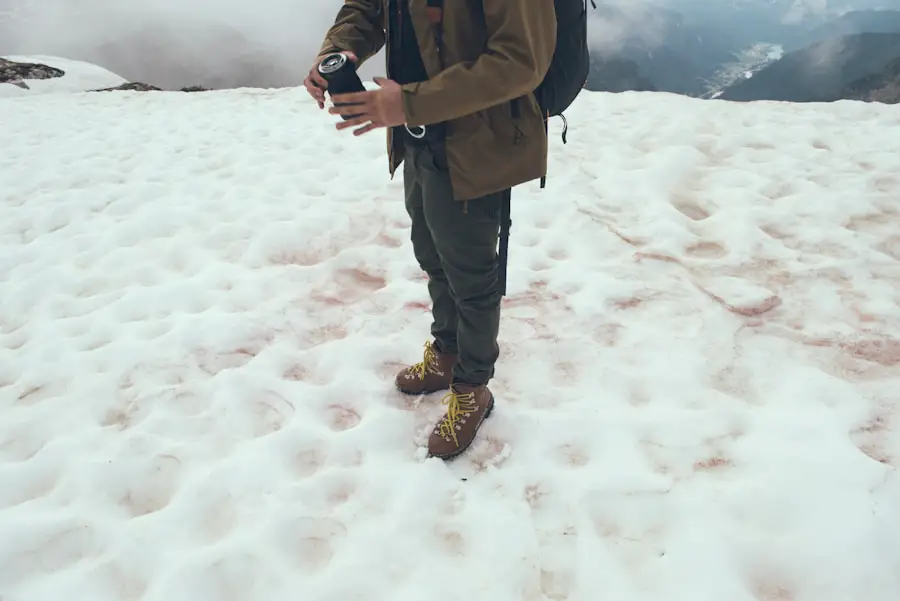
Protective Clothing
Clothing can be an important part of your sun-protection strategy. Long sleeves, long pants, a brimmed hat, and fabrics designed with a stated ultraviolet protection factor (UPF) reduce how much ultraviolet radiation reaches covered skin.
The CDC notes that tightly woven fabrics generally provide more protection and that purpose-made UPF clothing is available for travelers spending long periods outdoors.
A UPF 50 fabric allows about 1/50 of ambient ultraviolet radiation through the material, meaning roughly 98% is blocked under the rated test conditions.
Sunscreen and Skin Protection
Use sun-protective clothing together with sunscreen on exposed skin. CDC travel guidance recommends broad-spectrum sunscreen with SPF 30 or higher for travelers exposed to strong sun. Apply it thoroughly and reapply according to the product directions, particularly after swimming or heavy sweating.
Do not forget commonly missed areas such as the ears, back of the neck, tops of the feet, and backs of the hands. CDC sun-exposure guidance for travelers also recommends combining sunscreen with shade, clothing, hats, and sunglasses rather than relying on sunscreen alone.
Insect Repellent
Mosquitoes and ticks can be more than an annoyance. Depending on location, ticks can transmit illnesses including Lyme disease, while mosquitoes can transmit illnesses including West Nile virus.
DEET and picaridin are among the active ingredients found in EPA-registered skin-applied insect repellents. Choose an appropriate product for the pests and duration of protection you need, and always follow its label directions. The U.S. Environmental Protection Agency insect-repellent resource provides guidance on registered products and safe use.
Long sleeves, long pants, and closed footwear also create a physical barrier in buggy or brushy areas. After hiking in tick habitat, perform a tick check according to local public-health recommendations.
Rain and Cold Weather Gear
Weather can shift quickly in mountains and other exposed areas, so a sunny trailhead is not proof that conditions will remain warm and dry.
A waterproof-breathable jacket can protect against rain while allowing some moisture vapor to move outward. However, no shell eliminates heat buildup during hard exercise. Ventilation and timely layer changes are still important.
For cold weather, combine a dry base layer with insulation and a protective shell. Fleece, synthetic insulation, and down each have advantages. Fleece breathes well, synthetic insulation handles damp conditions relatively well, and down provides excellent warmth for its weight when kept dry.
Gloves, a warm hat, neck protection, dry socks, and appropriate footwear protect areas that can become uncomfortable quickly in cold wind or snow.
Packing and Carrying Essentials
The clothes you wear are only part of your hiking system. A well-organized backpack should also carry the supplies needed if the hike lasts longer than expected or weather changes.
The National Park Service Hike Smart guidance recommends carrying the Ten Essentials. A practical checklist includes:
- Navigation appropriate for the route
- Sun protection
- Extra insulation or clothing
- Headlamp or other illumination
- First aid supplies
- Fire-starting equipment where appropriate and legal
- Repair supplies and useful tools
- Extra food
- Water and, when necessary, water-treatment capability
- Emergency shelter
Carry enough water for the route and weather rather than relying on an assumed universal amount. Water needs change substantially with heat, elevation, exertion, trip duration, body size, and available water sources.
For food, pack items that are easy to eat and provide enough energy for the outing. Carbohydrates can provide readily available energy during activity, while foods containing protein and fat can help make longer trail meals and snacks more substantial.
A whistle, emergency blanket or bivy, headlamp, navigation backup, and first aid supplies can become especially valuable when an ordinary day hike does not go according to plan.
When planning a hiking trip, it is important to consider not only what clothes to wear but also what gear to bring along. One option for organizing lighter travel gear appears in this article on 5 Must-Have Minimalist Travel Backpacks for Spring Adventures. For overnight trips, sleeping equipment becomes another major consideration, as discussed in the guide to the Best Sleeping Bag for Backpacking Travel. And if you are shopping for someone who travels frequently, see the article on the Best Travel Gifts for Her.
Love travel? Join Our Facebook Community
Sources
- National Park Service — Hike Smart — Ten Essentials, food, water, preparation, and equipment guidance.
- National Park Service — Denali Hiking Guidance — wool/synthetic clothing, changing weather, rain protection, and trail equipment.
- CDC Yellow Book — Sun Exposure in Travelers — UPF clothing, sunscreen, hats, sunglasses, and UV protection.
- U.S. Environmental Protection Agency — Insect Repellents — EPA-registered repellents for mosquitoes and ticks.
- GORE-TEX — Membrane Technology — waterproof, windproof, and breathable membrane characteristics.
- PubMed — Knee Joint Forces During Downhill Walking With Hiking Poles — research supporting the contextual discussion of trekking poles during descents.
Frequently Asked Questions
What are the best clothes to wear for hiking?
For most hikes, wear a synthetic or merino wool shirt, quick-drying hiking pants or shorts, merino or synthetic socks, and shoes suited to the trail. Carry additional insulation and rain protection whenever the temperature, elevation, remoteness, or forecast makes changing conditions possible.
What type of shirt is best for hiking?
A lightweight synthetic or merino wool shirt works well for most hiking because it manages moisture and dries more effectively than an ordinary cotton T-shirt. Choose long sleeves when you need more protection from sun, insects, brush, or cool wind.
What pants are suitable for hiking?
Stretch nylon or polyester hiking pants are durable, quick-drying, and easy to move in. Shorts offer more ventilation in hot weather, while long pants provide better protection from sun, scratches, insects, and brush. Convertible pants can provide both options during the same trip.
What kind of socks should I wear for hiking?
Merino wool or synthetic hiking socks are good choices because they manage moisture and are available with different cushioning levels. Make sure the socks work with the volume of your shoes; overly thick socks inside tight footwear can create unwanted pressure.
What type of footwear is recommended for hiking?
Trail runners, hiking shoes, and hiking boots can all be appropriate. Lightweight shoes work well for many maintained trails and light packs, while sturdier boots are useful for rough terrain, heavier loads, snow, or cold and wet conditions. Fit and traction are more important than simply choosing the tallest boot.
What accessories should I consider for hiking?
Useful accessories include a brimmed hat, sunglasses, trekking poles where appropriate, gloves in cold weather, and a comfortable backpack. Your pack should also contain route-appropriate safety equipment such as navigation, water, food, a headlamp, first aid supplies, emergency shelter, and extra clothing.
Can I wear jeans hiking?
Jeans may be tolerable for a short walk in stable, dry weather, but they are usually a poor choice for longer, wetter, colder, or more remote hikes. Denim becomes heavy when wet, dries slowly, and generally provides less freedom of movement than purpose-made hiking pants.
Should hiking clothes be tight or loose?
Hiking clothes should allow unrestricted movement without leaving so much loose fabric that it snags on brush or interferes with backpack straps. Base layers often work best relatively close to the body, while insulating and outer layers need enough room to fit comfortably over the layers below.
